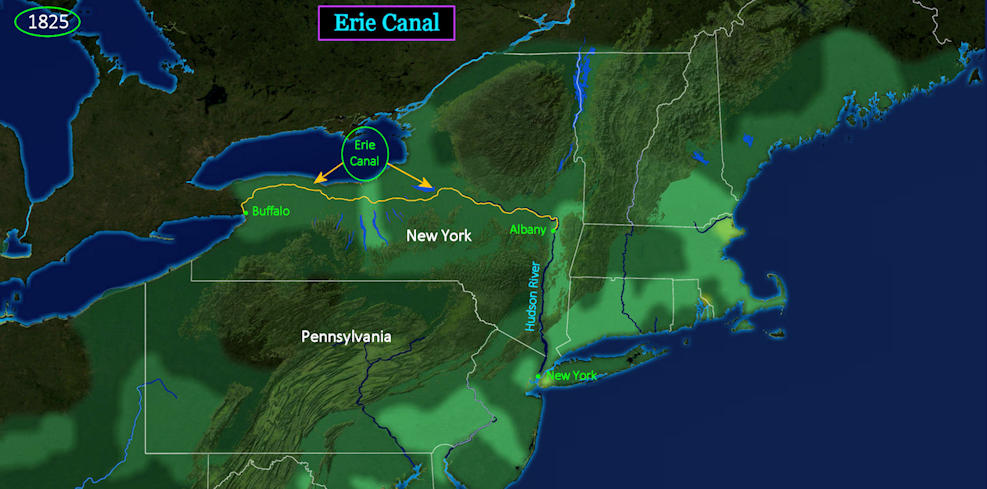
The Big DitchThe British have proven that canals can dramatically reduce shipping time and expense. Canals are already supplying London with products from all over southern Britain, and serve as magnets for business investment. The governor of New York becomes interested in digging a canal to cross the entire state, and convinces the state legislature to fund the venture. The canal opens in 1825, to great fanfare. It's an immediate, smashing success. |
| ||||||||||||||||
| |||||||||
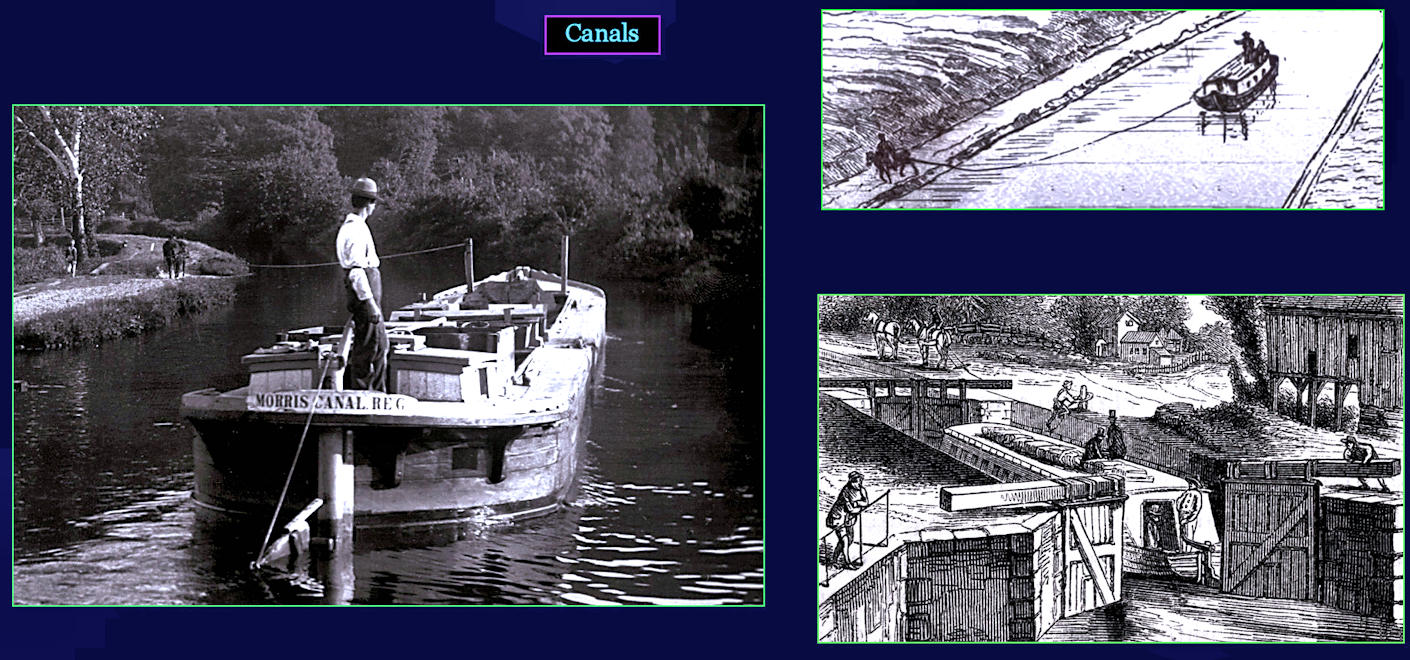
Leisurely Travel A canal is a very simple contrivance requiring only a mule (or two) for power. Except where locks are required to manage a change in elevation, canals are generally level, which means there is almost no current. This allows a single mule to pull a load that would otherwise require 20 mules and many wagons. Digging the canal by hand requires a large crew, but little skill. Locks are expensive to construct, but simple to operate, magically raising and lowering barges without effort. | |||||||||
| |||||||||
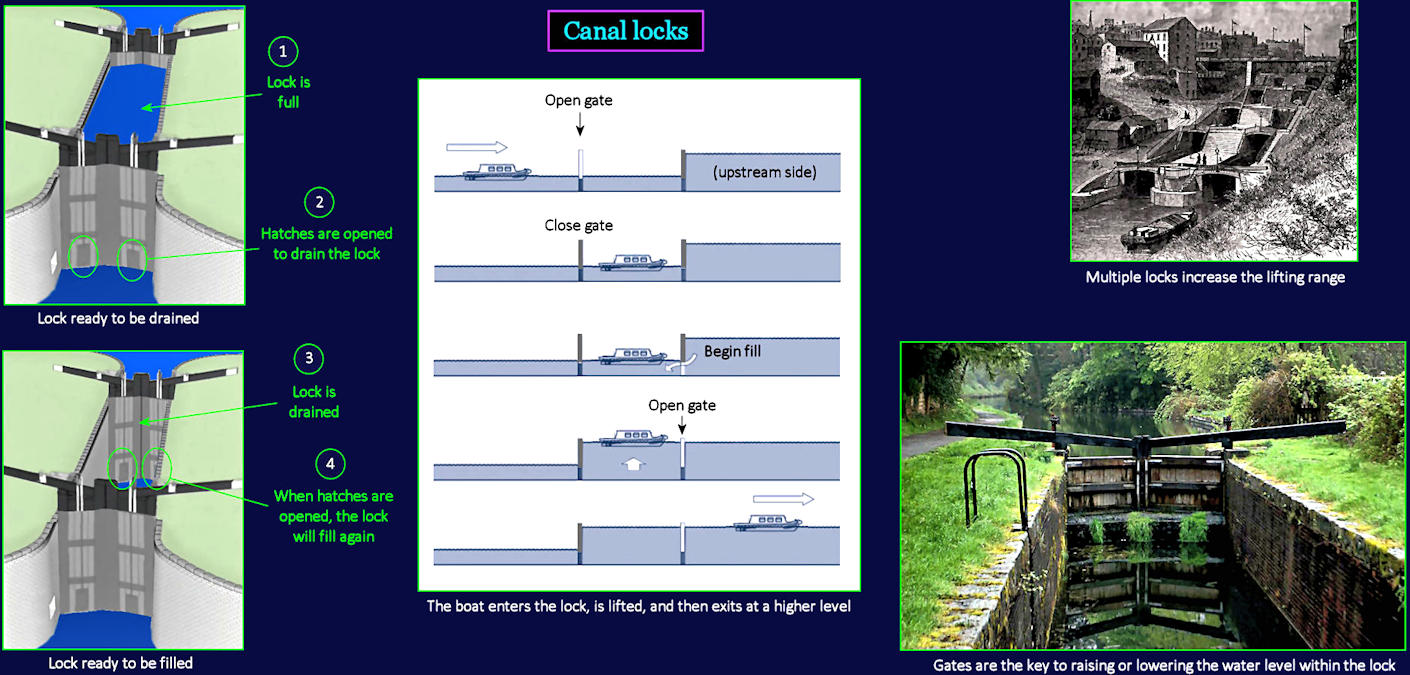
Gravity-powered Locks Canals are made possible by the development of canal locks, which operate by opening and closing a pair of large wooden gates. When traveling upstream, the barge enters the lock while the upstream gate is kept closed. The downstream gate is then closed behind the barge, and water is allowed to flow into the lock from the upstream side, slowly filling it and lifting the barge. When the lock is full, the upstream gate is opened, so the barge can continue upstream. The filling or draining is done by simple gravity. | |||||||||