| |
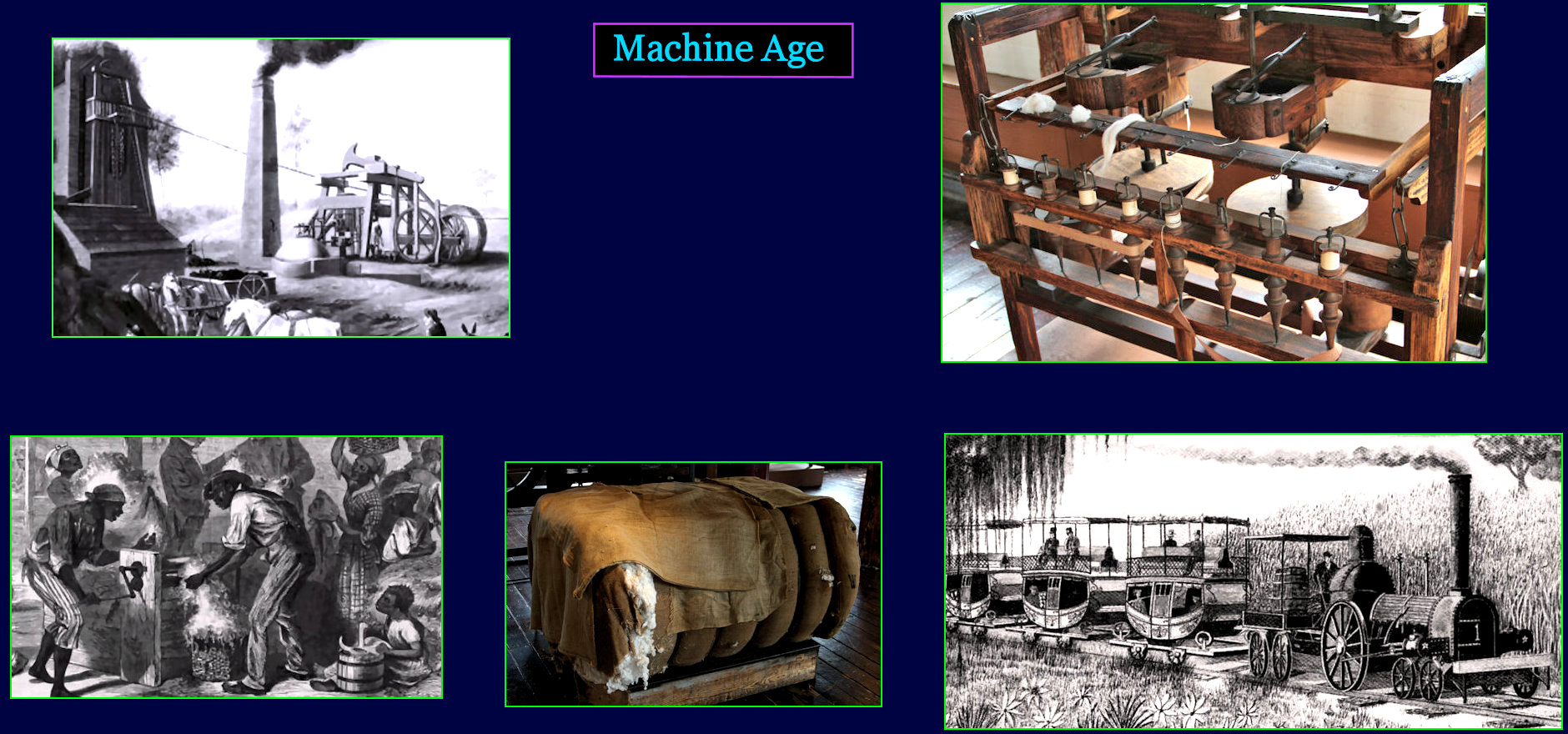
Powered Equipment The first steam-powered machines are giant pumps used to remove seepage water from mines (top left). Next come crude wooden devices to speed up the tedious spinning process needed to produce woven fabrics (top right). Then comes a machine to magically remove seeds from cotton (bottom left). Soon after that, steam-powered trains begin to appear. |
| |||||||||
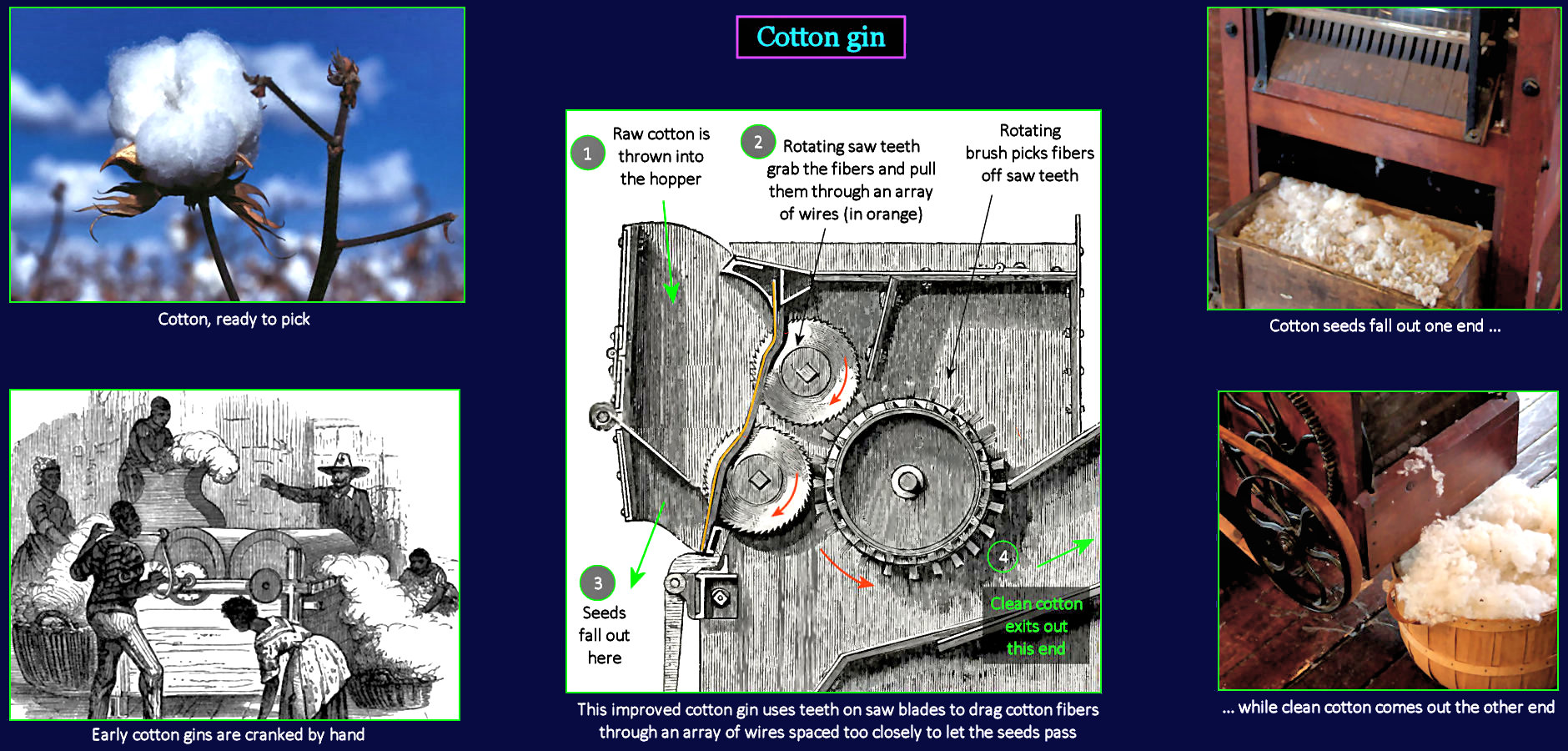
Launching a New Industry The new cotton gin is critical to the sudden growth of northern mills. Cotton plants produce lots of puffy white balls (top left), but each is cursed with big seeds that are devilishly difficult to pick out by hand. When a machine is invented that can pick them out just by turning a crank, however, raising cotton becomes instantly profitable. Southern cotton is soon flooding northern mills, giving planters the motivation to plant huge new cottonfields, and find slaves to work them. | |||||||||
| |||||||||
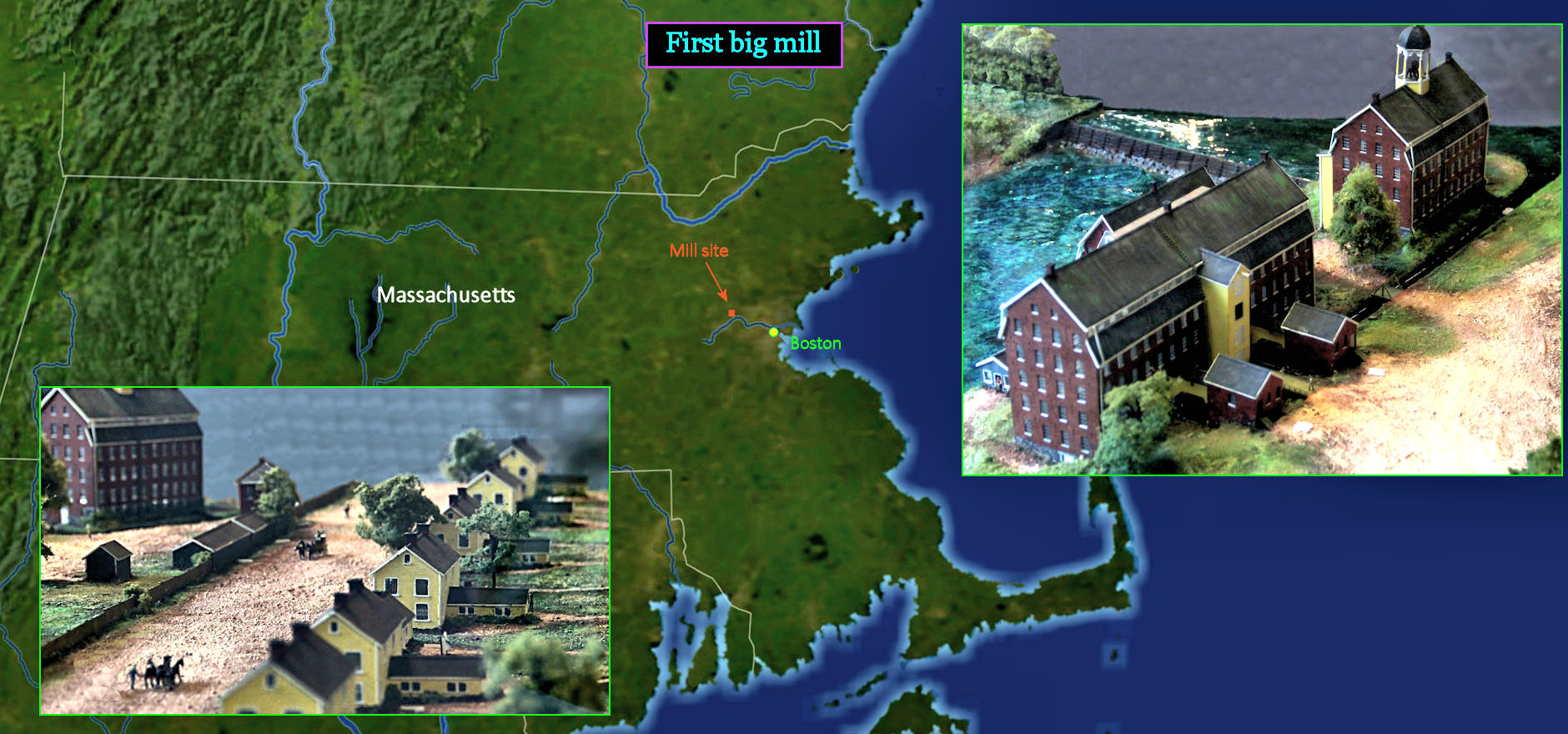
Going Big Just as the short and somewhat baffling War of 1812 with England comes to an end, a brand new type of business is developed outside Boston. Selecting a site west of the city, private investors build America's first large-scale textile mill (top right), which houses all the machinery required to produce woolen fabric under one roof. This includes America's first power looms. One key feature of the mill is the inclusion of worker housing (lower left), which is needed to attract workers from surrounding farms. | |||||||||