| |
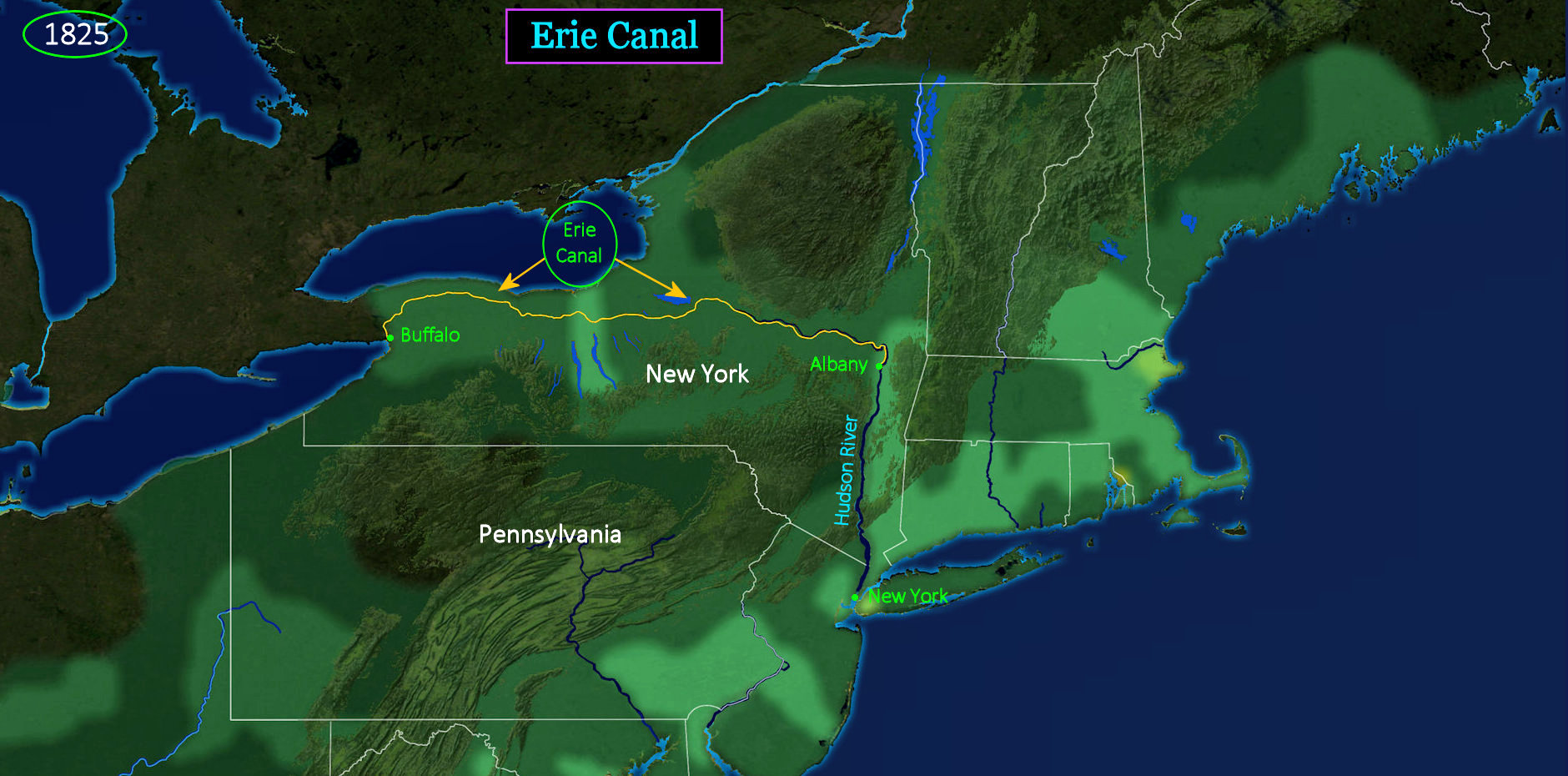
Albany to Buffalo The Erie Canal reduces the cost of transporting cargo by a monumental 95%, and lowers travel time by 70%. A single barge can now transport 30 tons of cargo, or a load of passengers out for a comfortable, elegant excursion. Although construction costs are immense, tolls collected from the brisk barge traffic cover the entire expense within 10 years. |
| |||||||||
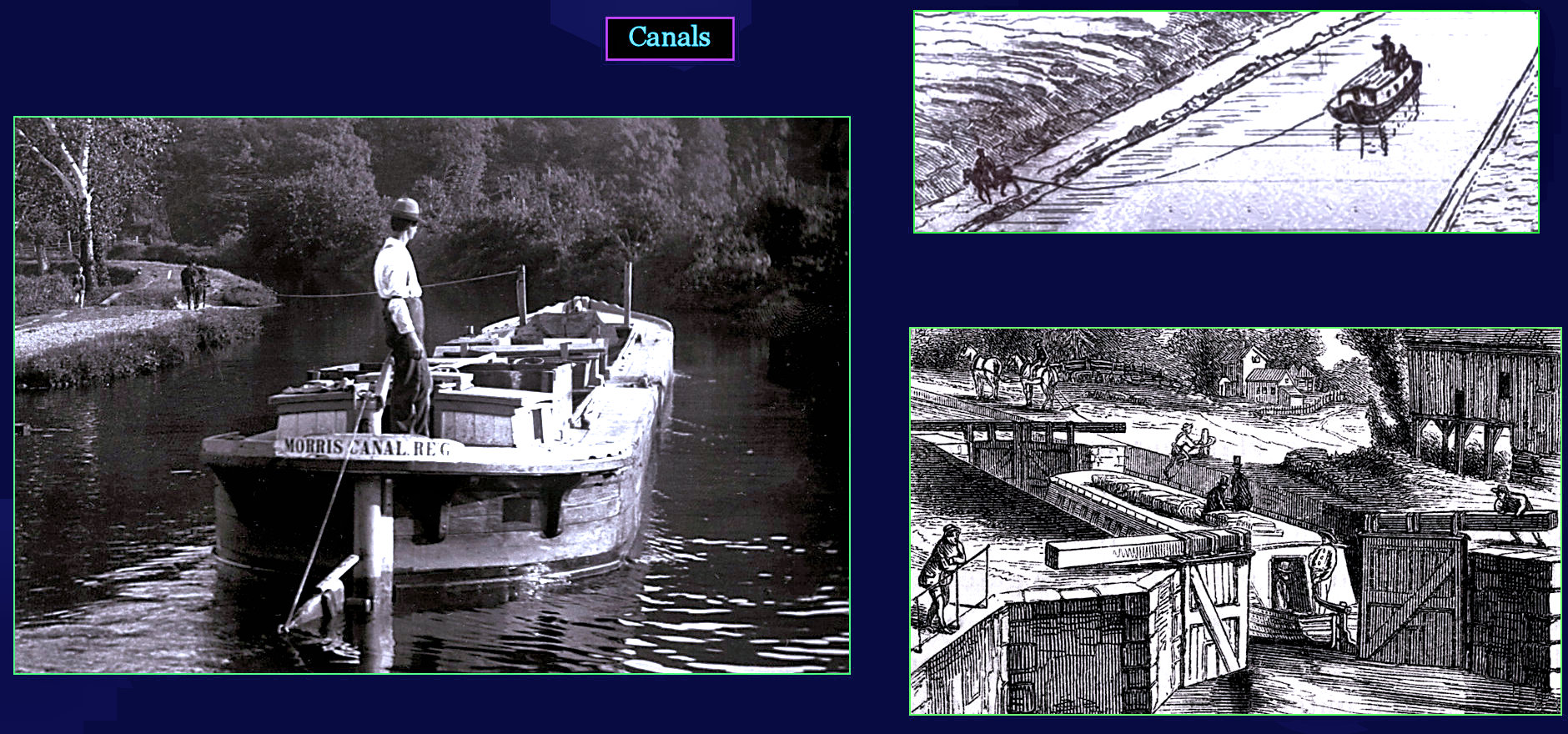
Leisurely Travel A canal is a very simple contrivance requiring only a mule (or two) for power. Except where locks are required to manage a change in elevation, canals are generally level, which means there is almost no current. This allows a single mule to pull a load that would otherwise require 20 mules and many wagons. Digging the canal by hand requires a large crew, but little skill. Locks are expensive to construct, but simple to operate, magically raising and lowering barges without effort. | |||||||||
| |||||||||
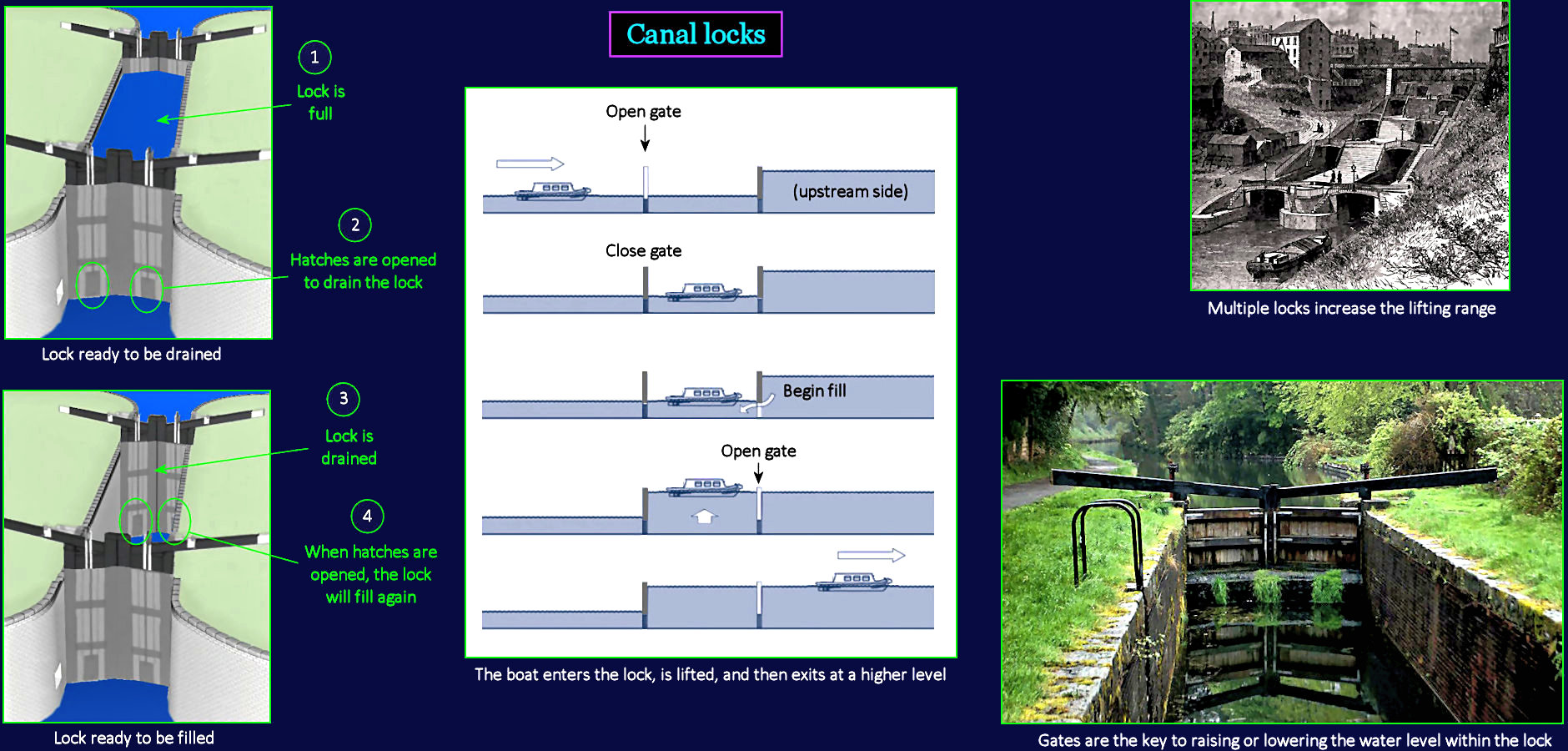
Gravity-powered Locks Canals are made possible by the development of canal locks, which operate by opening and closing a pair of large wooden gates. When traveling upstream, the barge enters the lock while the upstream gate is kept closed. The downstream gate is then closed behind the barge, and water is allowed to flow into the lock from the upstream side, slowly filling it and lifting the barge. When the lock is full, the upstream gate is opened, so the barge can continue upstream. The filling or draining is done by simple gravity. | |||||||||