| |
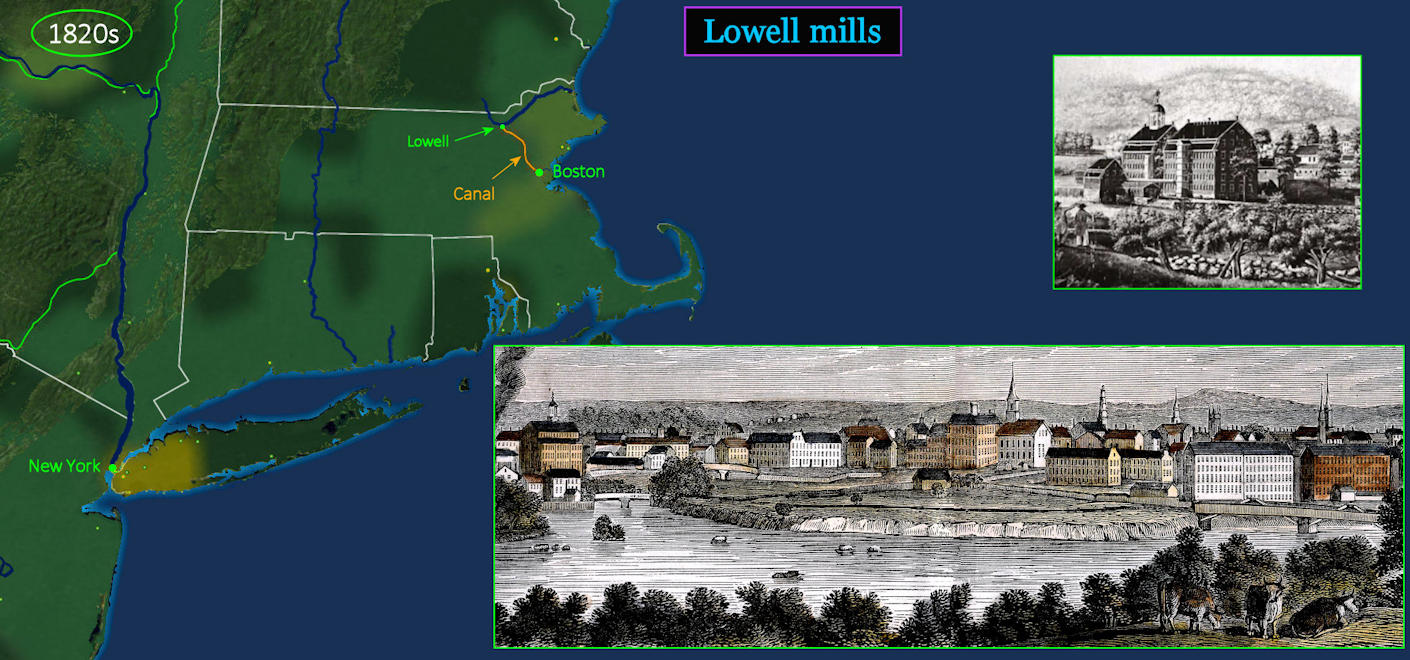
First Industrial Complex Although the term 'vertical integration' doesn't yet exist, the concept has already been tried and proven, in the first mill to contain all the equipment needed to transform raw wool and cotton into finished cloth (top right). The concept is then expanded upon at a site with enough waterpower for a really big-scale operation (lower right), and an existing canal connecting to Boston. |
| |||||||||
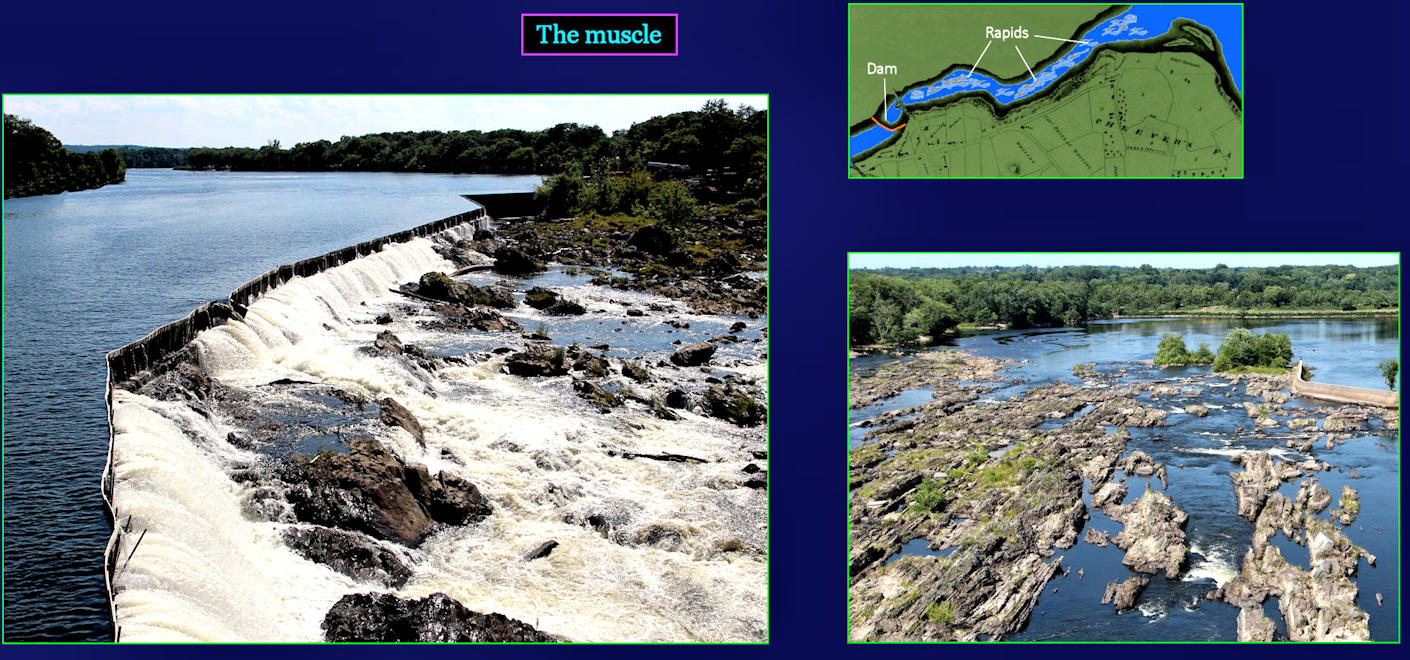
Harnessing an Entire River Steam power is not yet available, so planners have to depend solely upon waterpower. The Merrimack River is perfect for the job. It has plenty of water, and a full 30 feet of vertical drop. This power is harnessed by diverting most of the river flow above the dam (left, looking upstream) into the mill complex, and then dumping it back into the river downstream of the rapids (right, looking downstream from the dam). | |||||||||
| |||||||||
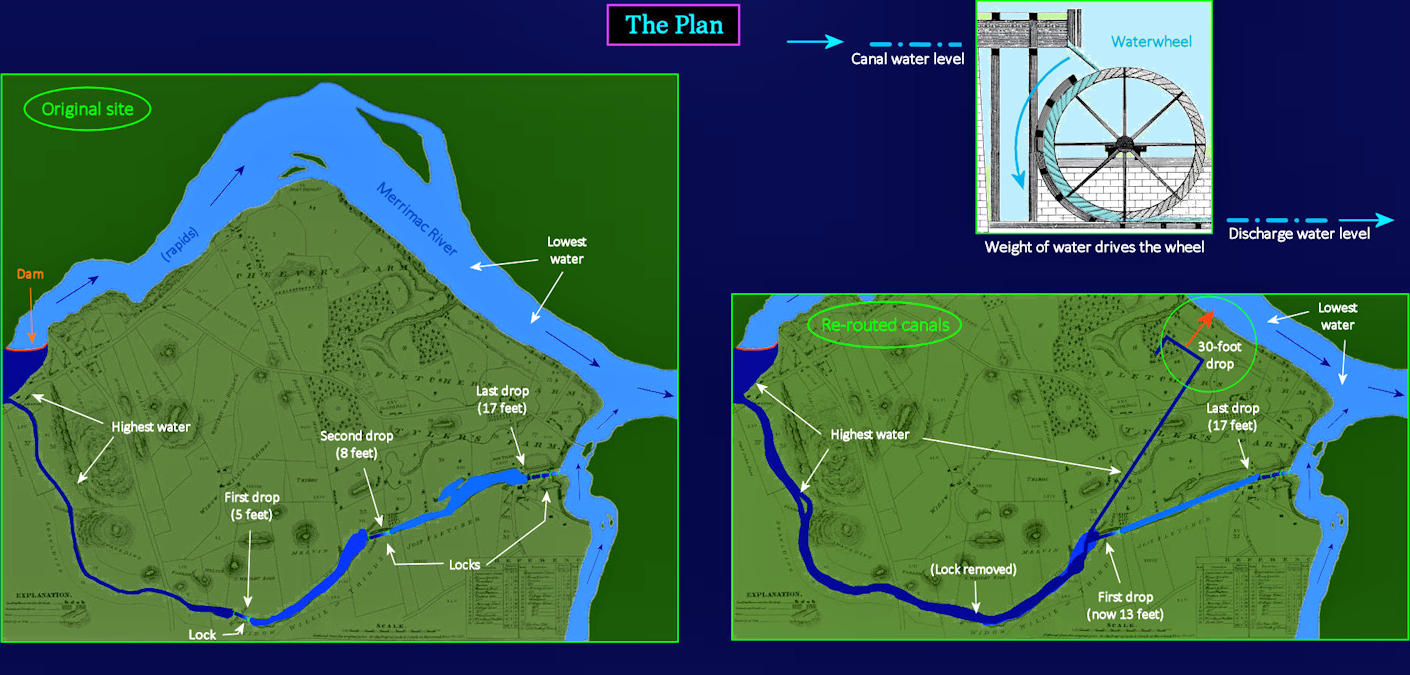
Engineering Challenge To extract maximum energy from the river, engineers need to re-route the water so that it arrives at the mill at the same water level as at the dam. The sweet spot is shown on the right-hand map, which can utilize the full 30-foot drop to the river below (RED arrow). Canal water entering the huge waterwheel fills chambers in the wheel only on the side nearest the chute (top right). The extra weight of all the water on this side turns the wheel in the direction of the arrow, with irresistible force. | |||||||||