| |
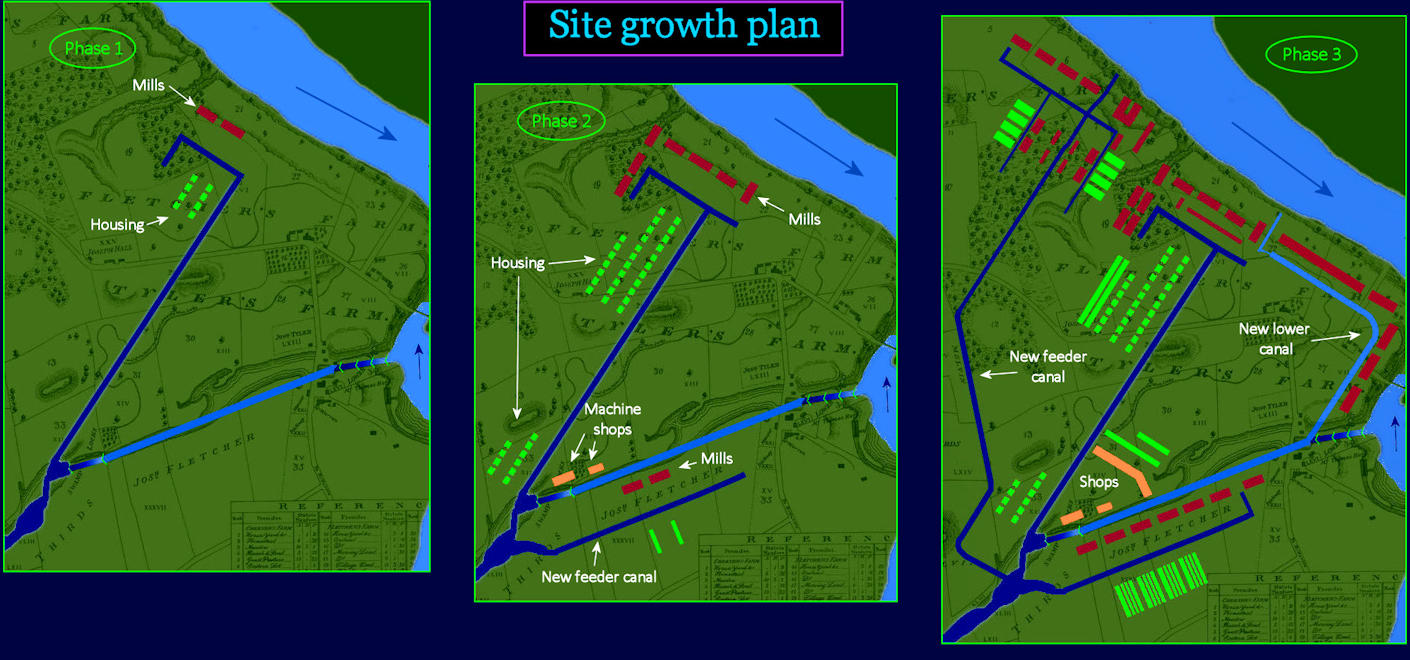
Three Construction Phases Initial engineering calculations determine that there is enough waterpower to operate an astonishing 60 mills at Lowell. The initial building phase includes just two mills (left), demonstrating the feasibility of the concept. Later phases (center and right) expand on the concept by providing enough feed water to power many more mills, plus dormitories and machine shops. |
| |||||||||
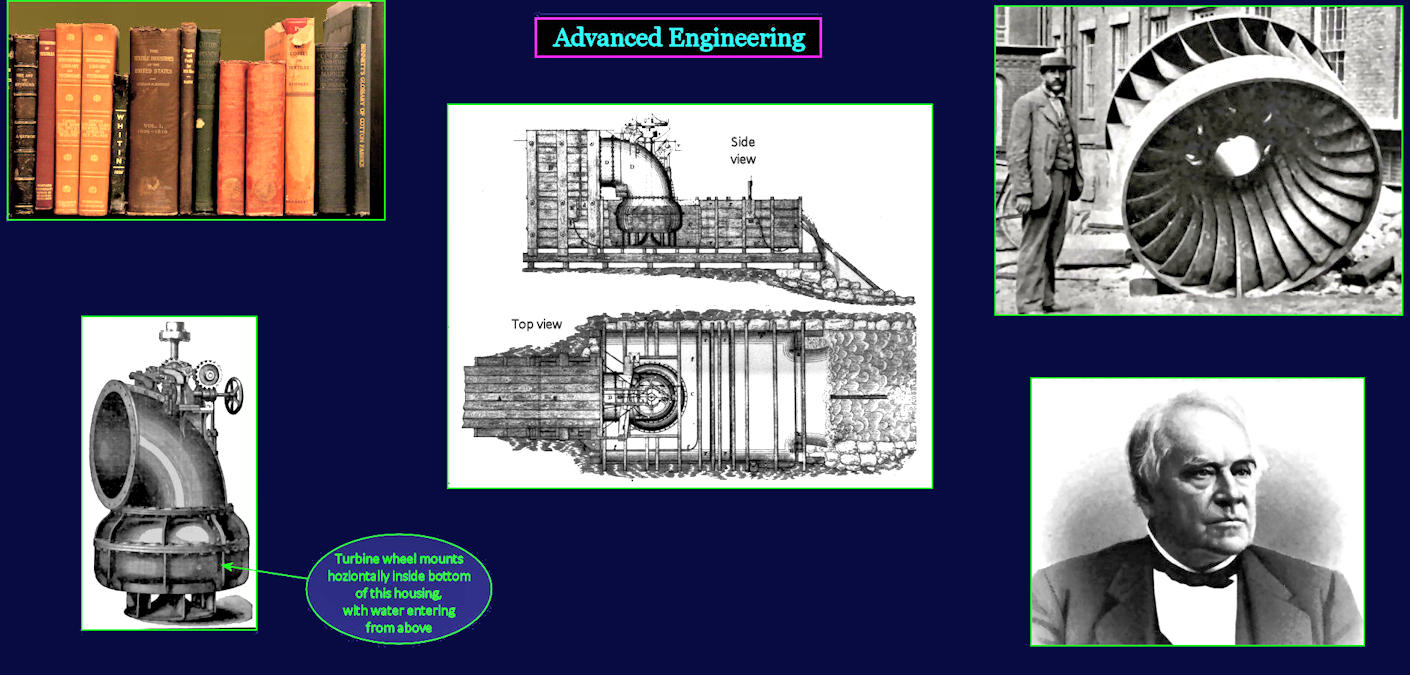
Dedication to the Task The Lowell mill complex is a commercial success beyond all dreams. It's an accomplishment of stunning vision, the first large-scale business enterprise ever attempted in America. But even more important is the new emphasis on engineering. The master engineer (lower right) calculates and tests everything before moving forward. Along the way, he invents the all-metal water turbine (top right) to replace clumsy wooden waterwheels, and advances the science of hydraulic engineering by light years. | |||||||||
| |||||||||
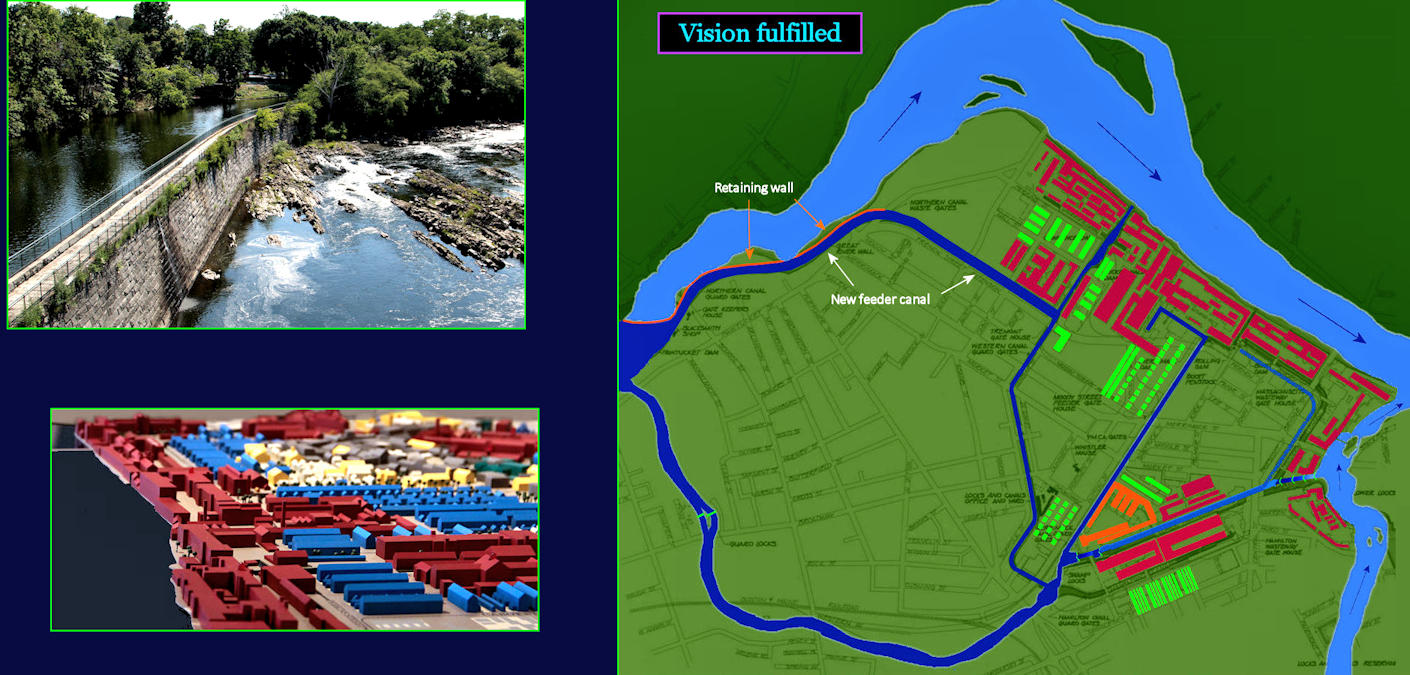
Maxed Out The views above properly belong in the next chapter, which deals with a later period, but are included here to show Lowell's later, fully-developed state. A new, and much bigger feeder canal is completed by 1850 (see map). It essentially diverts the entire flow of the Merrimack River into the mill complex, at the highest water level. This is a major accomplishment, requiring a quarter-mile long, 36-foot-high retaining wall (top left), to maintain flow at the same level as the top of the dam. | |||||||||