| |
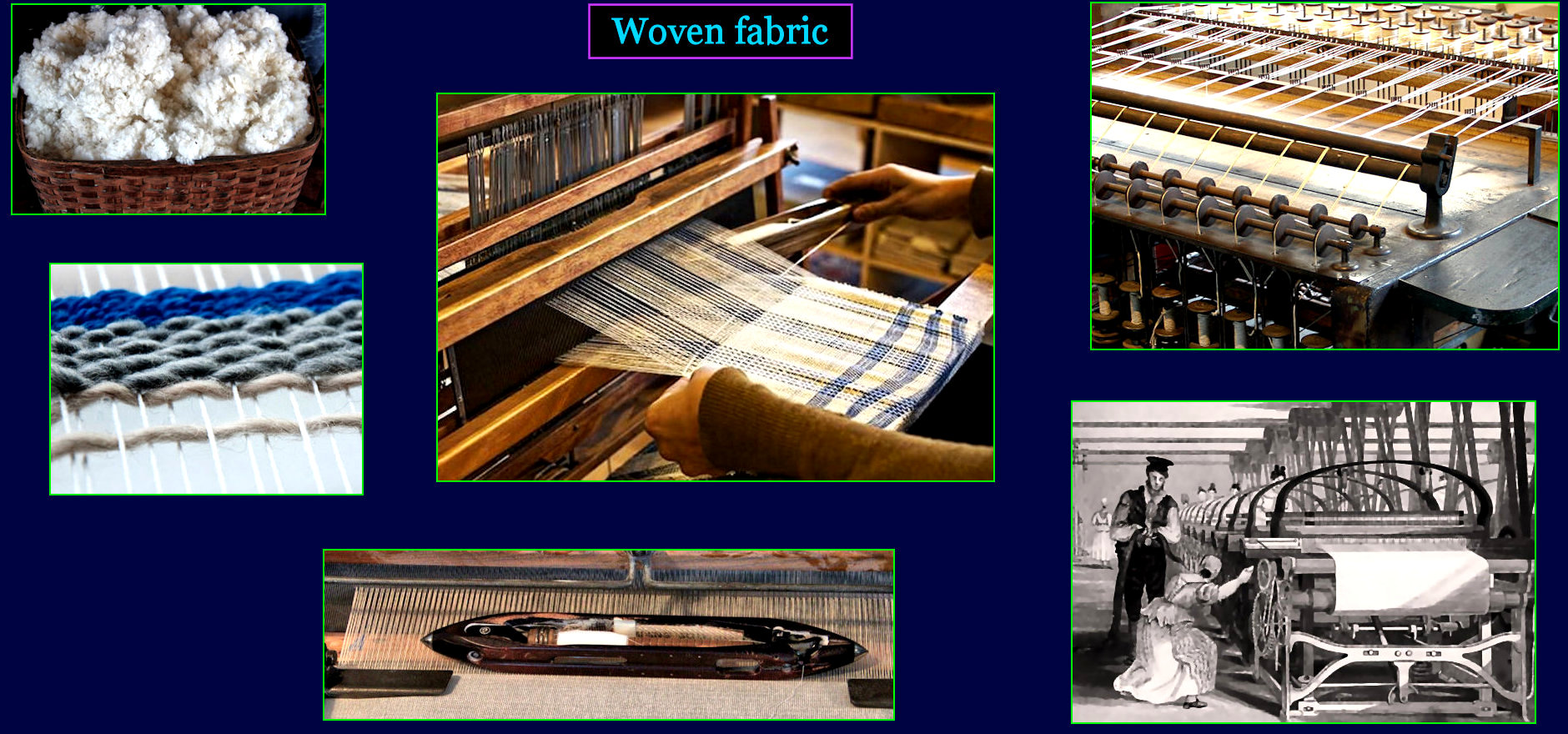
Many Strands, One Fabric Fabric begins as heaps of disorganized fibers (top left). After cleaning and combing, the fibers are stretched and twisted into yarn. Fabric is made by weaving softer crosswise yarn through the longer and stronger lengthwise strands, going first under, then over (bottom left). The loom at top center is loaded with all the longer strands stretched towards the weaver. |
| |||||||||
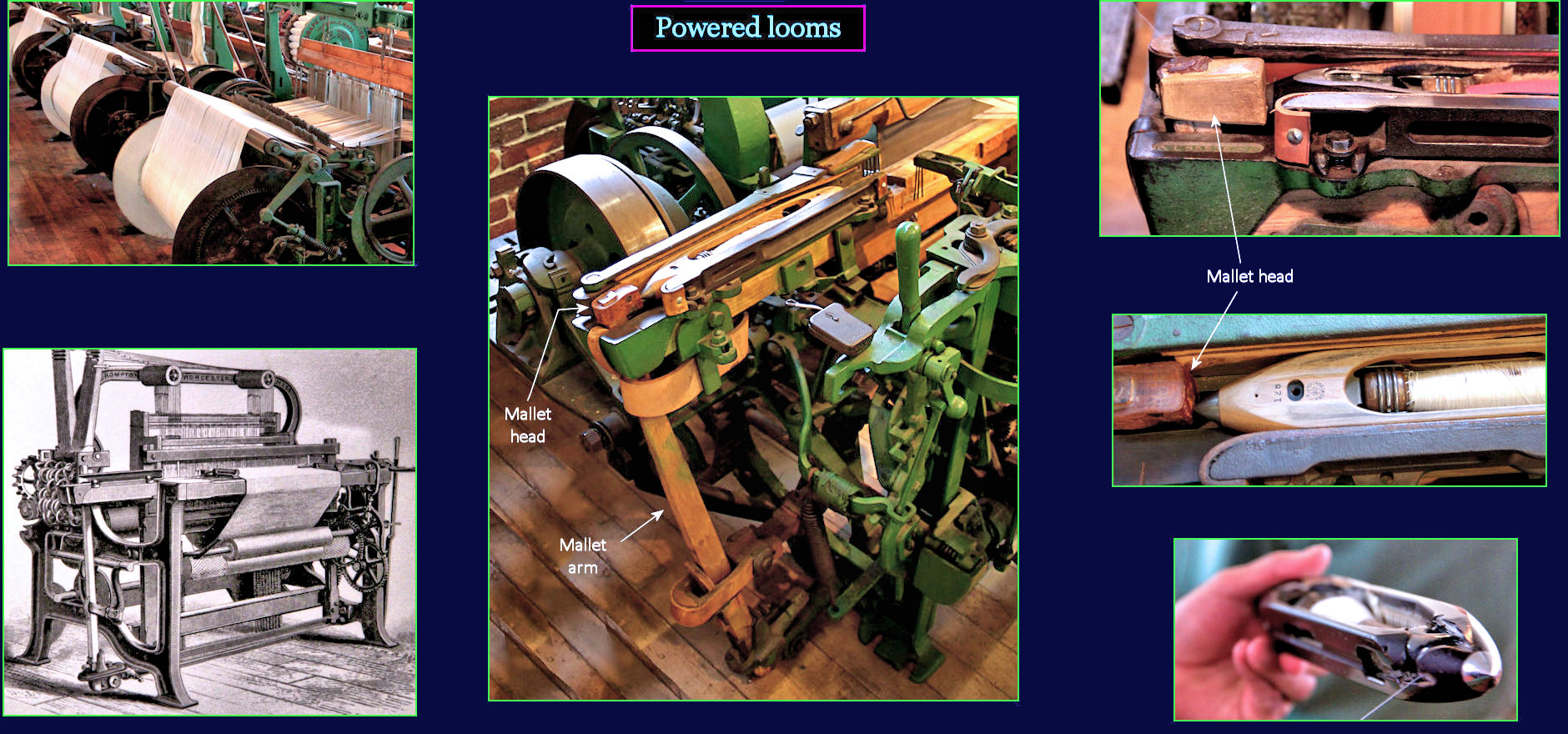
Advanced Machinery The magic of the power loom is how the shuttle is sent from side to side without being touched by the operator. At each side is a vertical wooden stick with a hard wooden head, which acts like a mallet to drive the shuttle from side to side. The mallet is pulled back (to the left, in center photo) and then suddenly released with great force. The head of the mallet whacks the pointed end of the shuttle (top right), sending the shuttle flying to the right. A similar mallet at the other end works in the opposite direction. | |||||||||
| |||||||||
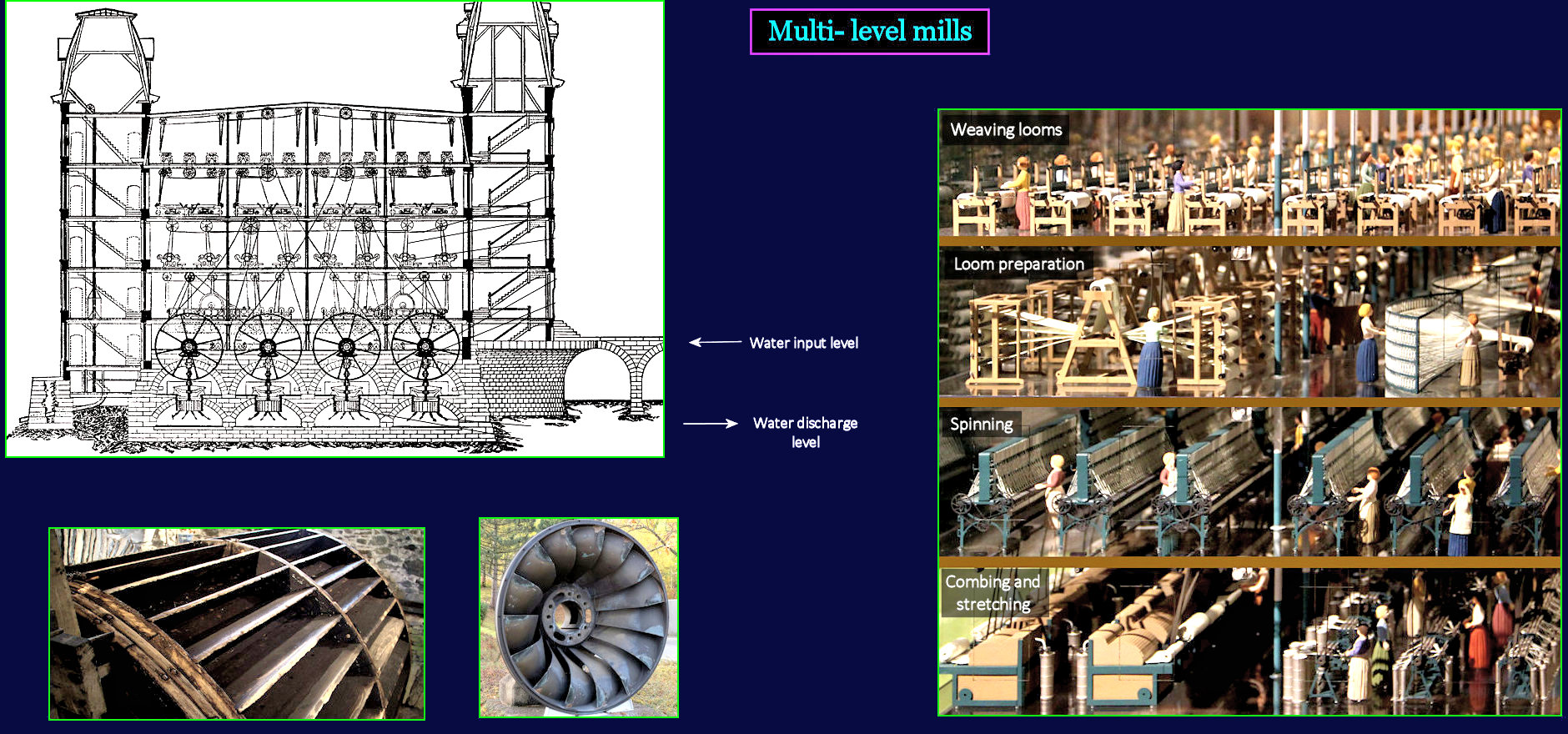
Layer Cakes Textile mills are organized like a big layer cake, with the power unit at the bottom. Canal water is diverted into the basement level, where it turns a series of waterwheels (lower left) or water turbines. The mill shown at top left has water turbines. Either way, leather belting is used to transfer power to overhead power shafts on each floor. Long rows of identical machines on every level (right) are connected to the power shafts. Operators typically tend several machines, keeping everything operating smoothly. | |||||||||