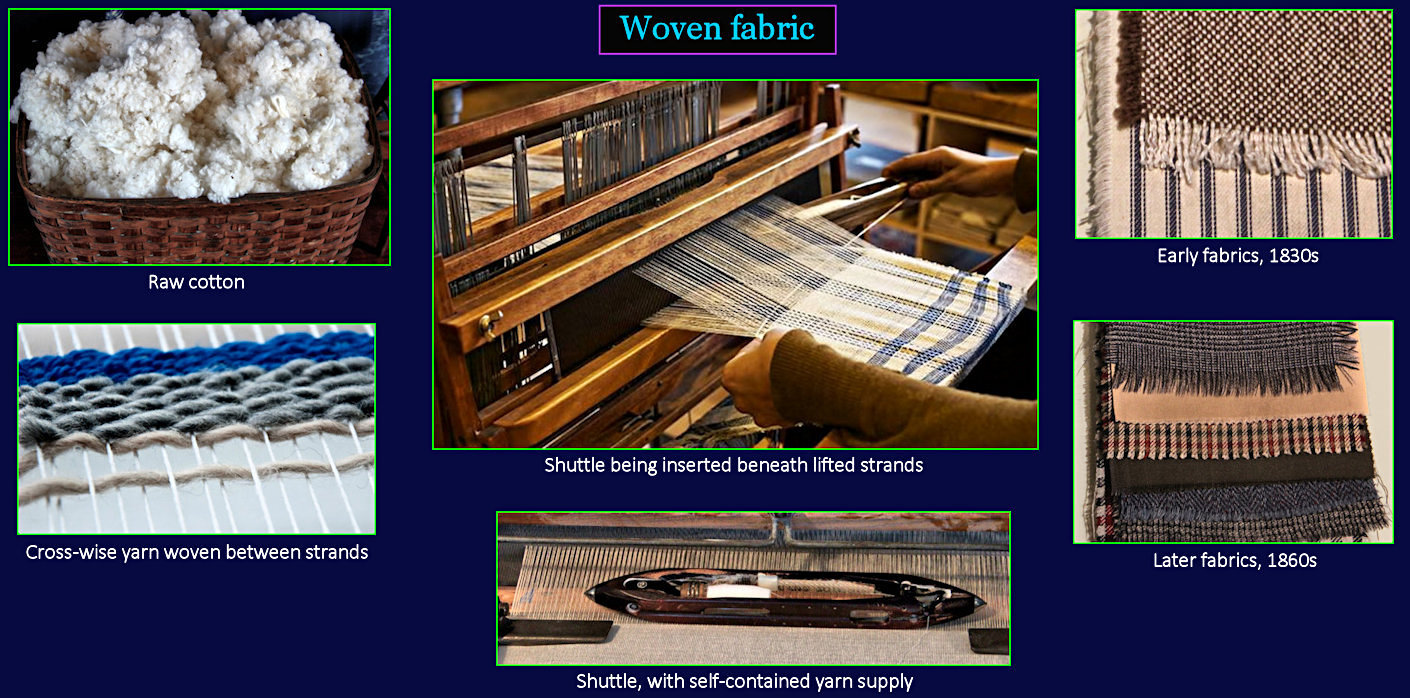
The Textile BusinessIn earlier times, the fiber was either wool or flax, both of which were readily available on most farms. Sheep provided wool, while flax was grown for the fibers used to make linen. Cotton was not yet readily usable. After cleaning and combing the raw fibers, the two main steps are spinning the fiber into yarn, and then weaving the yarn into lengths of finished fabric. Both were formerly manual processes, performed at home, by women. All this requires is a spinning wheel, a weaving loom, and plenty of manual labor. By 1810, both these tasks are being performed at high speed by textile mill machinery, using first waterpower, and then steam. |
| ||||||||||||||||
| |||||||||
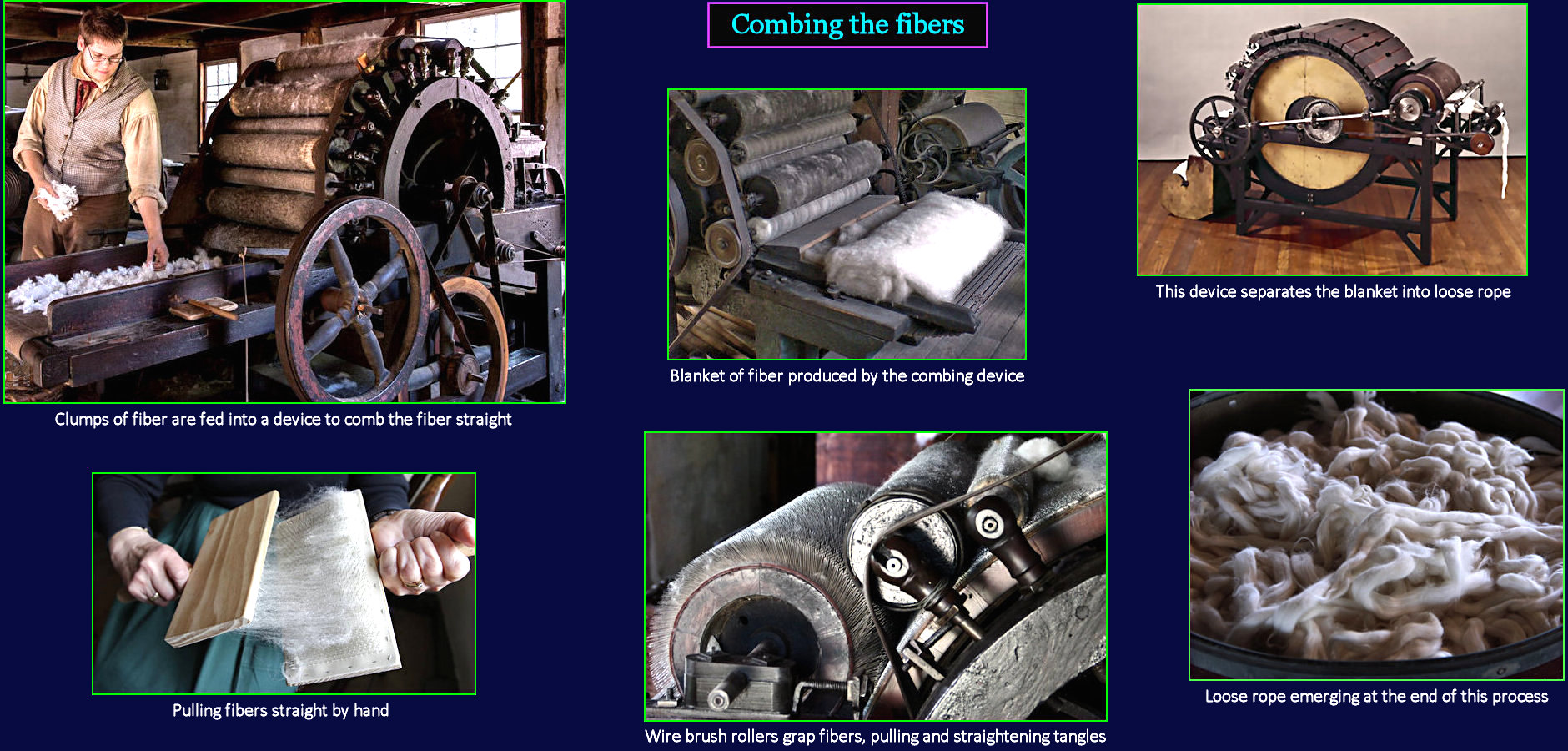
Aligning Fibers The first task is to align the fibers, the same way you would comb hair to remove tangles. In colonial times, this was done using a pair of wooden paddles full of short, protruding wires (lower left). Pulling the paddles in opposite directions causes wool in-between to be drawn into rough alignment. In mills, the same thing is achieved by feeding loose clumps of fiber into a series of rotating wire brushes (top left). What emerges from the other end of the machine is a kind of thick, loose blanket (center top, shown folded). This is then fed into a second, similar looking machine (top right), which stretches the blanket, pulling and separating it into rope-like arrays of loosely aligned fibers (lower right). | |||||||||
| |||||||||
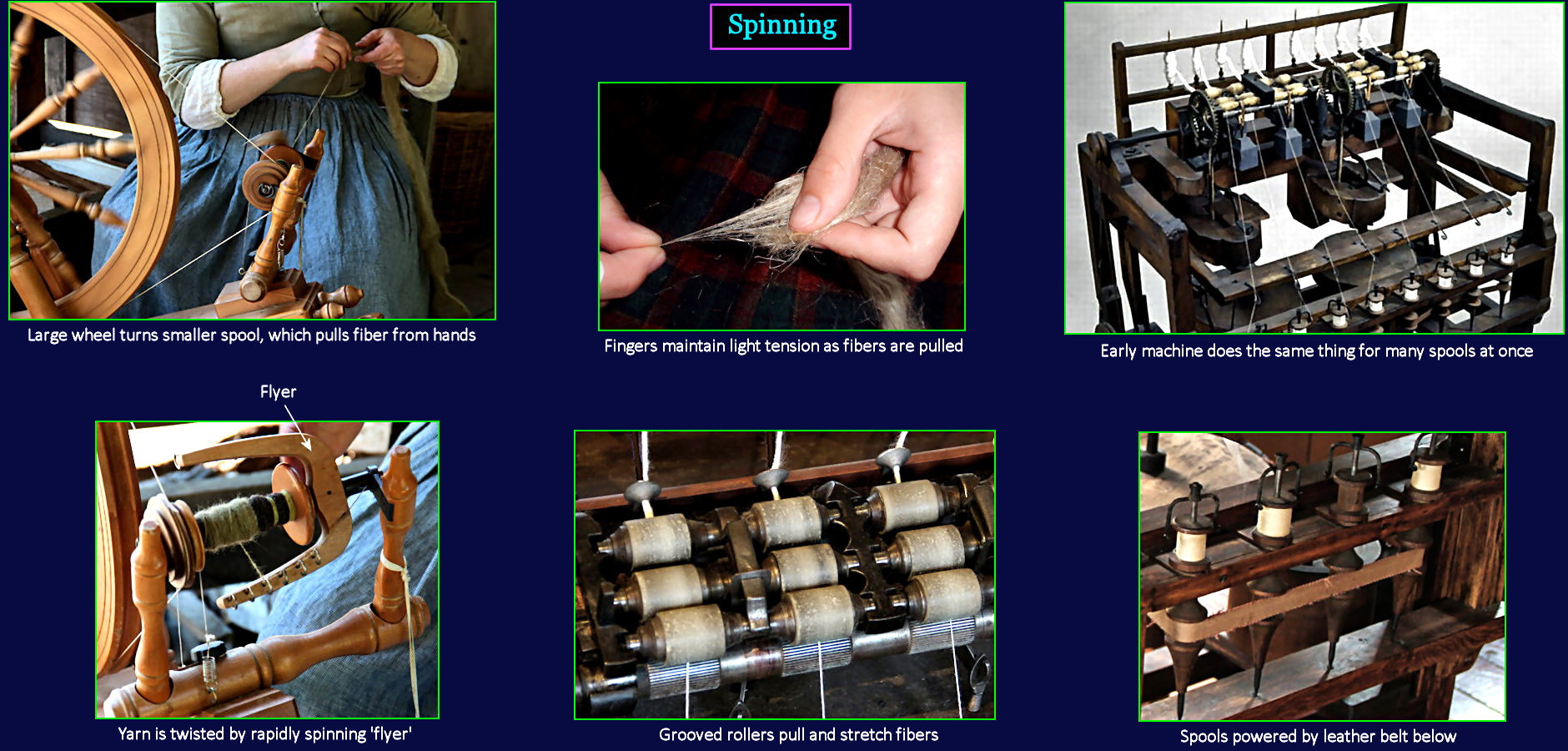
Twisting While Stretching To make yarn, fibers are spun by stretching and twisting at the same time. In colonial times, women used foot-powered spinning wheels (top left). The large wheel turns the smaller one, which spins much faster. It pulls fiber from the spinner's fingers, which apply light back-tension. The wooden, fork-like piece surrounding the spool (lower left) spins rapidly, adding twist while guiding the yarn onto the spool. Early spinning machines (top right) perform the same function for eight spindles at the same time, driven by waterpower. Proper tension is maintained by sets of powered rollers (center bottom), which pull fibers from the feed spindles. Finished yarn is gathered on spools rotated by a thin leather belt (lower right). | |||||||||
| |||||||||
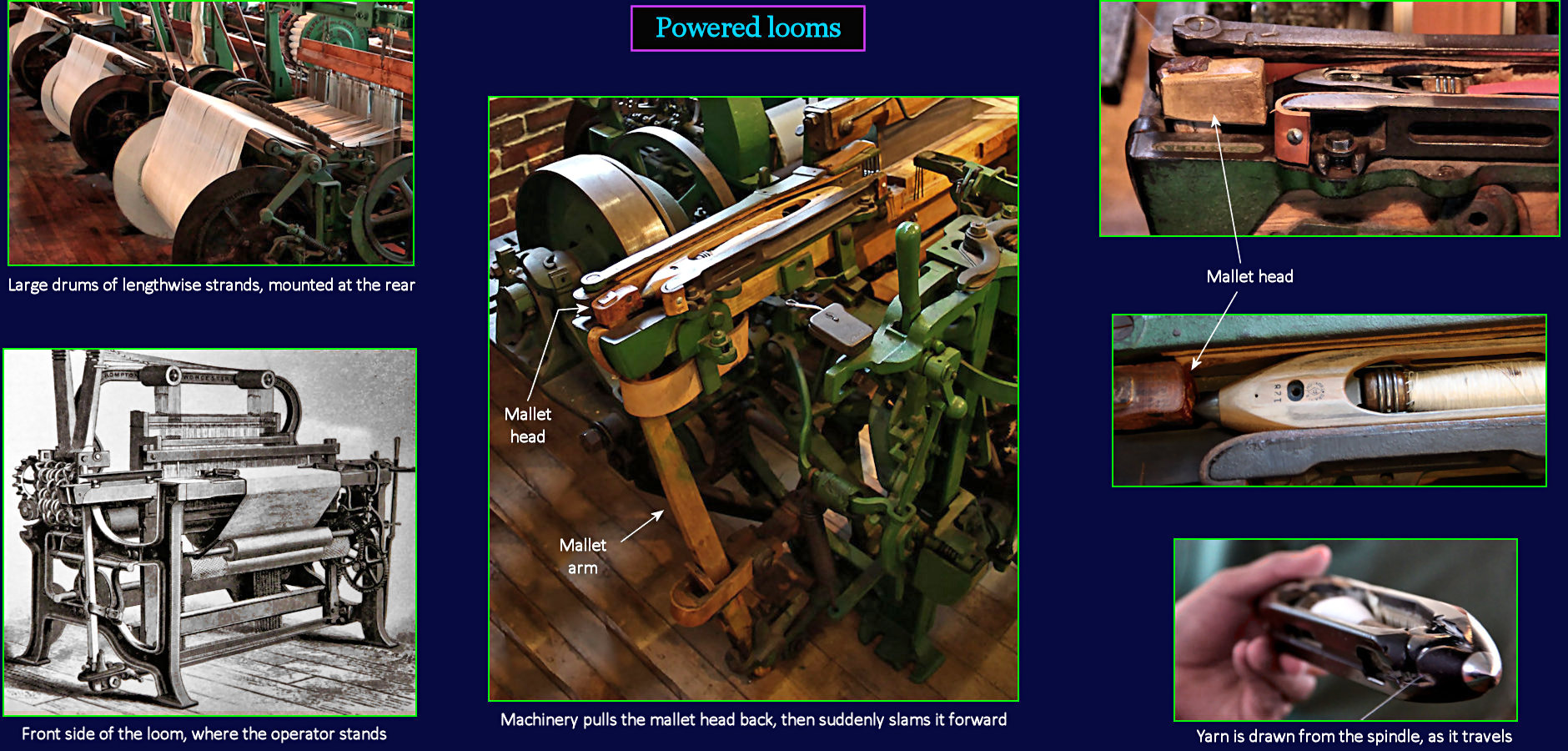
Advanced Machinery Powered looms are a huge advance. Big drums at the rear (top left) contain all the long strands, which are pulled towards the operator as the loom operates. The magic of the loom is how the shuttle is sent from side to side without being touched by the operator. At each side is a vertical wooden stick with a hard wooden head, which acts like a mallet to drive the shuttle from side to side. The mallet arm is pulled back (to the left, in center photo) and then suddenly released with great force. The head of the mallet whacks the pointed end of the shuttle (top right), sending the shuttle flying to the right. The cross-wise yarn is pulled from the end of the spindle (lower right) as it flies across. A similar mallet at the other end works in the opposite direction. | |||||||||
| |||||||||
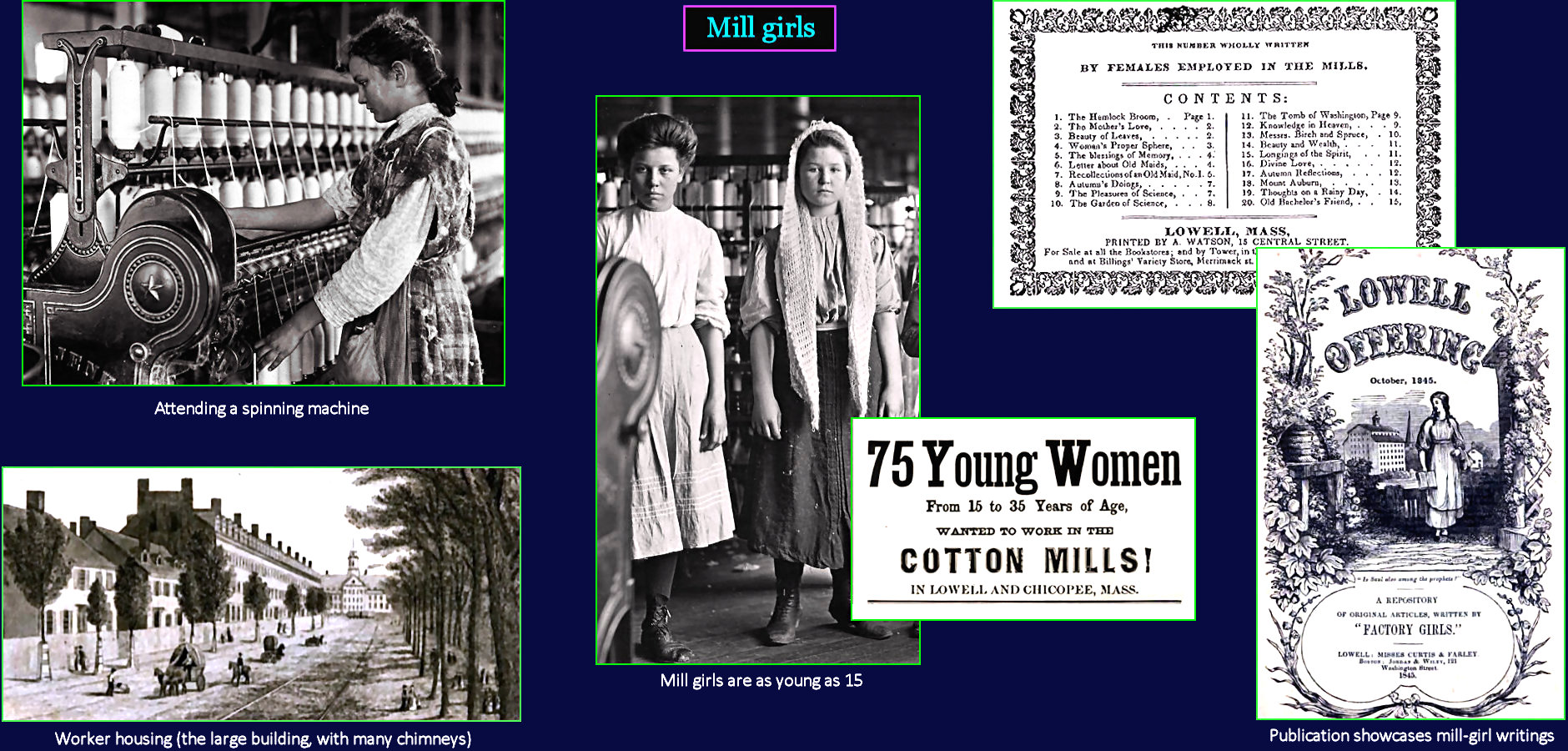
Women and Machines The workers at Lowell are mostly young women, who stand all day in front of the machines. There are no chairs or stools. Each girl tends a few identical machines, watching and waiting for a yarn to break, shuttle to empty, or spindle to fill up. At such times they stop the machine, fix the problem, and set it back in motion. It isn't hard work, but it isn't easy either. It takes full attention, all day. To induce women to leave their homes to work in the mills, advertisements are spread all over New England. Housing for the girls is elegant, with live-in matrons to maintain decorum. The girls are well-treated, and encouraged to write material for the monthly employee publication (right). Later mills will dispense with such niceties. | |||||||||
| |||||||||
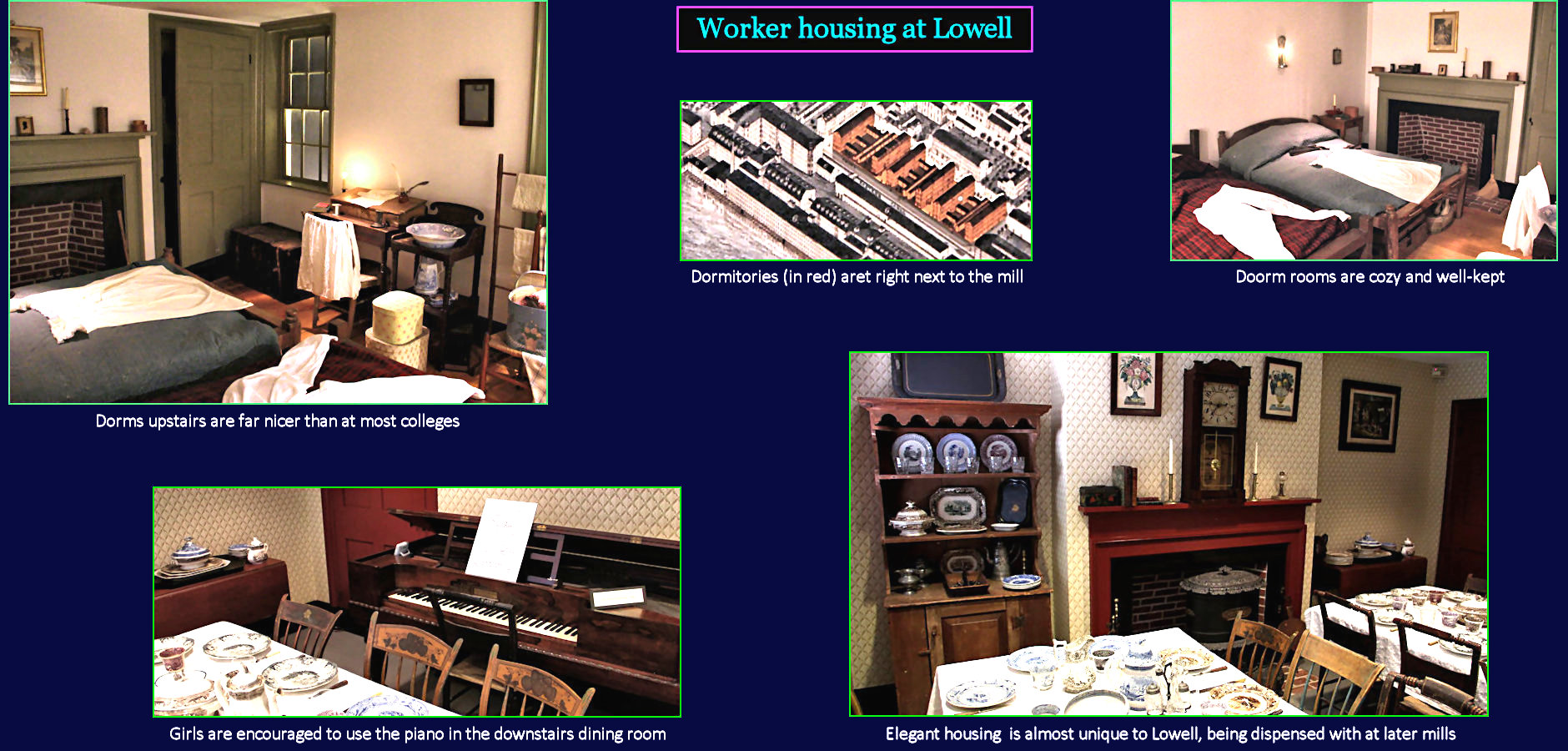
Fancy Digs Dormitory rooms are provided for the Lowell girls at no cost. The furnishings are far more refined than anything the girls have ever known, with the look of a prosperous urban home. All the female housing units have a resident housekeeper to look after the girls. This is often an older spinster or widow, charged with keeping out unwanted young males, who might otherwise come around to tempt the girls. But the biggest attraction for fathers agreeing to send their young daughters to Lowell is the pay. Mill wages far exceed those of any other unskilled occupation, especially for girls. The girls are able to buy nice clothing in town, unavailable at any price back on the farm, and can expect to return home in a few years with substantial savings. | |||||||||