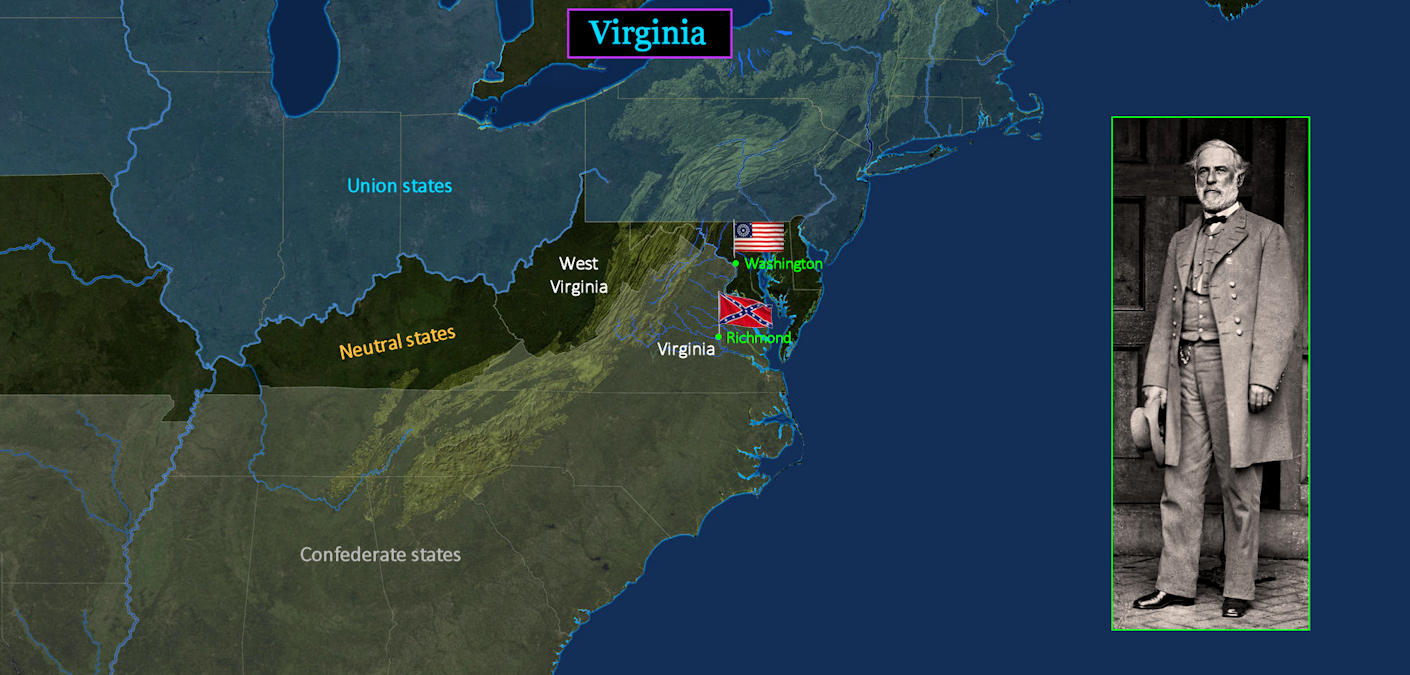
Virginia joins the SouthAfter the hotheads in Charleston seize the fort guarding the harbor, Lincoln is forced to raise an army. He calls for volunteer militia to be raised from each state, which results in Virginia immediately joining the Confederacy. This is a fateful decision. Virginia supplies not only manpower, but the Confederacy's most effective generals, starting with Robert E Lee. Its capital, Richmond, provides the Confederacy with its primary weapons factories. |
| ||||||||||||||||
| |||||||||
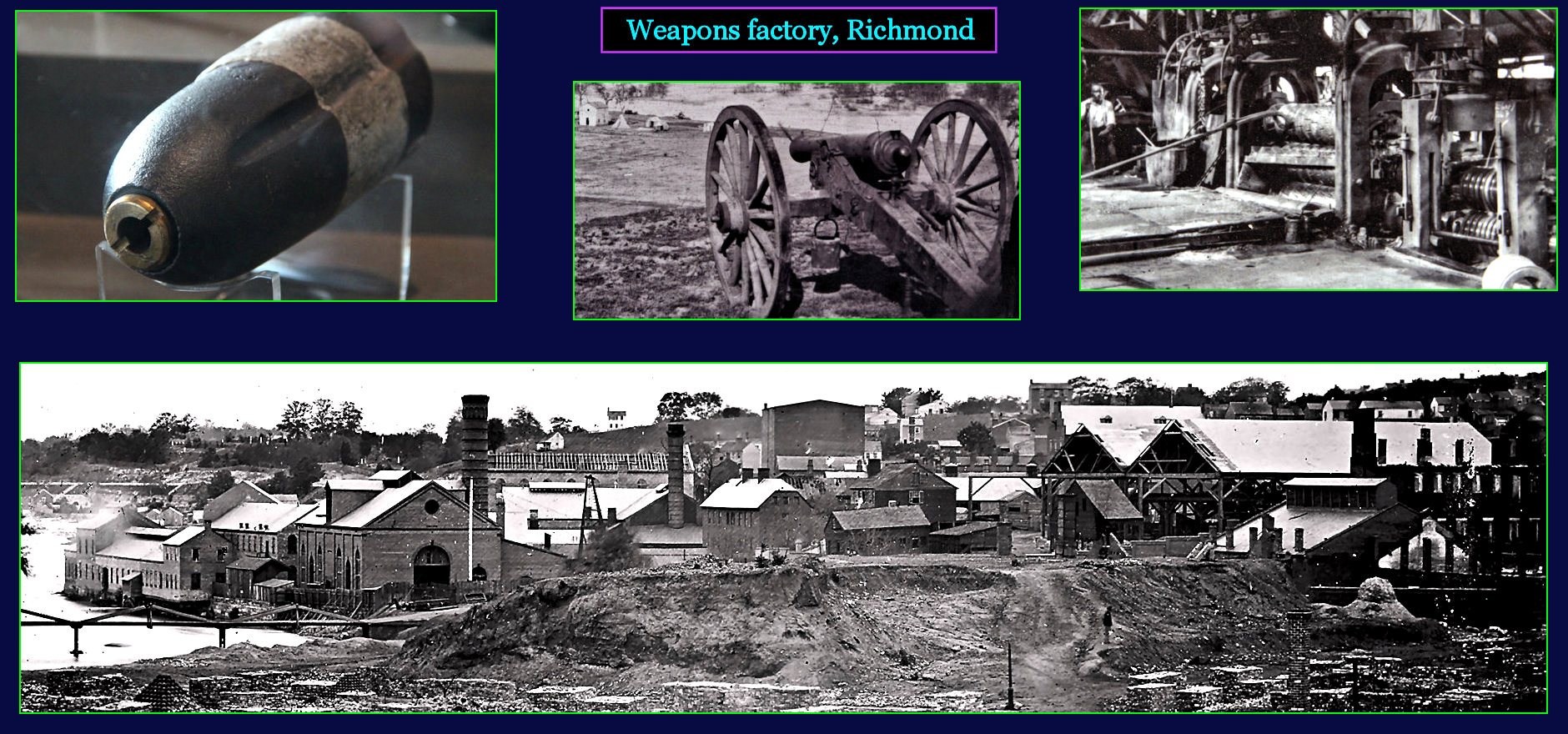
Confederate War Machine Richmond is the iron-working center of the entire Confederacy, and the most important source of weapons and munitions. With the help of slave and child labor, it produces 1,100 cannons during the war, over 60,000 muskets, and 70 million musket cartridges. Girls between ages 9 and 12 each make 1200 cartridges per day. The factory at bottom (shown partially destroyed, after the war) produces most of the heavy weapons, while the mill at top right produces iron plating for gunboats. | |||||||||
| |||||||||
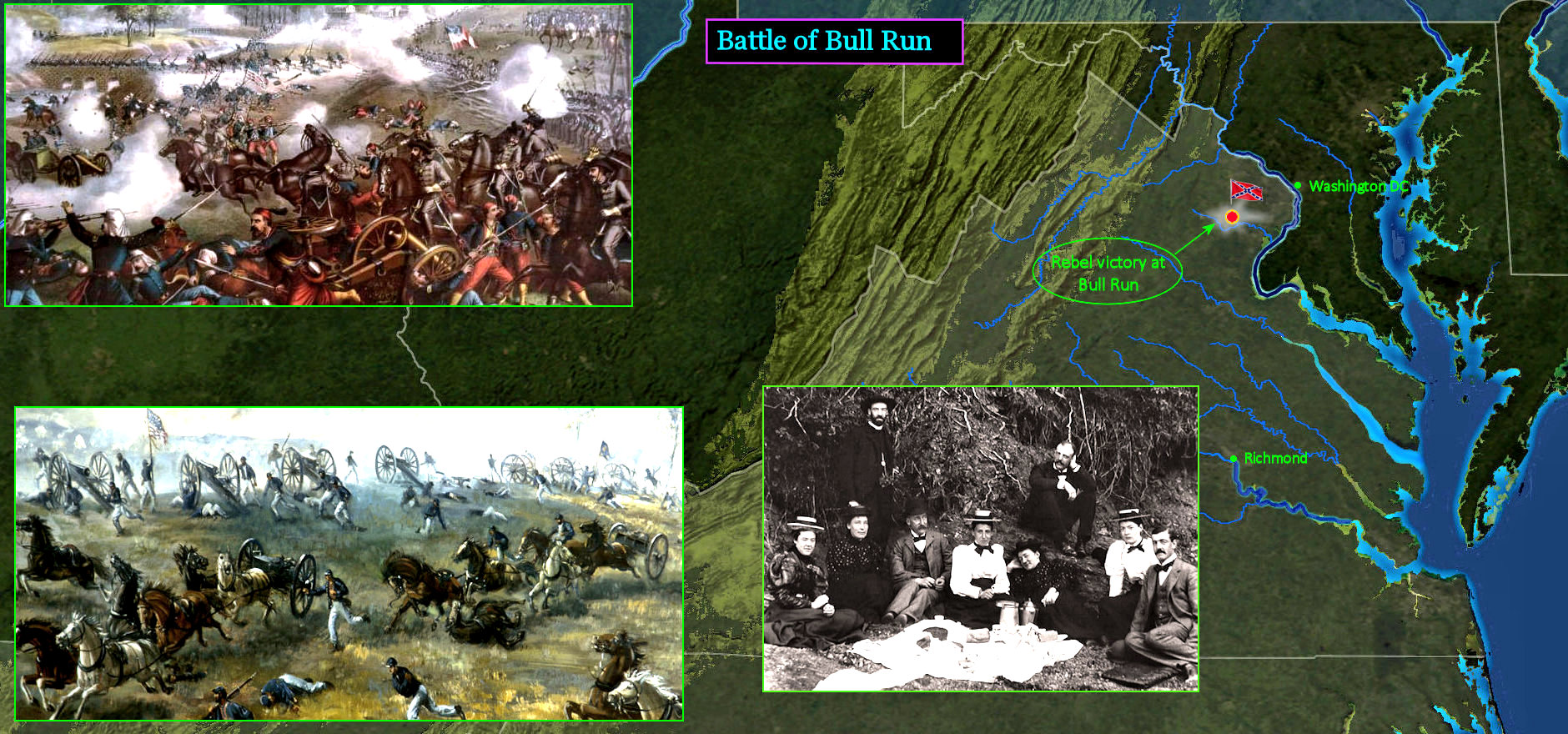
Too Close for Comfort The first big battle of the war is a rushed affair, with both sides scrambling to gain an early advantage. Union troops meet Rebels occupying a settled defensive position, just 30 miles south of Washington. Sentiment is so positive in the North that spectators drive their carriages to the battlefield, expecting to see the Rebels get thrashed. But when Confederate reinforcements arrive by rail in the afternoon, the tide turns, and the Union retreat quickly turns into a wild rout. It's a bad start for the North. | |||||||||