The War gets SeriousRailroads now allow moving large bodies of troops long distances, overnight. The First Battle of Bull Run is fought at a rebel rail depot, which allows reinforcements arriving by rail late in the day to tip the balance. Artillery is driving the high body counts. Instead of lobbing solid balls, cannons now fire exploding shells, with a vastly larger killing radius. Grapeshot turns cannons into giant shotguns, spraying pellets the size of walnuts. |
| ||||||||||||||||
| |||||||||
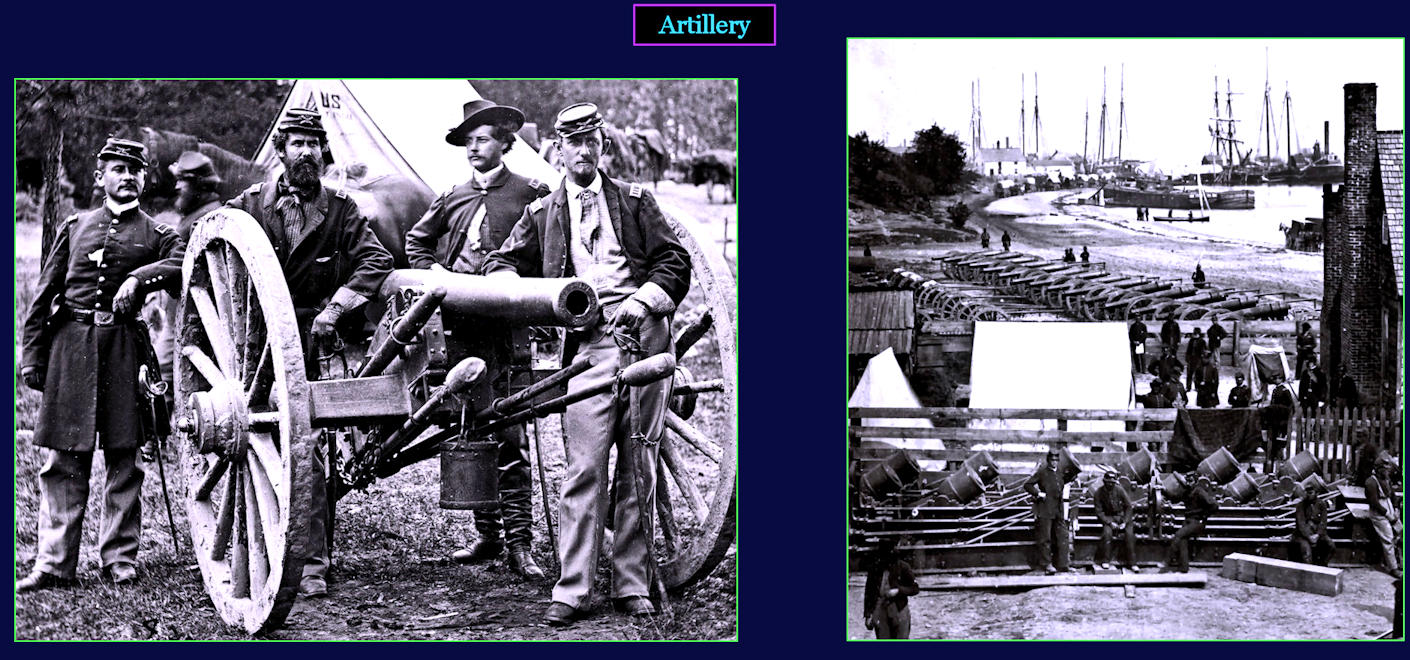
Moving the Equipment Field artillery pieces, which can be moved around the battlefield easily, are essential to waging effective war. Each cannon needs several ammunition chests, which are kept behind the battery with their own horse teams. Siege guns are somewhat heavier, and consequently less mobile. Bombardment of fortified positions calls for the use of short, fat mortars, to lob shells in a high arc over any obstructions. For its 1862 campaign, the Union brought 220 field pieces, 1150 wagons and 15,000 horses. | |||||||||
| |||||||||
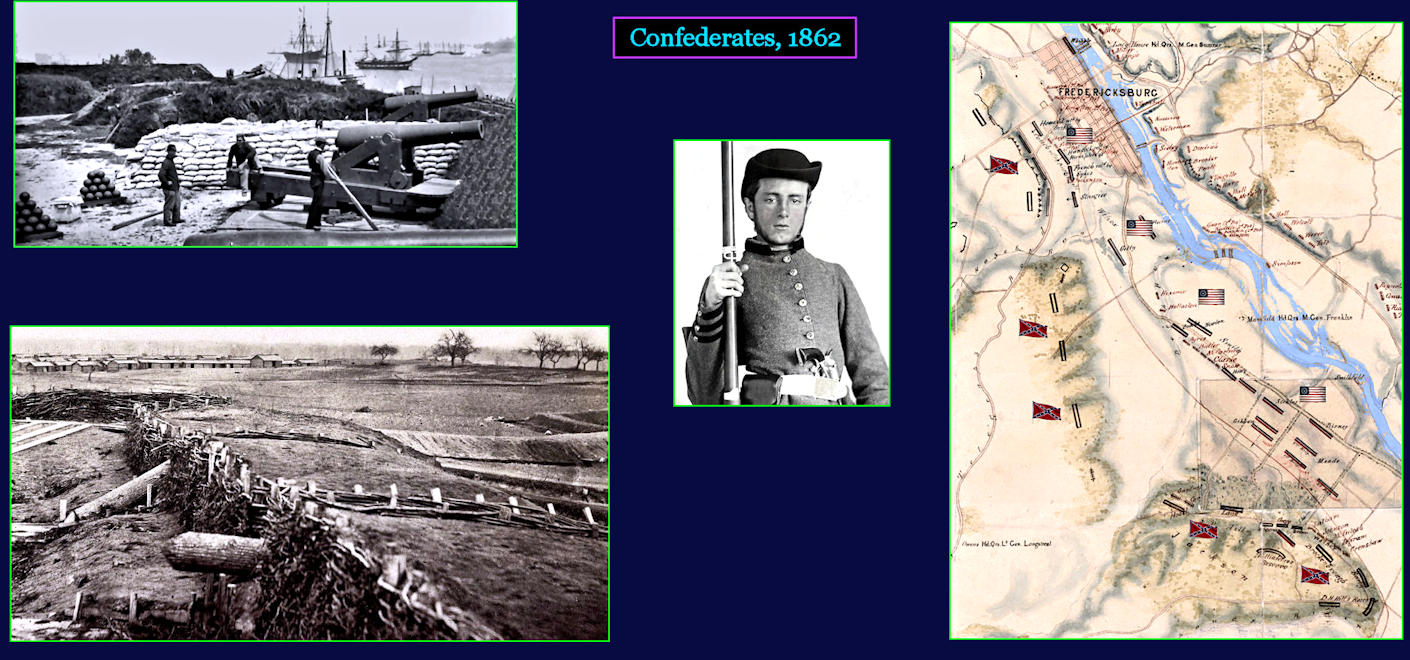
Advantage, Defense Lee and his Confederates are widely regarded as superheroes, always managing to defeat stronger opponents through cunning and daring. The Union, it is thought, only succeeds by bludgeoning the Confederacy into submission with overwhelming force. Actually, Confederates lose most of the battles, and all the campaigns, in the West. They only hold their own in Virginia, where they build extensive earthworks, often on higher ground. Dug in, they're well positioned to repel frontal assaults. | |||||||||