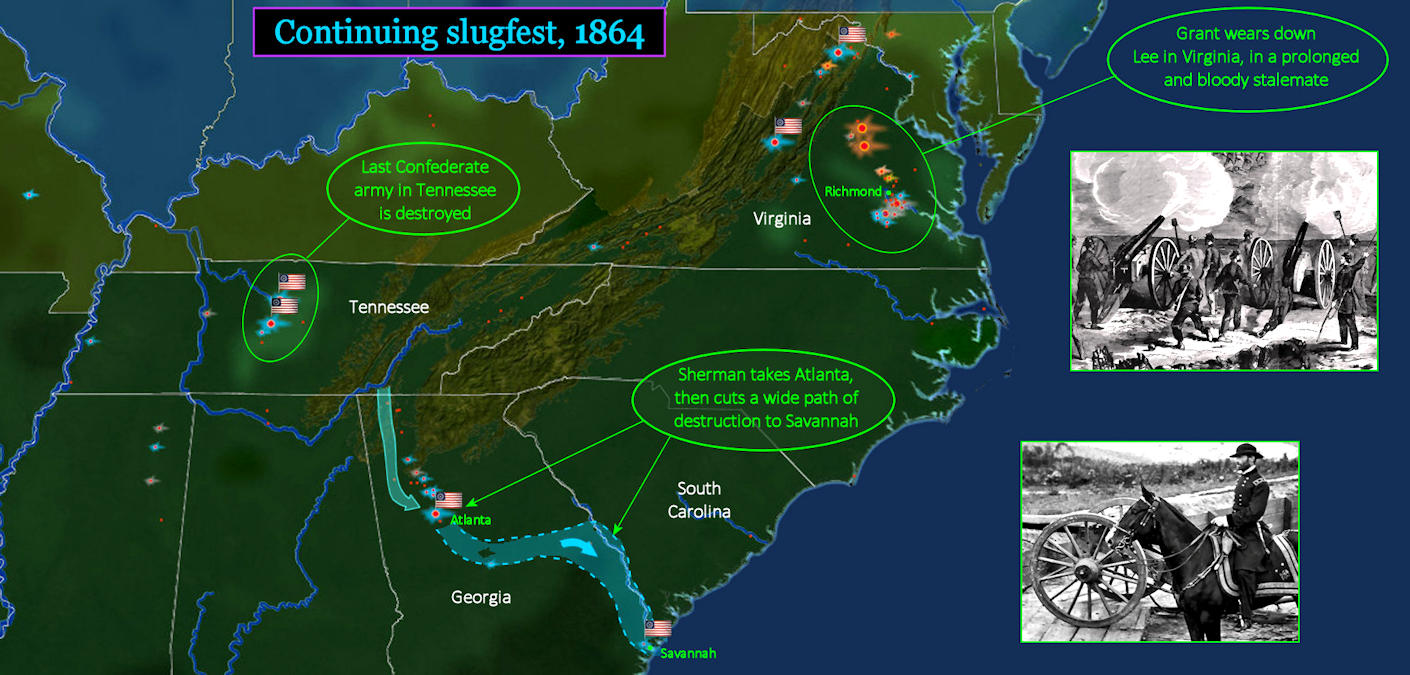
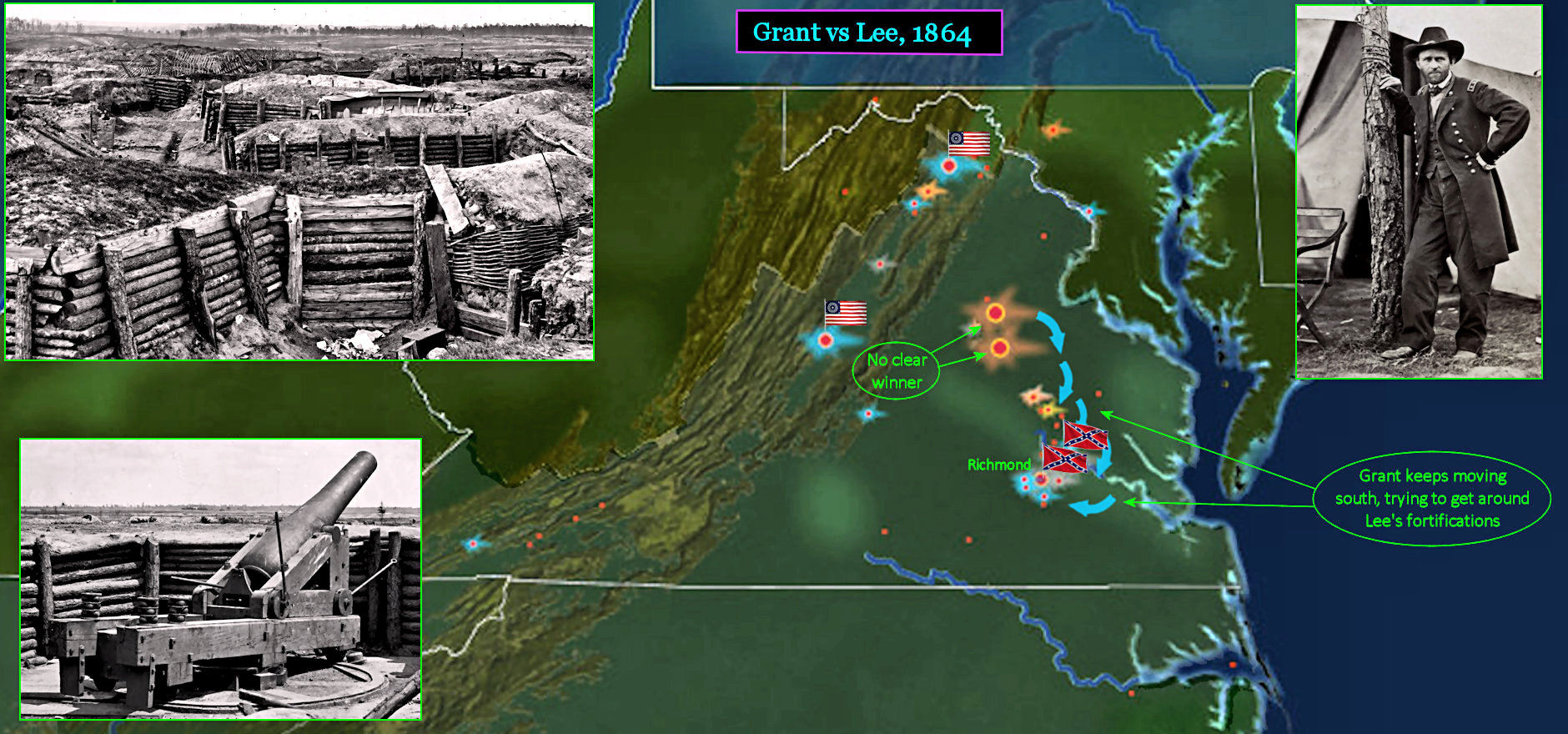
The Blood Keeps FlowingIt doesn't go well. Lee stubbornly resists Grant's relentless attacks, and fights him to a stalemate in the wilderness north of Richmond. With continuing heavy losses on both sides, many in the North are calling Grant 'the butcher.' But in Georgia, the prospect of southern victory dims, as the Rebels are forced to abandon the critical rail hub of Atlanta, which is burned. From there, General Sherman begins his famous 'March to the Sea,' ending in Savannah. |
| ||||||||||||||||
| |||||||||
Determined Resistance Grant is often criticized for throwing his men into failed attacks, which even he admits was true at Cold Harbor. But he is keenly aware that the only way to defeat Lee, is to fight him. If the Rebels are firmly entrenched behind earthworks, then defeating them will be costly. It's a general rule of warfare that an attacking force needs to be two or three times the size of the defending force, in order to have a good chance of success. Grant is forced to just keep hammering away, until Lee is exhausted. | |||||||||
| |||||||||
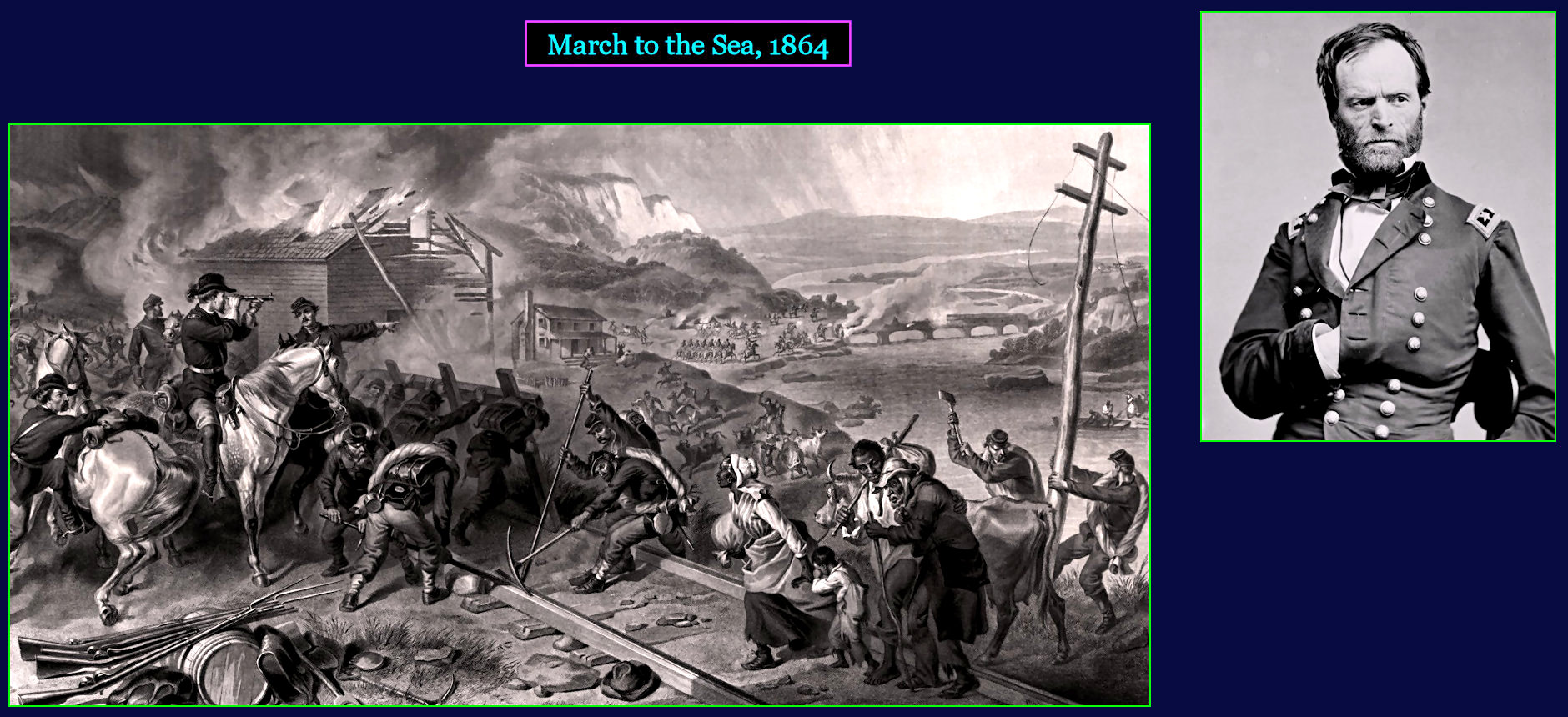
Cutting the Cord Sherman says that the purpose of his March to the Sea is to 'make old and young, rich and poor, feel the hard hand of war.' Indeed, Sherman treats Atlanta very harshly, burning it to the ground. But on his way to Savannah, he doesn't torch any other towns. Having abandoned his supply lines, he allows his men to confiscate any supplies they need, but only authorizes destruction of homes when the owners resist. Instead, he concentrates on destroying everything of military value, like railroads. | |||||||||