| |
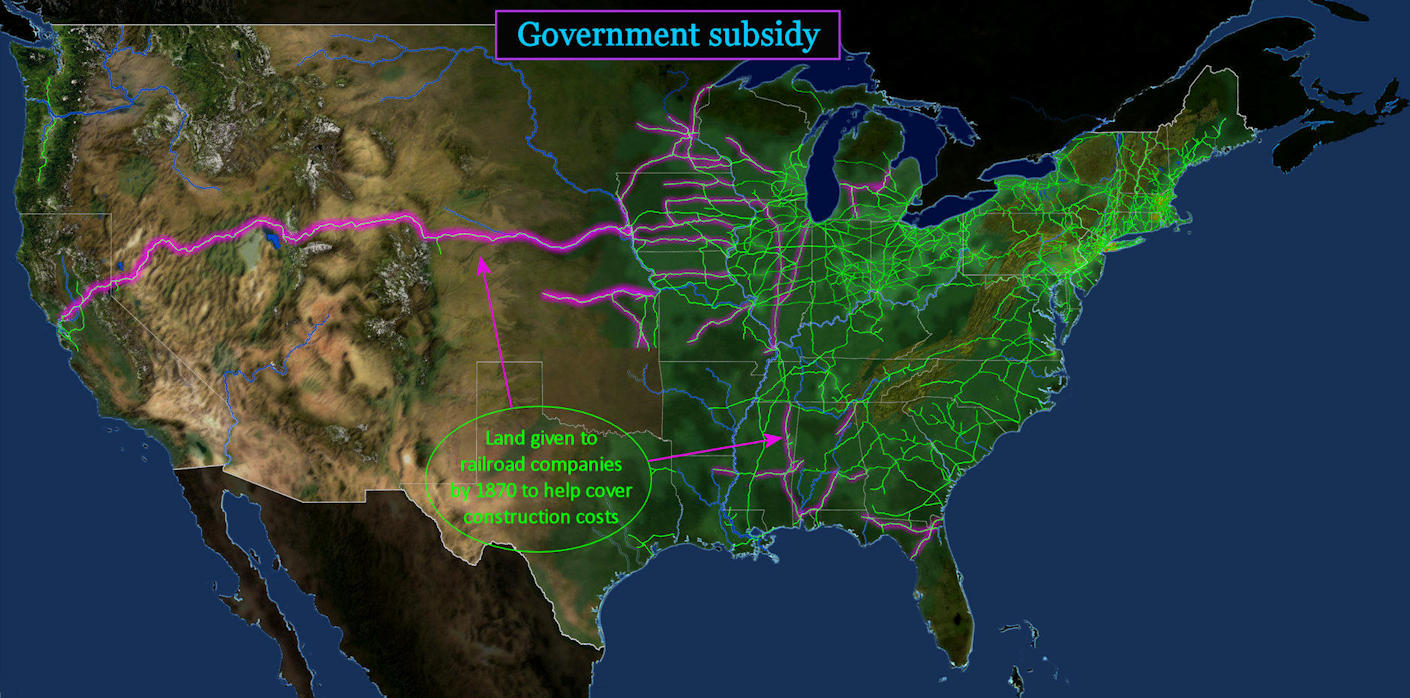
Government Sponsorship Every state wants railroads, because they stimulate business. Starting in 1850, Congress hits upon the scheme of supporting railway growth by giving free land to anyone willing to build a railroad in the sprawling Midwest, or even the South. RED highlights on the map show land granted to railroad companies by 1870. |
| |||||||||
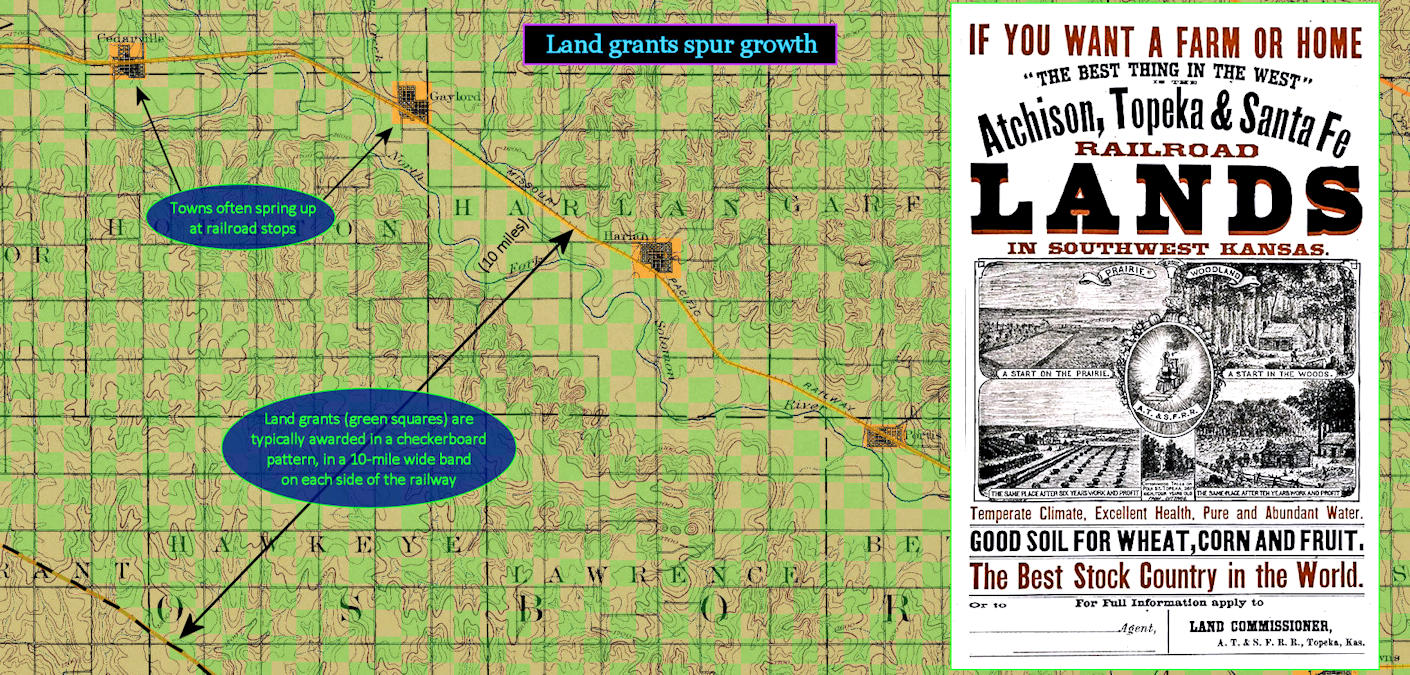
Rail Stops Become Towns The map above (part of Kansas) shows that towns often sprout at new railway stops. Land grants typically include half of the land (displayed as GREEN squares in the checkerboard pattern), in a 10-mile-wide band extending to each side of the railroad. This gives the companies free land, which they can then sell to settlers, to help cover construction costs. The railroad thus acts as a land agent to lure settlers (see poster). This trades vacant land for increased settlement, which boosts land values. | |||||||||
| |||||||||
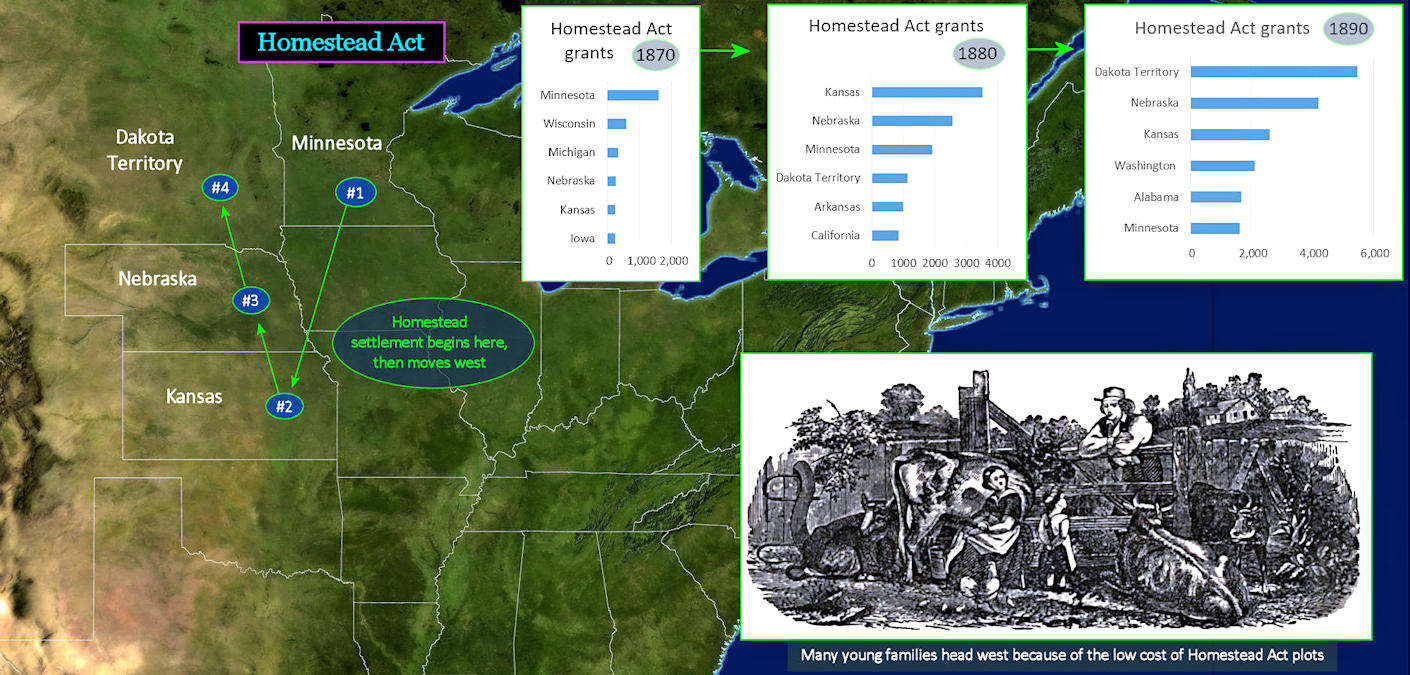
Land to the People Railroad land grants continue a long-standing government policy of encouraging development of unsettled land. Beginning in 1820, small plots of remote government land were sold to the public for $1 per acre. In the 1860s, when Congress is awarding land grants for the transcontinental railroad, it passes the Homestead Act at the same time. This gives settlers a quarter-mile-square parcel of land for a flat $15. Many of the 'blank' squares in the checkerboard pattern of railroad grants are awarded this way. | |||||||||