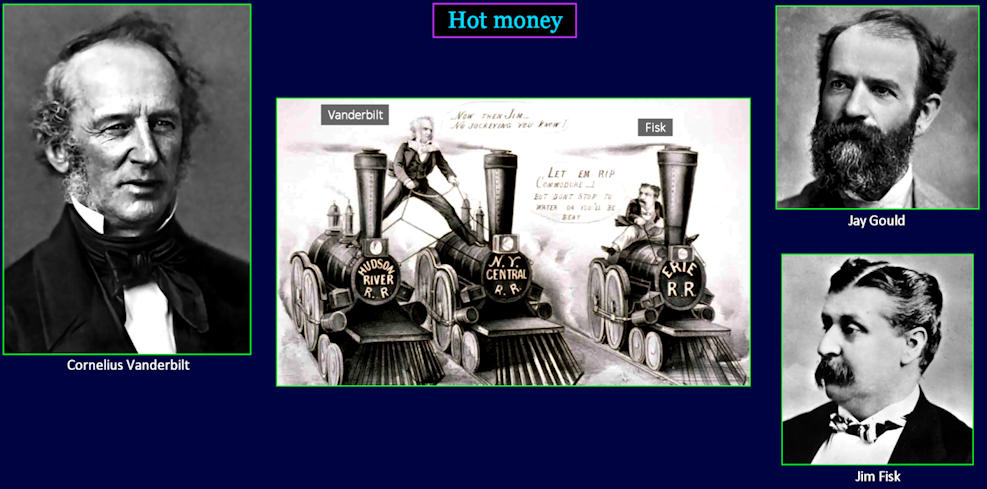
Clash of TitansThe Erie is the first big railroad to get into trouble, due to high construction costs and financial mismanagement, and it finally goes bankrupt. But like many failed corporations today, it doesn't just disappear. It gets reorganized. This makes it vulnerable to a takeover, and Cornelius Vanderbilt is just the man for a quick grab. He made his fortune monopolizing steamship operations in New York, before turning to railroads as his field of conquest. |
| ||||||||||||||||
| |||||||||
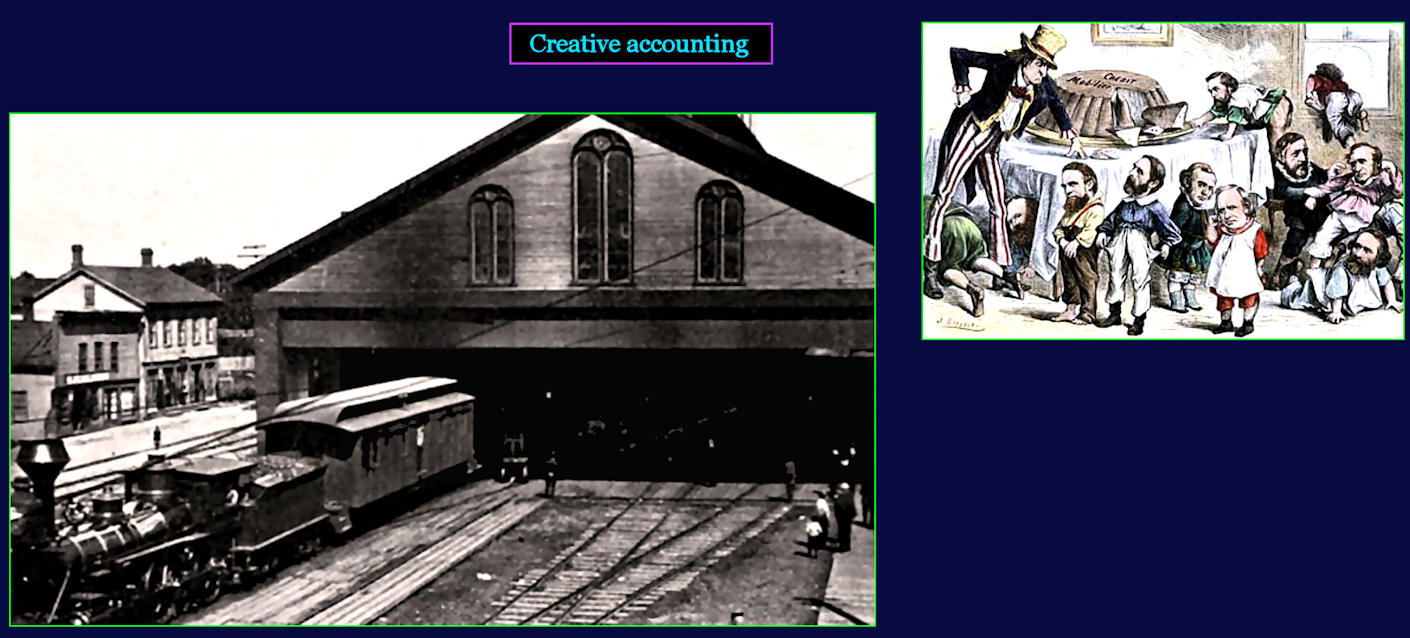
Cooking the Books Railroad finances are often ramshackle affairs, stitching together a loosely defined tangle of relationships between investors, company stock, and assets pledged as collateral against bonds and temporary loans. Whoever owns the stock controls the company. But company officers are also stock-owners, with extraordinary discretion to approve additional stock issues. They sometimes grant themselves huge blocks of stock at little cost. This helps set the stage for some spectacular looming bankruptcies. | |||||||||
| |||||||||
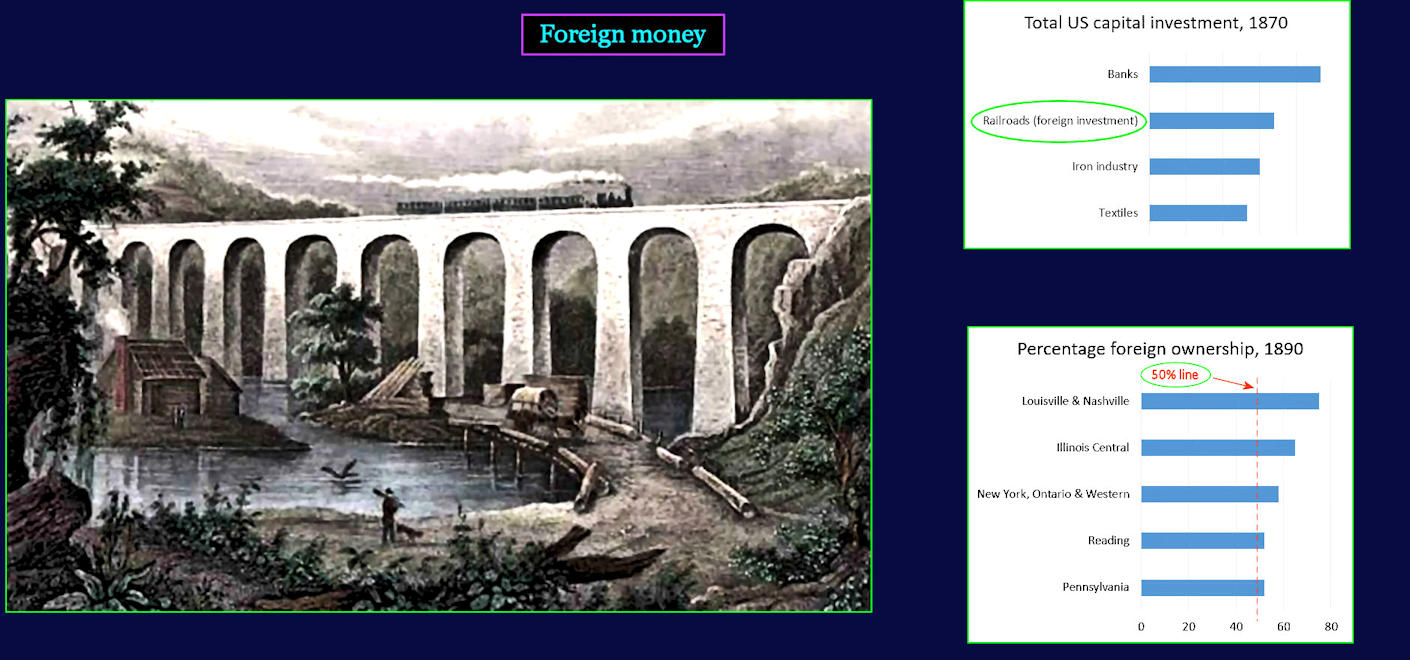
Europe Wants In Foreigners invest significant amounts in American railroads, lured by outsize profits. The chart at top right shows that foreign investment in US railroads is greater than American investment in either the iron or textile business, and almost equal to the total capitalization of all US banks. Without this foreign capital, railroads might have struggled to find adequate funding. The lower chart shows major railroads that are majority-owned by foreigners, the vast majority of whom are British. | |||||||||