| |
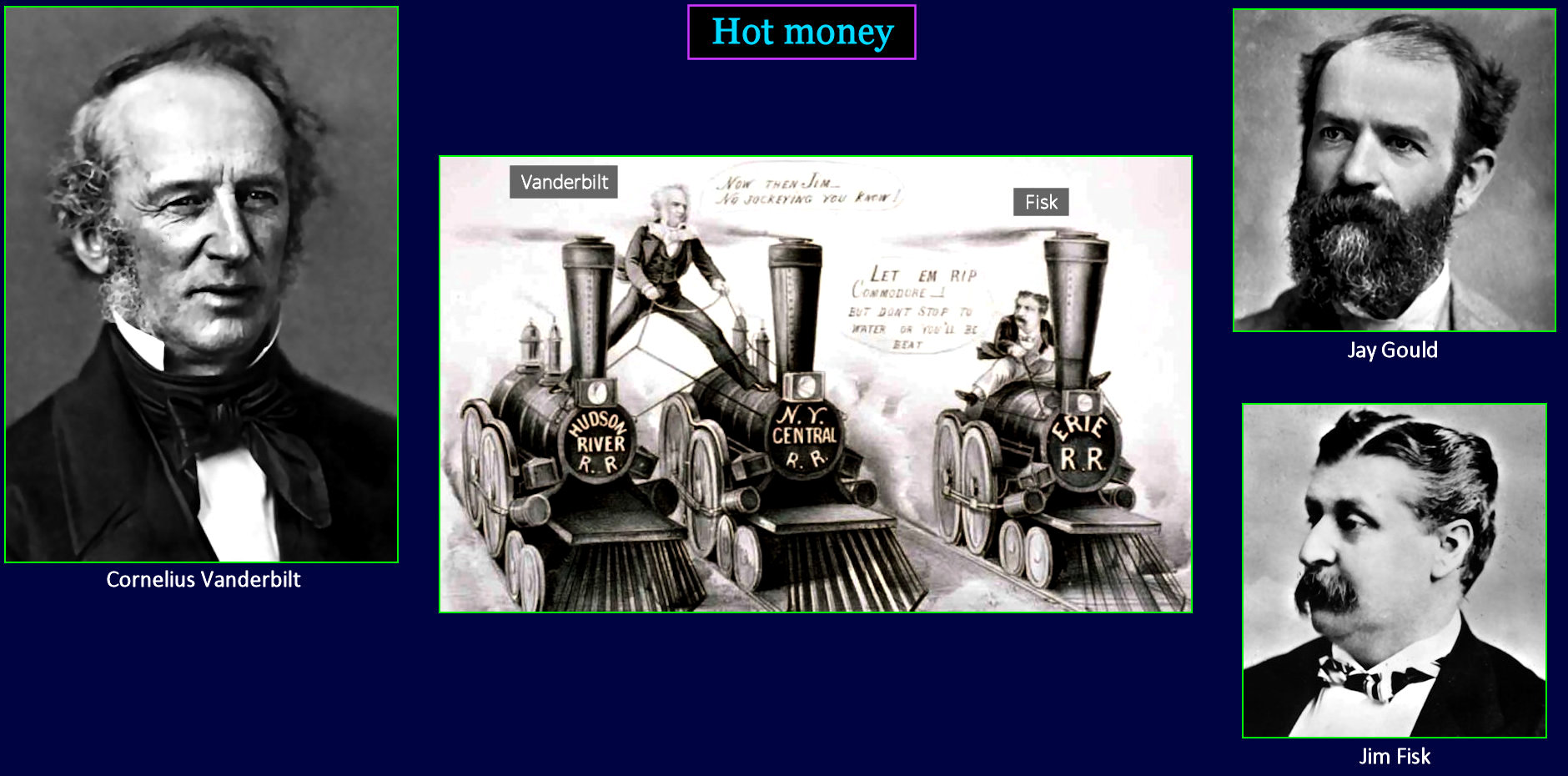
Financiers Jump In The struggle pits Vanderbilt against two opponents of equal skill (right). The fight involves manipulation of stock certificates, contradictory court injunctions, corrupt state judges, straw-man buyers and extortion. There is even a midnight escape across the Hudson River to New Jersey, with $6 million in cash, to evade New York court jurisdiction. In the end, Vanderbilt wins. |
| |||||||||
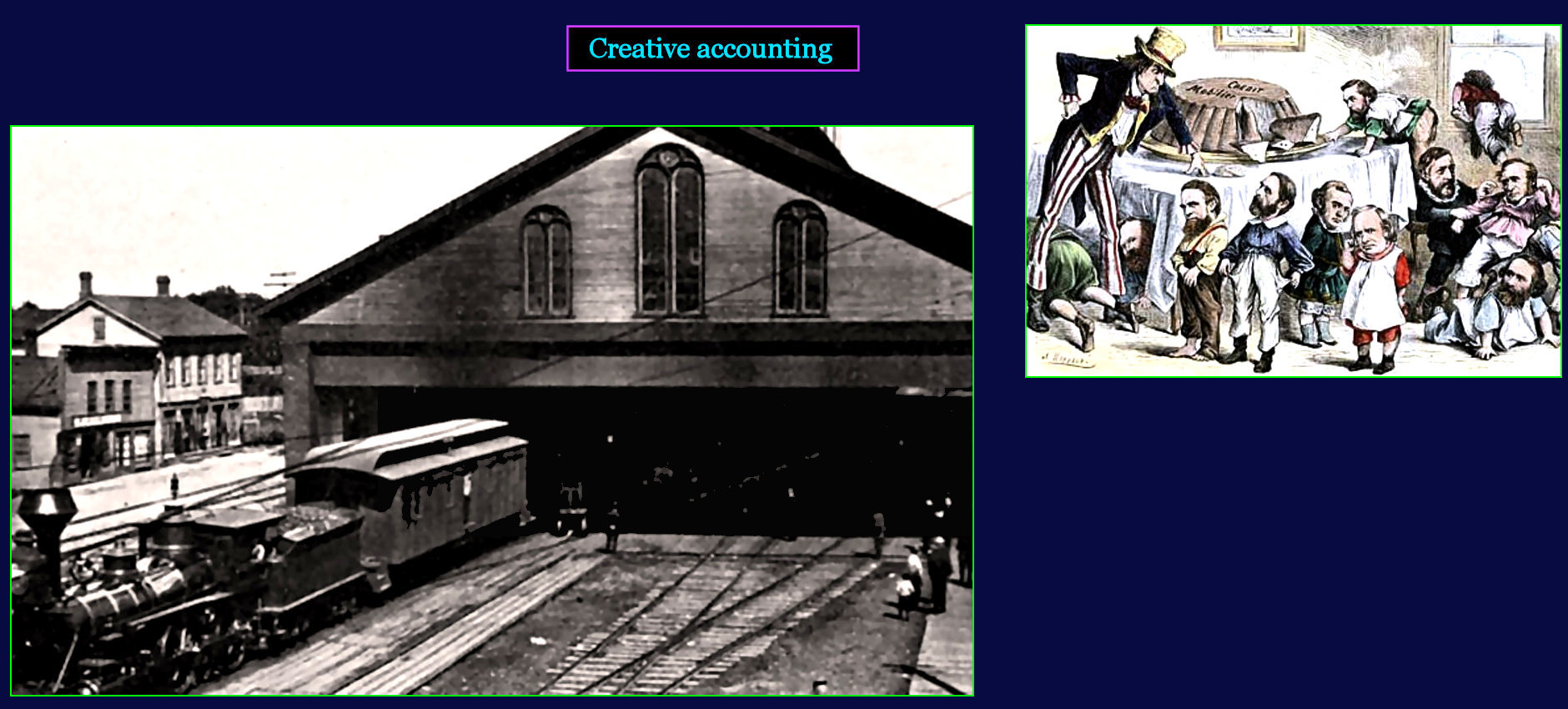
Cooking the Books Railroad finances are often ramshackle affairs, stitching together a loosely defined tangle of relationships between investors, company stock, and assets pledged as collateral against bonds and temporary loans. Whoever owns the stock controls the company. But company officers are also stock-owners, with extraordinary discretion to approve additional stock issues. They sometimes grant themselves huge blocks of stock at little cost. This helps set the stage for some spectacular looming bankruptcies. | |||||||||
| |||||||||
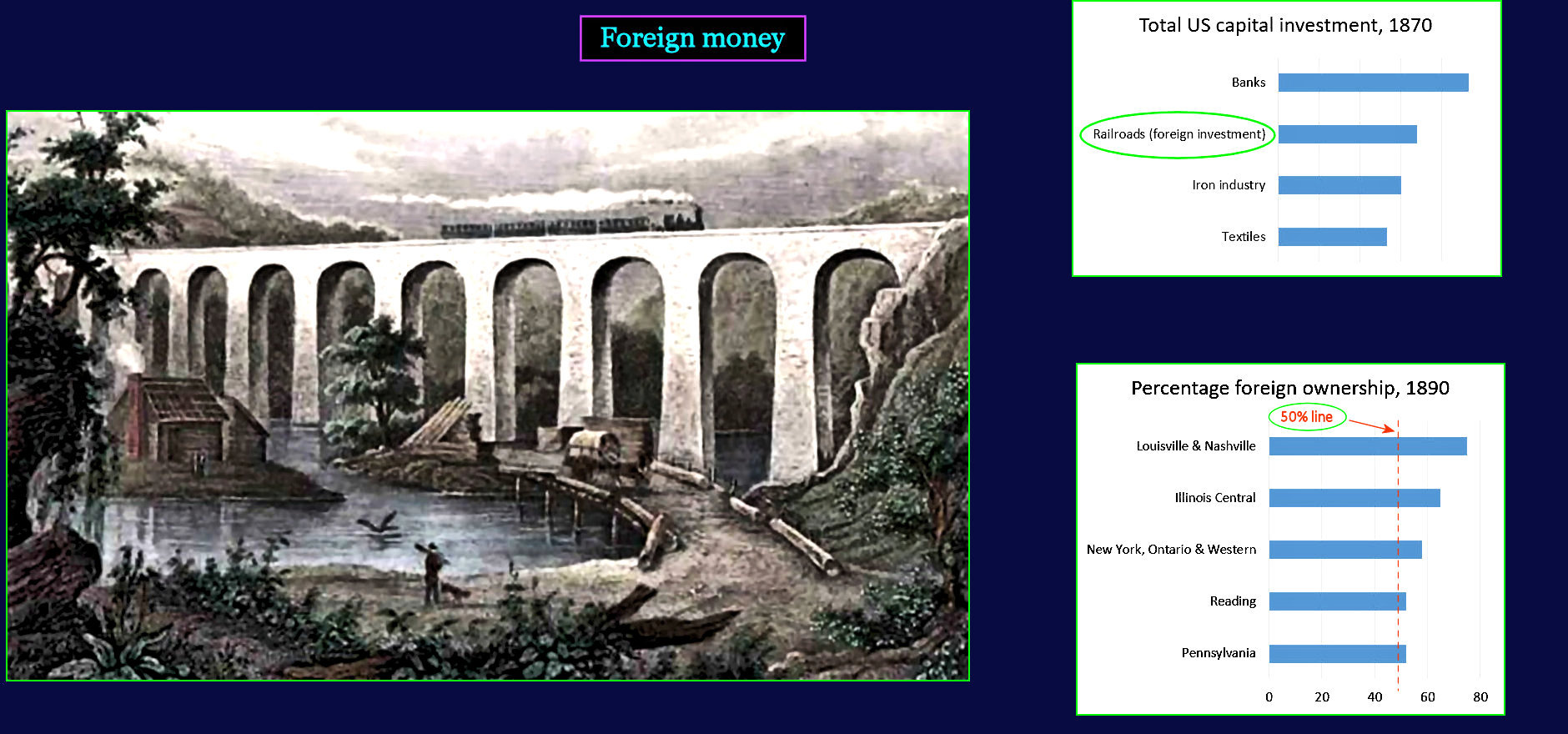
Europe Wants In Foreigners invest significant amounts in American railroads, lured by outsize profits. The chart at top right shows that foreign investment in US railroads is greater than American investment in either the iron or textile business, and almost equal to the total capitalization of all US banks. Without this foreign capital, railroads might have struggled to find adequate funding. The lower chart shows major railroads that are majority-owned by foreigners, the vast majority of whom are British. | |||||||||