| |
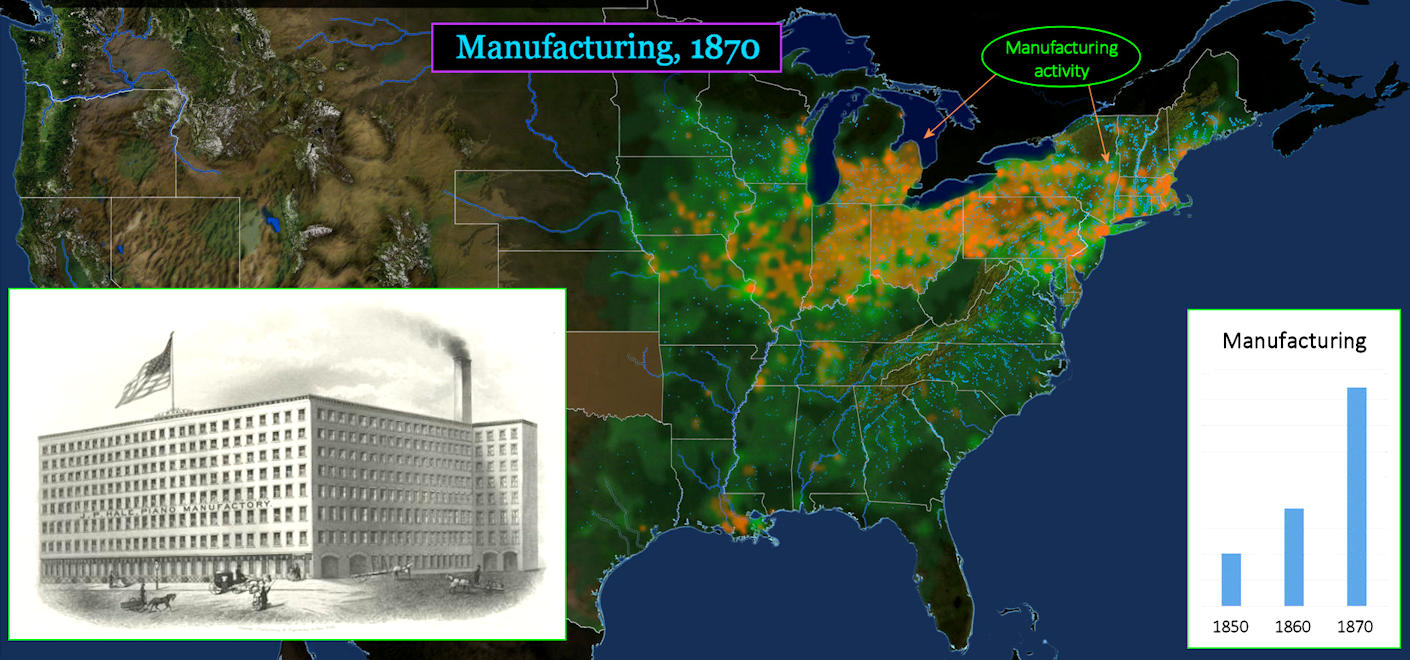
Industrial America ORANGE highlighting on the map indicates steam-powered manufacturing activity. Small BLUE dots are water-powered mills. Manufacturing has now expanded from its original base to cover the entire Northern belt of states. Waterpower (small BLUE dots) is still important in rural areas, especially in the South, which lost most of its manufacturing base during the Civil War. |
| |||||||||
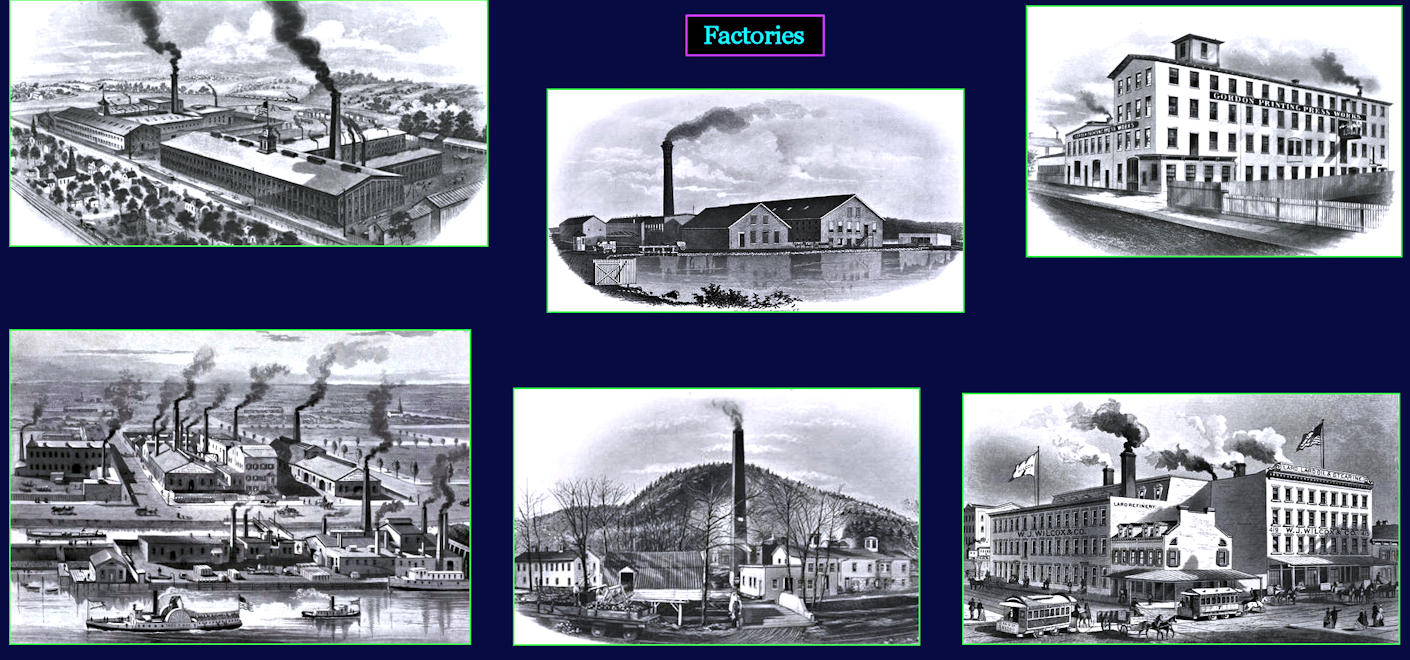
Smokestacks Everywhere New factories are now routinely powered by steam engines. Many factories have steam engines in the basement, while others generate steam pressure in a completely separate building, using pipes to transmit the steam to machinery located elsewhere on the site. Waterpower (small BLUE dots) is still important in rural areas, especially in the South, which lost most of its manufacturing base during the Civil War | |||||||||
| |||||||||
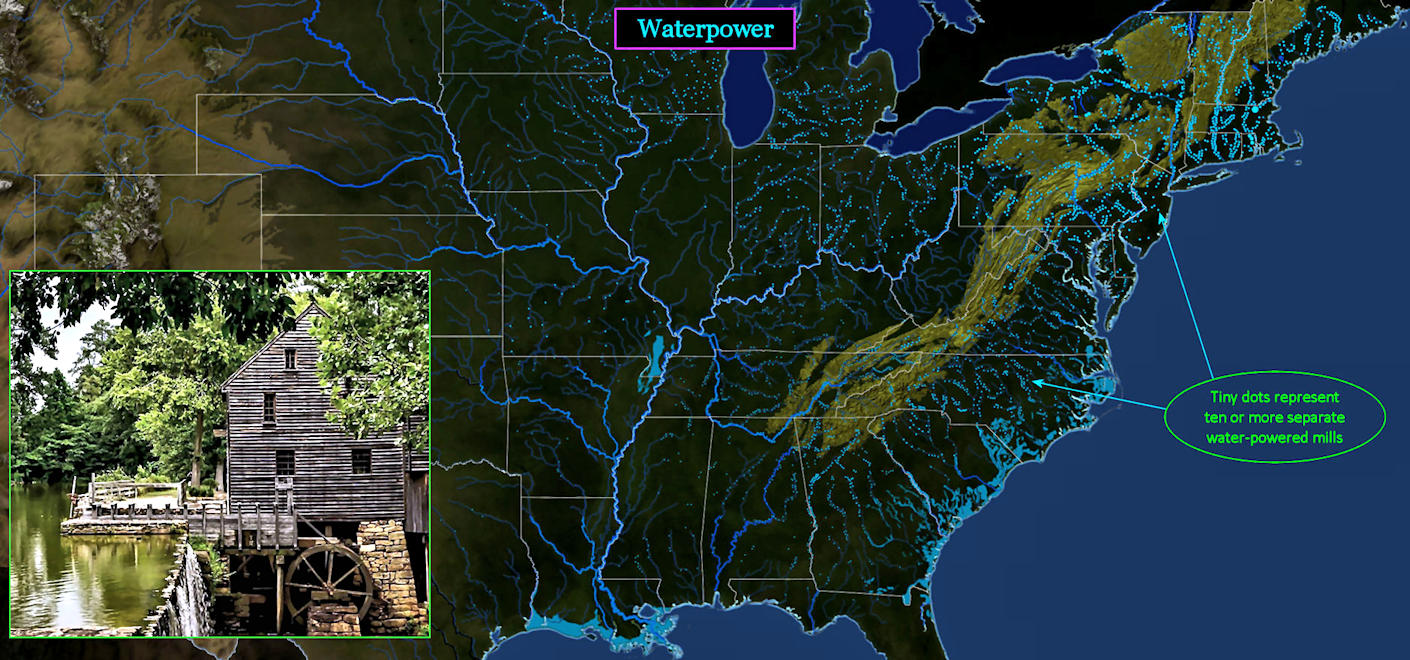
Rural Power Waterwheels are still in wide use in 1870, especially in rural areas, and don't require any fuel. Water-powered mills (BLUE dots on map) are surprisingly widespread, even in coastal areas where the land is mostly flat. Often, low dams are constructed across minor streams to make a mill pond, which creates a reservoir to power the mill during periods of low water flow. Most rural mills are either sawmills or grist mills, which use grindstones to slowly turn grain into flour. | |||||||||