| |
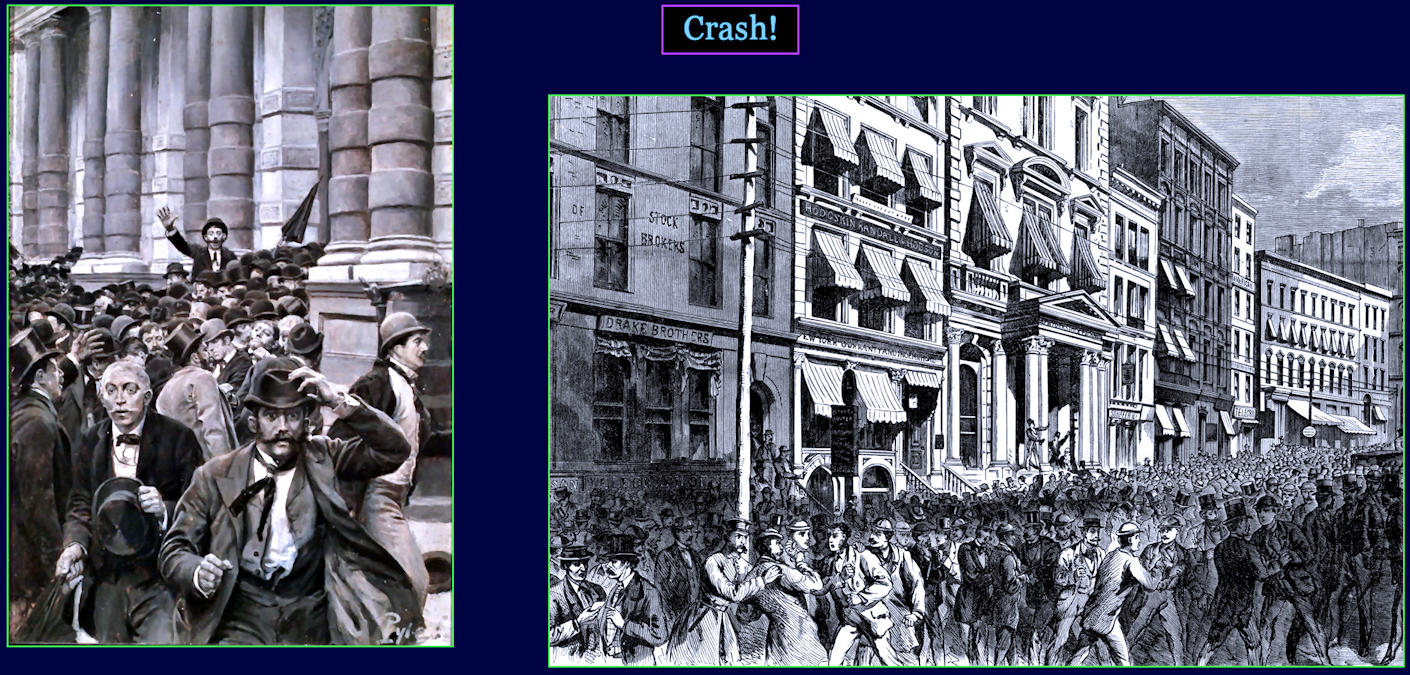
The Dikes Burst The Panic of 1873 is a world-wide event, lasting even longer in Europe than in America. It exposes some of the worst management excesses of the railroads, which had been largely hidden up to this point. Banks all over the Midwest begin to fail. Panic spreads from New York to Washington, Pennsylvania and the South, peaking in labor riots dubbed the 'Great Railroad Strike.' |
| |||||||||
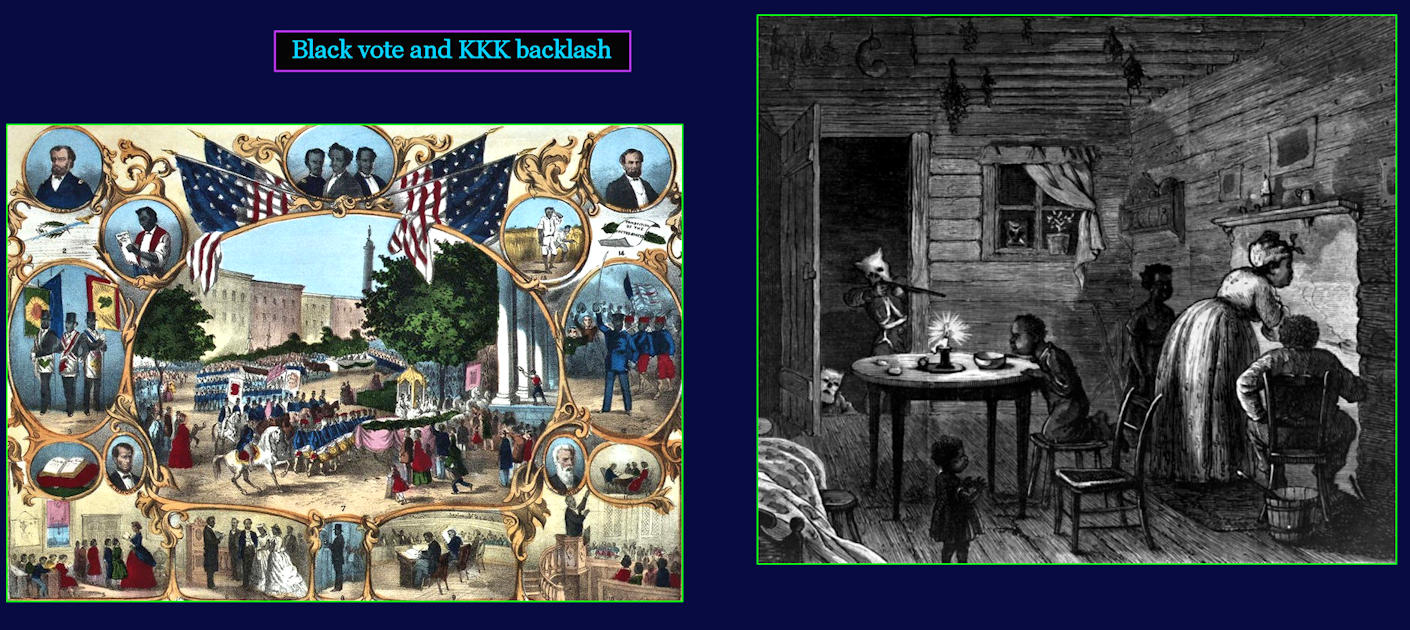
Southern Blacks The Panic of 1873 effectively ends the Reconstruction Era, as Congress tires of trying to manage affairs in the South. Meanwhile, the 15th Amendment has given Blacks the right to vote. Southern Whites respond by forming local vigilante groups known as the Ku Klux Klan (KKK), which terrorize black voters in an effort to turn back the clock. Within a few years, former rebels again begin rising to positions of local power throughout the South, which is gradually returning to old patterns of White domination. | |||||||||
| |||||||||
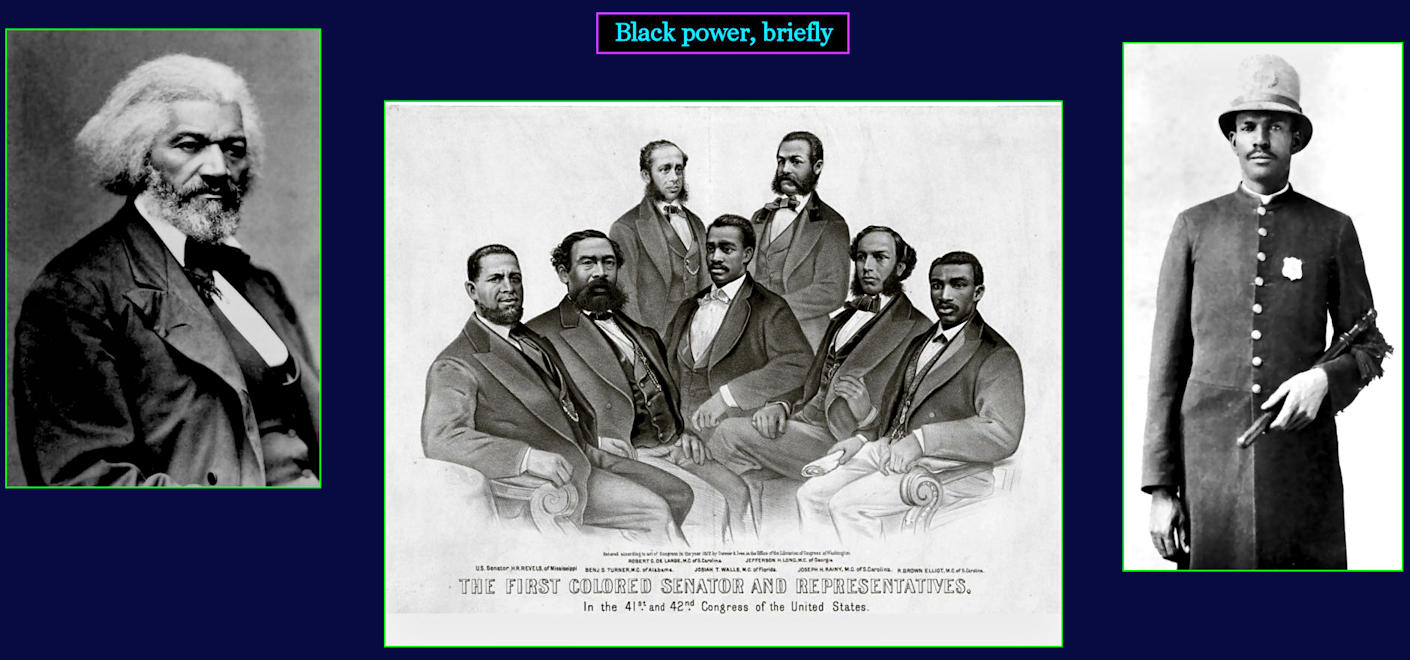
And Then They're Gone The election of 1870 is the first in which Blacks can vote, but the only year during which most Southern Whites can't. This provides a brief period during which Blacks are elected to Congress (center top). None are elected to a second term. Frederick Douglass is the great champion of Black rights, who manages to escape from slavery, and goes on to become active in abolitionist politics. Douglass meets with President Lincoln three times during the Civil War, in the White House. | |||||||||