| |
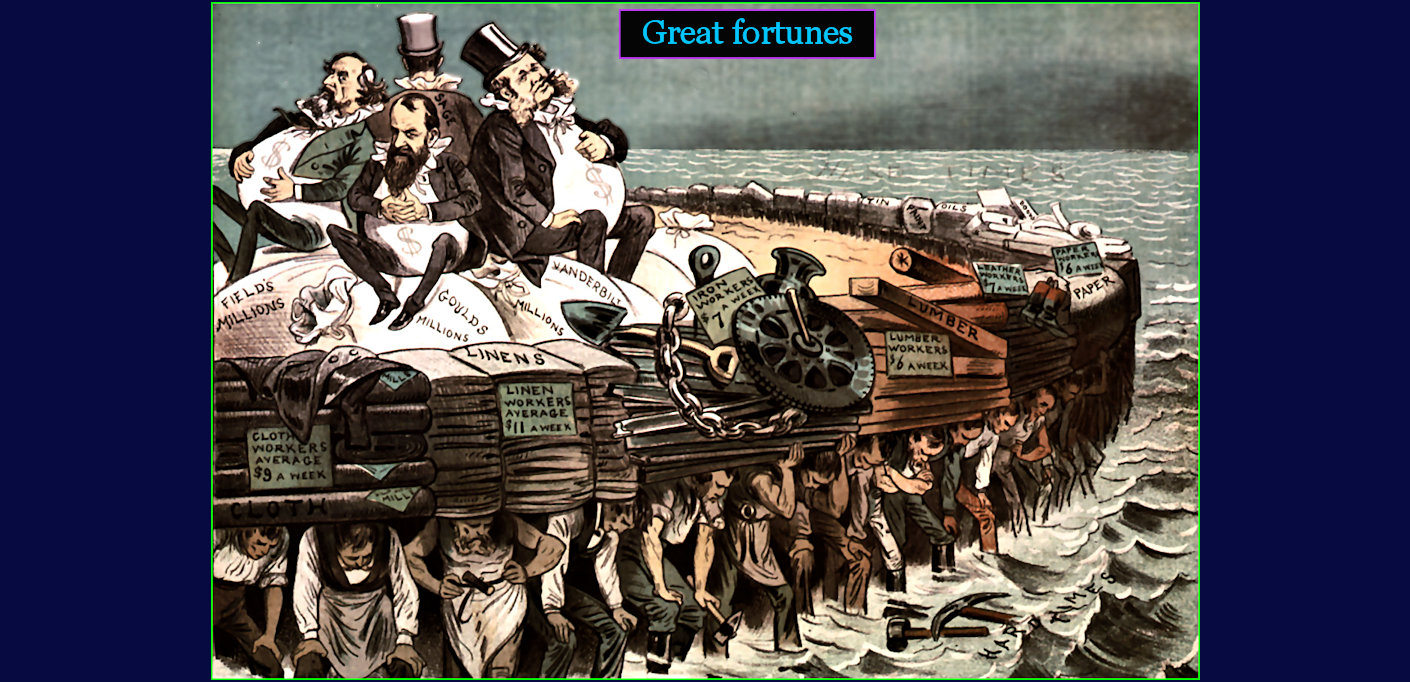
Fat Elites The 1890s usher in a whole new breed of industrialists who are less interested in running businesses than profiting from stock manipulation. Shown here are the top tier of those who earn the title 'robber baron,' exuding a style that is both aggressive and ruthless. Mark Twain laments the rise of insatiable empire-building in his book The Gilded Age. The name sticks. |
| |||||||||
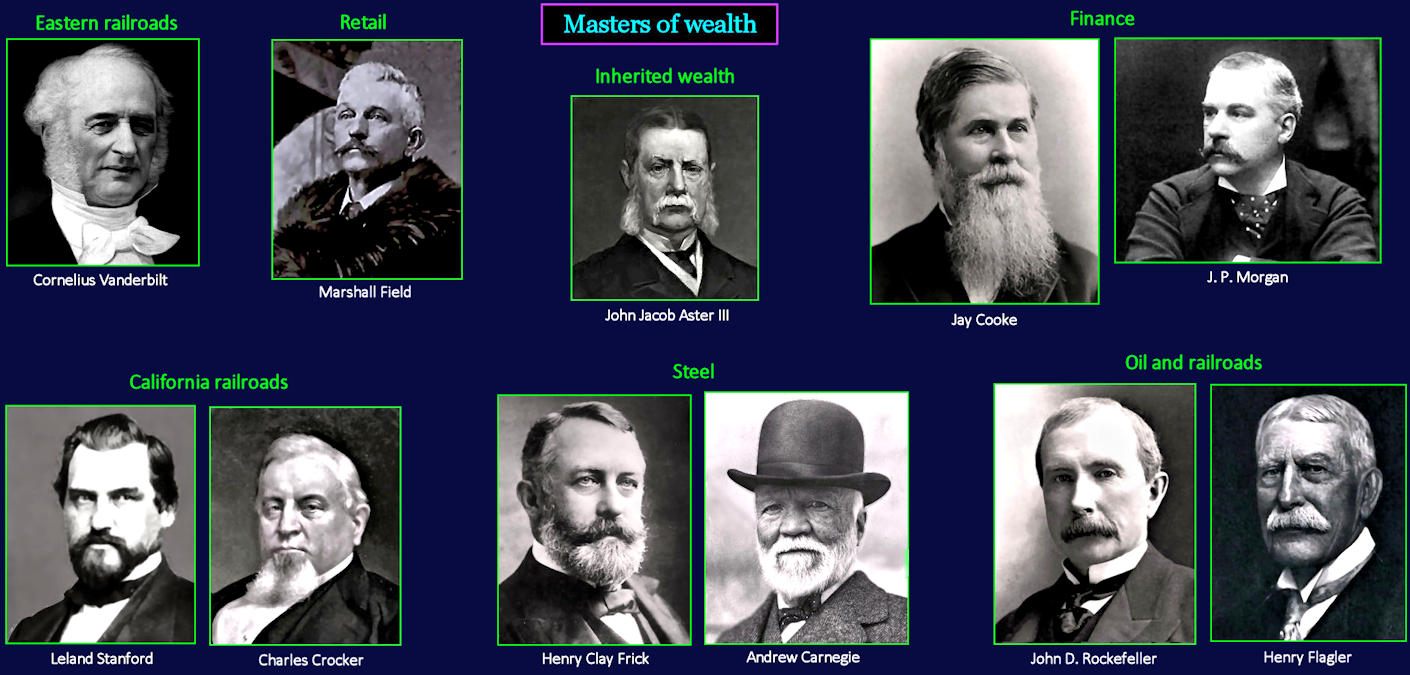
None are Angels These men occupy the top tier of the mega-rich, which today we might call the top 0.0001%. John Jacob Astor III (top center) is the only one to inherit fabulous wealth (from his ruthless grandfather), but grows it still further managing the Astor real estate empire in New York. The remainder build their own fortunes in railroads, steel, oil, finance and even retail. They are as rich in their day as the billionaires of today, often climbing to the top on sharp-elbowed business practices. | |||||||||
| |||||||||
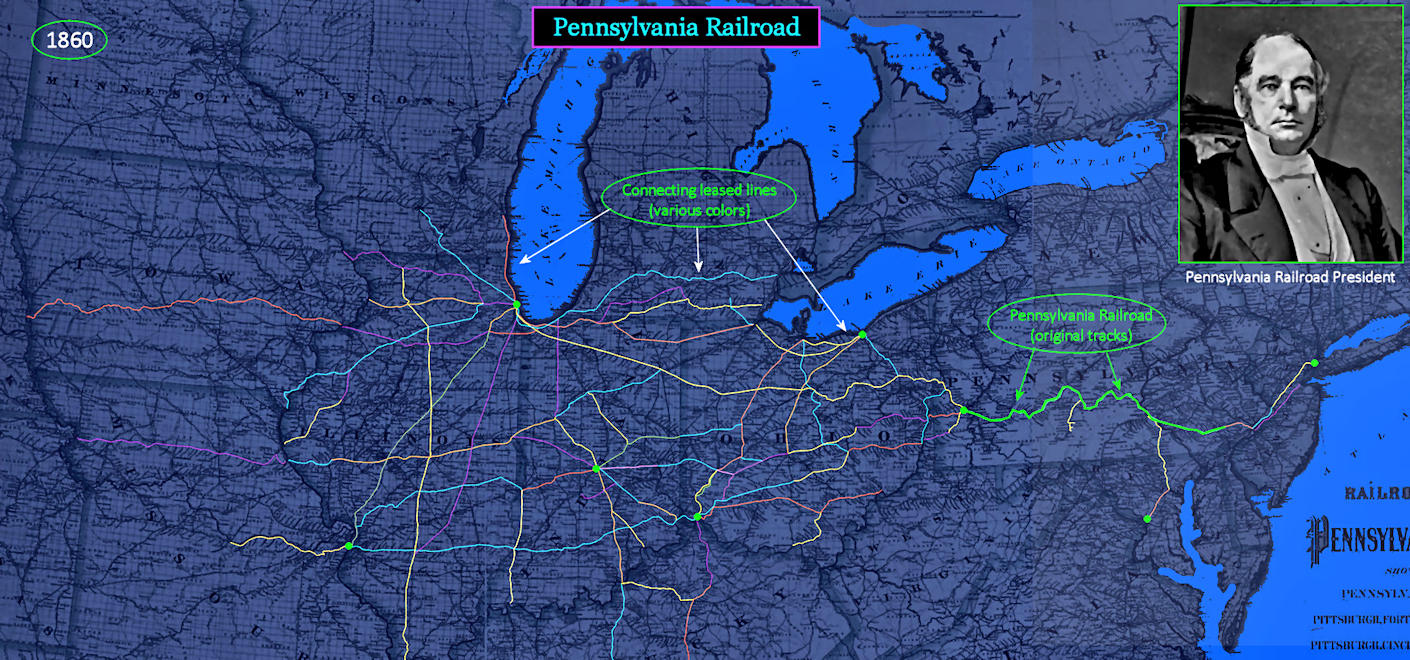
Forging an Empire Railroads build their terminals wherever their track ends. The first company to assemble a network connecting many independent lines is the Pennsylvania Railroad. This map shows the lines it actually owns (in GREEN, at right). All the other lines (various colors) are leased from the companies that built, and still own them. The Pennsylvania Railroad often buys substantial blocks of stock in the companies they lease from, creating America's first corporate empire assembled through interlocking ownership. | |||||||||