| |
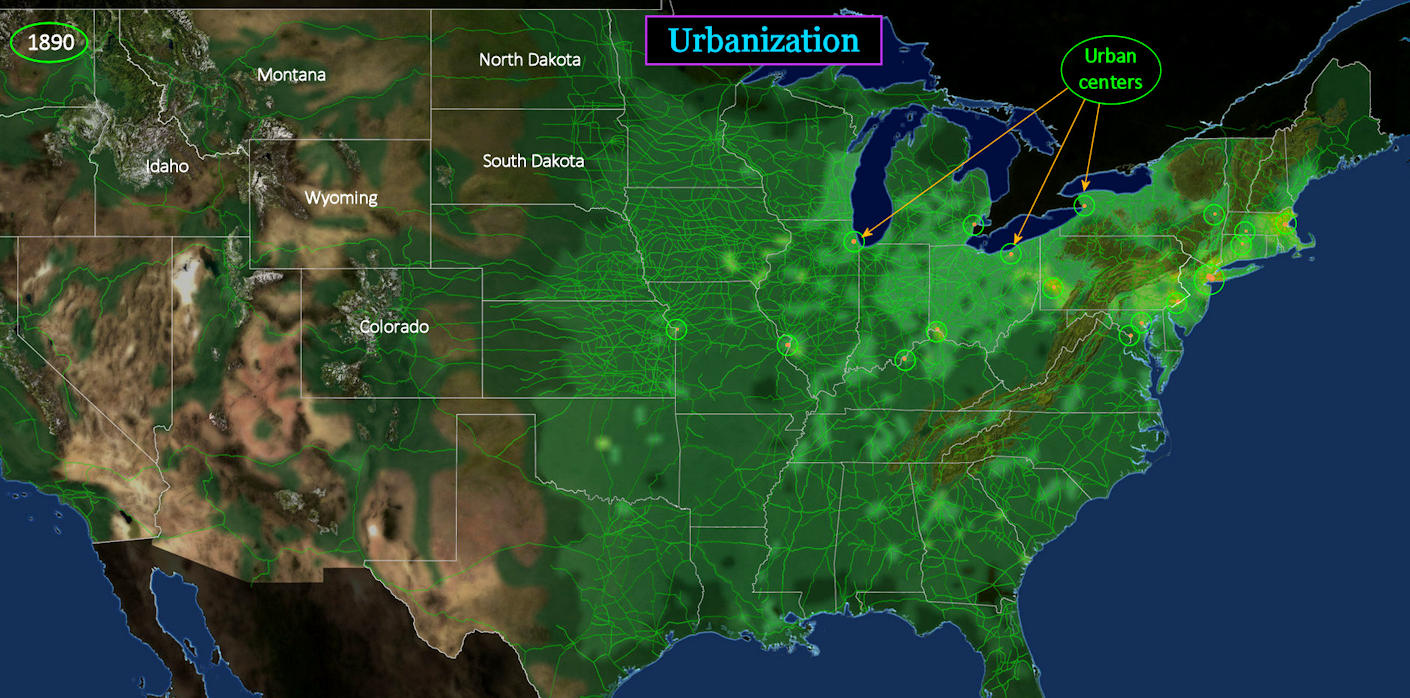
Mania on Steroids Railroad mania is still in full swing. It's hard to imagine that all the new connecting lines will turn a profit, but that hasn't stopped the frenzy. Cities everywhere are expanding, to create something the Census Bureau is now calling 'urban' zones. Surrounding these zones are 'suburbs,' where housing is cheaper. They connect to downtown areas by trolley or streetcar. |
| |||||||||
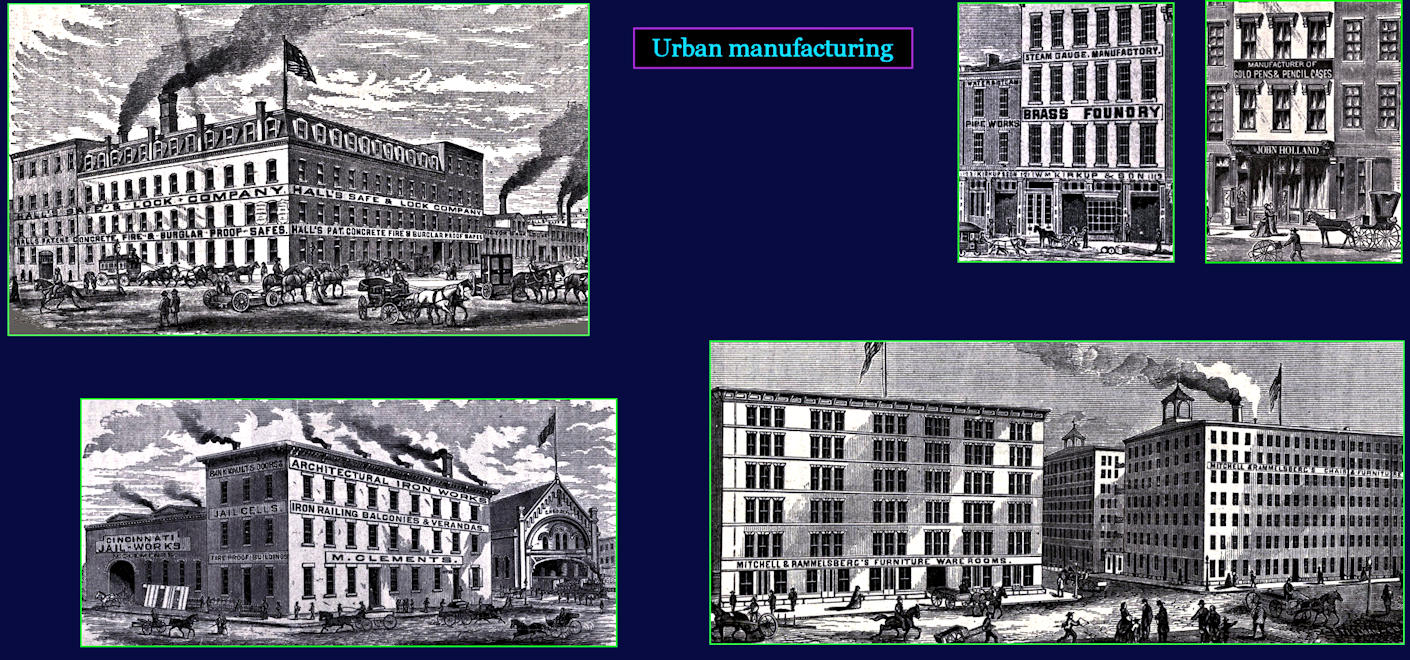
Downtown Factories Today, upscale city centers are rarely marred by industrial activity, but urban zones in 1890 feel very different. There are plenty of hotels and storefronts, but the business of cities is manufacturing. Factories are mixed in with retail establishments all up and down the broad avenues and smaller cross streets. Many street-level businesses offer items that are manufactured on the floors above. It will be many years before manufacturing is confined to tidy suburban industrial parks. | |||||||||
| |||||||||
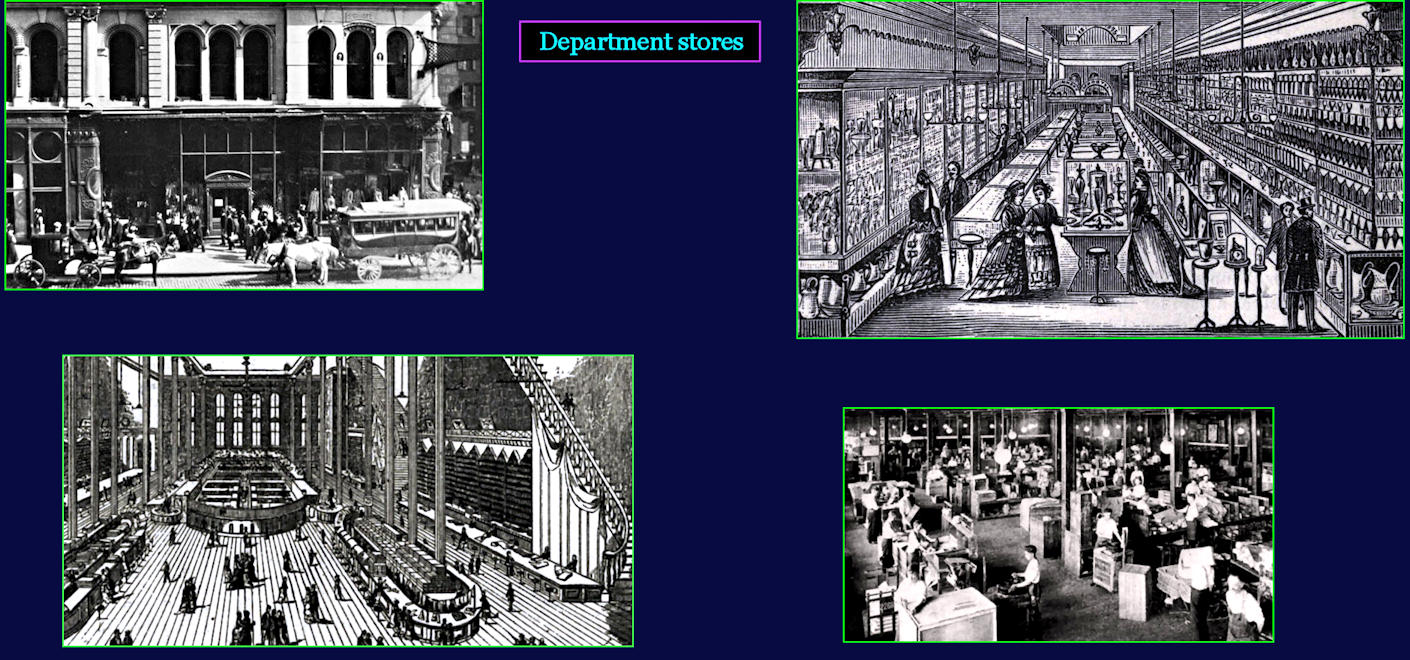
First Big-box Stores Marshall Field opens America's first mega-store in Chicago in 1873, after his original store is destroyed in the Great Chicago Fire (top left). He introduces 'unconditional' refunds, and instructs his staff not to push goods on uninterested customers. He originates the phrase 'The customer is always right,' and attracts fashion-conscious customers with a large inventory of imported goods. The scenes above depict department stores in 1875, as this new trend in retail is just getting started. | |||||||||