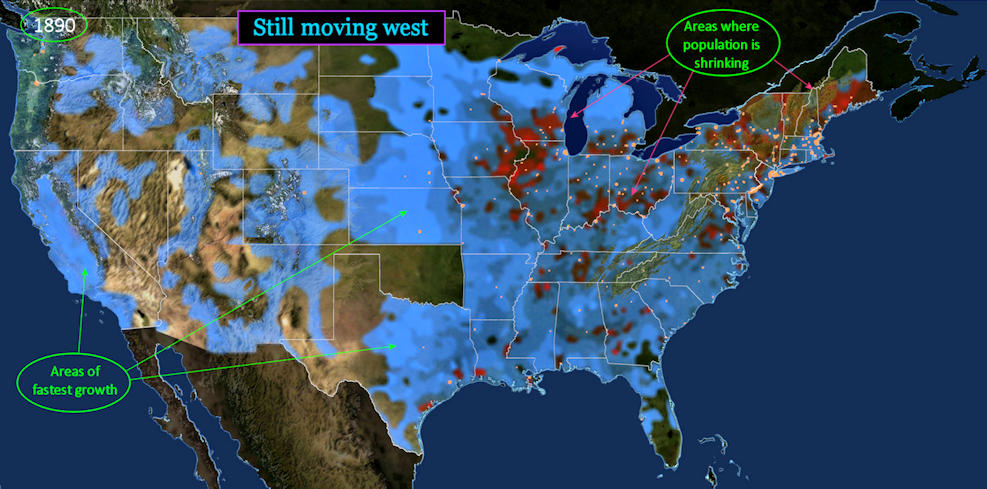
Earlier Trends ContinuePreviously, people leaving red zones were heading towards the western frontier, hoping to establish new farms in fresh territory. Now, however, they are increasingly being attracted by jobs in nearby manufacturing centers. This raises the question of whether or not the old cry of 'Westward, Ho!' still resonates. The remaining western portions of the country are not friendly to farmers, and the boom days of gold and silver mining are now over. |
| ||||||||||||||||
| |||||||||
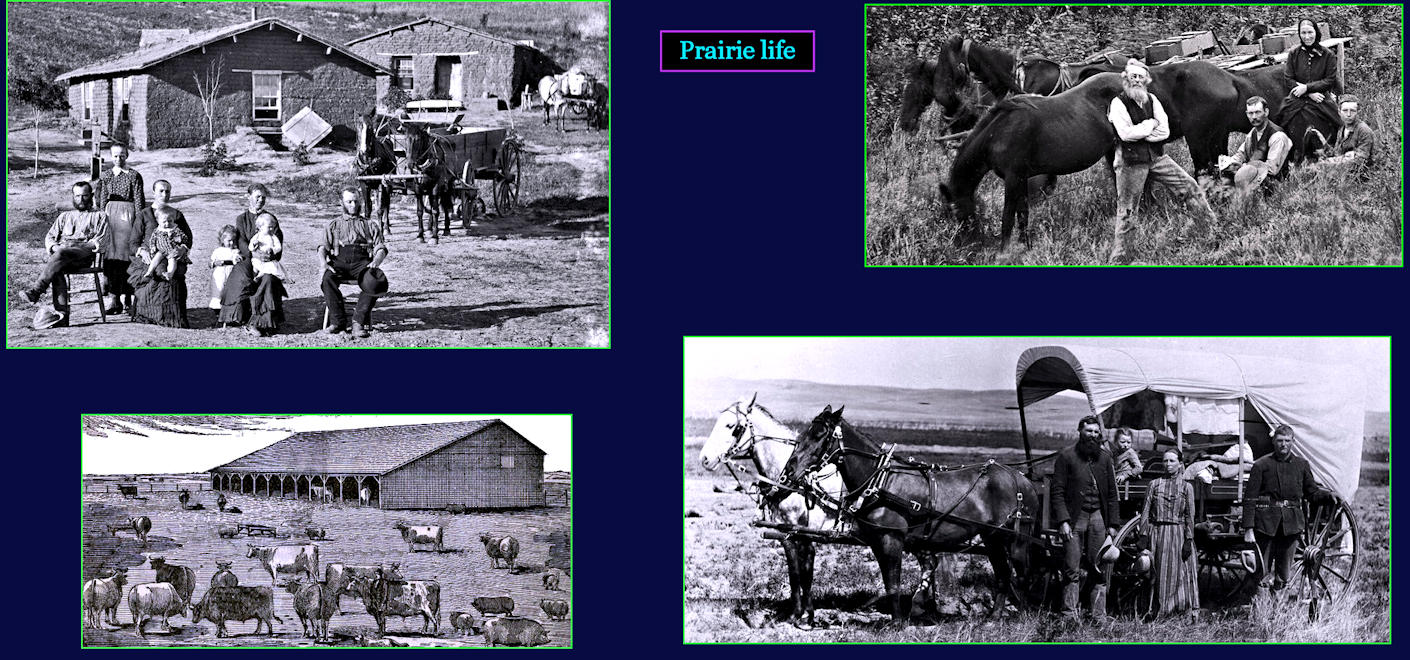
All Alone Trying to make a life for your family out on the prairie takes a lot of ingenuity, and even more grit. With so few trees, farmers cut the earth into brick-sized blocks to build sod homes (top left). With a good well, livestock can prosper, but some wives go mad with the solitude, and the relentless wind. Then there are the great rolling thunderstorms, and occasional tornados. But perhaps hardest of all is the lack of neighbors. Ranches are scattered, and children have few friends to play with. Schools barely exist. | |||||||||
| |||||||||
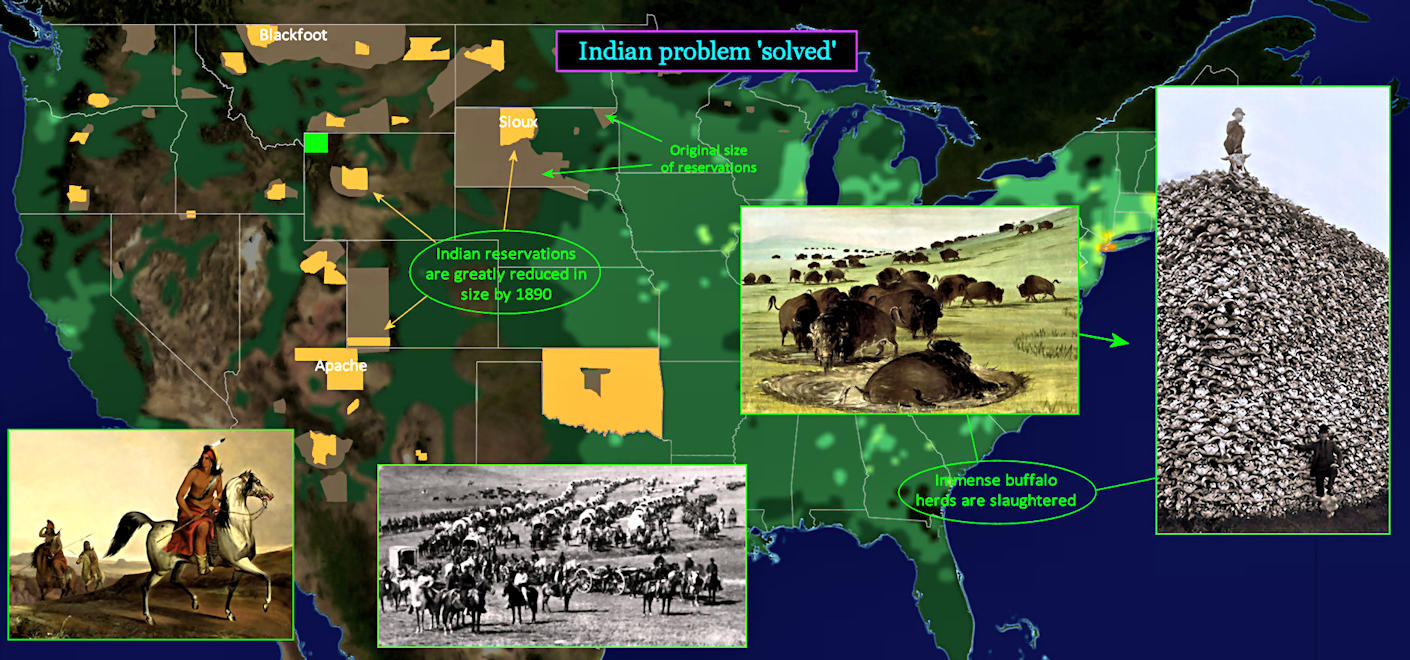
Put Them in a Box ... Somewhere It begins with Sioux Indians attacks, which kill hundreds of settlers, and force another 40,000 to flee. General Custer and the cavalry are dispatched to protect settlers, but his entire troop is wiped out when he stumbles upon a group of several thousand Indians, in a battle dubbed 'Custer's Last Stand.' After this, the cavalry rounds up all Indians it can find, and deposits them in reservations (YELLOW areas, reduced from previous BROWN areas). Some 30 million buffalo are slaughtered, to weaken Indian resistance. | |||||||||