| |
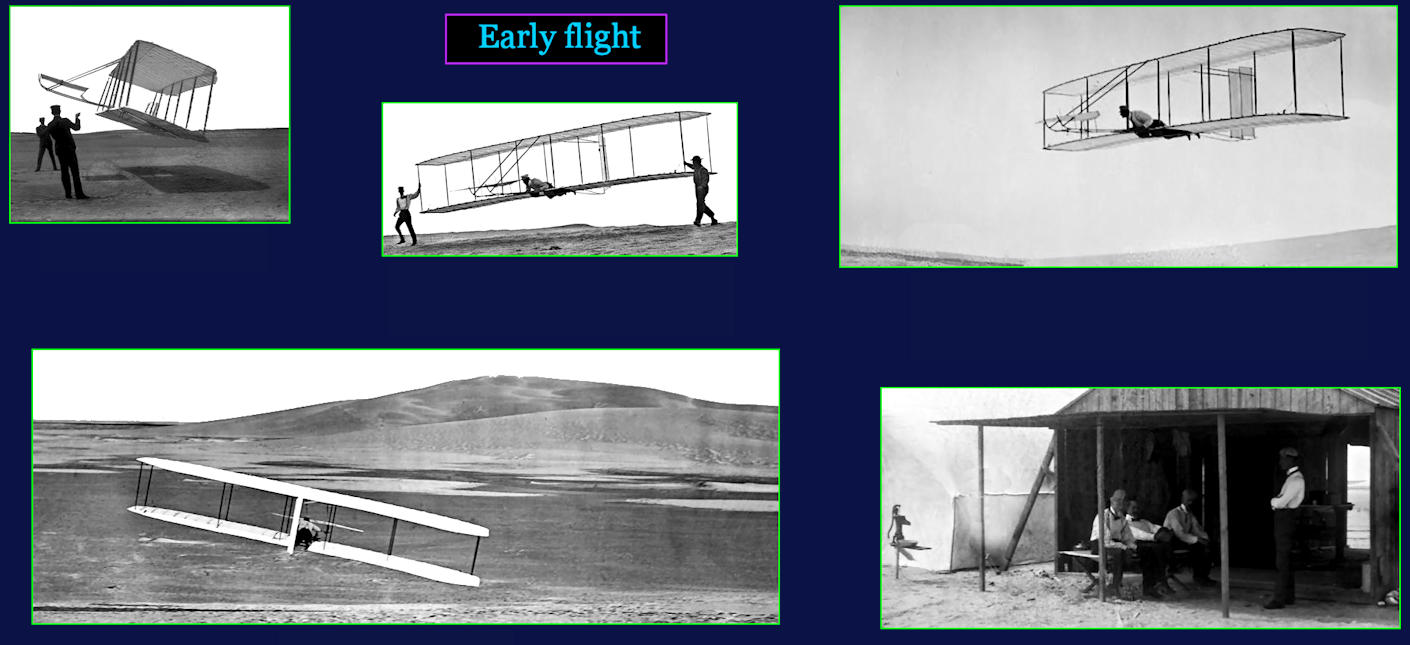
Starting with the Basics The Wright Brothers bring a highly scientific approach to their efforts. They start with a stationary glider (top left), which they fly like a kite. They return in following summers to make well over 1,000 glider flights, without seats, or even safety harnesses. Then comes the real trick, which is controlling turns. Their design achieves this by actually twisting the wingtips. |
| |||||||||
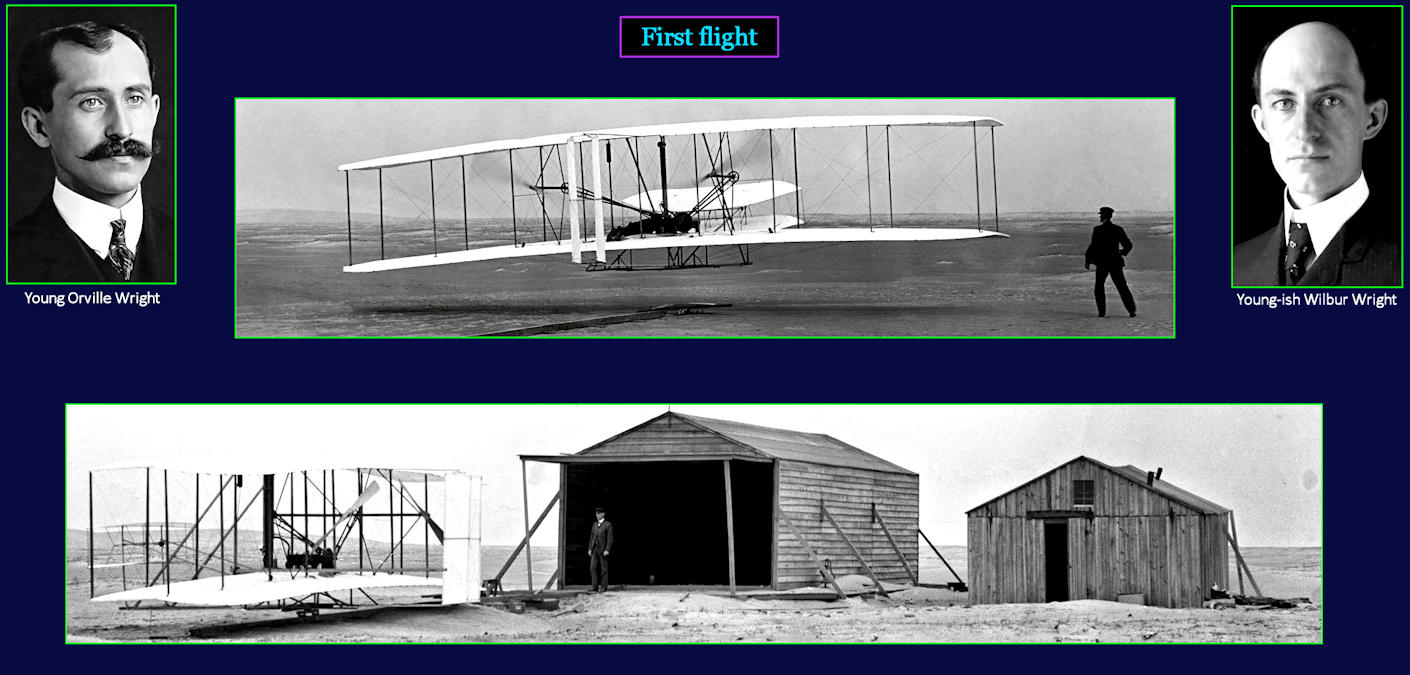
Still Lying on the Wing They test for three summers before making a first attempt at powered flight, using an aluminum engine of their own design. After an initial failure, they try again, and finally coax the aircraft into the air, briefly. It's mid-December, with freezing, gusty winds. The photo at top captures the moment of first liftoff. They have difficulty keeping the craft level, but manage to complete three more short but successful launches that day, reaching a top speed of about 10 mph. | |||||||||
| |||||||||
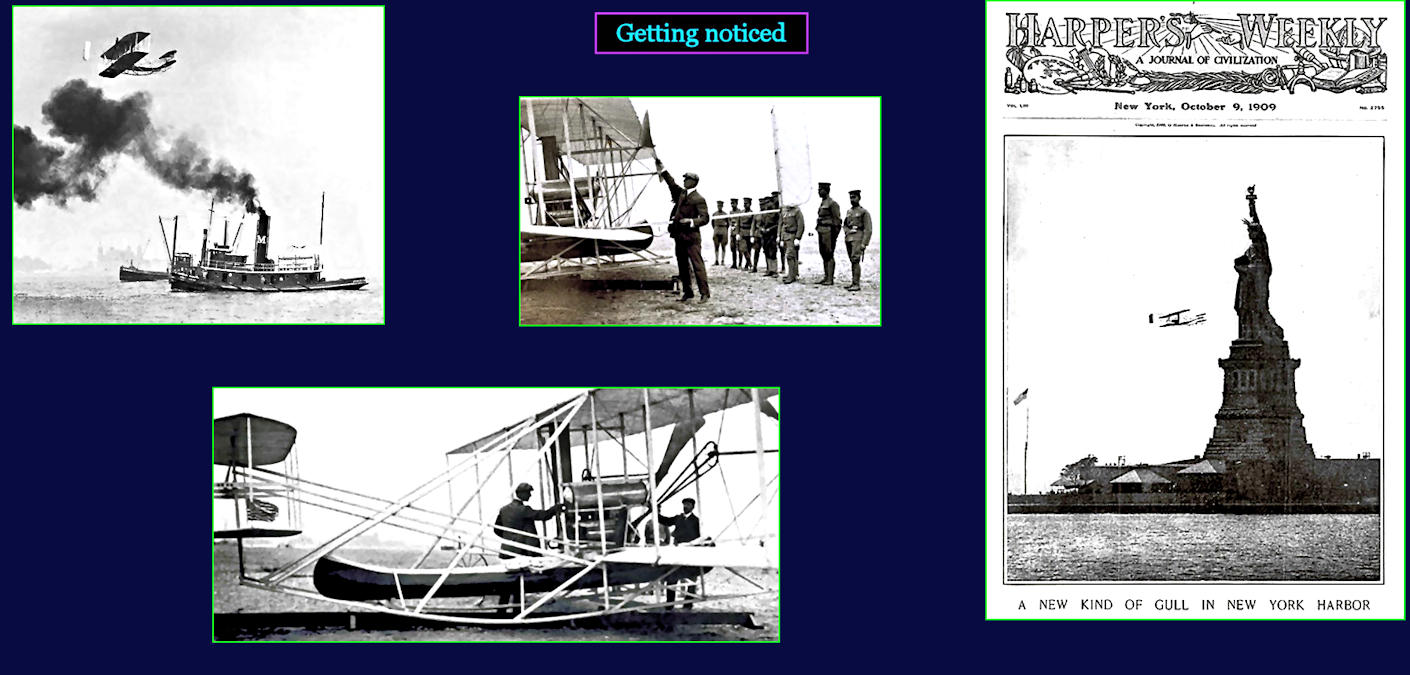
What's That, up in the Sky? The Wright Brothers are not wealthy, and lack any sponsorship by government, or outside investors. They spend the next two years modifying their initial design, adding a more powerful engine, and learning to control the aircraft in turns. When they finally get the US Army interested in a flight demonstration, it ends with a crash in which Orville is badly injured. Despite this, the following year Wilbur performs a flawless demonstration for the Army near the Statue of Liberty, with a canoe lashed underneath for safety. | |||||||||