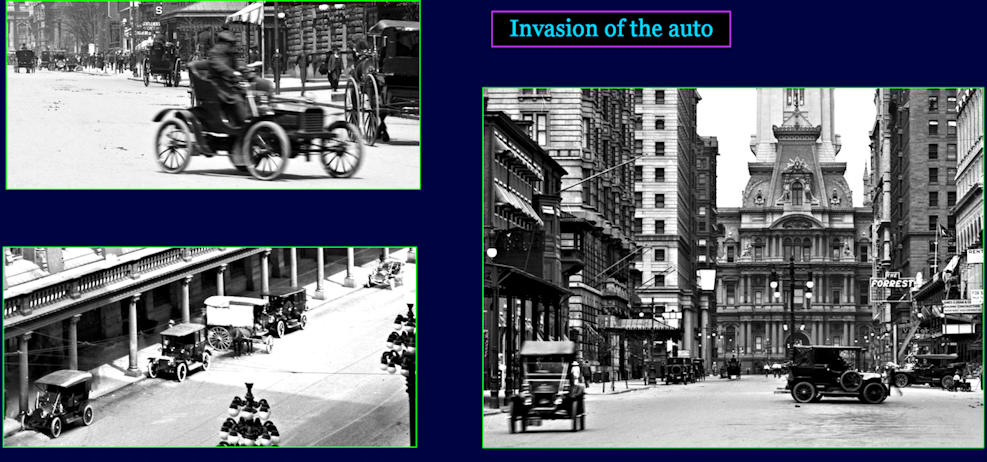
More PeopleThings change rapidly. In 1900, there are only 8,000 cars registered in the entire country. Just 10 years later, there are half a million. Nothing grows that quickly, but automobiles somehow manage the feat. Increased noise and growing traffic problems will be initially ignored. People can now go anywhere they want, anytime they want. All they need is a car, gasoline, and a good road. These will all come. |
| ||||||||||||||||
| |||||||||
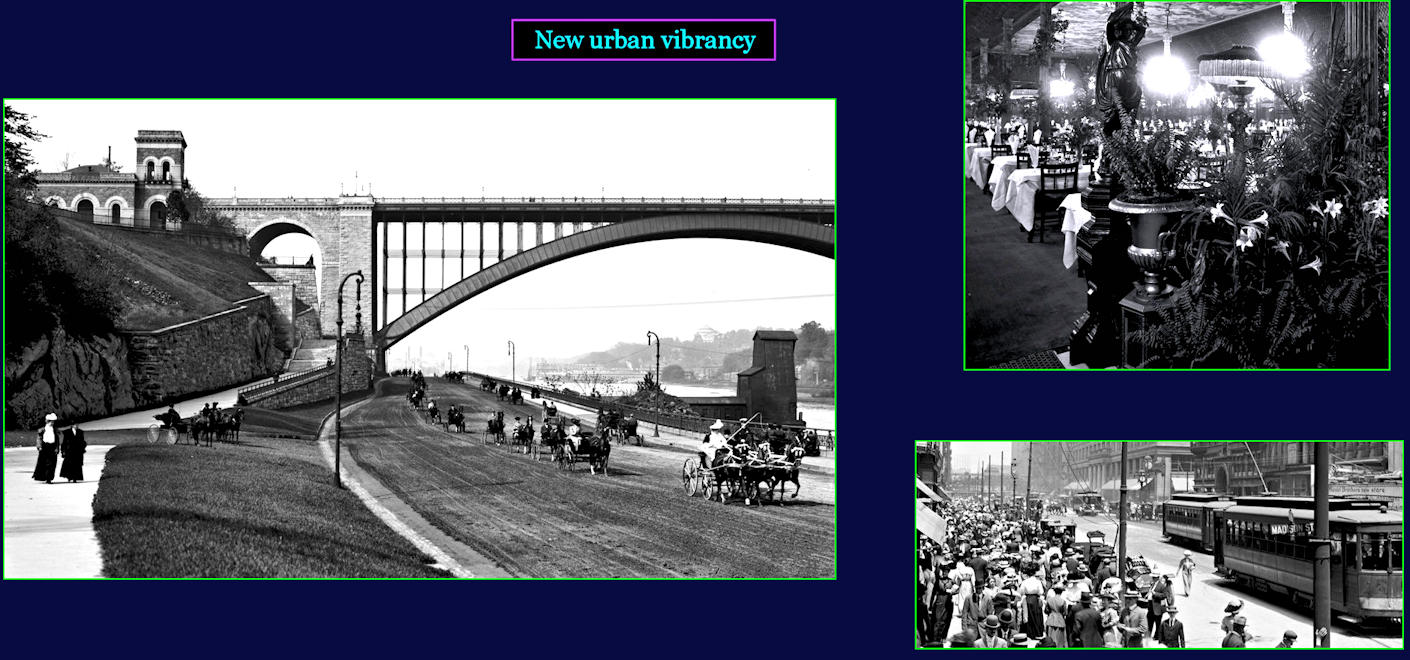
Genteel, but Exciting New York indulges the new fascination with speed by opening a new 'speedway' track along the Harlem River. This is reserved for carriages only, and seems to be intended mainly for gentry to display themselves. Electric indoor lighting is now available almost everywhere (top right). Many factories, office buildings and even steamships have their own steam-powered generators. Shopping is becoming increasingly popular, with fleets of streetcars to help people get around. | |||||||||
| |||||||||
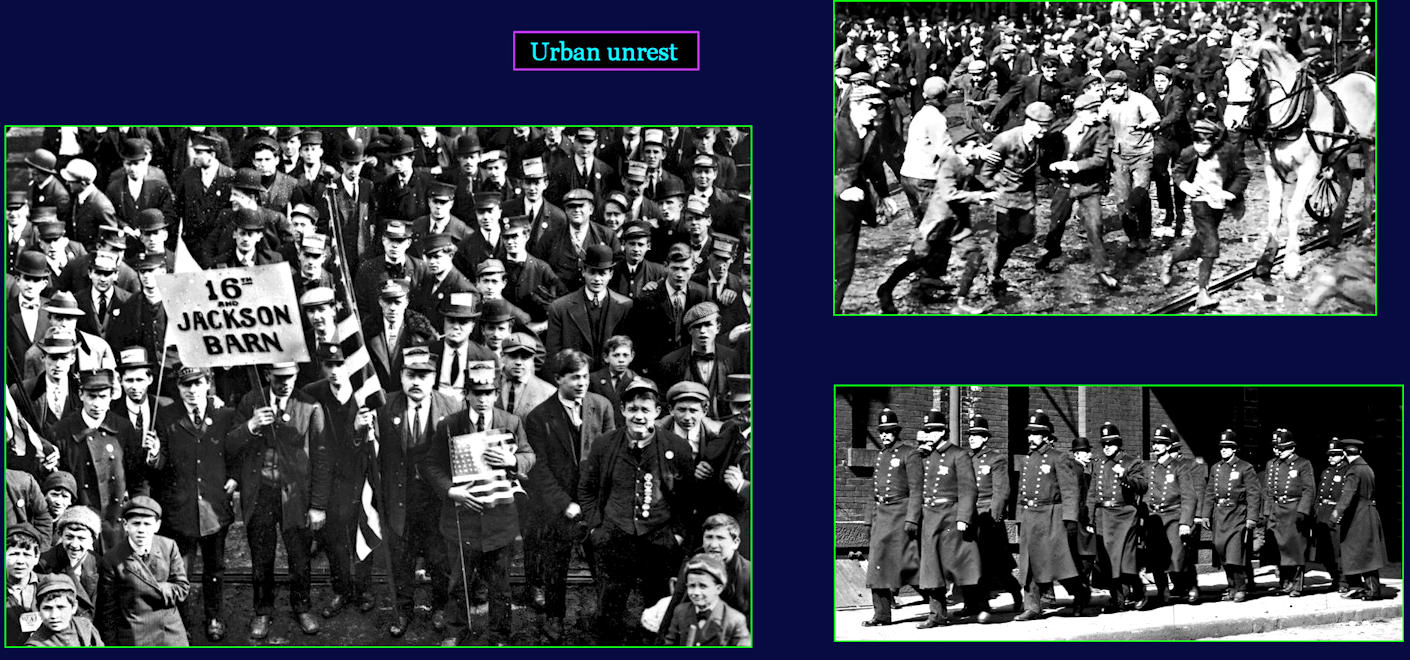
The Price of Change Not all the new changes in urban life are good. The working class does not share in most benefits, and begins demonstrating for better conditions. Philadelphia is hit by a strike against the streetcar company in 1910, demanding higher wages and a 10-hour limit on the workday. Management brings in strike-breakers from New York and Boston, and the unrest widens into a general strike. Police are needed to protect property. | |||||||||