| |
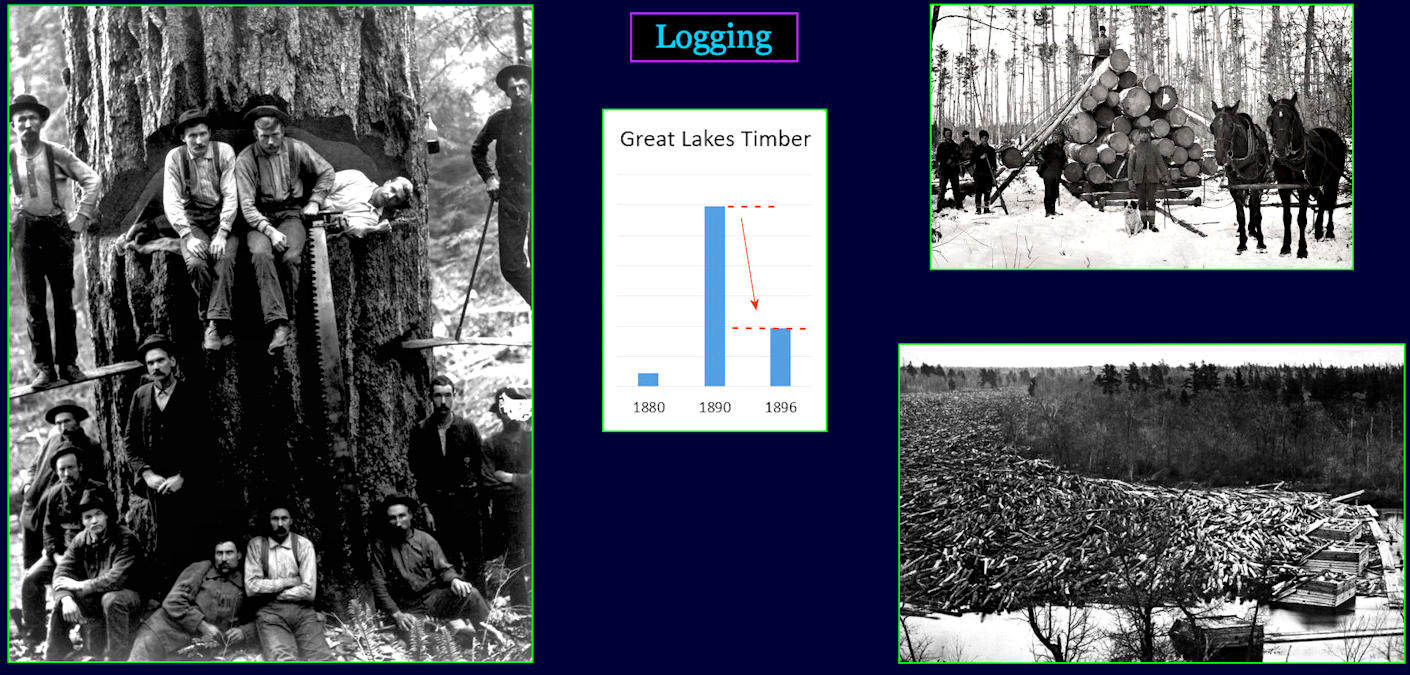
Men and Trees Western fir trees are huge, taking six men all day to bring one down (top left). The somewhat smaller Michigan pines are typically moved with horses during the winter, over frozen ground (top right). Wherever possible, logs are dragged to the shore, then rolled into the water during spring flooding season to float down to the mills. Sometimes they jam tight (lower right). |
| |||||||||
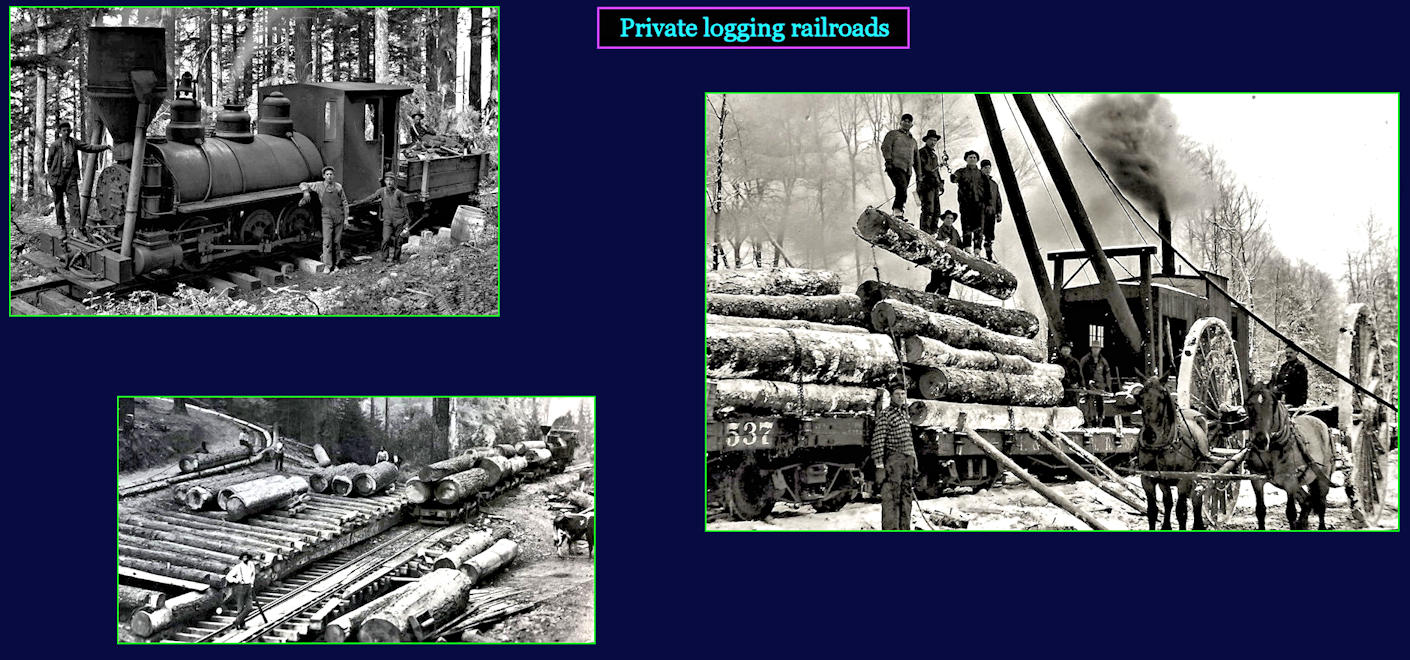
Wood by Rail The bigger logging operators eventually discover they can build their own railroads, right through the woods, to reach stands of trees far from the water (top left). This is often a two-step process, with logs arriving at the rail cars by other means. Hundreds of little narrow-gauge logging railroads are built in Michigan alone, which can be pulled up and moved as conditions dictate. When loggers are finished with an area, equipment is sometimes left to just rust away in the woods. | |||||||||
| |||||||||
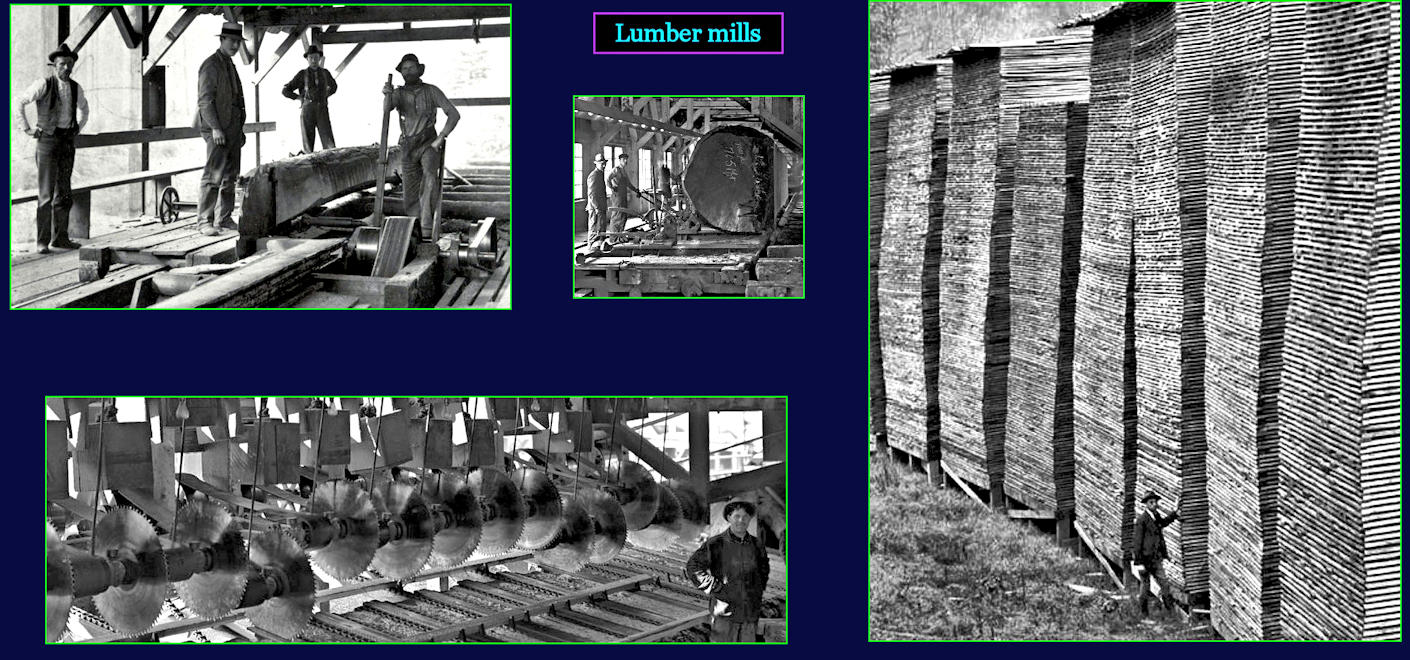
Where it all Goes The final destination for all that wood is the lumber mill, with its big circular saw blade (top) and smaller gang saws (bottom). Band saws are also sometimes used. Stacks of lumber drying out behind the mill soar beyond belief (right). | |||||||||