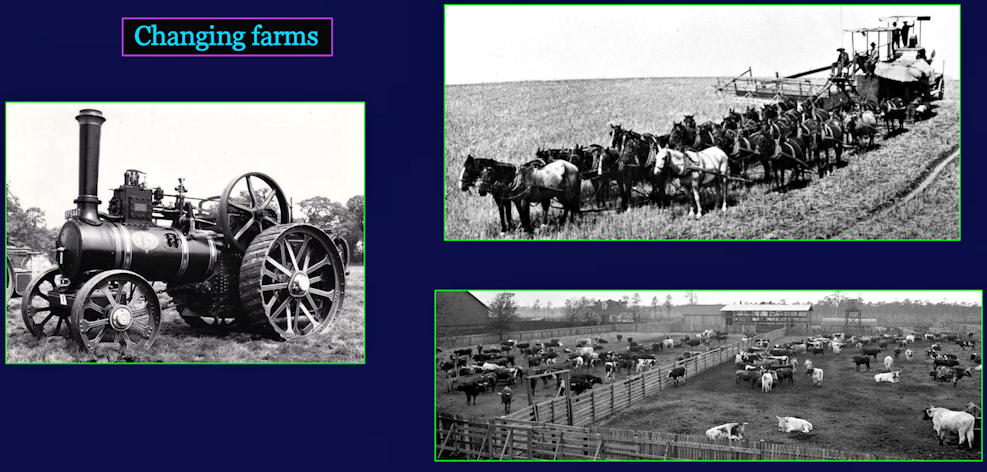
Bigger farmsMost still use horses to pull equipment, including the big grain 'combines' used in western wheat fields (upper right). These ungainly machines cut the wheat, extract the kernels, and discard the waste, all in a single pass. Corn is the biggest crop, but has to be mowed and harvested by hand. Hay is the third biggest crop, used to feed livestock during the cold, dark winter months. Cattle, pigs and sheep are all important farm products. |
| ||||||||||||||||
| |||||||||
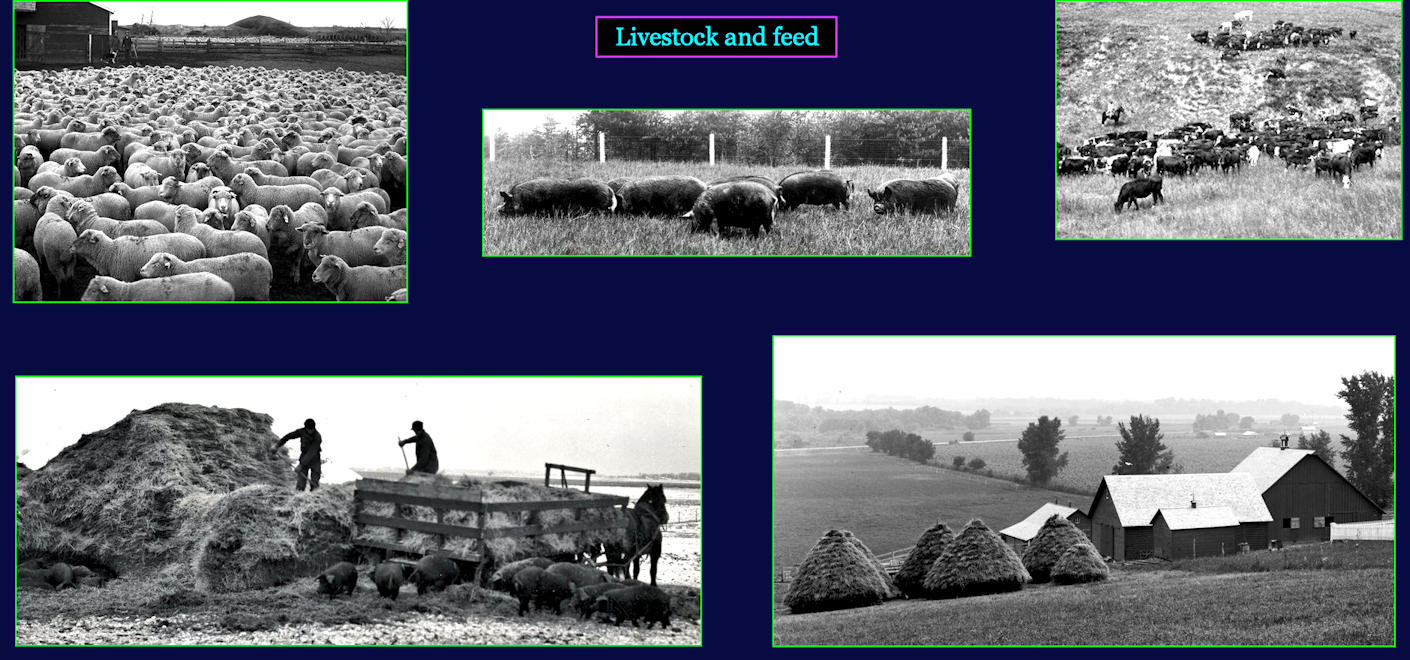
Money on the Hoof Farmers raise livestock for many reasons. Horses are needed for labor, and sold for good money. Sheep are easy to tend, and can be shorn of their wool twice a year. Dairy cows support a substantial business in milk, butter and cheese. Cattle and pigs are raised in approximately equal numbers, and shipped off to Chicago for slaughtering. Hay is a key ingredient for livestock farmers, as grazing opportunities are limited in the winter. Dried corn, oats and alfalfa are also important winter feed. | |||||||||
| |||||||||
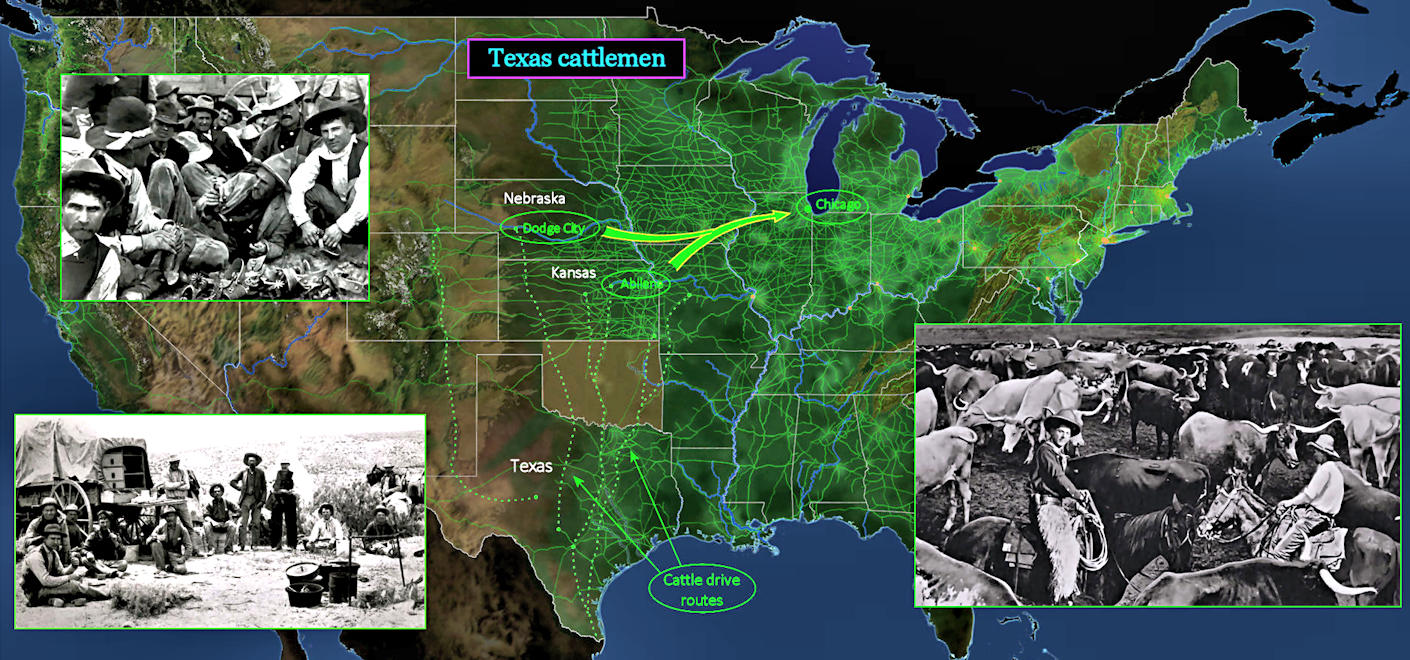
Brief Moment of Glory Texas cattlemen perform an important function for the meat-packing industry, until barbed wire divides up most of the free-range Texas grasslands, ending the big drives around 1900. Cattle are typically turned loose in open country, to fend for themselves until roundup time, when cowboys gather them together again. The drive to northern rail connections is 1,000 miles long, and takes two months. A dozen cowboys can drive 3,000 head of cattle, with three horses for each cowboy. | |||||||||