| |
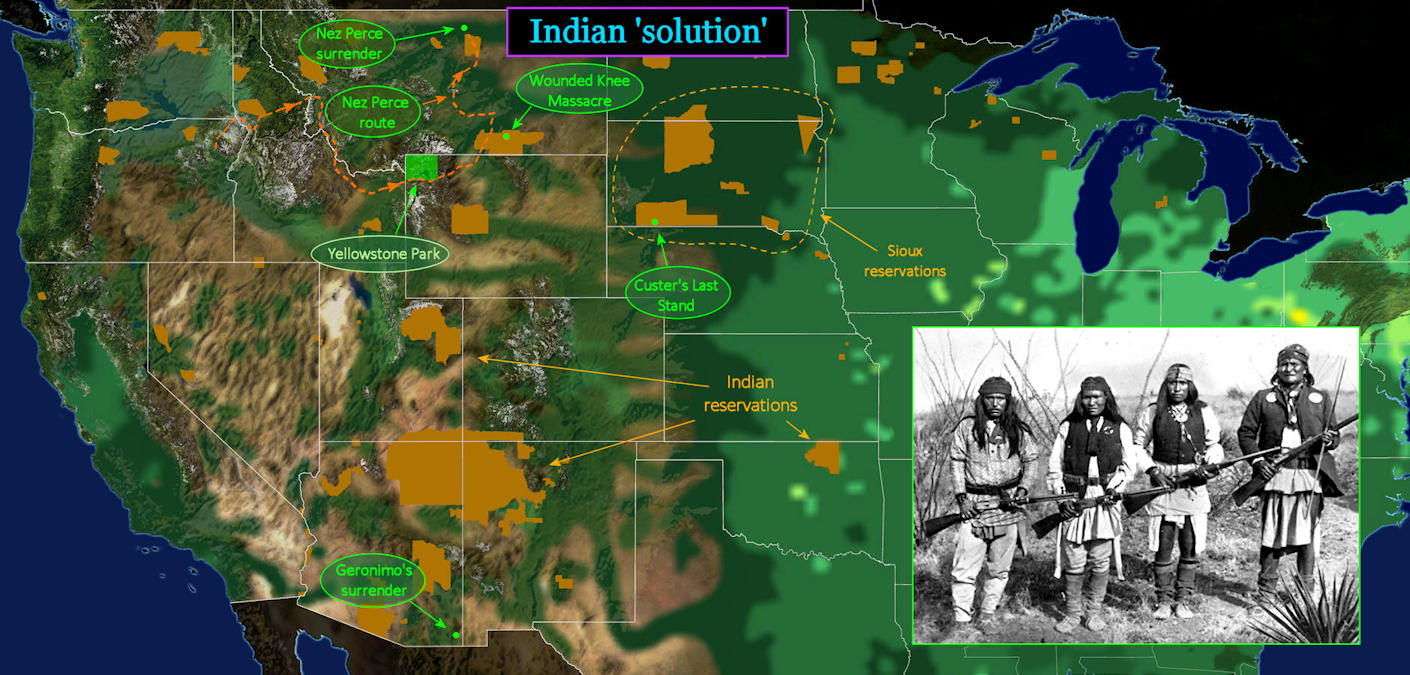
Rounding Up the Holdouts After Nez Perce Indians kill 20 white settlers in a raid, the Army chases them more than a thousand miles (GREEN dotted line), before they finally surrender. Far to the south, a determined Indian named Geronimo leads a small band of Apache guerilla fighters, who are the last Indians to be captured. Areas highlighted in BROWN are Indian reservations, which remain to this day. |
| |||||||||
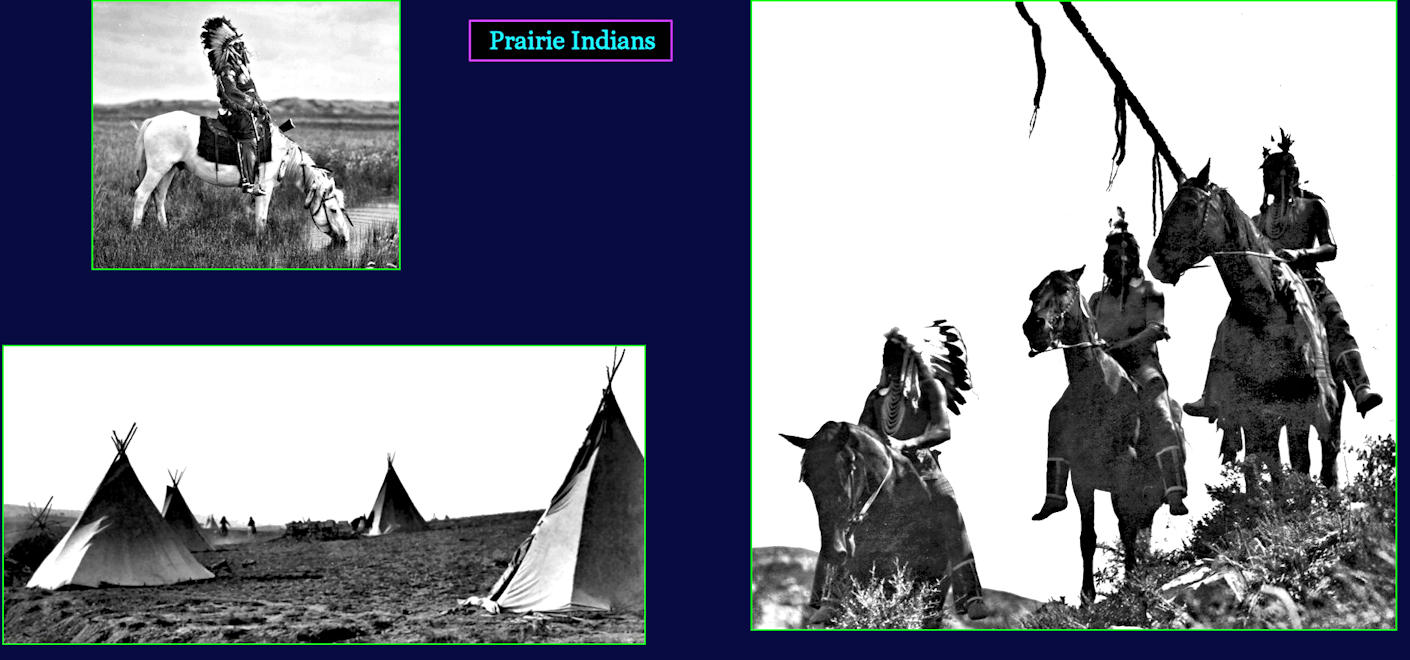
Mighty Sioux Of all the Indians, the various tribes that form the Sioux Nation are the most numerous. Their homeland range includes most of Minnesota and the Dakotas. The so-called Indian Wars start with actions against the Sioux, who are gathered for a great celebration of 8,000 Indians. General Custer stumbles on the group at their encampment, which includes perhaps 2,000 warriors, and makes an ill-advised attack. His entire 700-man command is wiped out, causing a great national outcry and demands for revenge. | |||||||||
| |||||||||
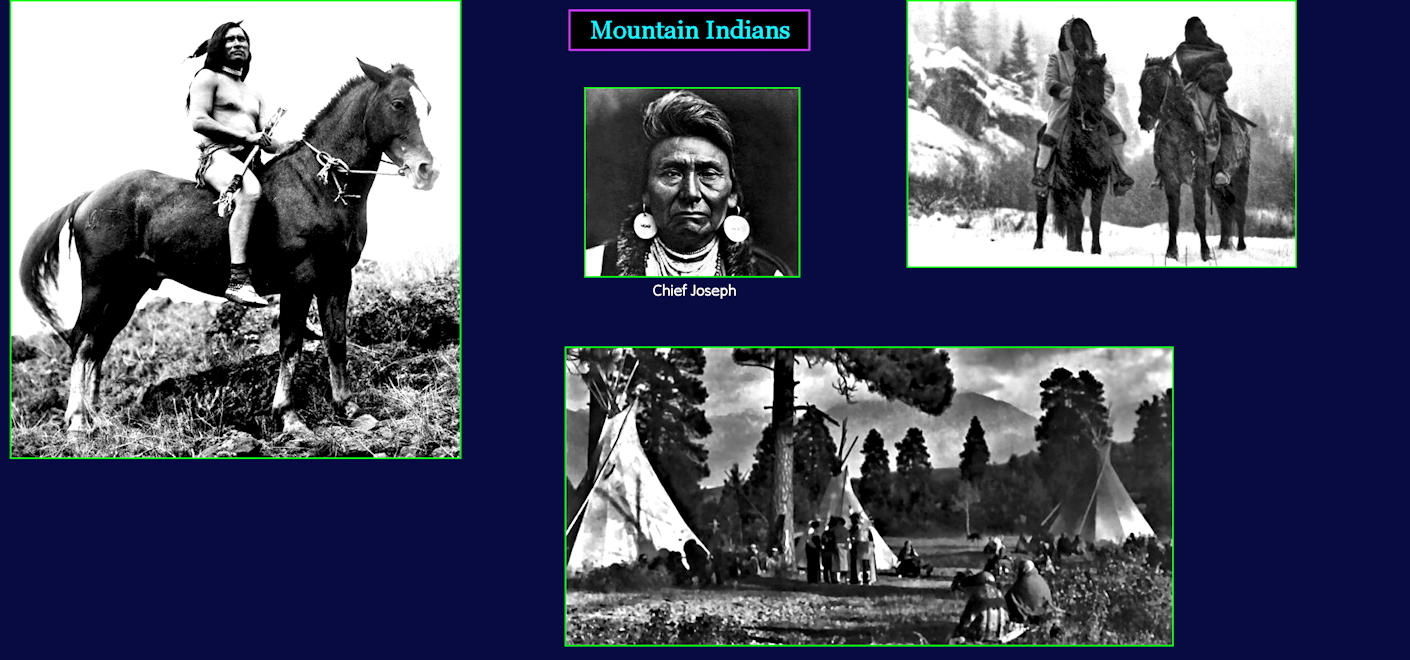
Chief Joseph The year after Custer's disaster, the cavalry begins its relentless pursuit of the Nez Perce Indians, which lasts all summer (see map at top of this page). They are led by Chief Joseph (top center), who finally surrenders with a profound statement summarizing the Indian plight. 'I am tired of fighting. Our chiefs are killed ... The little children are freezing to death ... My people have no blankets, no food ... My heart is sick and sad. From where the sun now stands, I will fight no more, forever.' | |||||||||