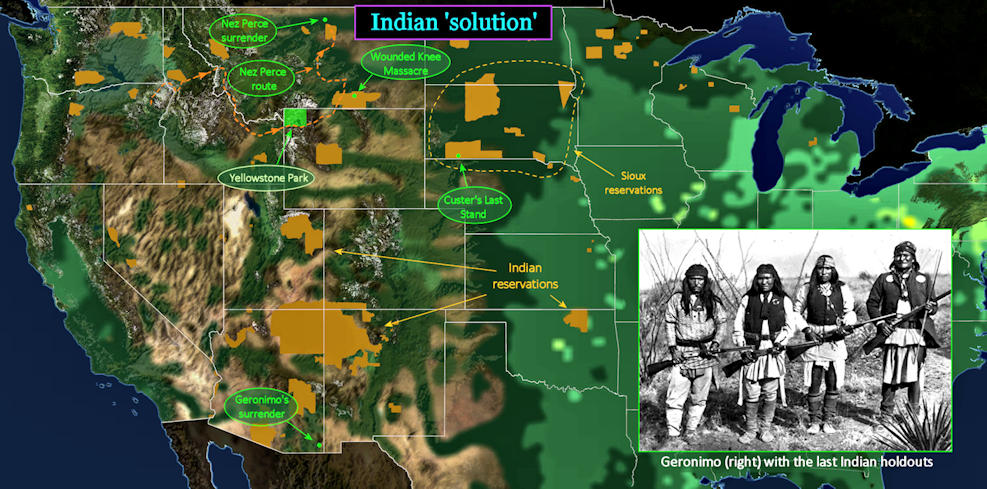
Chasing them DownThis is a sad period in American history, with heroic tales ending in tragedy for the Indians. The Indians score an initial success, wiping out Custer's pursuing cavalry in South Dakota, but elsewhere are hunted down. Hundreds of Indians are killed in systematic massacres by the Army, such as at Wounded Knee. But many thousands more die in vigilante raids by white settlers in California, alone. Even larger numbers die of disease. Between disease and vigilante raids, the number of Indians in California declines by 100,000 during just the first two years of the gold rush. In the end, almost all remaining Indians are confined to reservations shown here. |
| ||||||||||||||||
| |||||||||
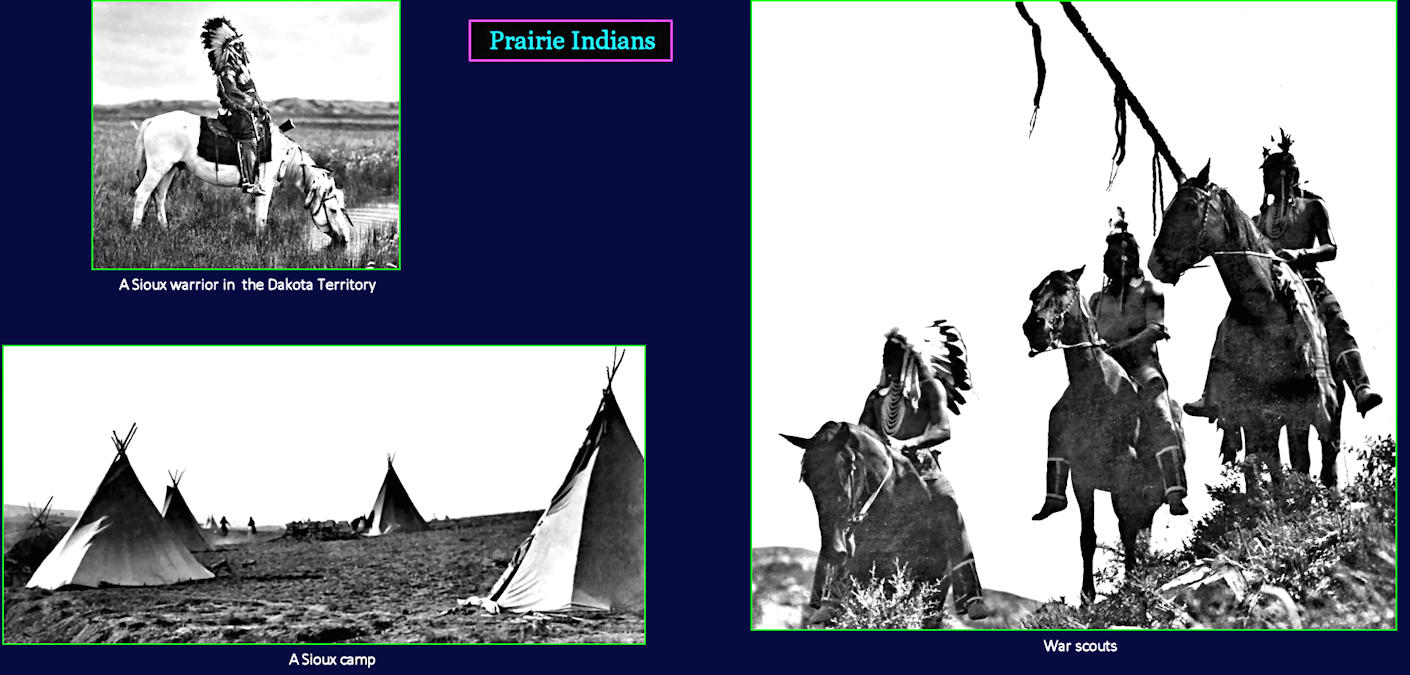
Mighty Sioux Of all the Indians, the various tribes that form the Sioux Nation are the most numerous. Their homeland range includes most of Minnesota and the Dakotas. The so-called Indian Wars start with actions against the Sioux, who are gathered for a great celebration of 8,000 Indians. General Custer stumbles on the group at their encampment, which includes perhaps 2,000 warriors, and makes an ill-advised attack. His entire 700-man command is wiped out, causing a great national outcry and demands for revenge. | |||||||||
| |||||||||
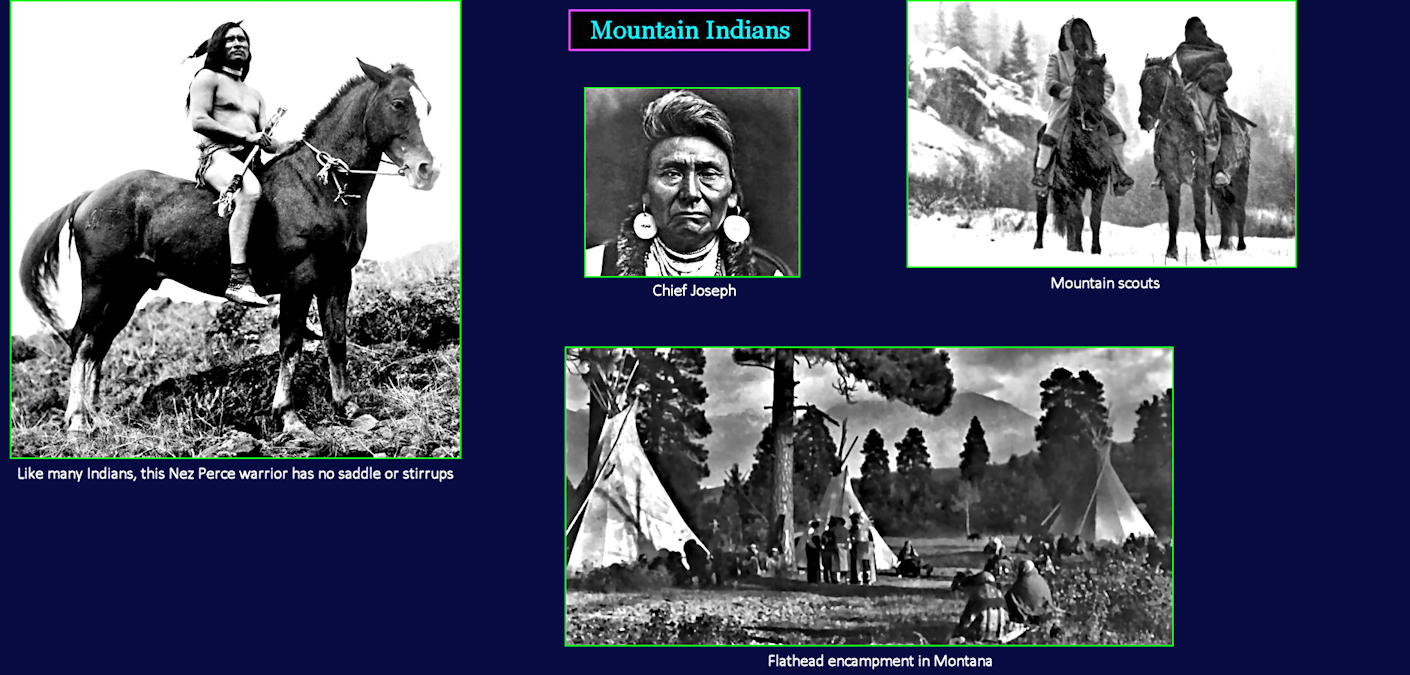
Chief Joseph The year after Custer's disaster, the cavalry begins its relentless pursuit of the Nez Perce Indians, which lasts all summer (see map at top of this page). They are led by Chief Joseph (top center), who finally surrenders with a profound statement summarizing the Indian plight. 'I am tired of fighting. Our chiefs are killed ... The little children are freezing to death ... My people have no blankets, no food ... My heart is sick and sad. From where the sun now stands, I will fight no more, forever.' | |||||||||
| |||||||||
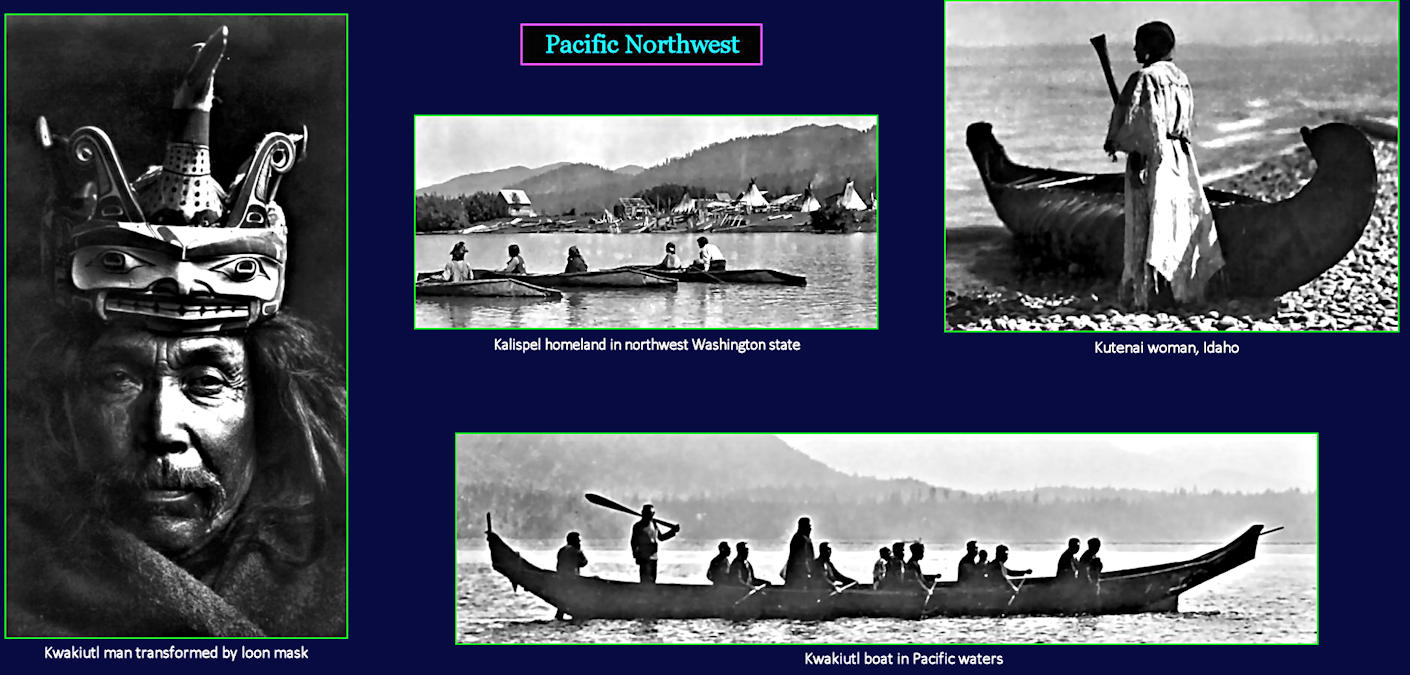
A Different World The Indians of the Pacific Northwest cause little trouble for white settlers, and escape the worst of the Indian Wars. Their isolated coastal settlements center around fishing, with fantastic masks, totem poles and ceremonial feasts. | |||||||||
| |||||||||
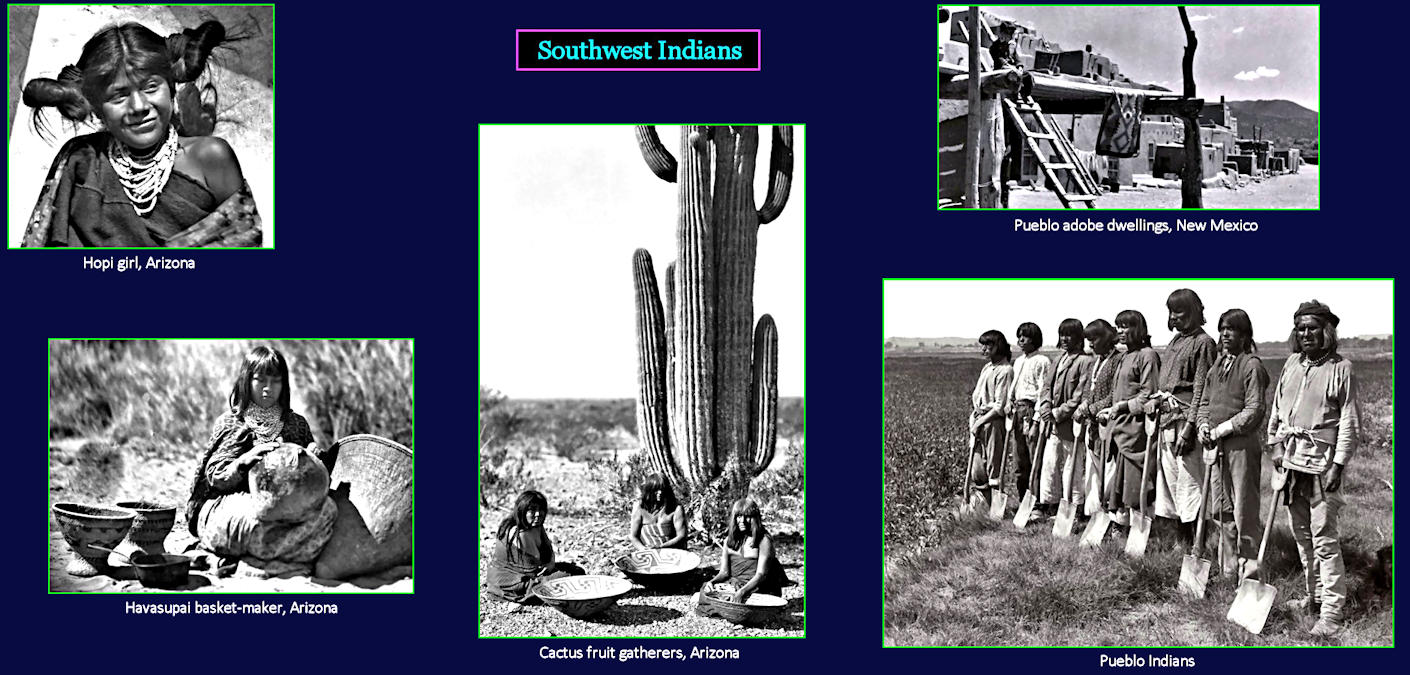
Sun-Baked The scattered Indians of the Desert Southwest pose little threat to white settlers, with the exception of the aggressive Apache Indians of southern Arizona. Nonetheless, they are all confined to reservations. | |||||||||
| |||||||||
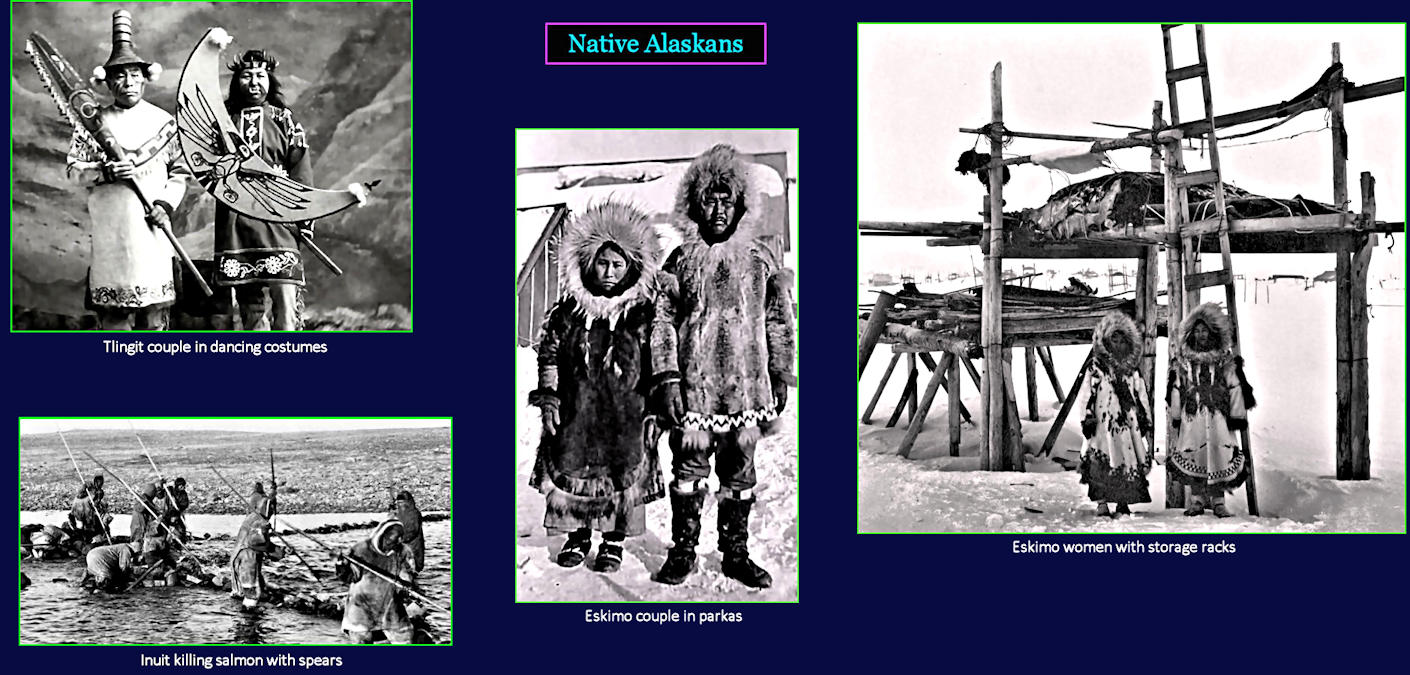
Salmon and Snow Alaska has been a US possession since it was purchased from the Russians, just after the Civil War. With 30,000 native Eskimos, it is little noticed until gold is discovered in 1896, triggering the Klondike Gold Rush. White whalers, hunters and fishmen quickly brush the Eskimos aside, and their population continuously declines. | |||||||||