| |
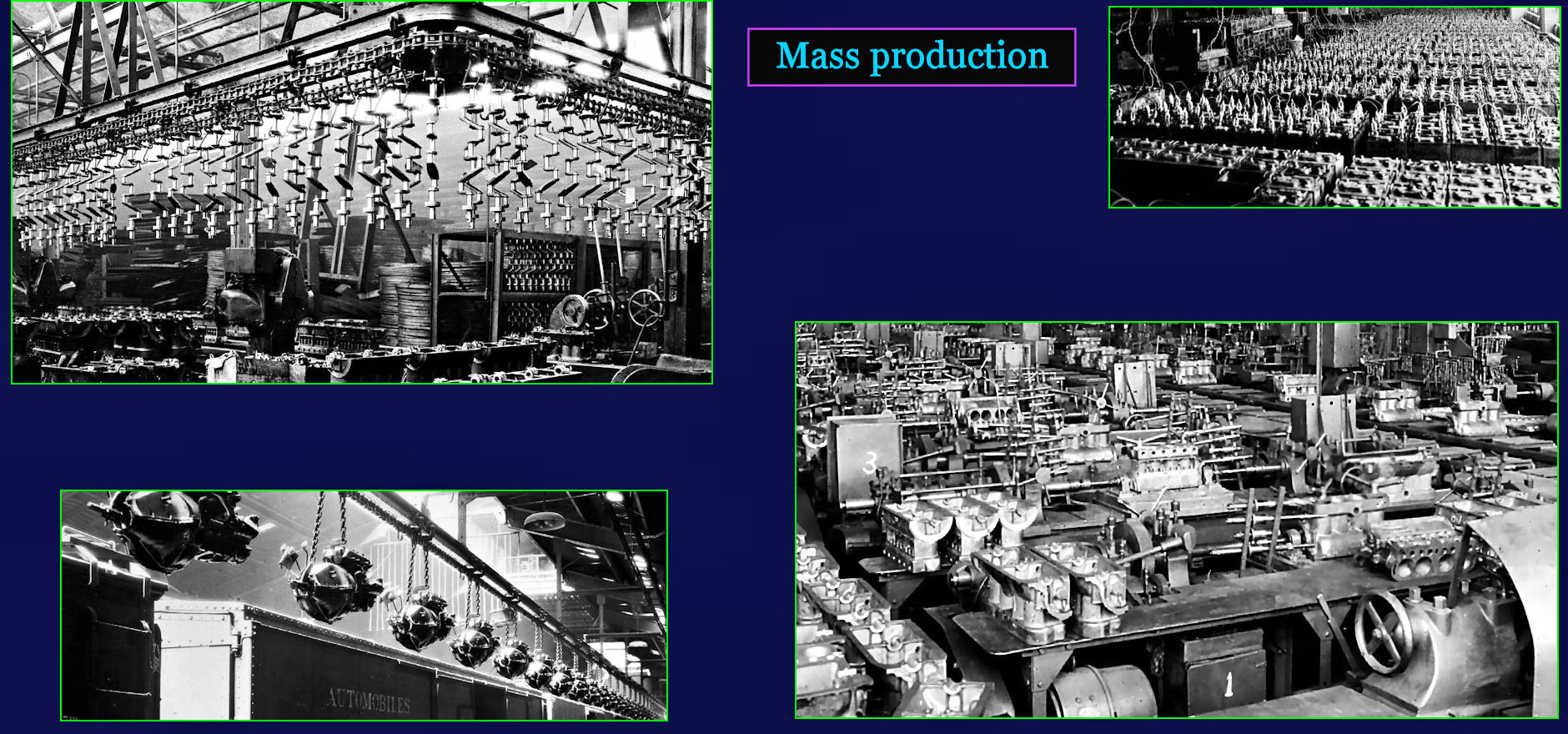
Standardized Parts Autos coming out of Ford's huge new plant outside Detroit are broken down into many smaller sub-assemblies. Many of these need their own conveyor systems to maintain high production rates. Some are overhead, while others travel on a moving bed of rollers. Crankshafts, motor blocks, batteries, axles, mufflers and seat upholstery all have their own production areas. |
| |||||||||
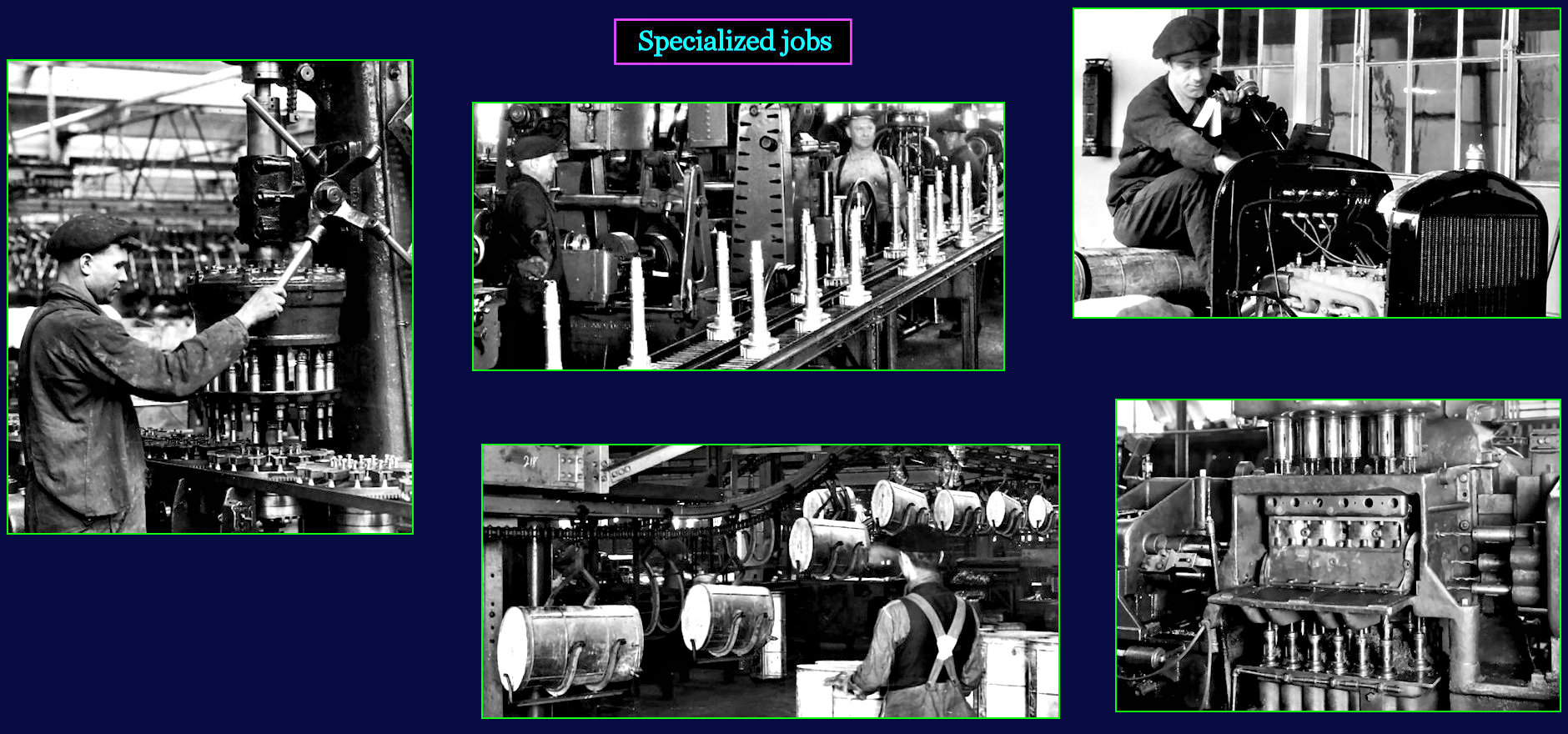
Efficient, but Mind-numbing To maximize efficiency, every complicated task is broken down into a set of small sub-tasks, that only require a few simple operations, repeated all day. This produces workers who are highly skilled at specific operations. But it also results in deadening boredom and fatigue, especially on the main line. The assembly line moves at a constant speed, forcing all workers on the line to complete their tasks at the same rate, regardless of how they're feeling. This drives many workers to quit' until pay rates are doubled. | |||||||||
| |||||||||
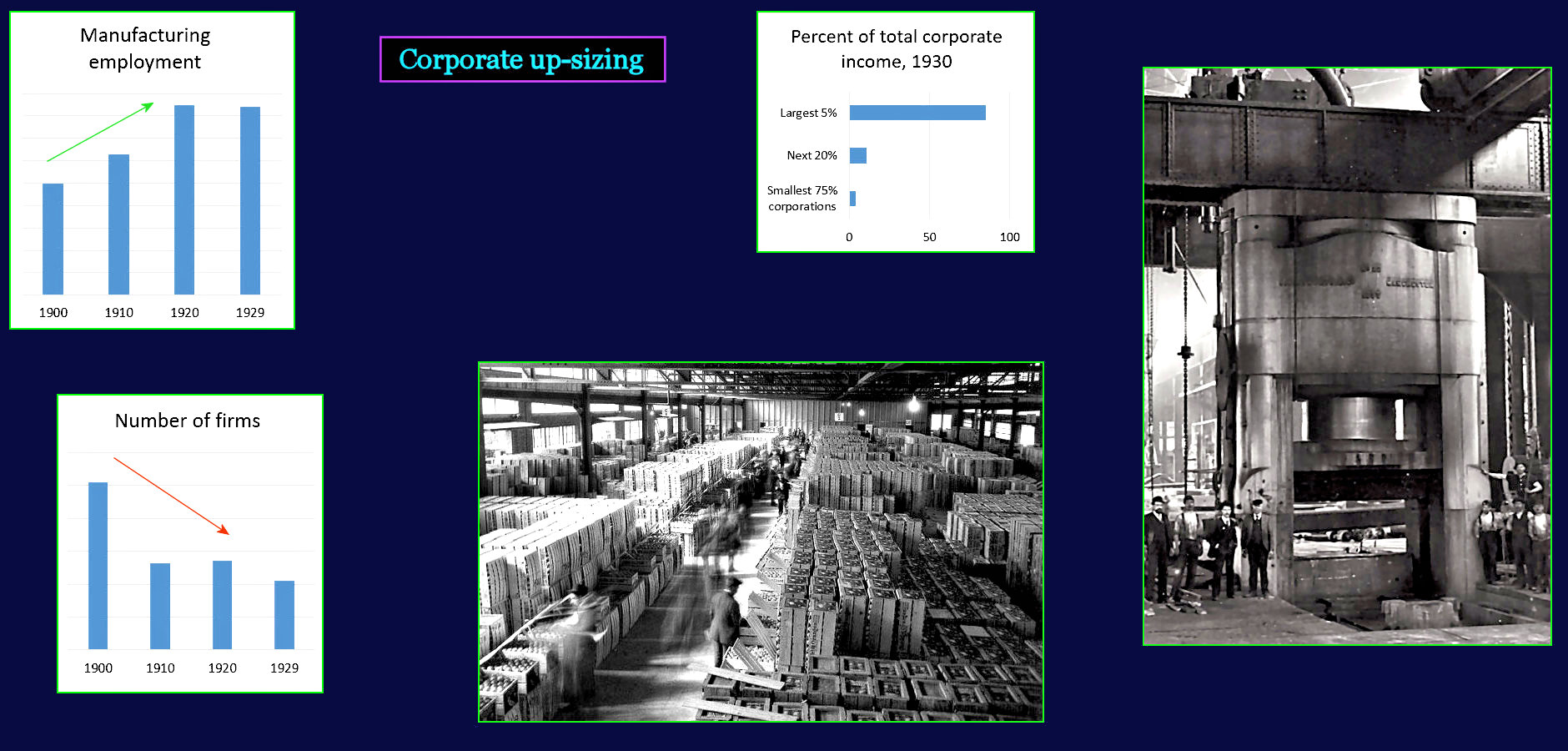
Early Consolidation Businesses all across America are getting larger, sometimes through expansion of plants, but often by merging with rivals, or simply buying them out. The two charts at left show a growing number of workers, but a shrinking number of firms, indicating that the average size is increasing. This trend towards consolidation results in the biggest firms gobbling up almost all the business (chart, top center). By 1930, there are 200 firms employing at least 2,500 workers, and averaging 5,000 each. | |||||||||