| |
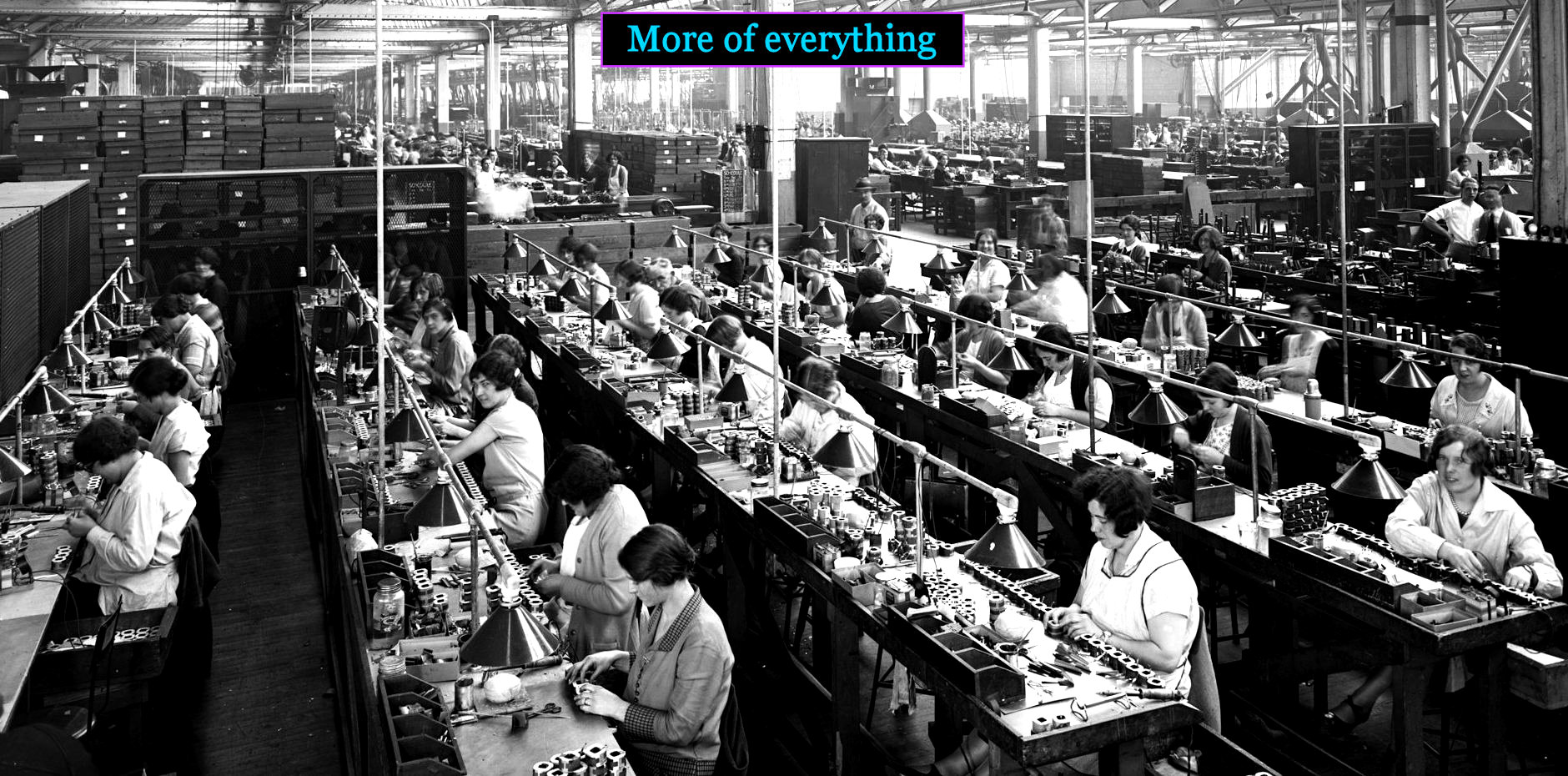
Nine Million Radios by 1930 These women are assembling components at America's leading radio manufacturer. The parts visible on the assembly tables are made in separate rooms full of machinery. Workers like these are enjoying a new kind of industrial work, in well-lit facilities with actual seats. Amazing. Never before have manufacturing workers actually been able to sit down on the job. |
| |||||||||
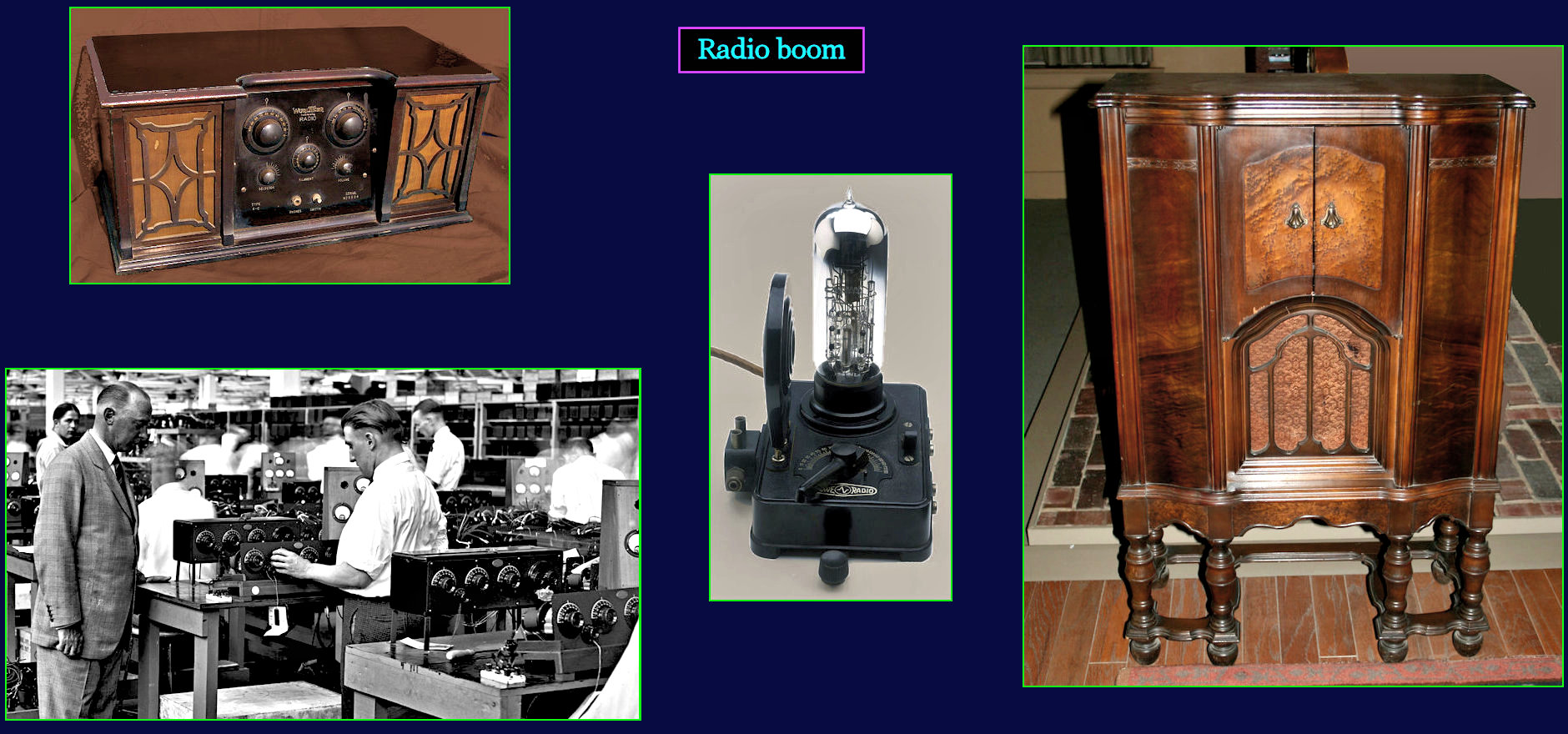
Vacuum Tubes Make it Possible Henry Ford demonstrates that if you have a product people want, at a price they can afford, your sales are only limited by your ability to produce the product. Mass-produced radios are made possible by the development of the vacuum tube (center), which enables weak radio signals to be amplified, and transmitted over long distances. This, in turn, enables people everywhere to enjoy music and variety shows in their own living room. It's a national sensation. | |||||||||
| |||||||||
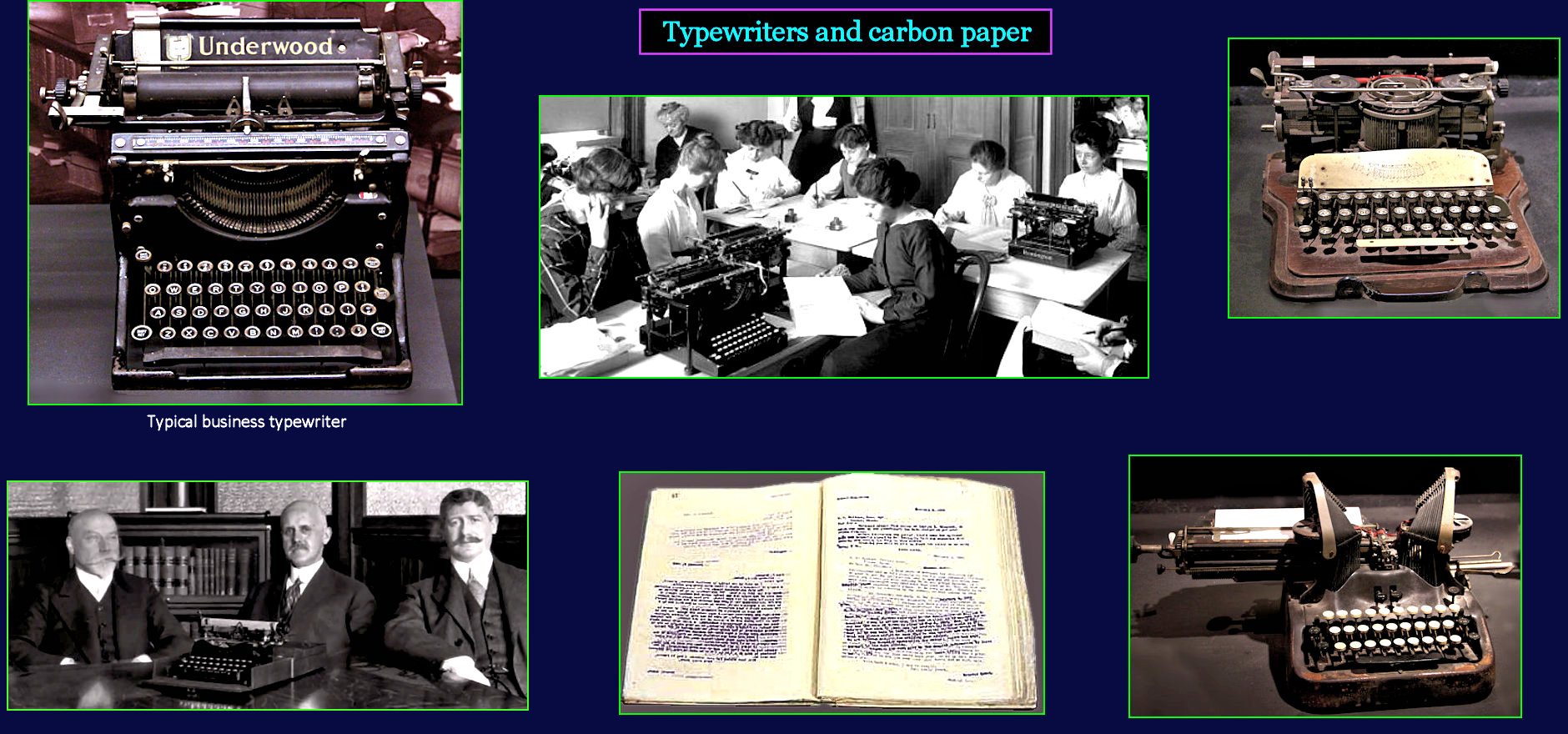
Business Before Copiers Amazingly, businesses have no good way to make copies of the documents they create every day, like orders, invoices and office correspondence. 'Copy presses' can make a few copies of something hand-written in special ink, but only if you act right away. A much better solution is to combine the typewriter with a sheet of carbon paper. The impact of a typewriter key is able to penetrate the original document, simultaneously creating a copy underneath. With forceful typing, two or three copies can be generated. | |||||||||