| |
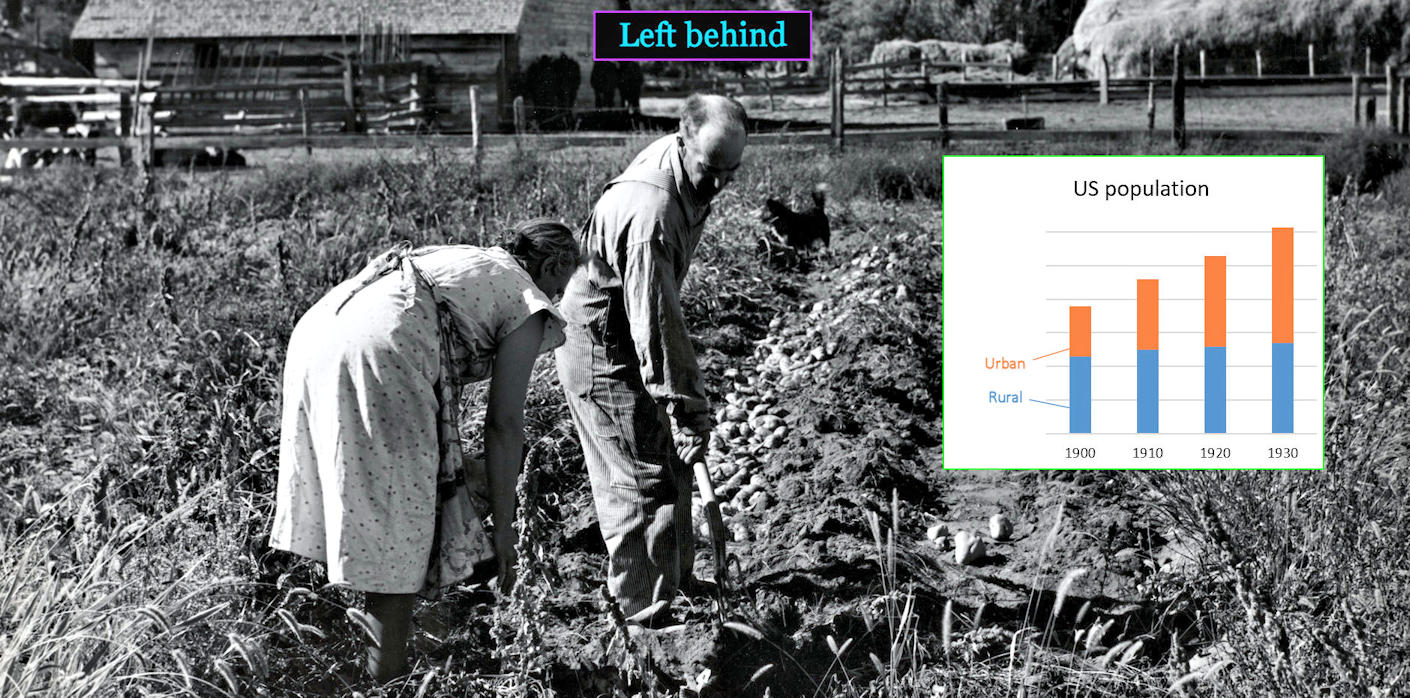
Traditional Farm Life America's urban population (ORANGE bars on chart) continues growing steadily throughout the 1920's. The farming population (in BLUE) is also growing, but just barely. It's hard to keep the kids on the farm after they've seen the big city, but most rural parents are still intent on making a go of it on the family farm. |
| |||||||||
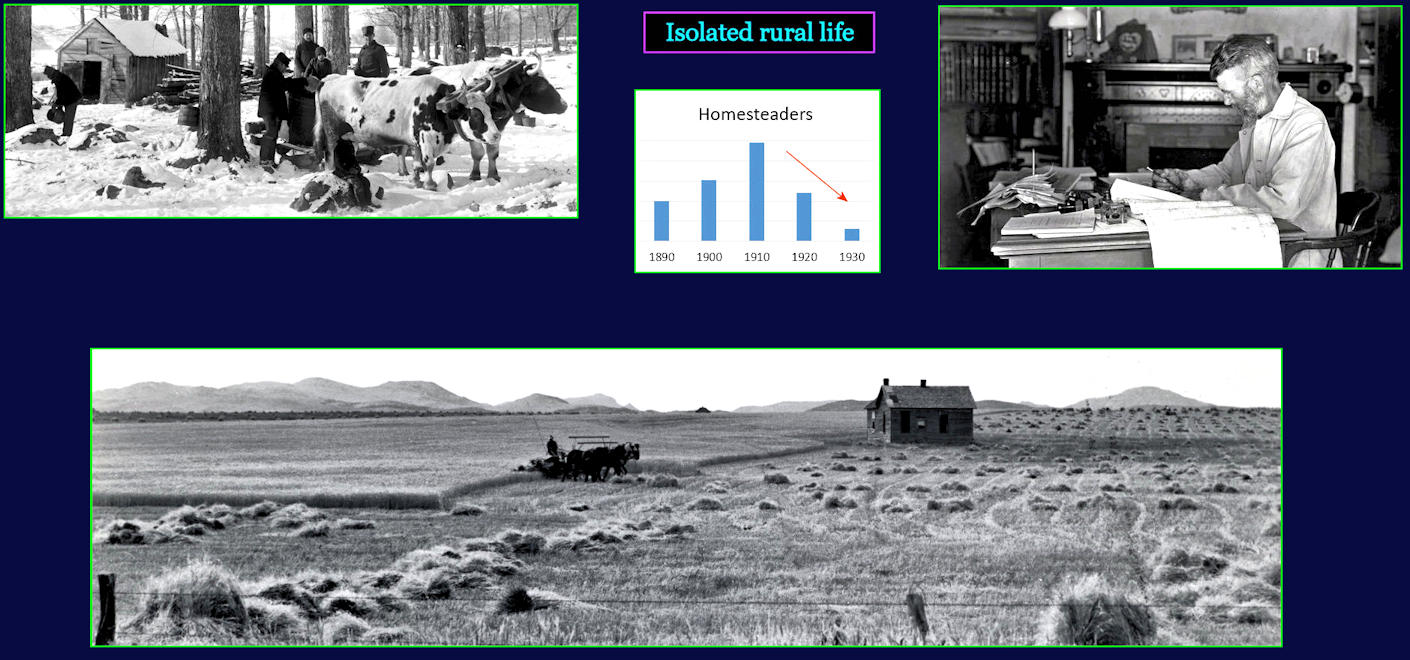
Keeping the Farm Going Out on the farm, yearly family income is not just dependent upon favorable weather. Wholesale prices for grain and livestock are kept artificially low by shippers and distant commodity brokers who control the transport networks, including the owners of grain elevators necessary to manage rail shipments. Too often, farmers struggle to make sense of their finances through dark evening hours. By 1930, the allure of establishing a frontier farmstead is gone (see chart). | |||||||||
| |||||||||
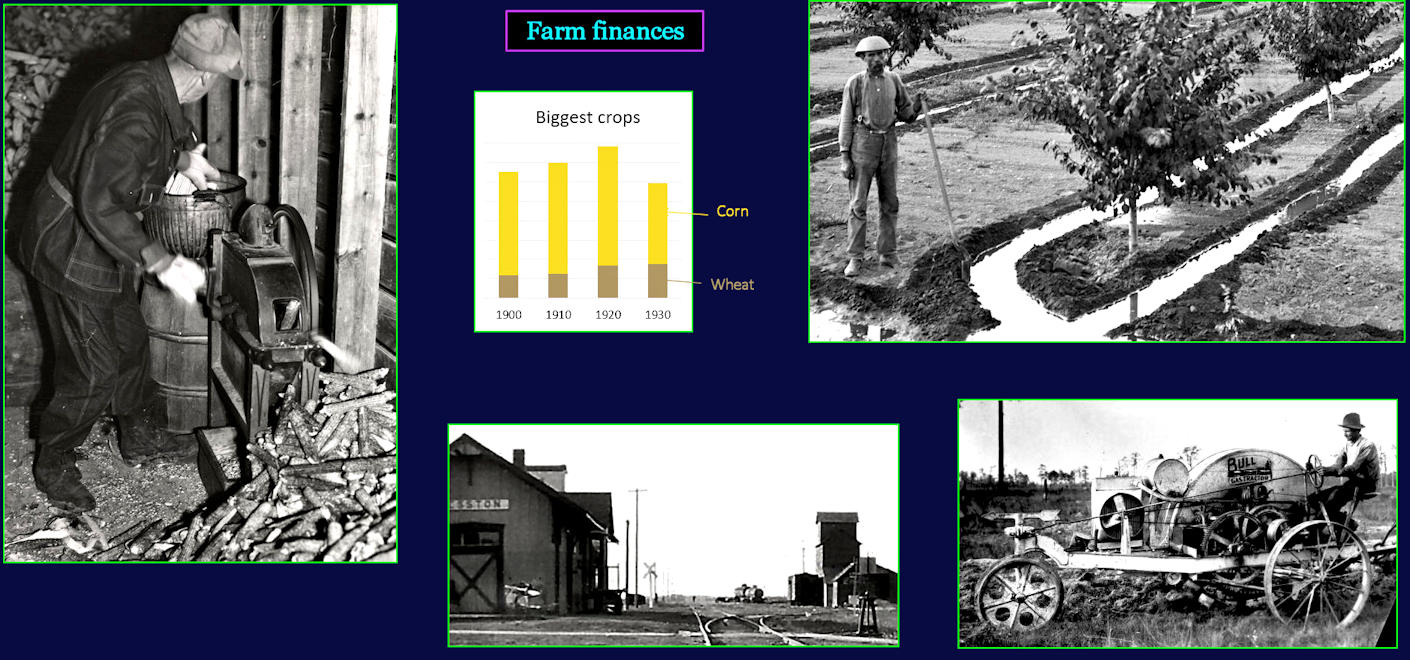
No Money to Spare While manufacturers fill their factories with specialized equipment tailored for each task, most farmers still use wooden contraptions pulled by animals. Even small machines, like the hand-cranked device used to strip corn kernels from the cob (top left), cost money. Barns on some larger farms begin to fill with improved equipment, but often by increasing the mortgage. By 1930, there are six million farms, but barely a million tractors. Only one farm in a hundred owns a combine harvester. | |||||||||