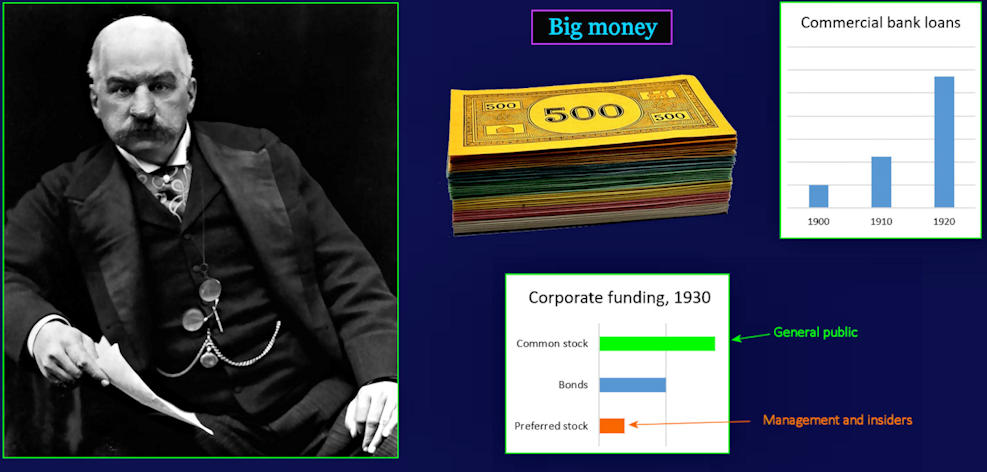
Financial InnovationsThis is also true of banks. The largest bank in the world is now based in New York, having merged with a string of rival banks during the 1920s. As it grows larger, it gradually transforms itself into an investment bank. Unlike commercial banks, which take in deposits and issue banknotes backed by these deposits, investment banks act as brokers, putting together deals between corporations and deep-pocketed investors, and charging advisory fees. |
| ||||||||||||||||
| |||||||||
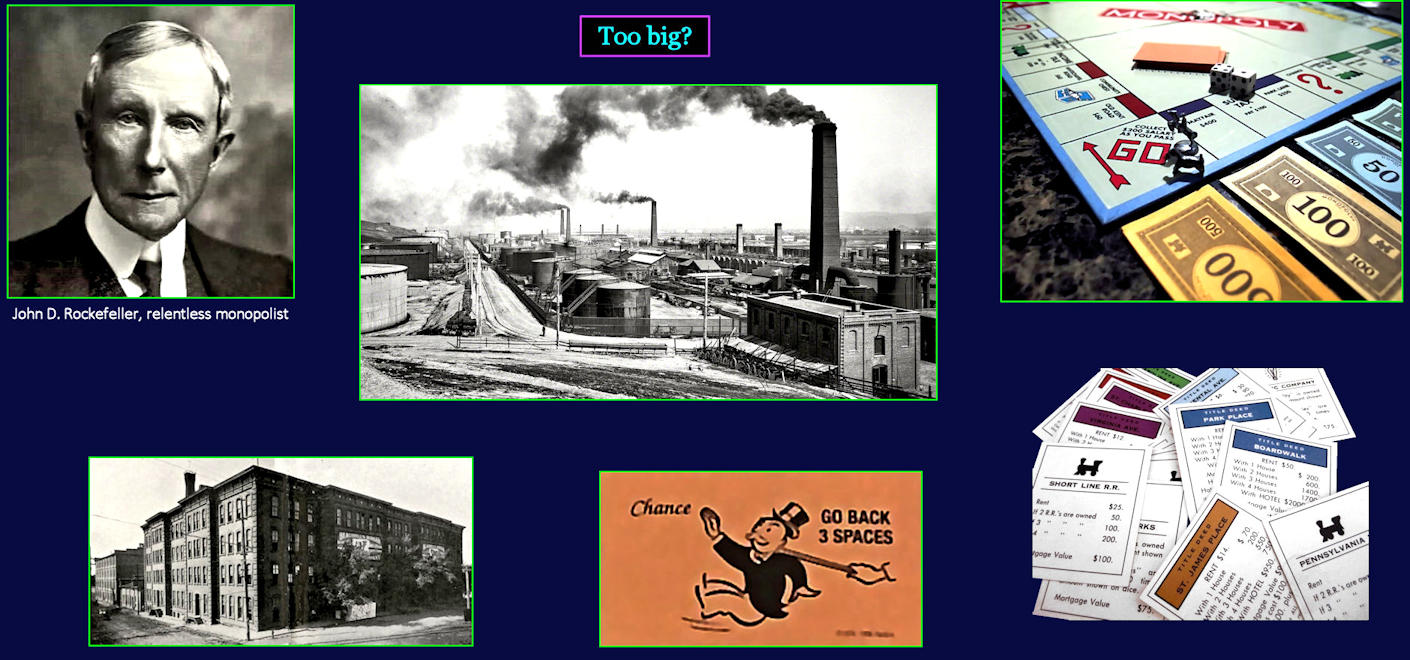
Pushing the Limits Inevitably, some industrialists take the game too far. John D. Rockefeller, who formed Standard Oil to refine petroleum into kerosene, hates competition. Any competition. He resorts to extreme tactics to absorb or ruin all his smaller rivals, achieving a near-total monopoly of the refining industry. The Supreme Court steps in, declaring that Standard Oil has restrained trade, and must be broken up. American Tobacco, another near-monopoly, is also broken into pieces by the Court, in a separate case. | |||||||||
| |||||||||
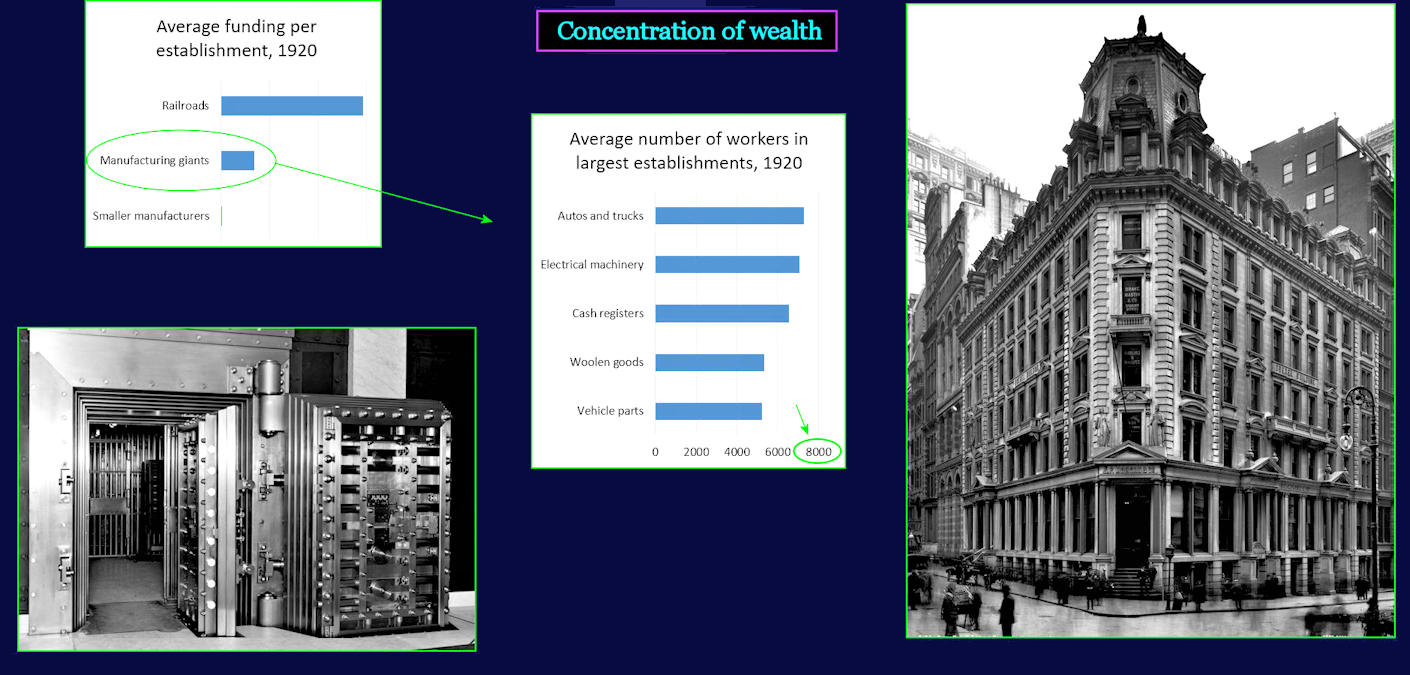
Unstoppable Giants Despite the break-up of two early monopolies, the continuing trend is towards the concentration of wealth in fewer and fewer hands. This trend persists to the present day. New manufacturing giants, led by Ford, are built on funding that is 200 times greater than that of the average manufacturer (barely visible, in chart at top left). The railroads are even bigger financial monsters. At the same time, business is being re-directed from regional banks into the hands of the biggest New York firms (right). | |||||||||