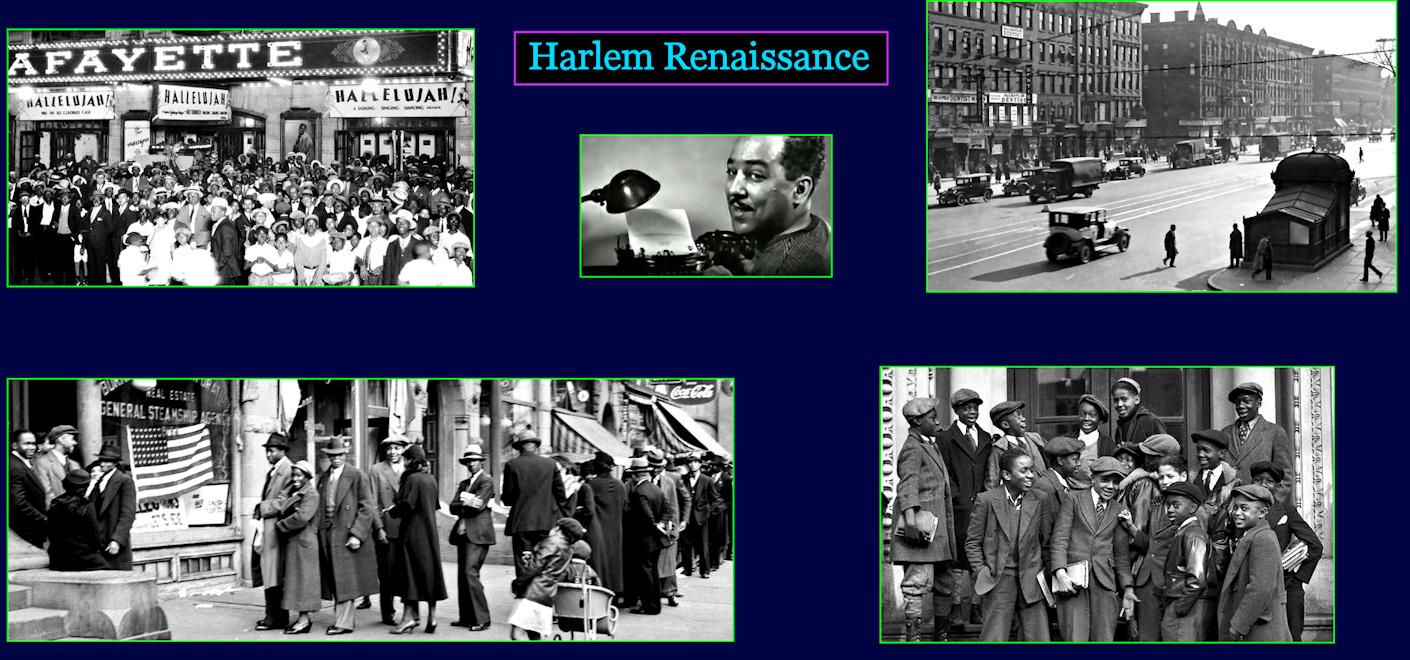
Blacks ReappearIt's a tentative beginning, and is limited to Harlem, near the northern fringe of New York's expanding footprint. But what begins as a small enclave of affluent black families quickly mushrooms into a full-blown black oasis. All the business establishments are black, as are the local police. But New York white elites are beginning to discover that Harlem offers the best entertainment in town, the best music (by far), and the hottest dancers. |
| ||||||||||||||||
| |||||||||
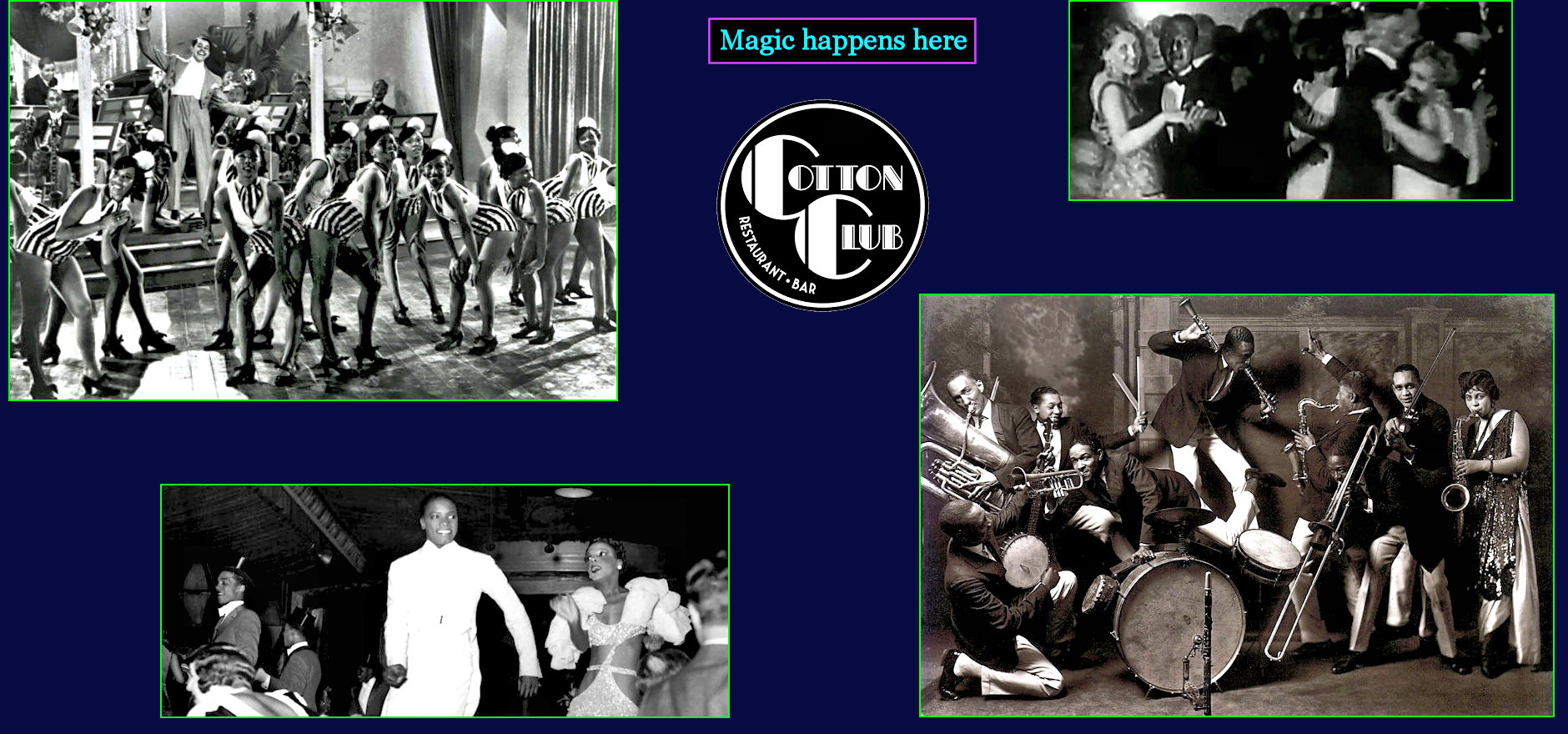
Hottest Show in Town The Cotton Club is the throbbing center of entertainment, though only one of several 'whites-only' clubs in Harlem. It's been renovated by a local gangster, who puts in lots of money to dress it up in exotic, jungle style. Louis Armstrong, Duke Ellington, Cab Calloway and King Oliver all rise to prominence at the Cotton Club. The clientele is white, while performers and wait staff are all black . This could only happen in Harlem. Anywhere else, it would be banned as scandalous, or outright illegal. | |||||||||
| |||||||||
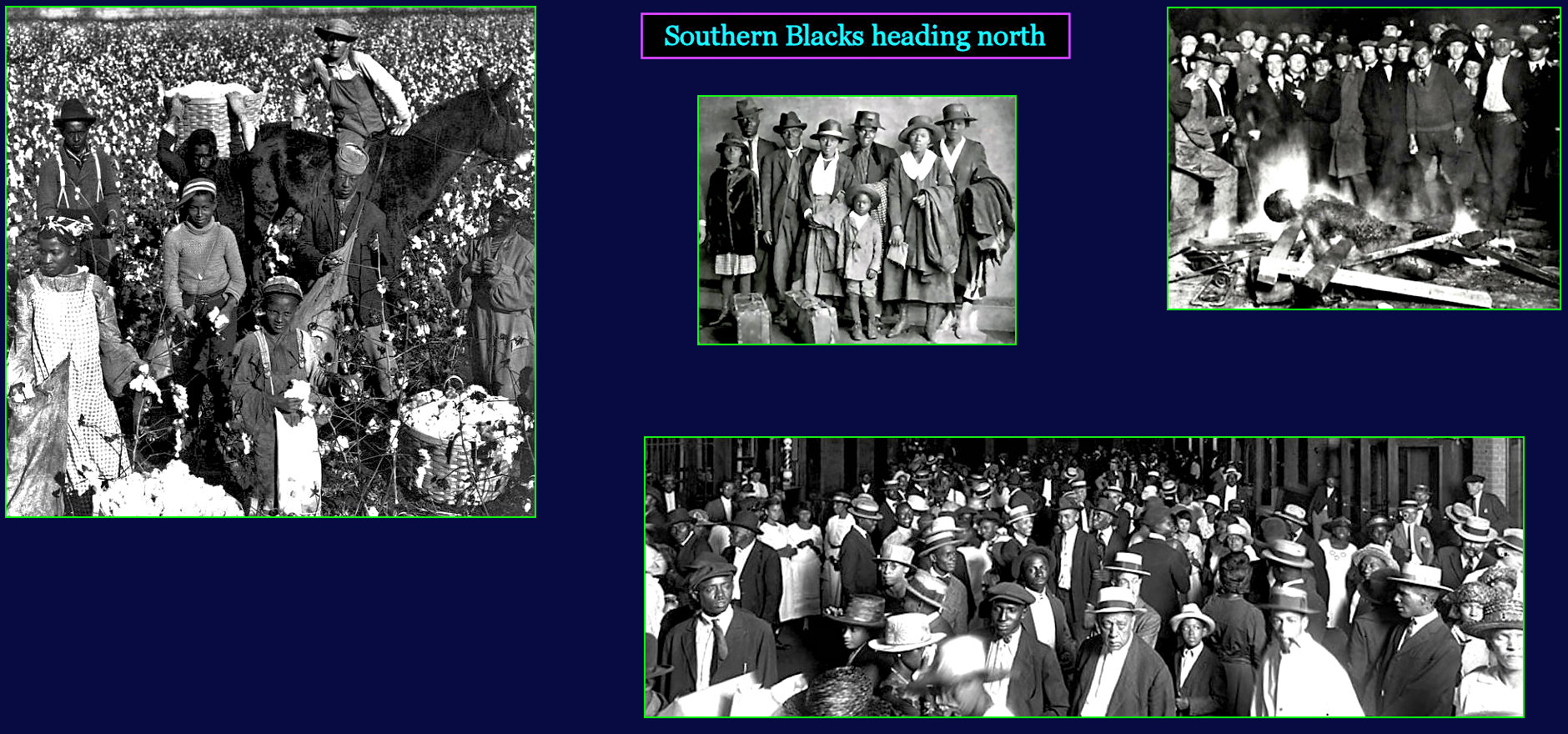
Abandoning the Past The sudden population growth in Harlem is part of a much larger migration of southern Blacks to northern cities during the 1910s. Even larger numbers will follow in later years, as railroads and manufacturers offer jobs to Blacks eager to trade poverty and abuse in the South for work in the North. Many find solid jobs in the surging automobile industry in Detroit, while other destinations include Kansas City, St Louis, Chicago, Buffalo and even California. | |||||||||