| |
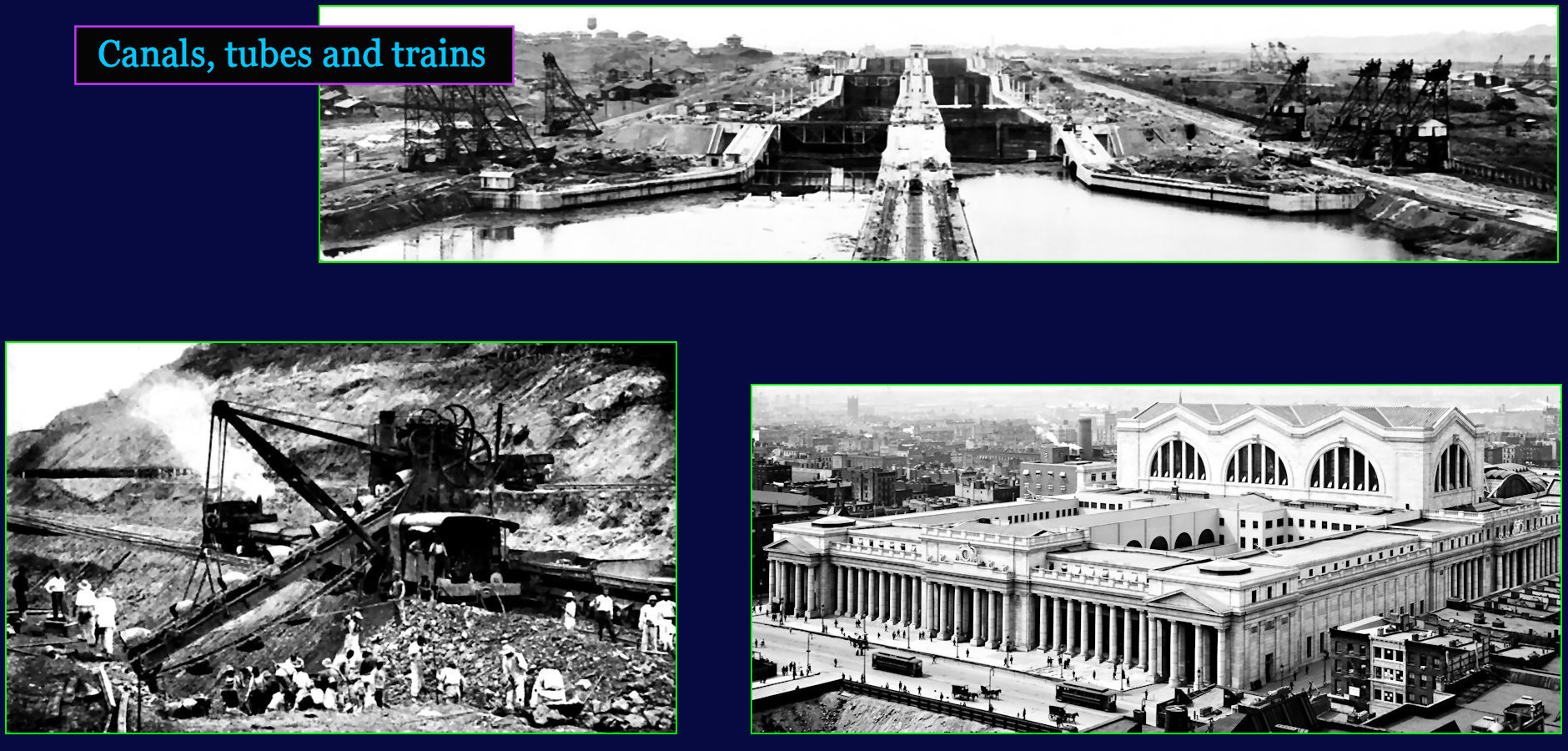
Dig We Must The problem that defeated the French in their efforts to build the Panama Canal was the removal of waste. Americans complete the task by building an entire rail system, moving waste to remote dumping sites more efficiently. Meanwhile, railroads are spanning great rivers in New York and Detroit, using tubes beneath the riverbeds. New rail stations are marvels (lower right). |
| |||||||||
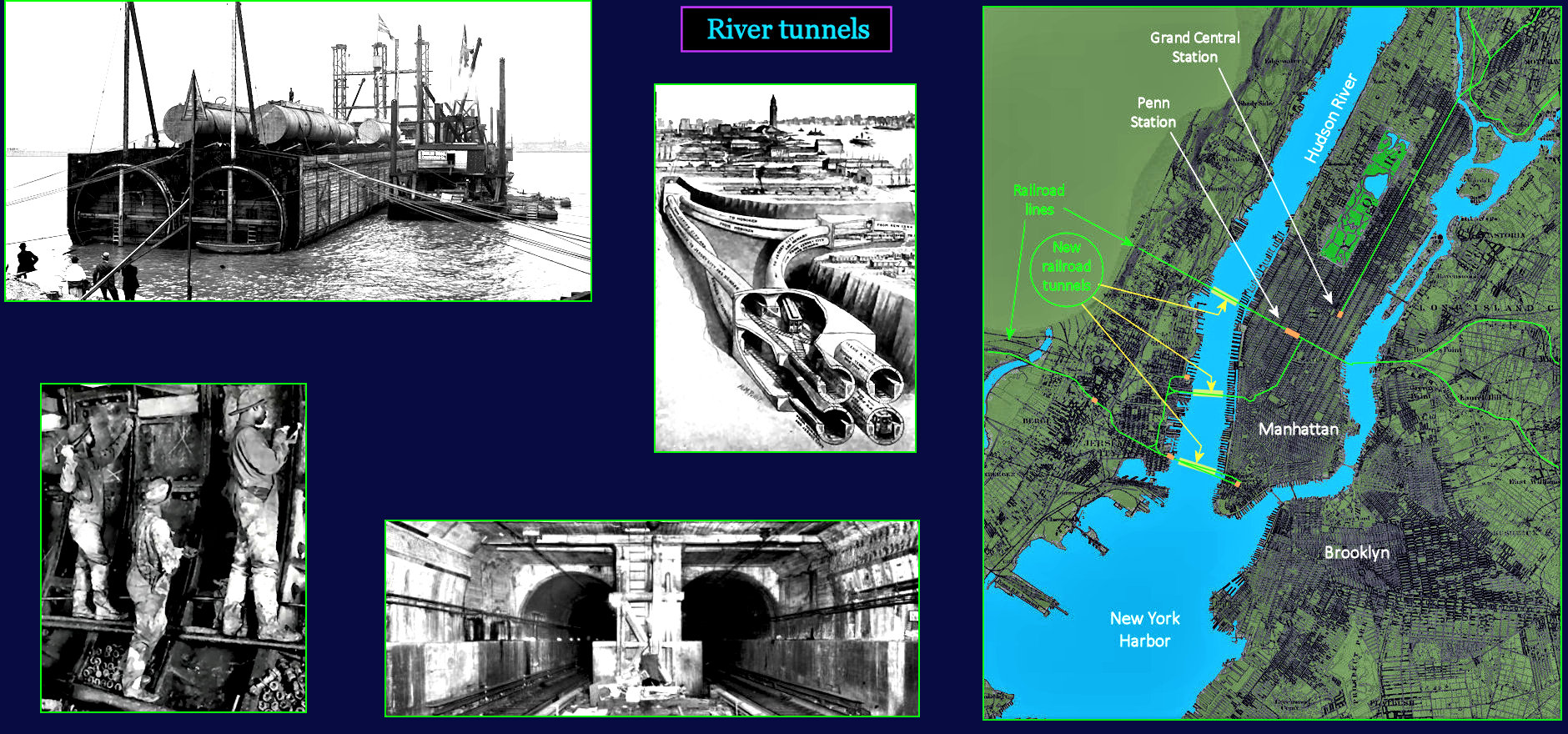
Taking the Low Route In 1900, New York has 150 ferries, mostly connecting with rail terminals on the Jersey side of the Hudson River, because that's the only way to get across. By 1910, however, there are three sets of rail tubes beneath the Hudson (see map). The distance is about a mile and a half, and the tubes have to descend 100 feet to get under the river. The tunnel built by the Pennsylvania Railroad is the most northly of the three, ending at newly-built Penn Station, near the center of the city. | |||||||||
| |||||||||
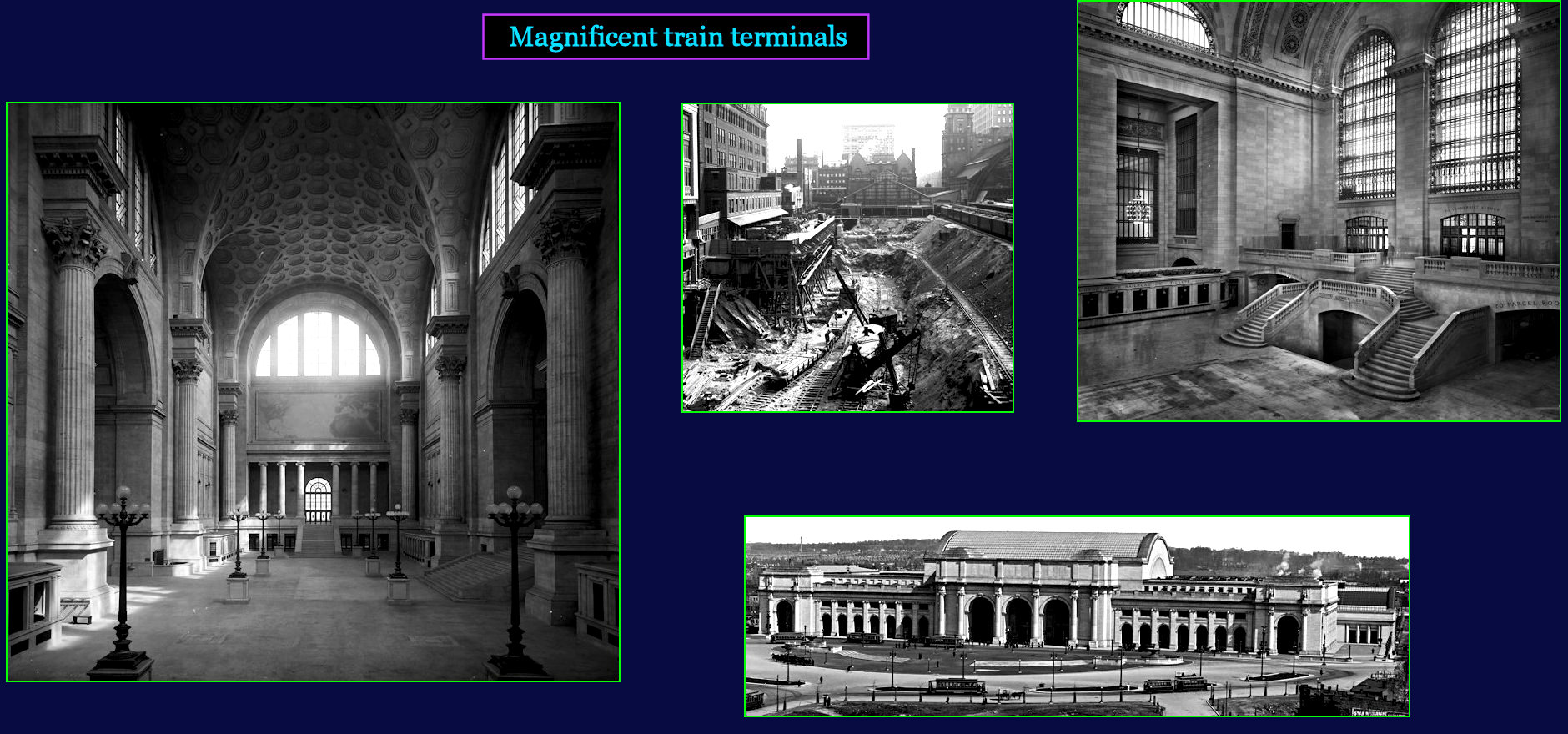
Peak of an Era It's ironic that the great cathedrals of American railroads in New York, Penn Station and Grand Central Station, are completed just as railroads begin losing ground to automobiles as the dominant means of transportation. Majestic Penn Station (left) is headed for eventual demolition almost from the moment it opens. The above-ground structure is reduced to rubble in the 1980s, to make way for a more profitable use of real estate. Grand Central Station and Union Station have so far been spared the wrecking ball. | |||||||||