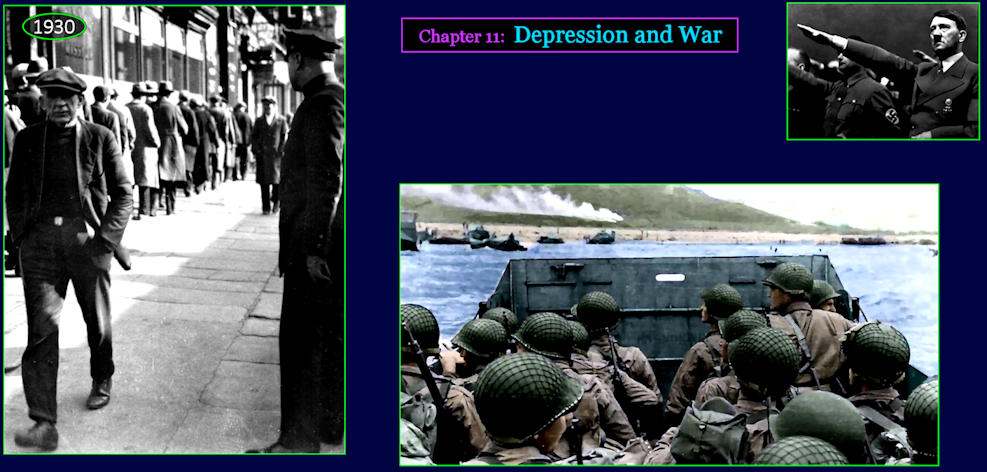
The Party's OverThe Depression is a world-wide event. All the major nations in Europe are deeply affected, with persistent high unemployment rates similar to those in America. The entire world economy, it seems, has stalled. President Franklin Roosevelt tries to restore prosperity in America with government programs on a scale never before attempted. This helps to blunt the worst misery, but unemployment remains stubbornly high. |
| ||||||||||||||||
| |||||||||
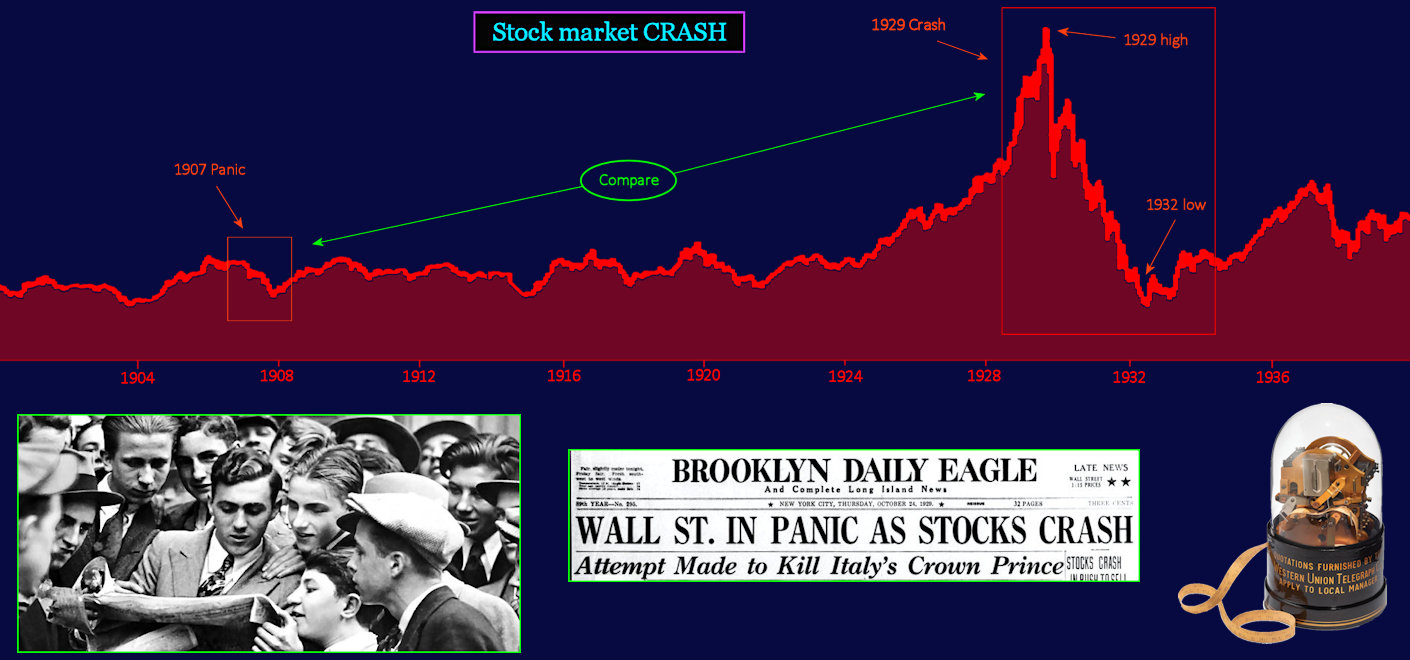
Wakeup Call The graph (in RED) shows the extent of the market crash, dropping 90% before recovering to previous levels. Compare the big box (at right on graph) with the much smaller box of the 1907 Panic (at left). Before the crash, the market rises sharply on surging investor enthusiasm, beginning in 1925. Ordinary people are buying stocks for the first time, sometimes on credit, hoping to cash in on America's first bull market. Banks are also rushing in, investing money from customer deposits. | |||||||||
| |||||||||
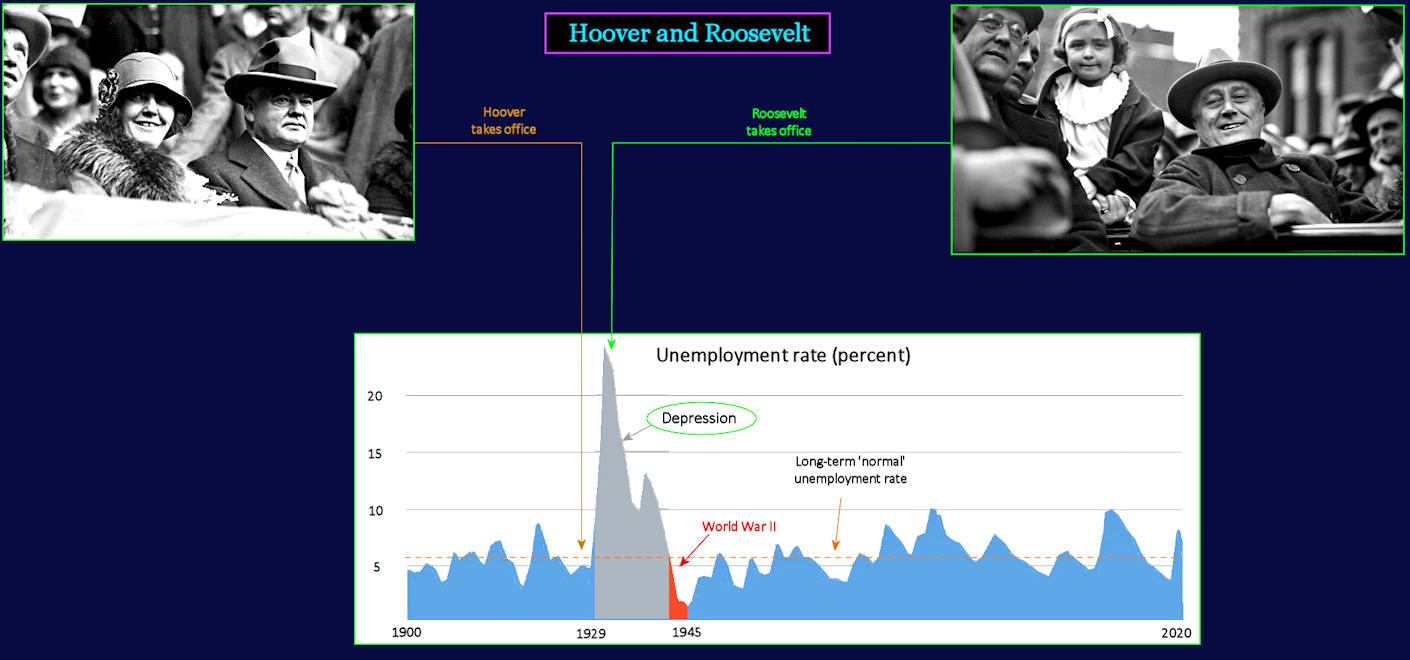
Fixing the Mess Herbert Hoover is president when the market crashes in 1929, and the entire economy suddenly plunges into free-fall. Hoover is widely admired for his no-nonsense, engineering approach to solving problems. It's something of a surprise, therefore, when his efforts to stabilize the situation prove ineffective. After three years of effort, with the Depression at its worst, Hoover is replaced as president by Franklin Roosevelt. Roosevelt's massive 'New Deal' spending program attempts to ease the pain. | |||||||||