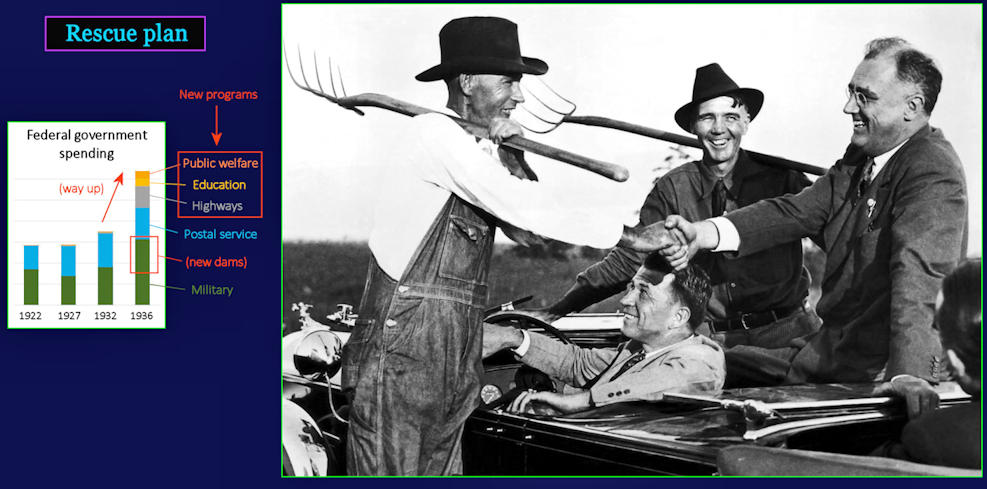
Big GovernmentOn the first full day of his Presidency, he goads Congress into passing the first of many new initiatives. Every bank in America is immediately closed for a week, so emergency cash can be transferred where it's needed most. Together with new guarantees for bank deposits, this ends the banking crisis almost overnight. The bleeding is thus stopped, but the patient is still flat on his back. To revive the economy, more new programs are launched. |
| ||||||||||||||||
| |||||||||
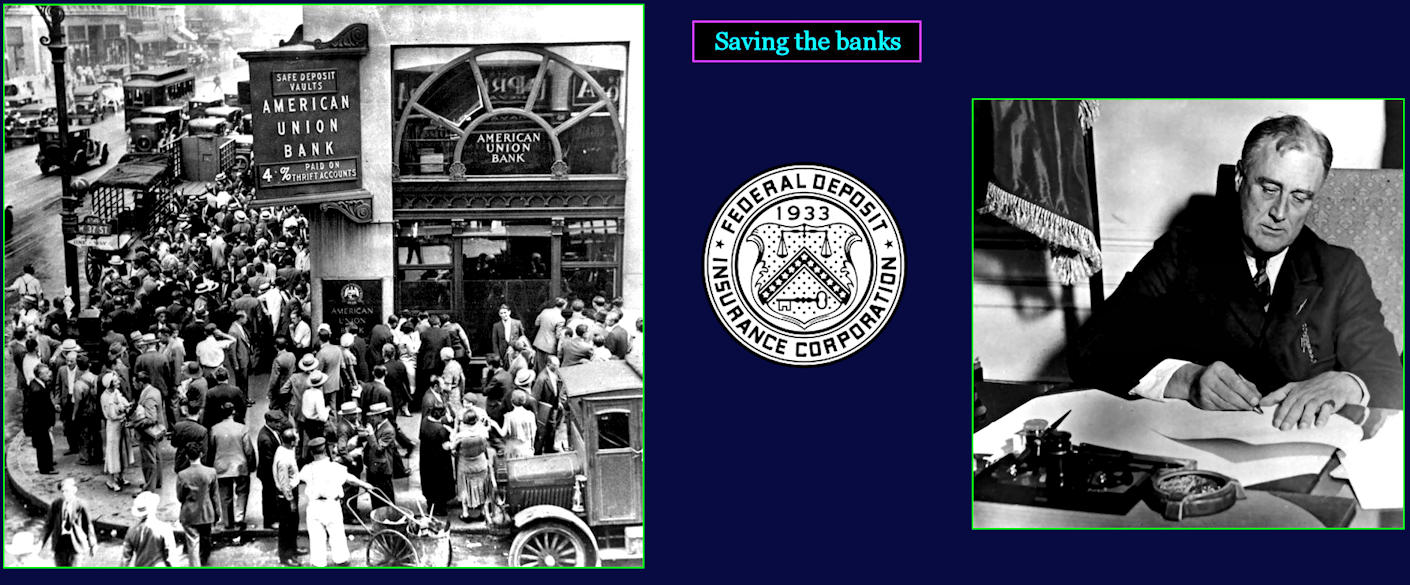
Starting With Banks The banking crisis is out of control. Nearly half of all banks in the country have already failed. People are so scared that they attempt to withdraw their entire savings, in cash. No bank can survive such an assault. If everyone attempts to withdraw at the same time, the bank fails. Realizing this, Roosevelt temporarily closes all banks in the country until sufficient currency can be distributed to keep them afloat, with guarantees that no citizen will lose a penny. Just 10 days later, most banks have reopened. | |||||||||
| |||||||||
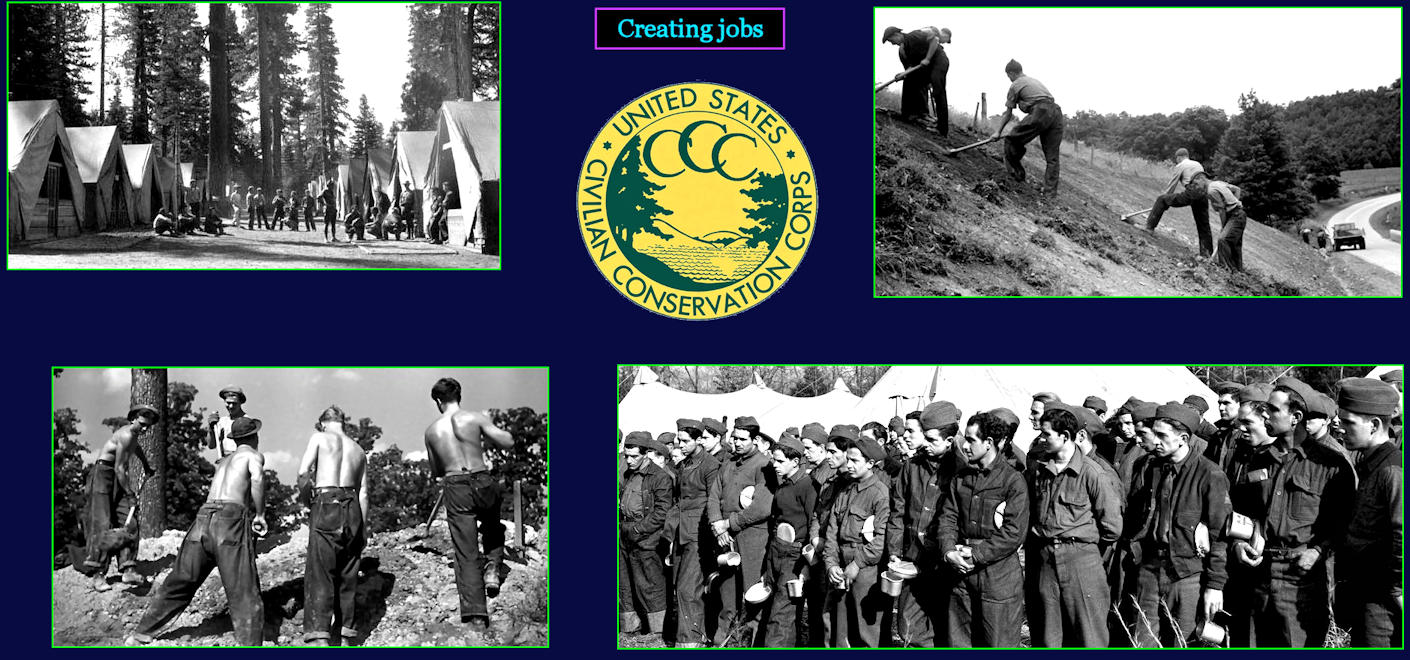
Jobs Come Next Roosevelt now turns to the next most pressing issue. Jobs. There are 13 million Americans without jobs. Presidents can't actually create jobs, so instead he creates new agencies that can, with budgets for plenty of new hires. To fill the time gap until these agencies can ramp up, Roosevelt creates the Civilian Conservation Corps (CCC), with the simple initial task of planting trees. The CCC later builds access roads through national forests out west, and creates state parks all over the country. | |||||||||