| |
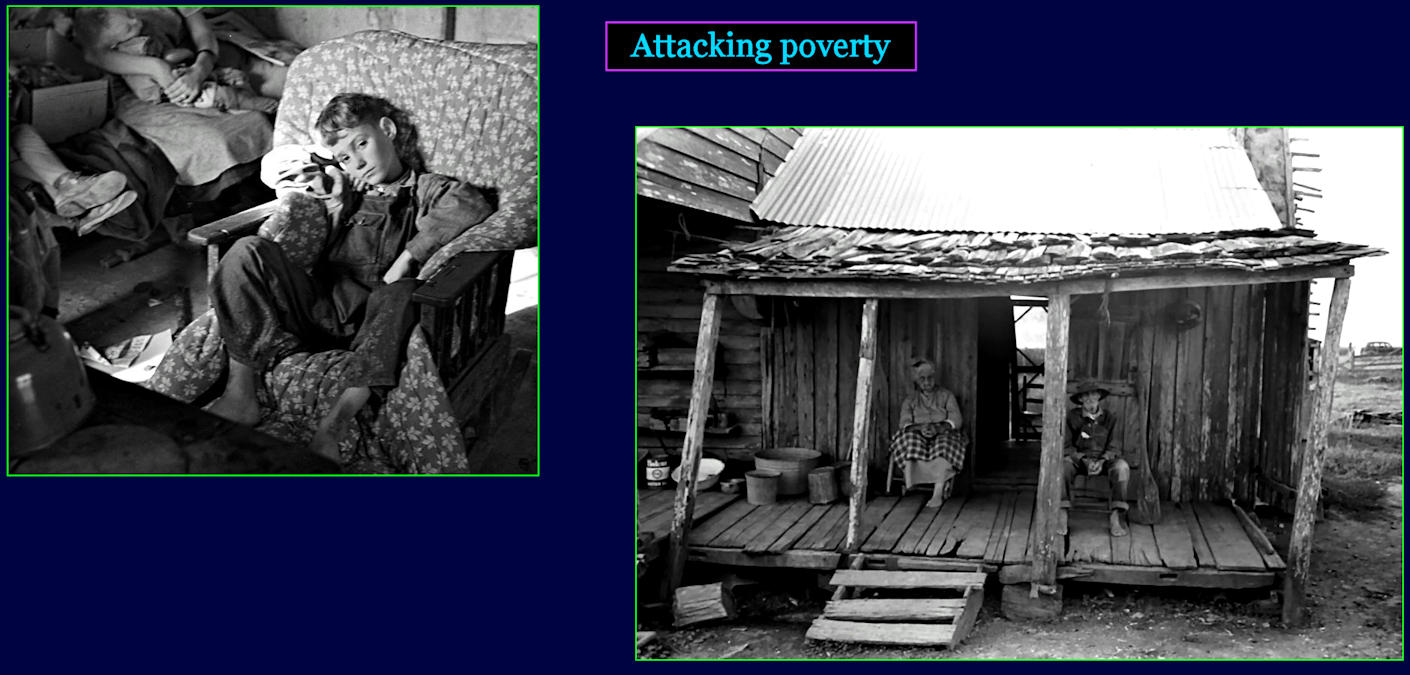
The Rural Poor One early approach to relieving distress is to help struggling homeowners meet monthly mortgage payments. Efforts are expanded into rural areas with the creation of the Farm Security Administration (FSA), which manages loans to a million 'tenant farmers,' helping them purchase the farmland they are currently just renting. |
| |||||||||
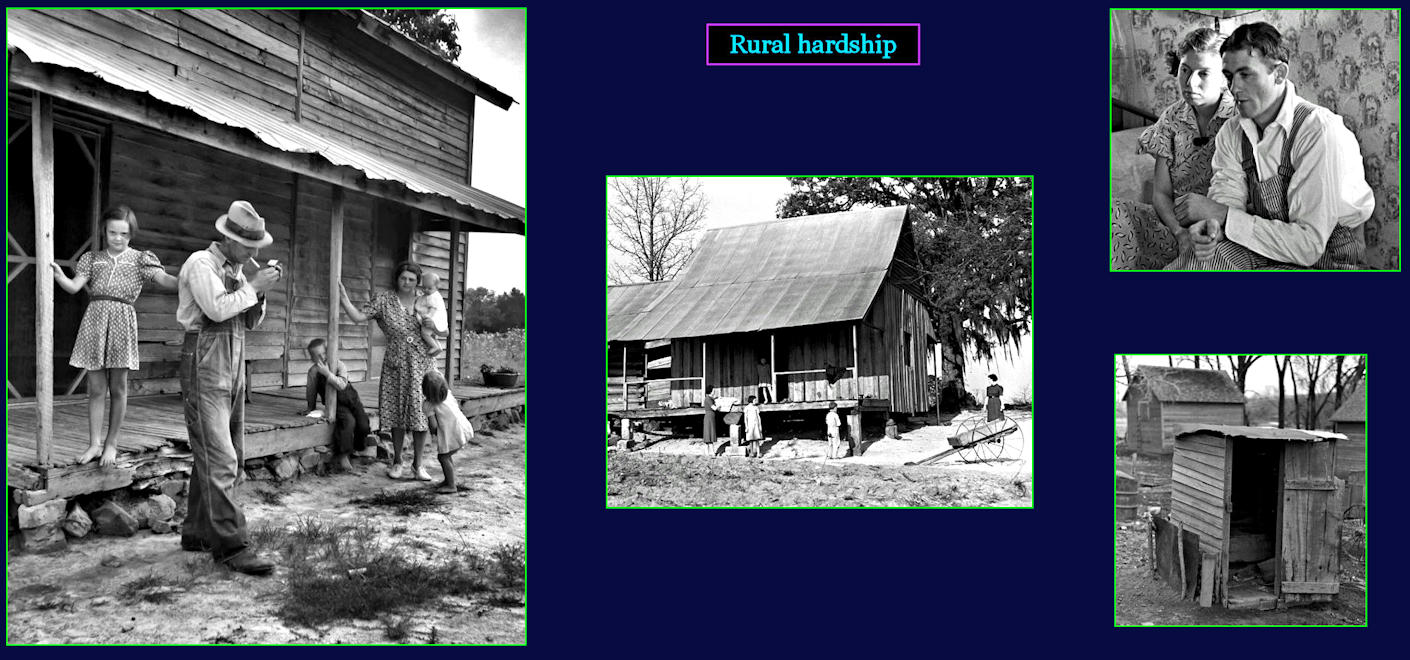
Isolated Existence Nearly half of all Americans are still living in rural areas, where cash is scarce and opportunities few. The country can't be restored to health without helping farmers. Rural housing is mostly make-shift and bare-bones. Few farms have electricity or running water, and virtually all still rely on outhouses for sanitation. Worse yet, half of all farmers own no land at all. Tenant farmers rent the land they farm, while 'share-croppers' are even more dependent upon their landlords. They own neither land nor equipment. | |||||||||
| |||||||||
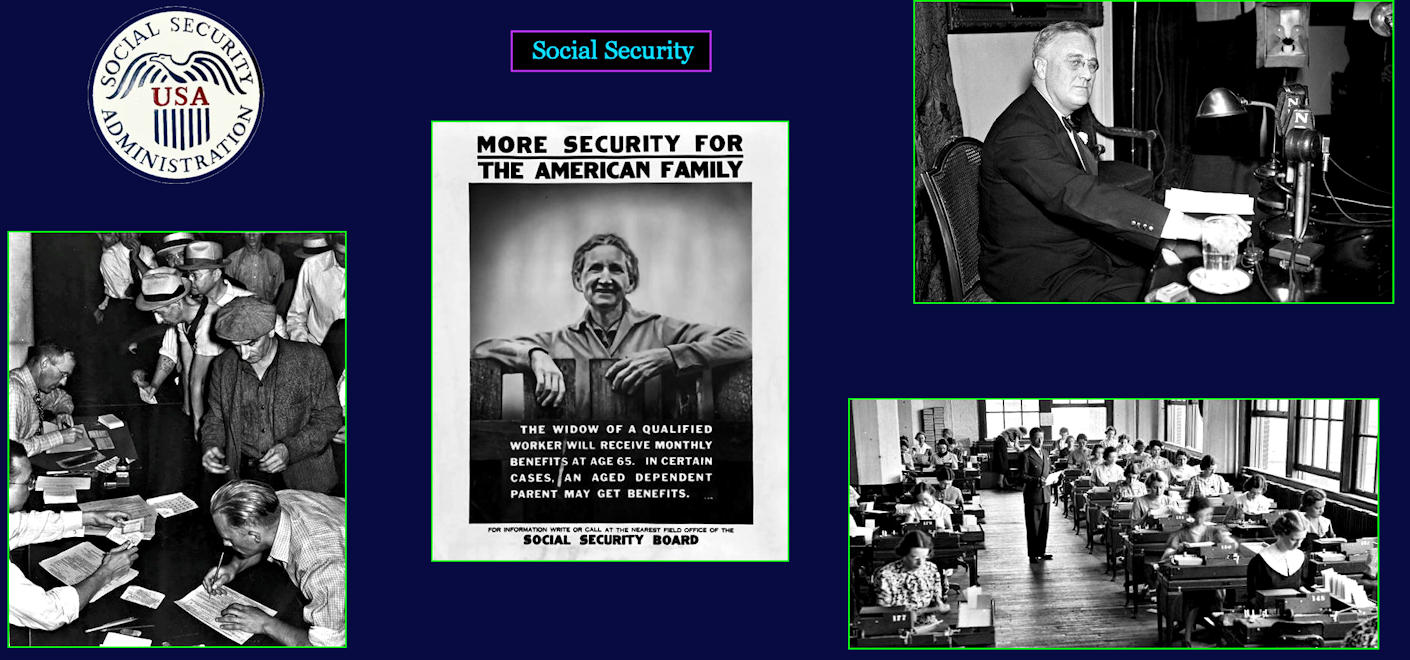
Reaching the Elderly One of the most popular New-Deal programs comes late in the process, as an effort to reduce poverty among older Americans. These are people whose working days are over, and who often live alone. Many are widows, as women tend to outlive their husbands. The Social Security Act of 1935 is still regarded as the centerpiece of America's ongoing effort to eliminate poverty. It includes benefits for the disabled, and temporary aid for the unemployed. | |||||||||