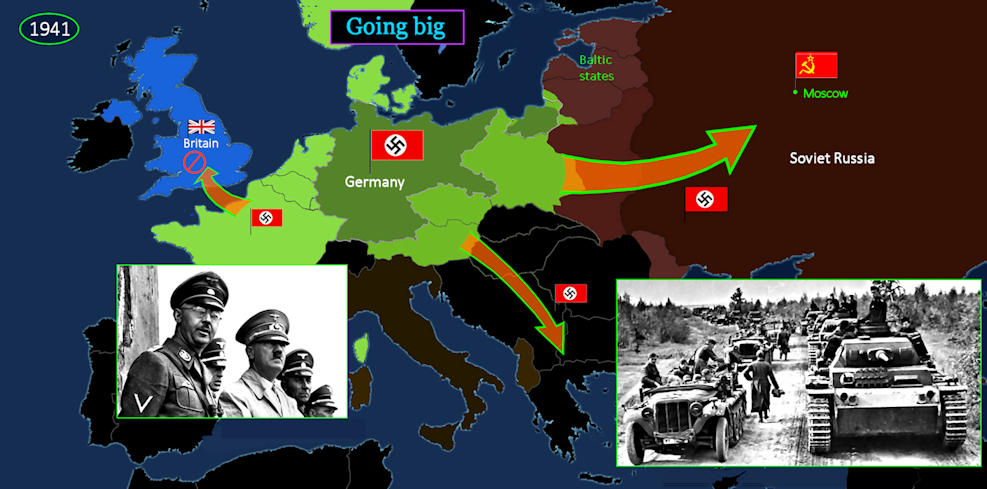
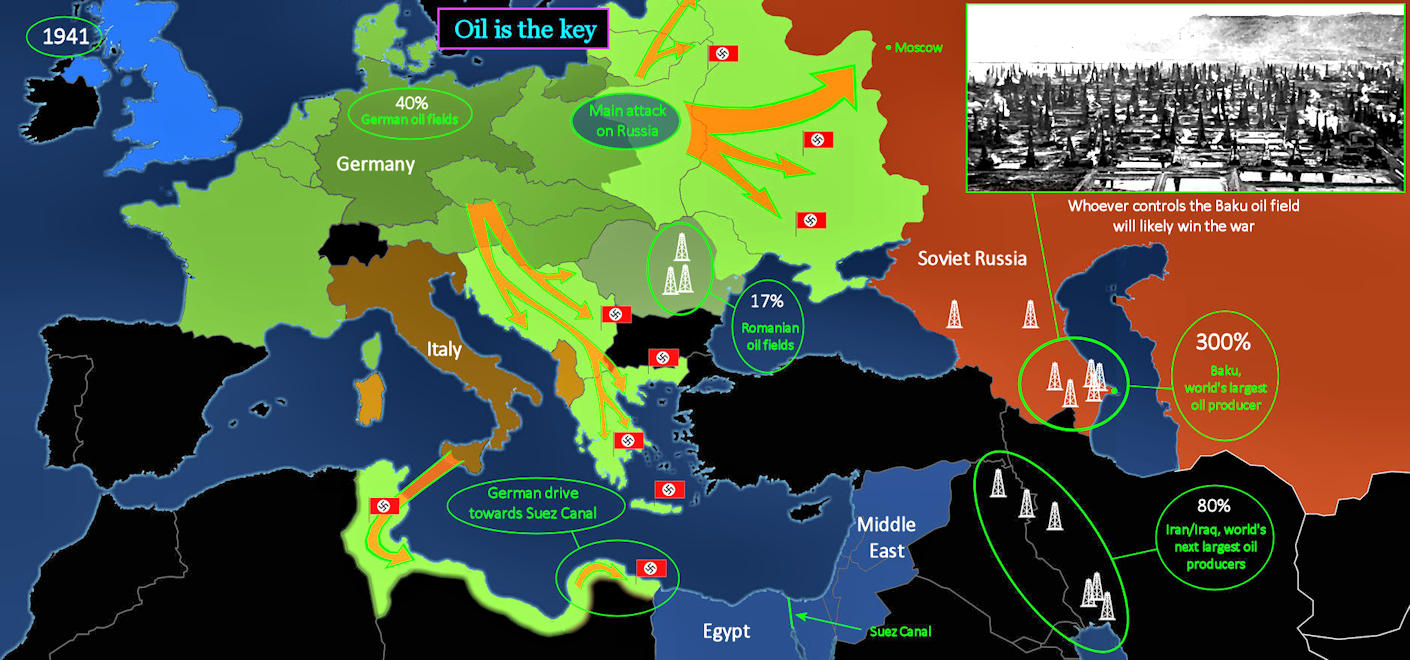
Lashing OutNo conqueror since Genghis Khan has enjoyed such swift and complete success. The mighty French army barely slowed him down. He could have settled for gazing up at the Eiffel Tower, as the proud new owner of Paris. But Hitler is a strategic thinker. Germany's oil resources fall well short of his military requirements, which include eradication of all inferior races. He needs the Russian oil fields, the largest in the world. So he abruptly pivots east. |
| ||||||||||||||||
| |||||||||
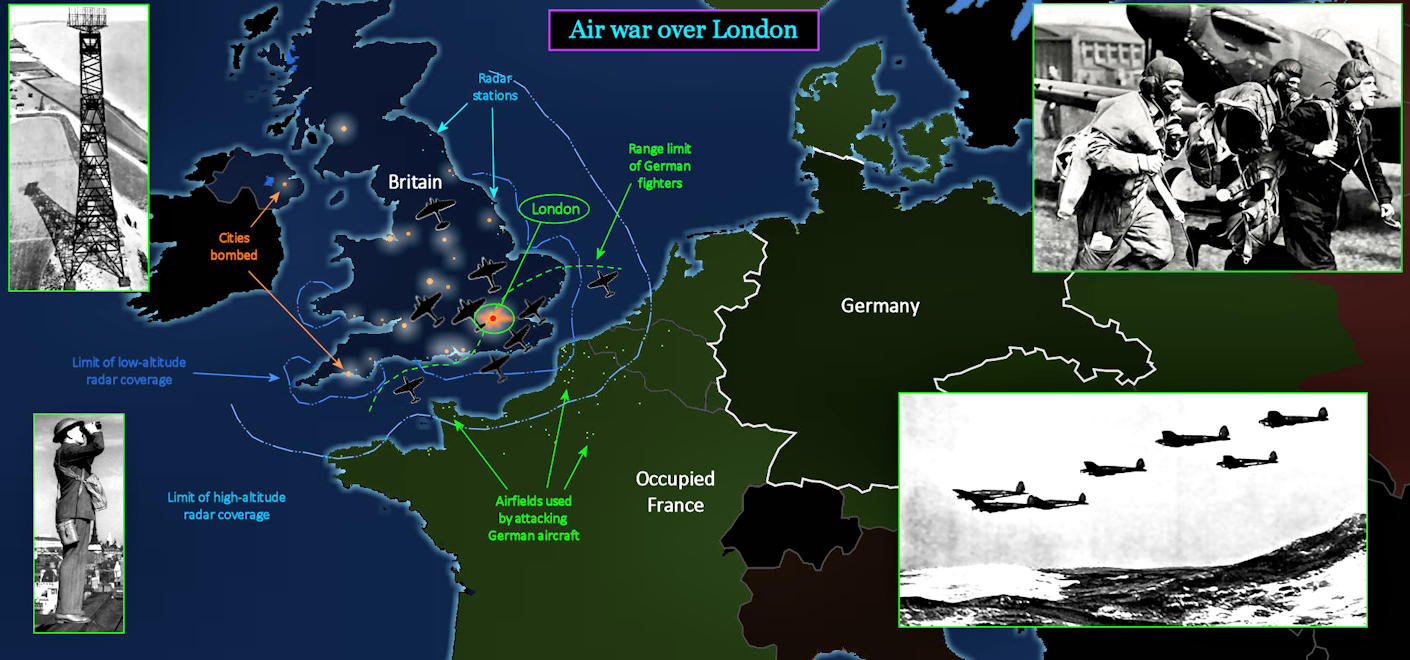
Surprising Failed Attack Hitler plans to destroy Britain's limited air defenses in four days, and then launch an amphibious invasion. But the combination of British radar, and tenacious young fighter pilots, foil these plans. Radar tracks the approaching attacks, giving British fighter pilots warning. Scrambling to their planes, they're able to pick off and destroy both fighters and bombers. Within three months, the Germans lose 80% of the 2,500 aircraft they deploy. The raids end, and Britain is spared. | |||||||||
| |||||||||
War in the East Things go much better for Hitler in the east. After a delay securing the Balkans, he begins the advance on Moscow, with three million men, 3,000 tanks and 3,000 aircraft. Dangerously short of gas, however, he also brings 600,000 horses to transport supplies. The percentages next to each oil field on the map indicate the portion of Hitler's total needs each one can supply. The invasion proceeds with brutal efficiency, surrounding and destroying five Soviet armies, which costs the Soviets a million men and 5,000 tanks. | |||||||||