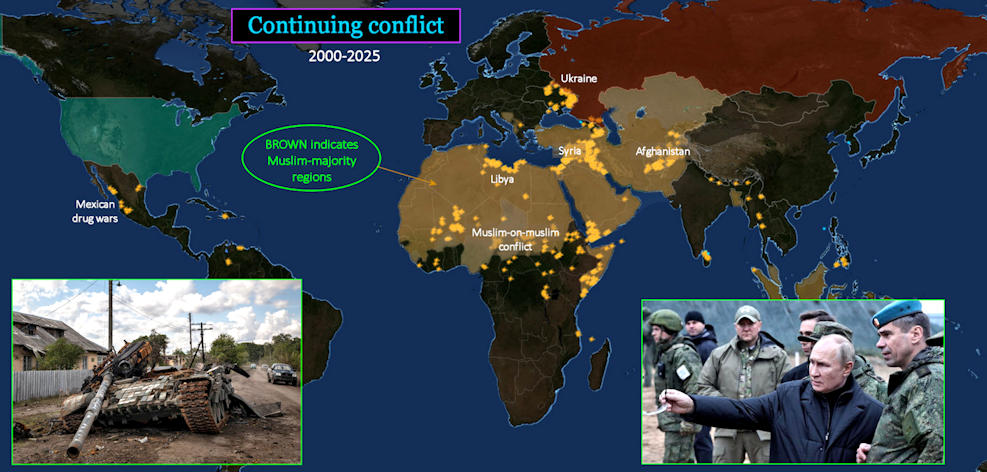
The Fight Goes OnPrompted by the 9-11 terrorist attack on the World Trade towers in New York, America is responsible for much of the fighting. This is first in Iraq, to punish Saddam Hussein, and then Afghanistan, hunting for terrorist camps. The conflict in Ukraine and Syria accounts for most of the remaining hot wars. But Africa, too, is slowly becoming a smoldering region of Muslim-on-Muslim conflict, and Russian meddling. |
| ||||||||||||||||
| |||||||||
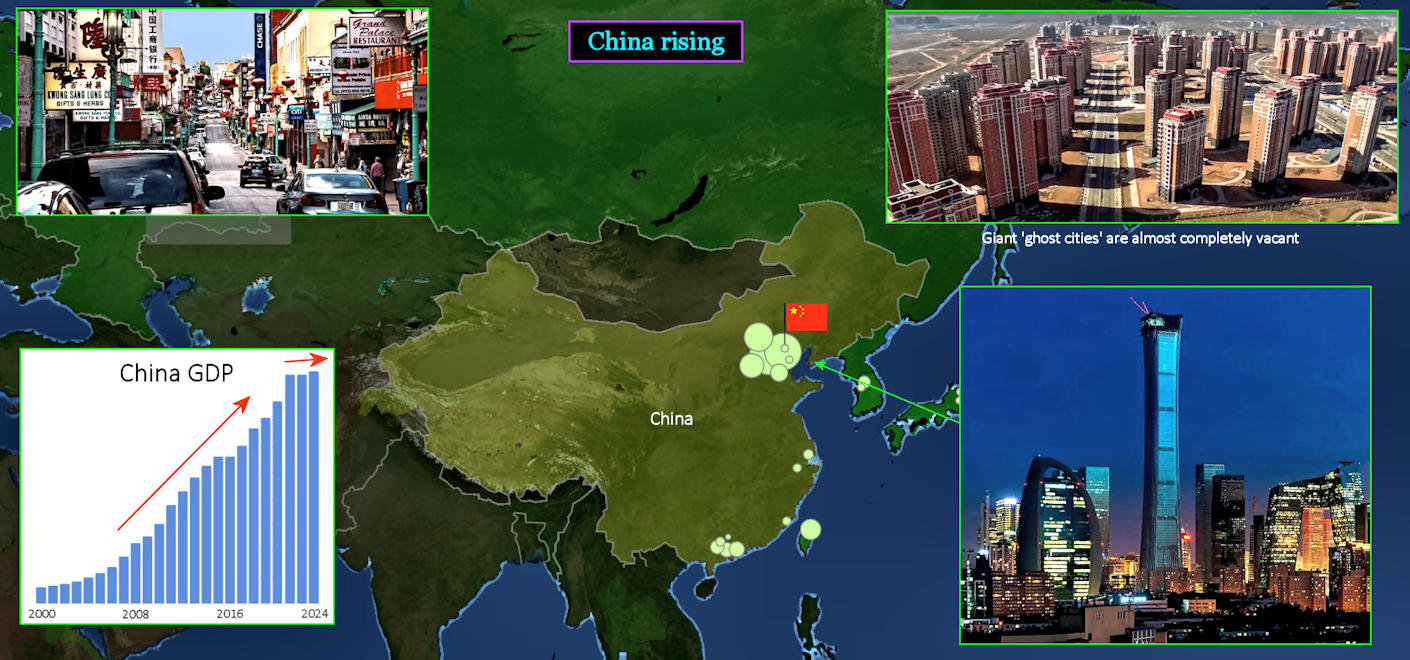
Economic Rival As China gains economic clout, it continues to supply most of the items sold by America's biggest retailers, including Walmart. The resulting trade imbalance is a continuing drain of American wealth to Asia, which offsets the imbalance by parking the bulk of its trade surpluses in US Treasury bills. But China has its own problems, most glaringly evident in its array of empty 'ghost cities,' financed with heavy government support, they're a gigantic waste of resources, signaling trouble ahead. | |||||||||
| |||||||||
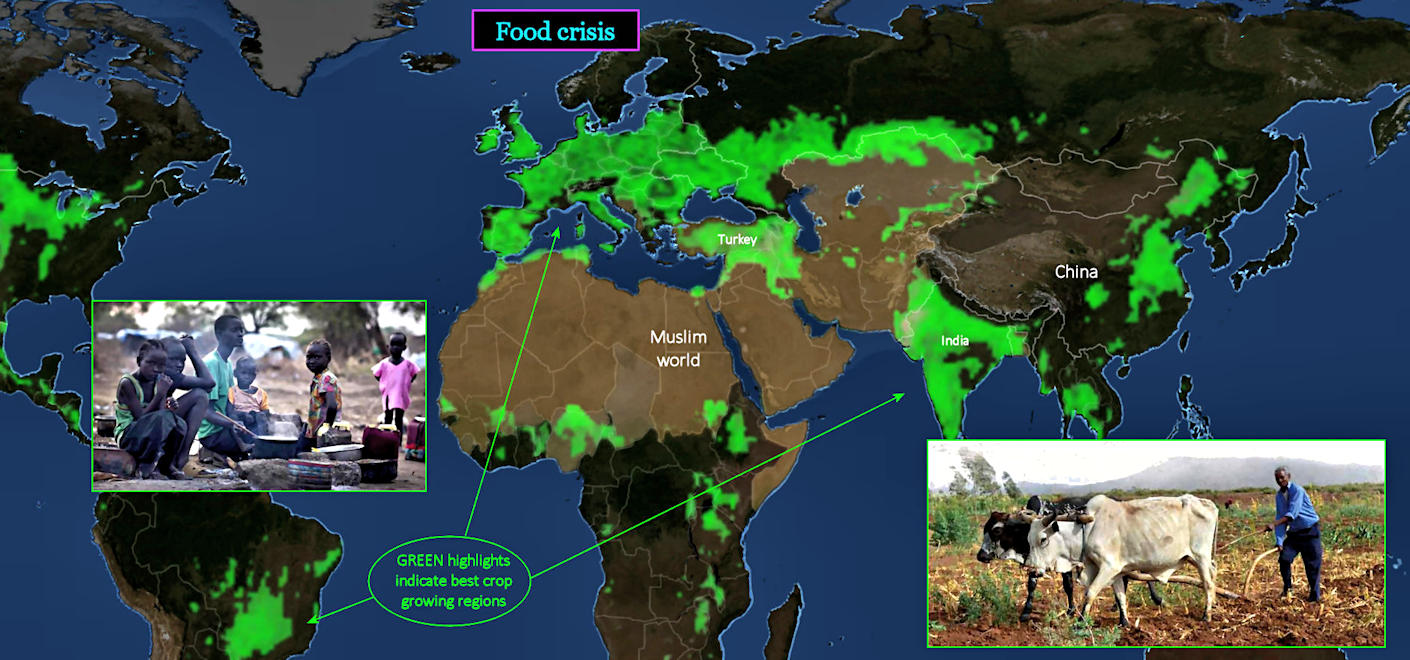
Raw Deal This map helps explain why Muslim countries are often beset with more than their share of conflict, and seem to be the world's primary breeding ground of terrorism. They occupy land which is starved of natural bounty. The BROWN areas on the map indicate Muslim-majority regions, which are among the world's least productive food-producing regions. The areas with GREEN highlights are the primary farming zones. It's almost as if Africa was intentionally snubbed, when all the good land was distributed. | |||||||||