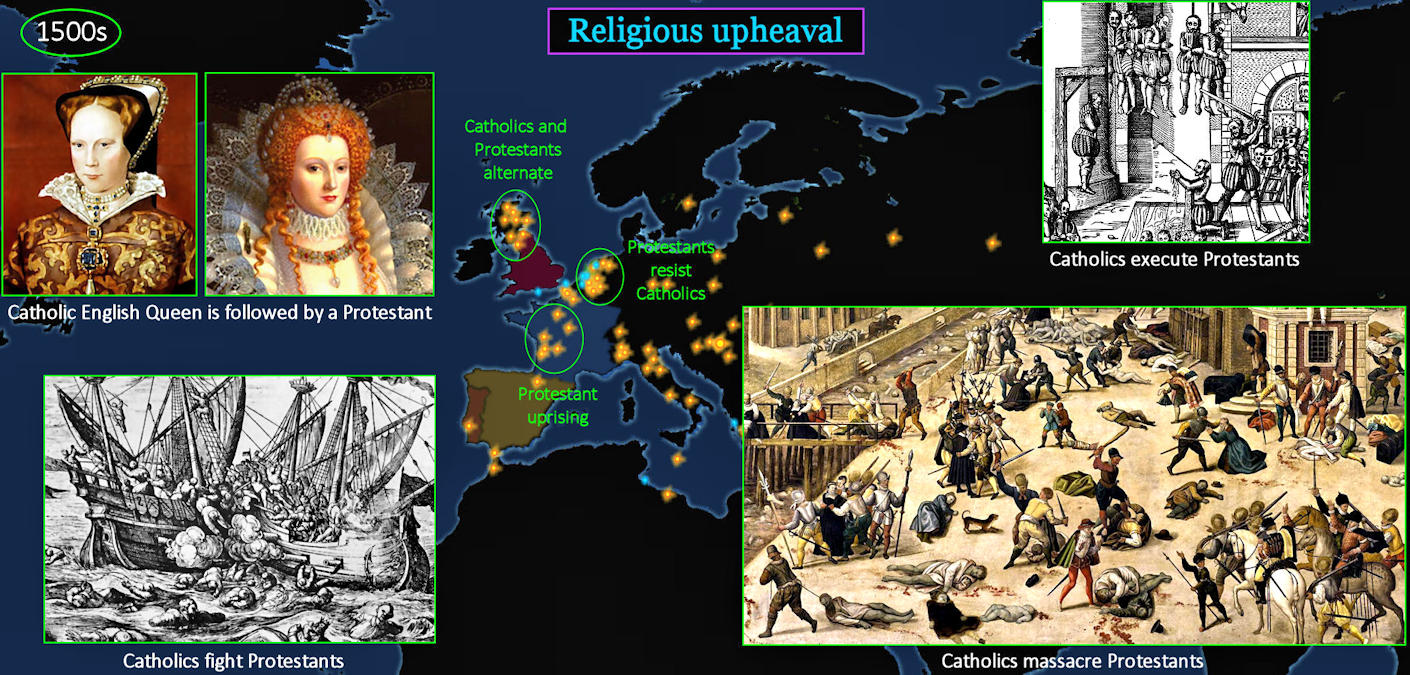
Catholics and ProtestantsFeuding between neighboring cultures is nothing new, but this new religious-based conflict is different. Catholics and Protestants within the same cultures are now bitterly and adamantly hostile to each other. The chasm is so wide that pitched battles are fought right on the street, with citizens executing citizens. The English King declares the presence of witches, while fabricated charges of heresy lead some to be publicly burned alive. This is not normal, particularly considering that both sides are Christian. It's just that Catholics believe the Pope's word is infallible and absolute, while Protestants look directly to God for their guidance. |
| ||||||||||||||||
| |||||||||
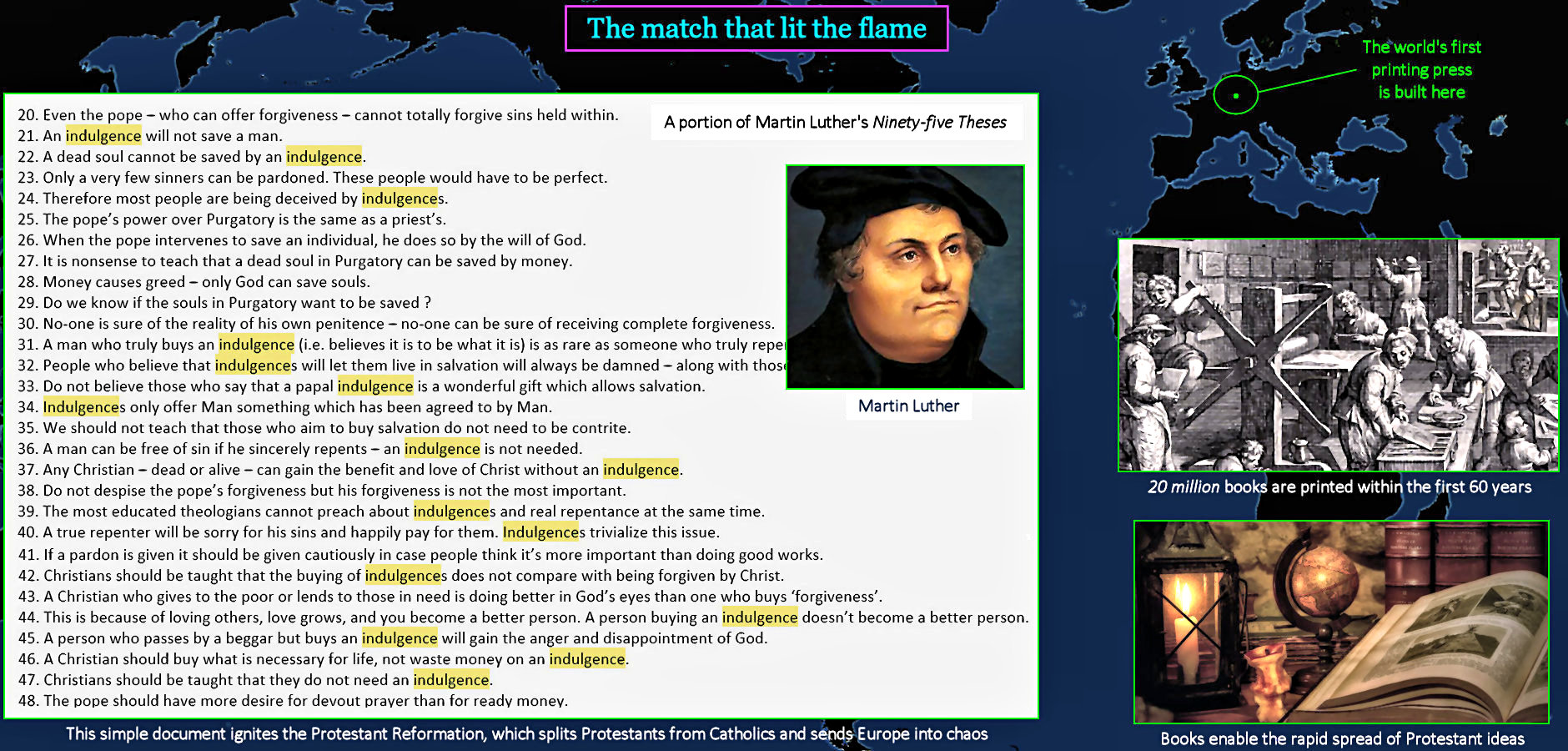
Protestant Reformation A simple act of protest by a former monk turns out to be the event that splits the Christian world in half. Martin Luther is a theology professor and devout Catholic when he nails his 95 Theses to the door of the church. He focuses obsessively on the Pope's endorsement of the sale of 'indulgences,' which supposedly grant forgiveness of sin by giving money to the Church. The newly-introduced printing press allows this document to go viral. It also provides a means for rapid and wide distribution of Luther's translation of the Bible into German, which permits many to read the actual text of the Bible, for the first time. This leaves Christians in one of two camps. Those who remain obedient Catholics, and those who protest. The latter are called Protestants. | |||||||||
| |||||||||
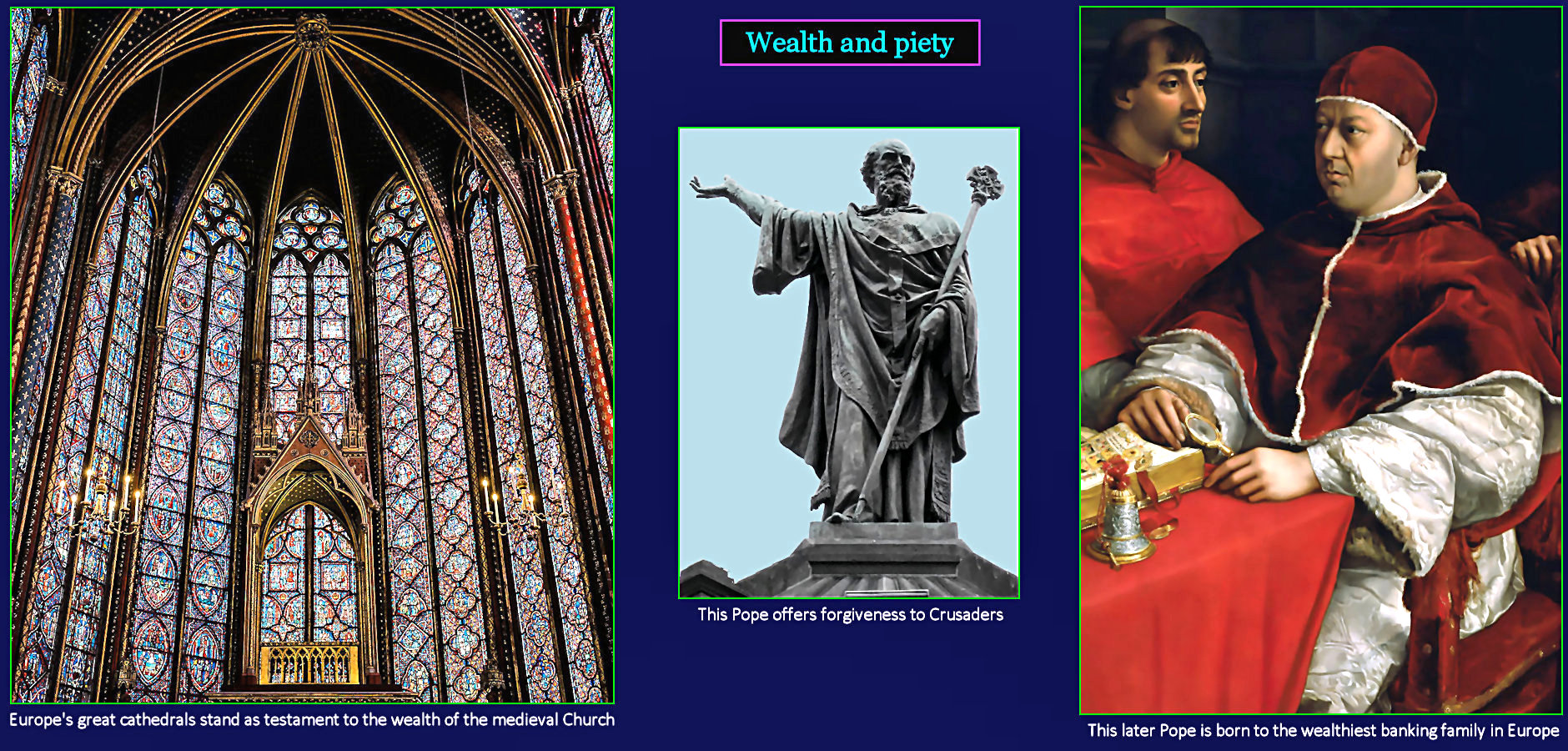
Popes and Politics The Protestant Reformation is a long time in coming. Popes enjoy near absolute rule over Church matters, as well as political questions, but their religious piety has sometimes come into question. The Pope who launches the First Crusade (center) entices Crusaders with the promise of pardon for all past sins. By the time of the Protestant Reformation, the reigning Pope (right) is OK selling forgiveness for hard cash. Between their two reigns, the Church amasses great wealth, enabling the spectacular era of cathedral construction. But there are also political feuds and internal squabbles. During one 40-year span, the Church itself is split, with two different 'Popes' claiming legitimacy at the same time. | |||||||||
| |||||||||
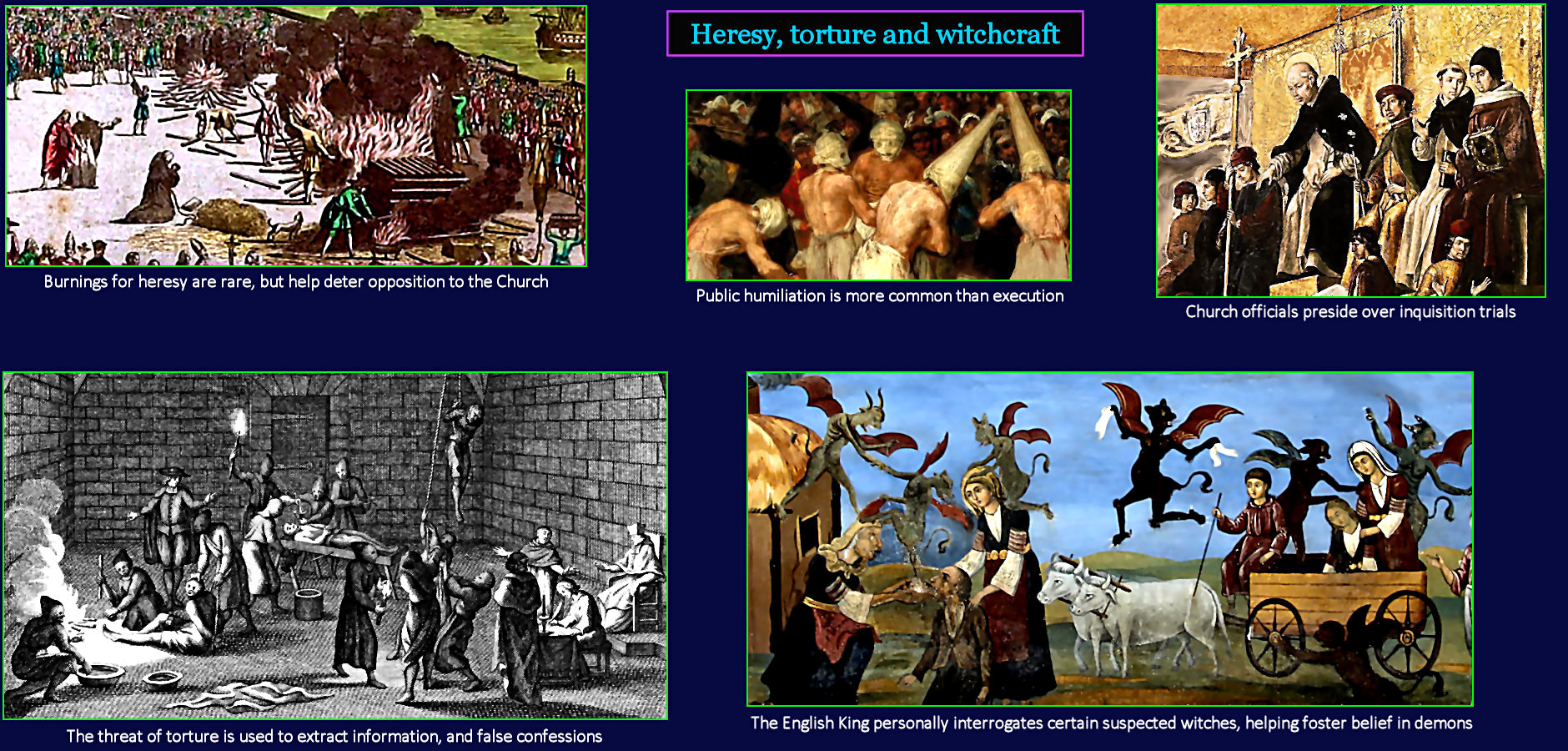
Enforcing Catholic Doctrine The Protestant Reformation isn't only about indulgences. It's about whether a Pope, any Pope, should be entrusted with interpreting the intentions of God. Popes often stray into clearly political matters, while cloaking their authority in the obscure Latin language, which is used exclusively in Catholic Church services, but almost nowhere else. The Church responds by attempting to stamp out converts to the new Protestantism, as heretics. The excesses of this period are abundant, but most clearly evident in the Spanish Inquisition. Clergymen officiate at trials of victims who have been previously threatened with torture. Charges are based on falsified evidence to extract forced confessions, and justify confiscation of property. | |||||||||
| |||||||||
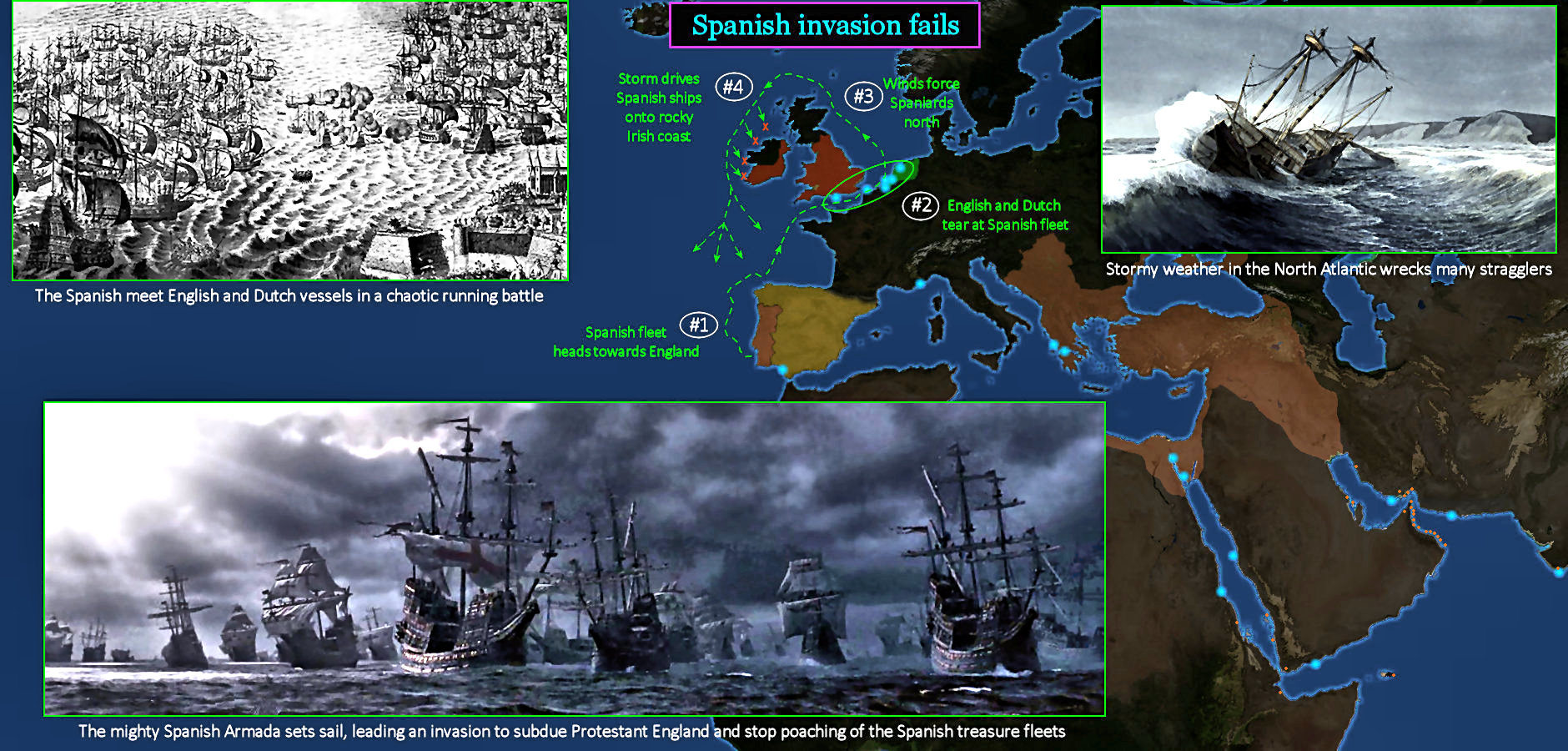
Spanish Armada The widespread conflict of the 1500s gradually resolves into a single mighty struggle pitting (Catholic) Spain and France against (Protestant) England and its northern allies. Capping it all is the attempt by Spain to invade England itself. The Spanish assemble a great invasion fleet including 30,000 soldiers and sailors, with 2,500 artillery pieces. They intend to join up with an additional 30,000 Spanish troops in the Spanish Netherlands, to invade England. The Spanish are opposed by a hastily-assembled English and Dutch fleet, with an approximately equal number of warships. With their intimate knowledge of the tricky coastline, however, the defenders manage to fend off the invasion, sending it out to sea on a circuitous retreat. Very few ships make it home. | |||||||||
| |||||||||
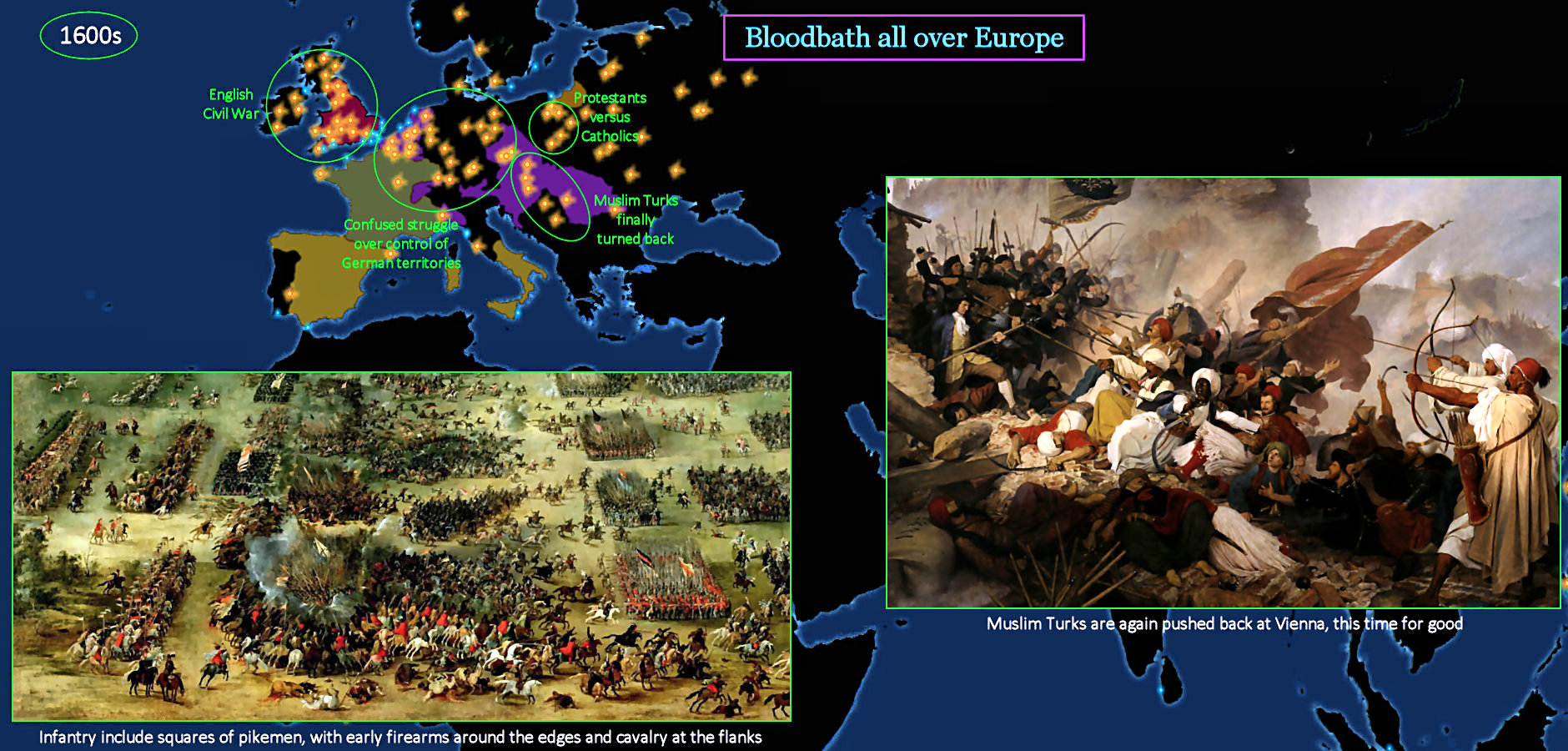
Thirty Years' War As Europe moves into the 1600s, the intensity of conflict escalates tragically. The Thirty Years' War is the bloodiest, and most destructive period of struggle the world has ever known, in a tangle of conflict that today seems almost incomprehensible. Broadly speaking, the bloodshed is now between two camps, both Catholic, and both based on family connections. The French ruling family is thrashing it out with the Austrian dynasty, which also controls Spain. Meanwhile, England is engulfed in its own private civil war, while the Muslims continue to push up from the Balkans towards Central Europe. Armies get larger and larger, with so many individual battles that deaths eventually total at least five million. Most are civilians caught in the crossfire. | |||||||||