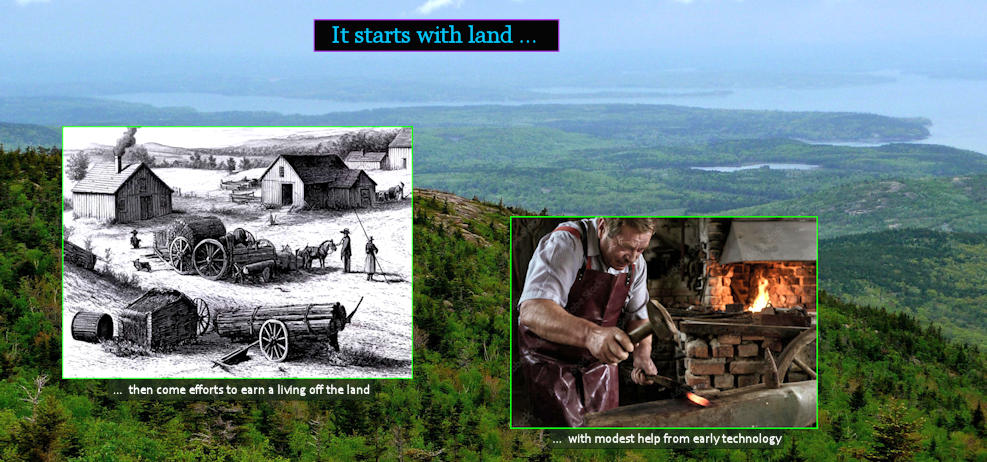
Land, Business, TechnologyThis presentation is organized around three key elements:
|
| ||||||||||||||||
| |||||||||
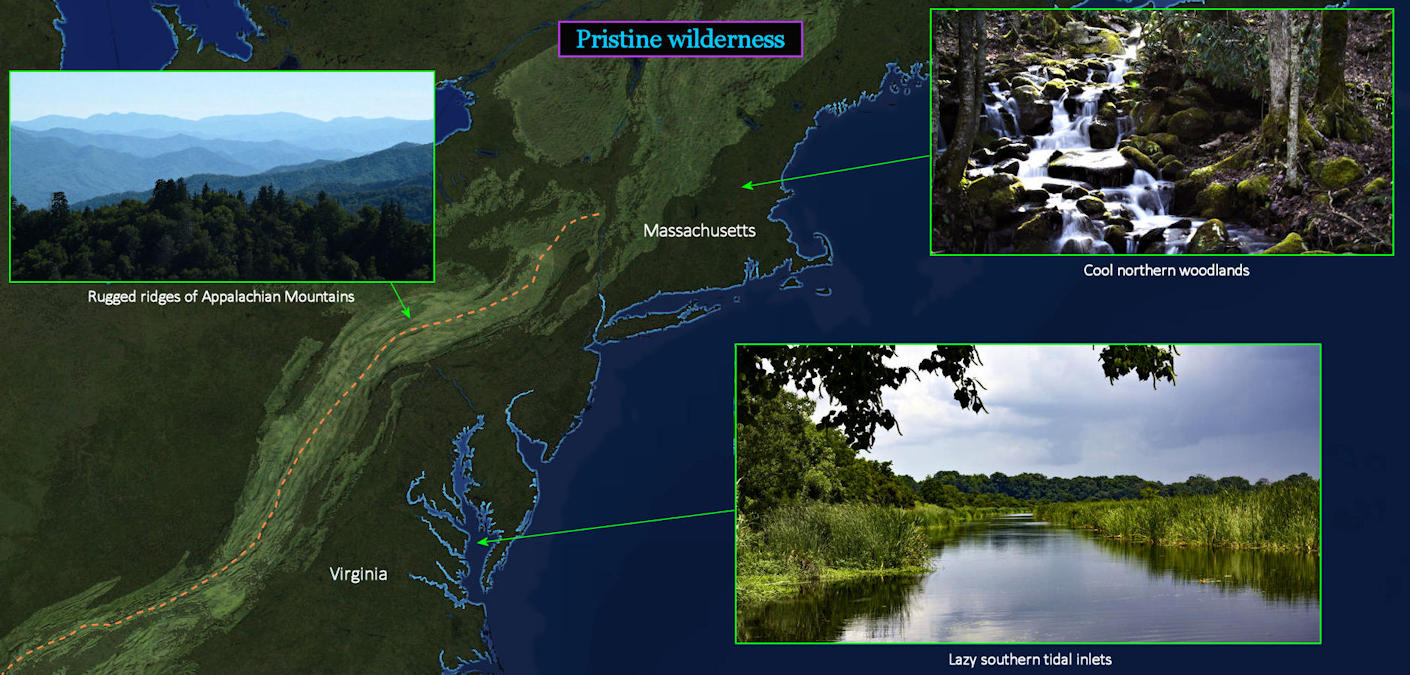
Awaiting Development The first colonies in America are hacked out of the wilderness in Massachusetts and Virginia. The companies that sponsor these colonies are hoping to find gold, and perhaps other valuable resources, to recoup their investment. These early hopes are disappointed, however, as settlers can find little of immediate value along the American shoreline. Mostly, it's just undeveloped land. For many years, colonists are confined to the relatively flat lowlands along the Atlantic coast, hemmed in by the forbidding Appalachian mountains, to the west. | |||||||||
| |||||||||
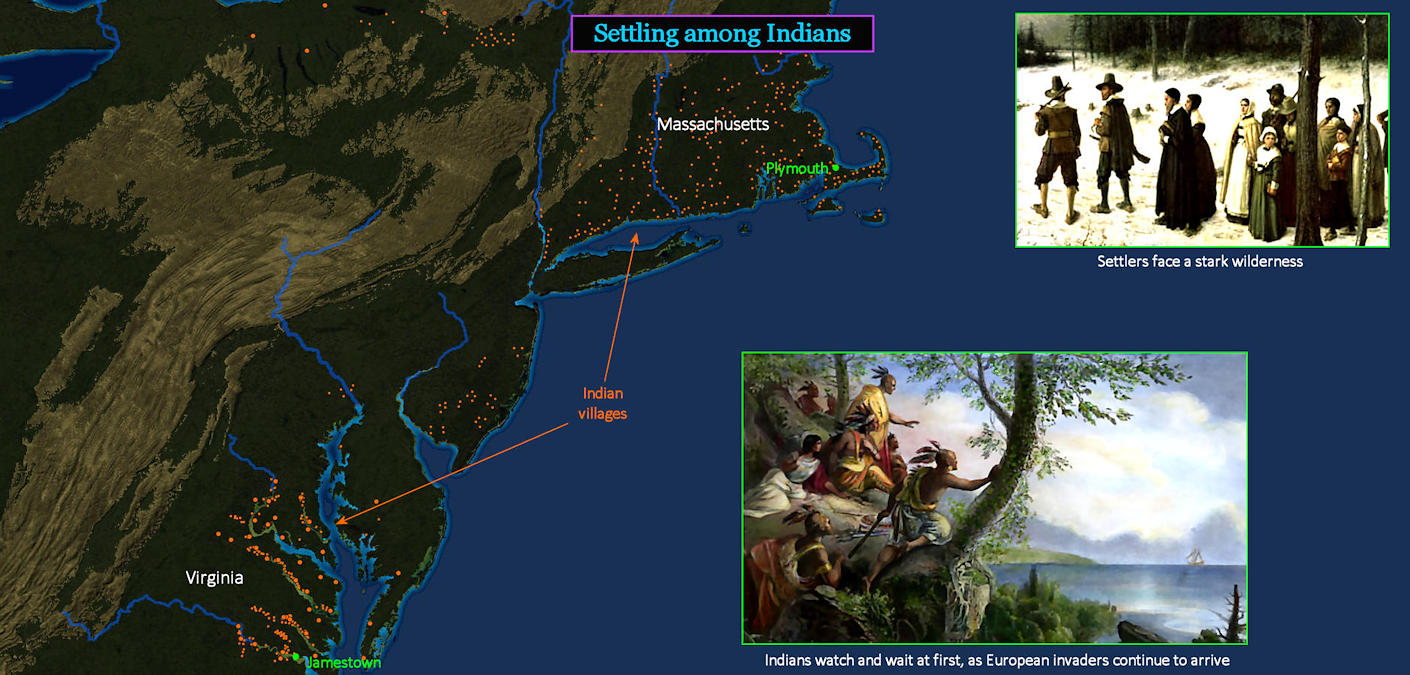
Not Really Empty As it turns out, the land is far less empty than settlers expect. The entire region is sprinkled with small Indian villages (ORANGE dots on map), although contact with the native inhabitants is limited, at first. The Indians have been severely weakened by disease, spread by English fishing vessels that had been working the northern coast for some years. Indians remain wary of these dangerous new invaders, who arrive with frightening metal weapons, in immense ships they can scarcely comprehend. The strange new breed of white-skinned men seem to possess magical powers. | |||||||||

| |||||||||
Making Do The early colonists have very little technology to help them survive. They arrive with seeds, muskets, axes and saws, but little else. Still, it's enough to fell trees, start gardens, and erect simple frame houses in clearings that are enlarged, year by year. Settlers also bring a small collection of livestock, to help them get through long winter nights. Soon enough, settlers learn to raise additional animals, to ship to English colonies on islands in the Caribbean, providing sorely needed income. | |||||||||
| |||||||||
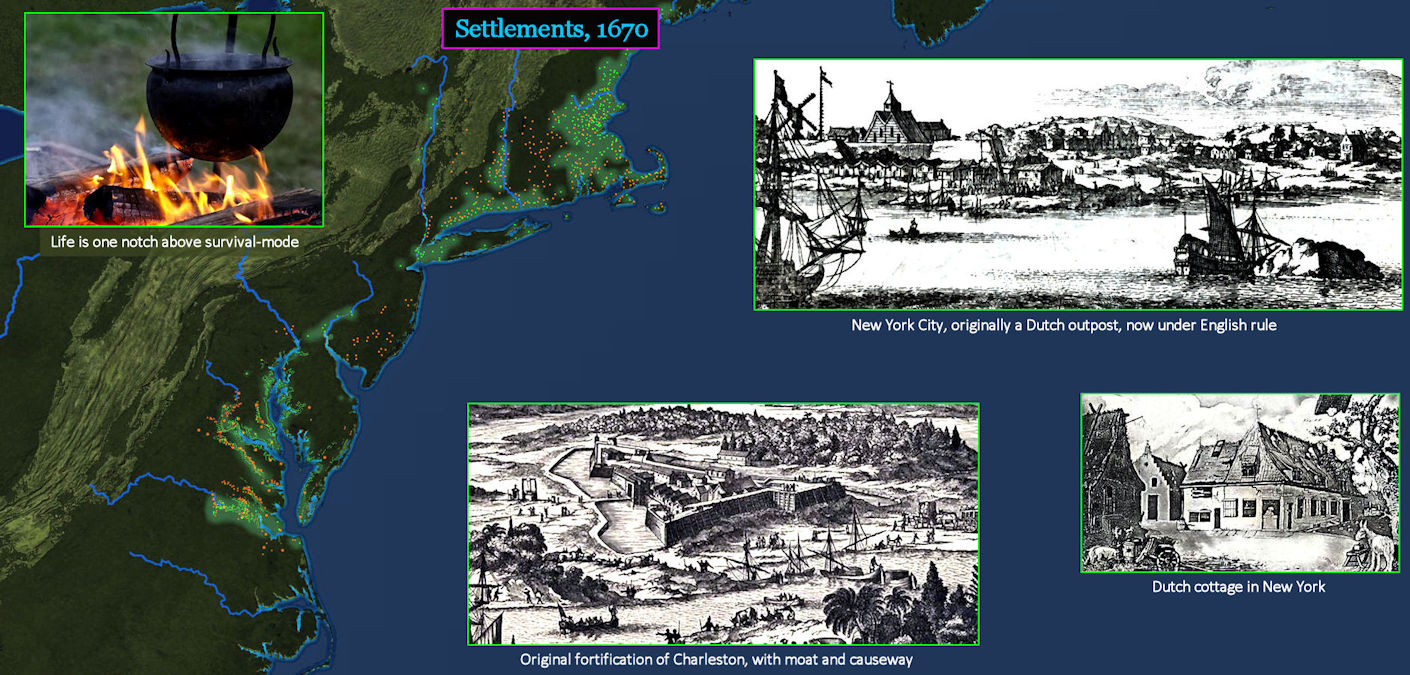
Settlements, 1670 The lack of money is a continual, pressing problem. Colonists can grow food, but almost everything else they need to sustain life must be imported from England. Yet English investors expect colonists to somehow manage for themselves. After the first few shipments of supplies, colonists are left on their own. To pay for imports, they have to find products that English businessmen will accept in payment for the goods that are shipped back to America. This is a huge challenge, given the lack of resources and tools. London creditors keep track of colonial accounts, prodding settlers to find anything of value to ship back to help offset the debt. | |||||||||