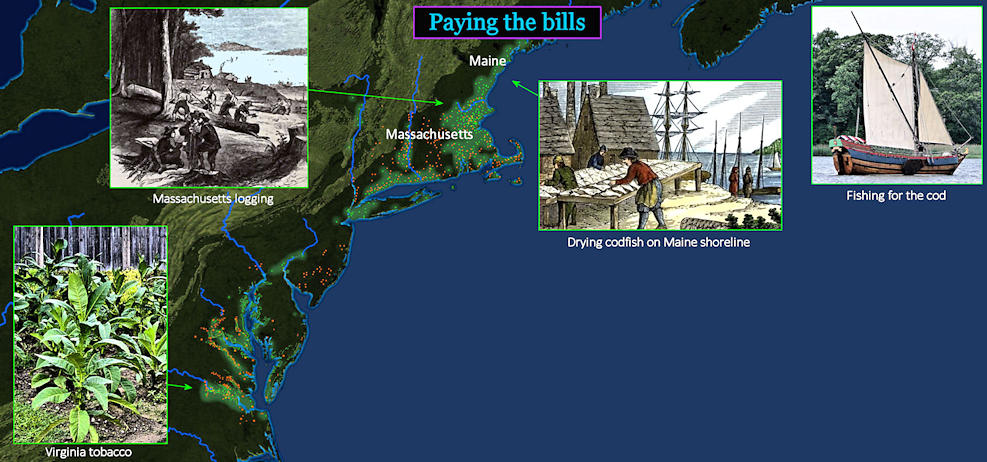
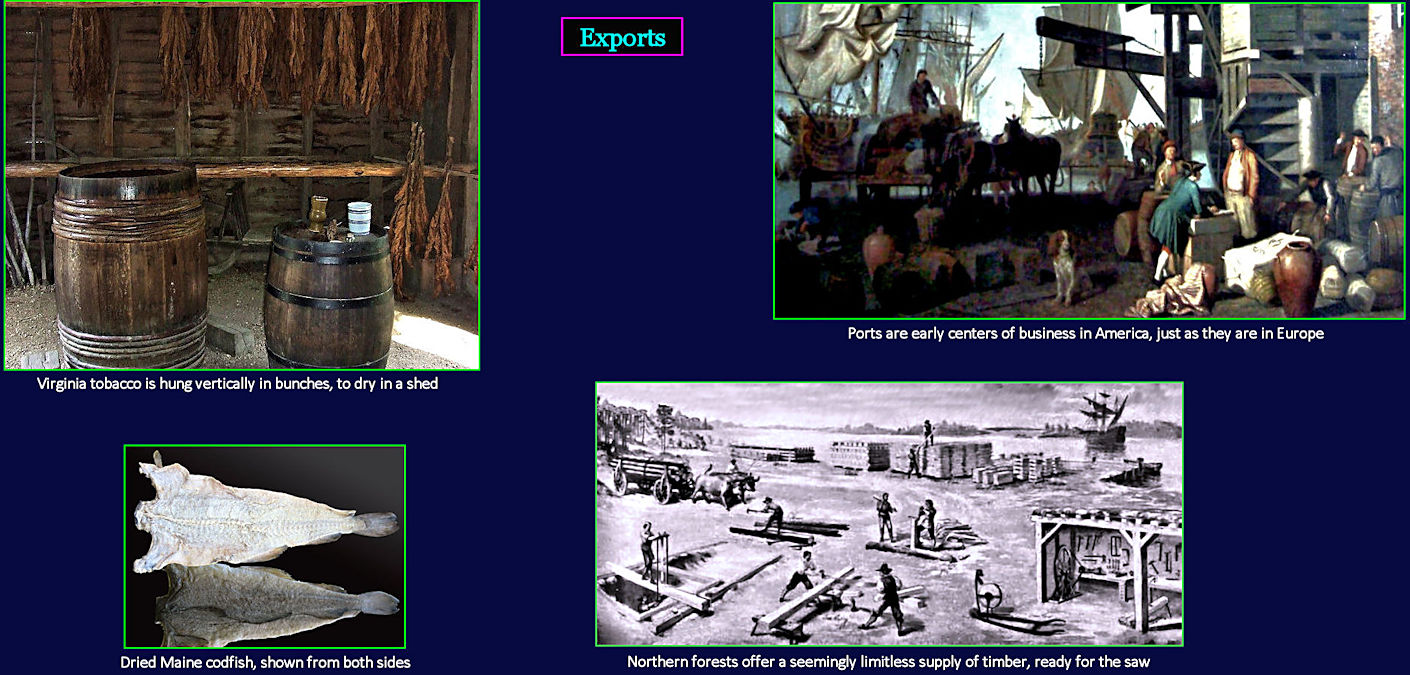
Limited OptionsUnfortunately, the North American coast possesses only three basic items that can be exchanged for all the goods that colonists need. All three are basic, low-technology products. The easiest to procure is dried fish. European fishing grounds are so depleted that ship captains have been fishing the abundant waters off Canada and Maine for years, returning with precious cargos of dried cod. Another product is wood. European forests are nearing exhaustion, making the seemingly endless American forests an important replacement. The final export option is less obvious, but even more profitable. Virginia tobacco. |
| ||||||||||||||||
| |||||||||
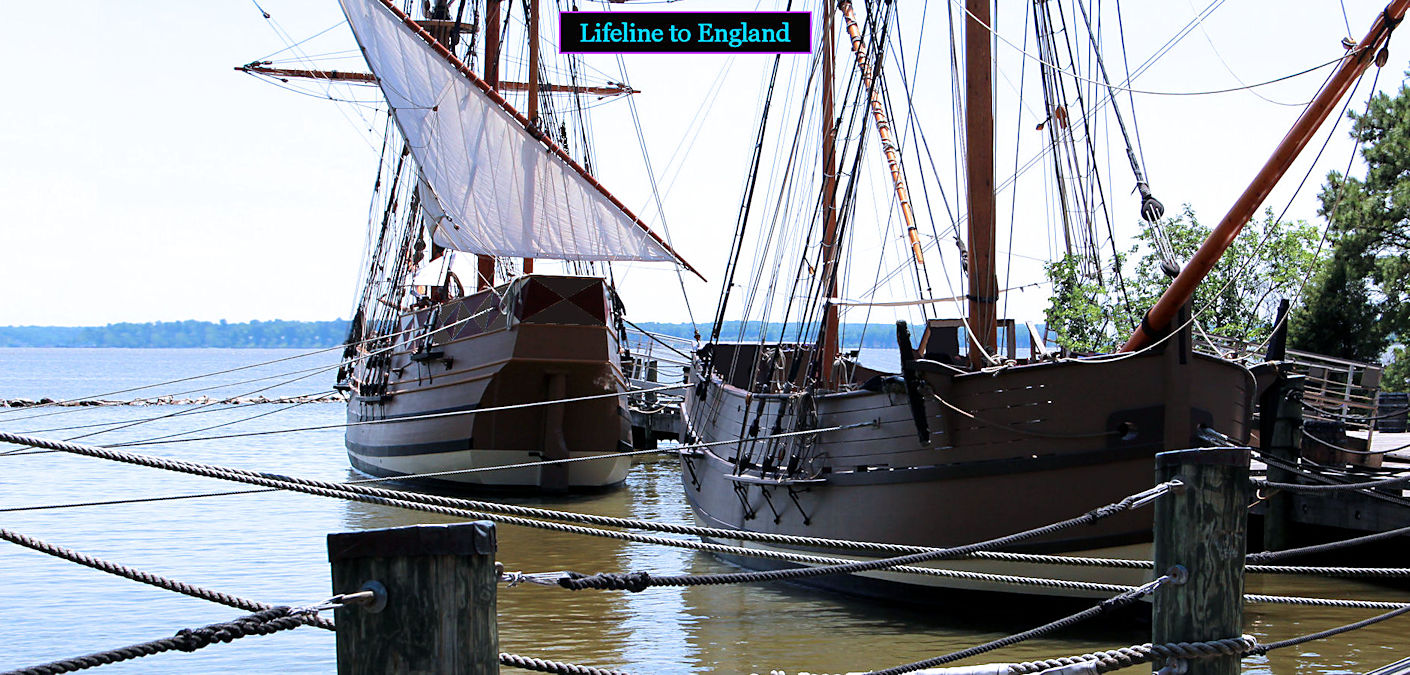
Moving Goods by Water Any location where a vessel can safely anchor has the opportunity for trade, so the shoreline is a busy place. The big port is Boston, along with a smaller harbor at nearby Salem. But there are dozens of smaller coves and inlets, which service a growing fleet of small coasting vessels. Most are built right on the shoreline, with locally available timber. | |||||||||
| |||||||||
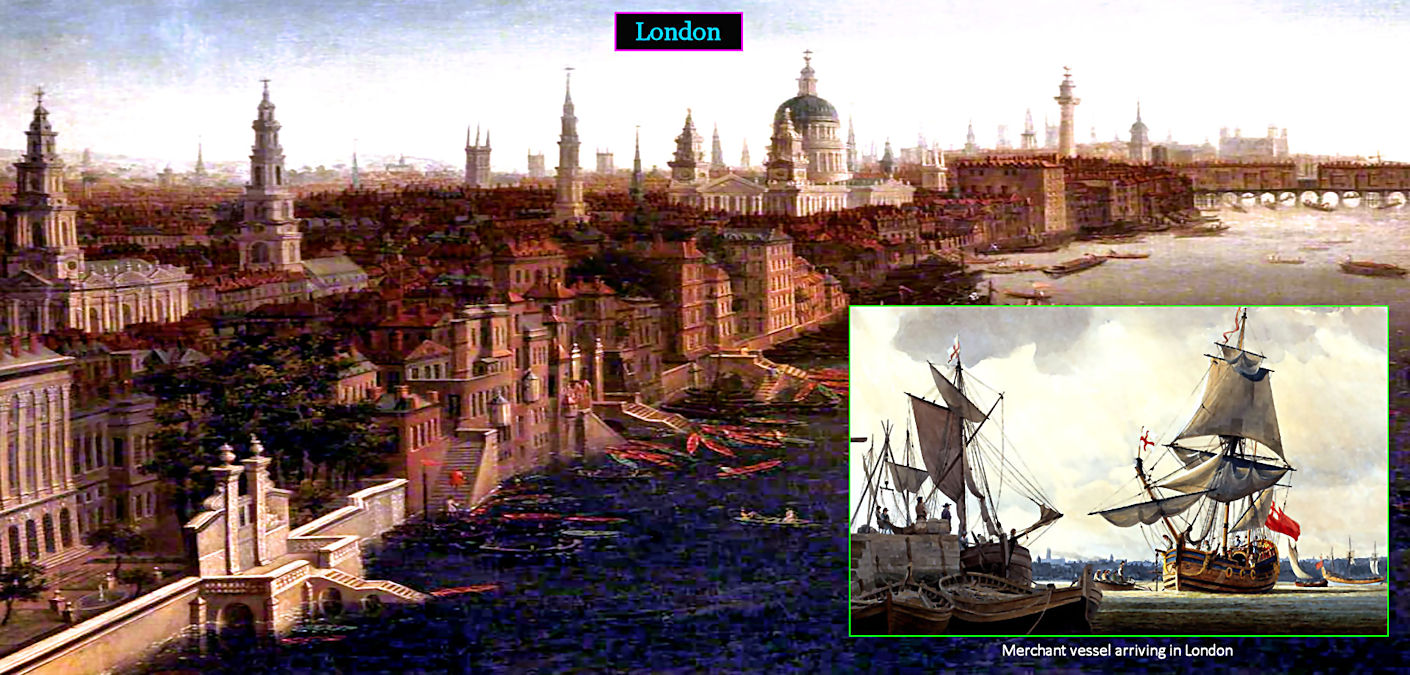
But Who Will Buy? The problem, as colonists quickly discover, is that Europe already has well-developed business centers, serviced by centuries of accumulated infrastructure. Compared to America, with its rustic lifestyle, London (depicted above) is an advanced society. Items that arrive from the American colonies must compete with higher-quality products from all over Europe. Only those that are in relatively short supply have any real commercial value. | |||||||||
| |||||||||
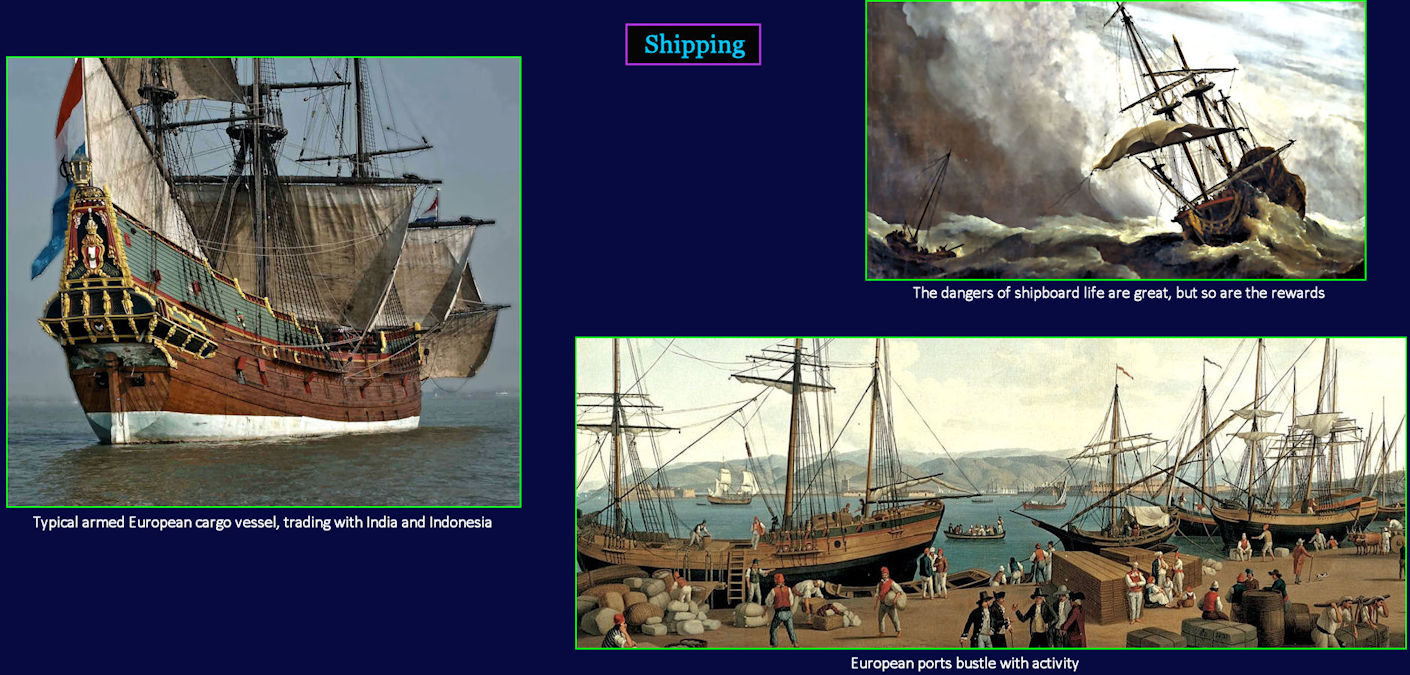
Merchants and Vessels By the mid-1600s, the great European powers have all discovered that shipping is the key to gaining wealth. This means scouring the globe for products which are cheap and plentiful in remote locations, but relatively rare (and therefore expensive) back home. The big business opportunities are in the so-called East Indies (modern India and Indonesia), where highly-prized spices and exotic Chinese silks can be obtained. These are shipped thousands of miles back to eager buyers in Europe. | |||||||||
| |||||||||
America at a Disadvantage America is effectively excluded, by sheer distance, from such business opportunities. Beyond that, English merchants have a vested interest in keeping the American colonists starved of anything that might allow them to become competitors. The English welcome the relatively inexpensive fish, timber and tobacco, but understandably wish to keep more profitable businesses to themselves. In effect, the colonists are viewed as a convenient captive labor force, similar to servants, in a position little different from that of actual slaves. | |||||||||
| |||||||||
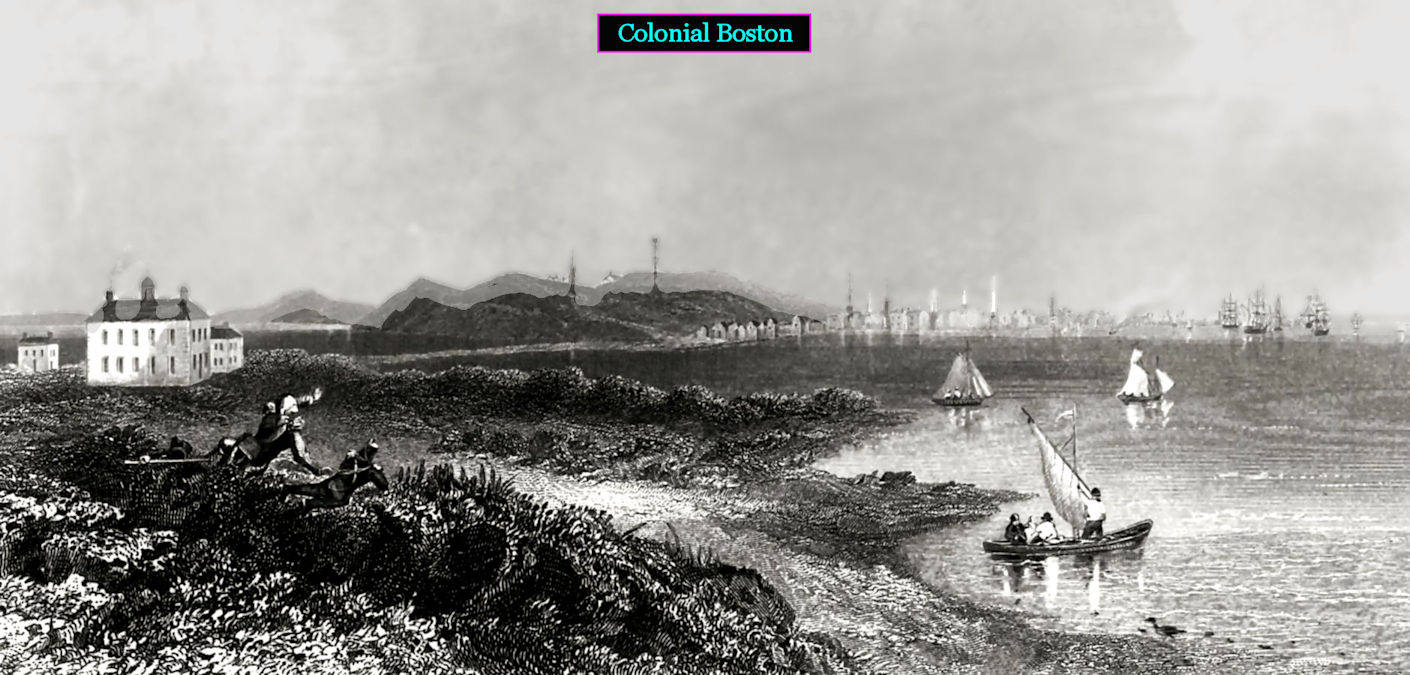
Boston is an Exception The northern colonists have one advantage over Europe, as they are fast becoming masters of low-cost ship-building. Colonial vessels are relatively small, but can be built of nearby timber at almost no cost. This allows Boston to maintain its position as the premier American port, well into the 1700s. But colonists remain starved of technology, as the English take every opportunity to exclude Americans from their important manufacturing markets. As long as the Royal Navy rules the sea, England can control maritime shipping almost everywhere. Only the Dutch offer serious competition, but they focus their attention on the East India trade. | |||||||||