After the RomansThe Roman road system, a model for the world, has fallen into disuse, as there is no protection from marauders and thieves. The Italians are beginning to revive trade in the Mediterranean, but their sea routes are fairly limited. A few independent Italian cities are beginning to grow, while Constantinople remains the only great city in Europe. Elsewhere, towns are beginning to emerge from a wasteland generally dominated by Germanic tribesmen. Meanwhile, Arab traders in the Middle East are beginning to establish contacts in India and China, which offer luxury items not available in Europe. China's population and wealth far surpass those of Europe. |
| ||||||||||||||||
| |||||||||
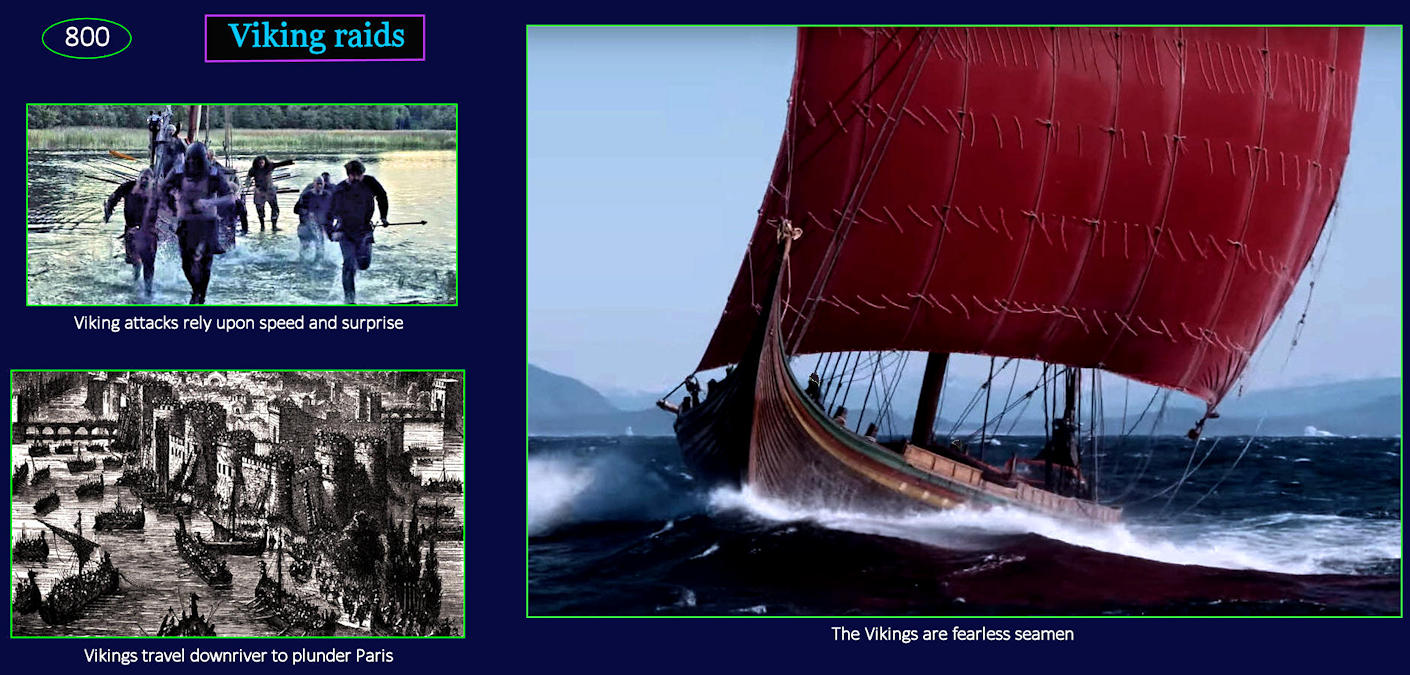
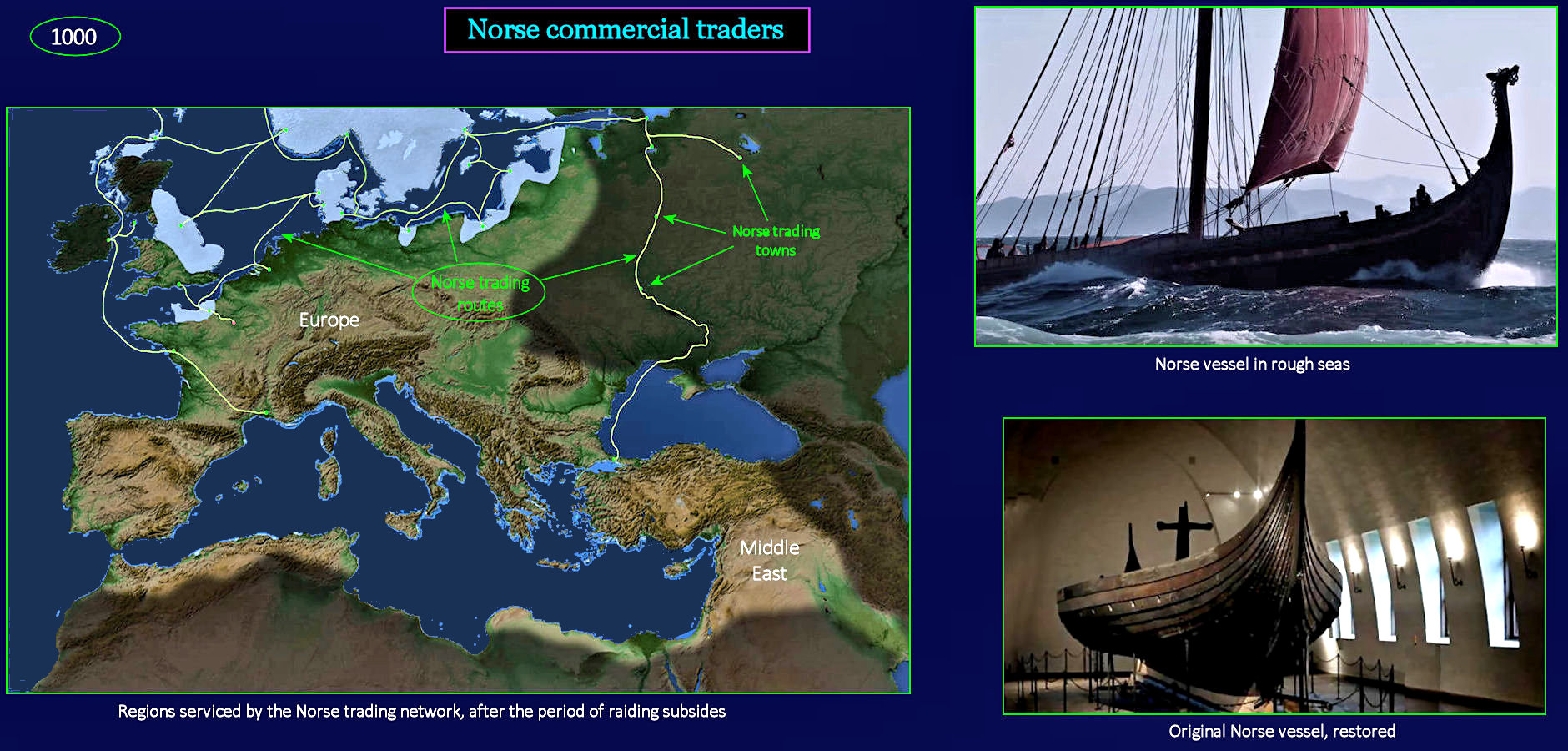
Norse Trade Routes Despite the scattered nature of the raids, the Vikings from Sweden and Norway create something approaching panic all over Europe. No one is really safe. The shallow-draft Viking ships can follow rivers far inland, to places like Paris. The success of these raids encourages attacks from Denmark as well. Eventually, all invaders from the north are lumped together simply as 'Norsemen,' meaning men from the North. This is later shortened to 'Norman.' It isn't long, however, before the Normans turn from vandalism to business, establishing a robust and far-flung trading network, at a time when virtually all other trade has vanished. | |||||||||
| |||||||||
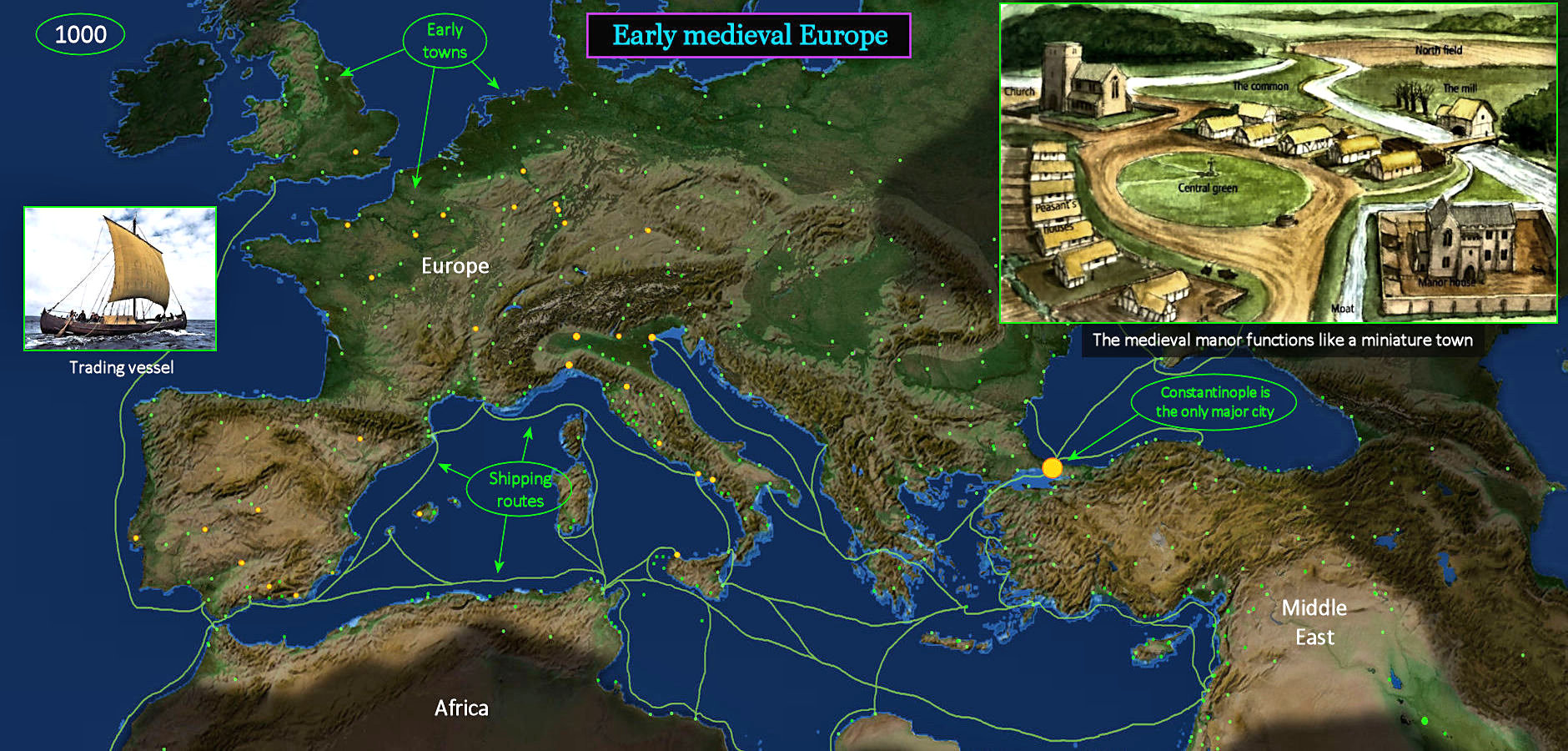
Manors and Towns This is Europe during the early medieval era, when people are living amid the ruins of the old Roman Empire. Small village settlements have been replaced by the medieval manor, a kind of self-contained estate which functions like an entire miniature town. The Lord lives in the great manor house, while peasants are given simple housing nearby in return for working the surrounding land. The GREEN dots on the map mark the location of scattered towns. YELLOW circles indicate the handful of early cities. | |||||||||
| |||||||||
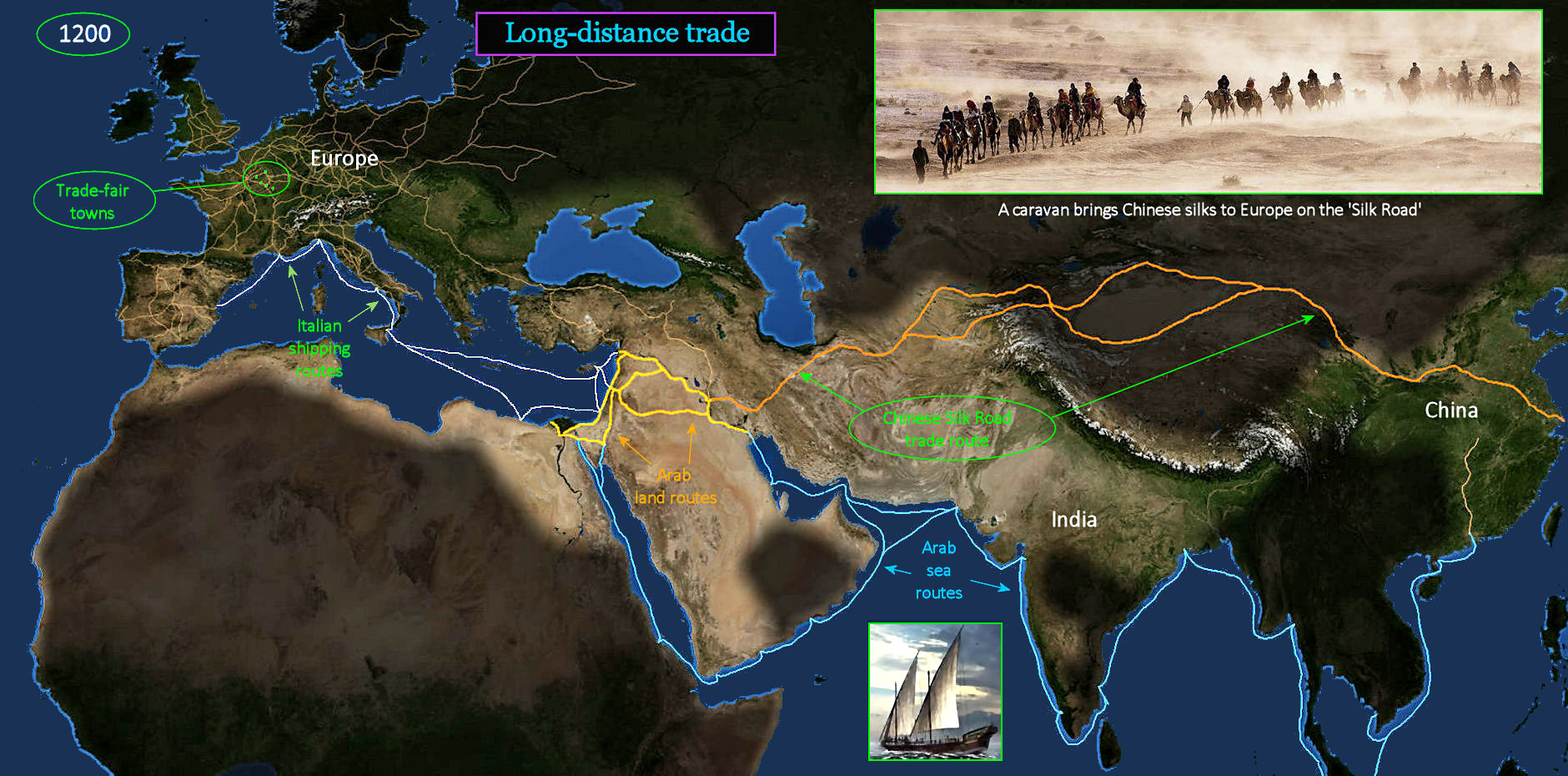
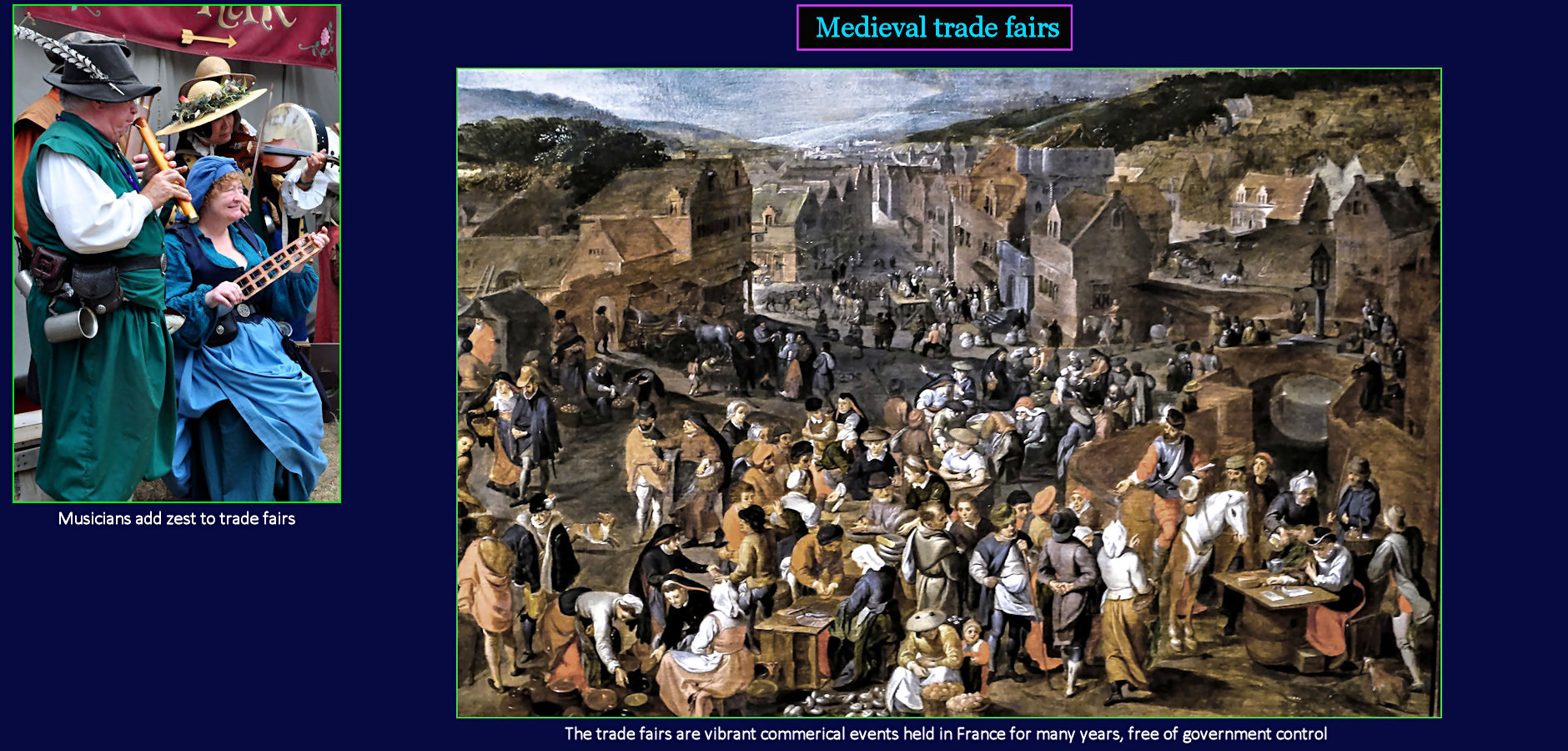
Silk and Spice By the middle of the medieval era, business is recovering nicely in Europe. The big-money trades are long-distance exchanges between the gold-hungry Chinese in the Far East, and the silk-and-spice crazed Europeans. In between are Muslim Arab traders in the Middle East, and Italians controlling the connecting shipping routes up to the trade-fair towns (upper left). These special towns are located in the only French province which is free of taxation or regulation by the king. They function like giant, town-sized flea markets, where all the products of the world are offered for sale. It's too good to last. | |||||||||
| |||||||||
Free-market Capitalism The glory days of trade fairs in Europe mark a brief period when true 'free market' conditions actually exist in Europe. Local rulers are business-friendly, and self-regulation is the name of the game. The fairs last all year, with a different town acting as host every couple of months, one after the other. A festive gaiety pervades the fairs, with traveling merchants scouring the town for bargains to bring back home, for resale. Many transactions are barter-type trades, with little actual money changing hands. This all comes to a sudden halt around 1300, when the French king finally takes control of the region, and the business. | |||||||||
| |||||||||
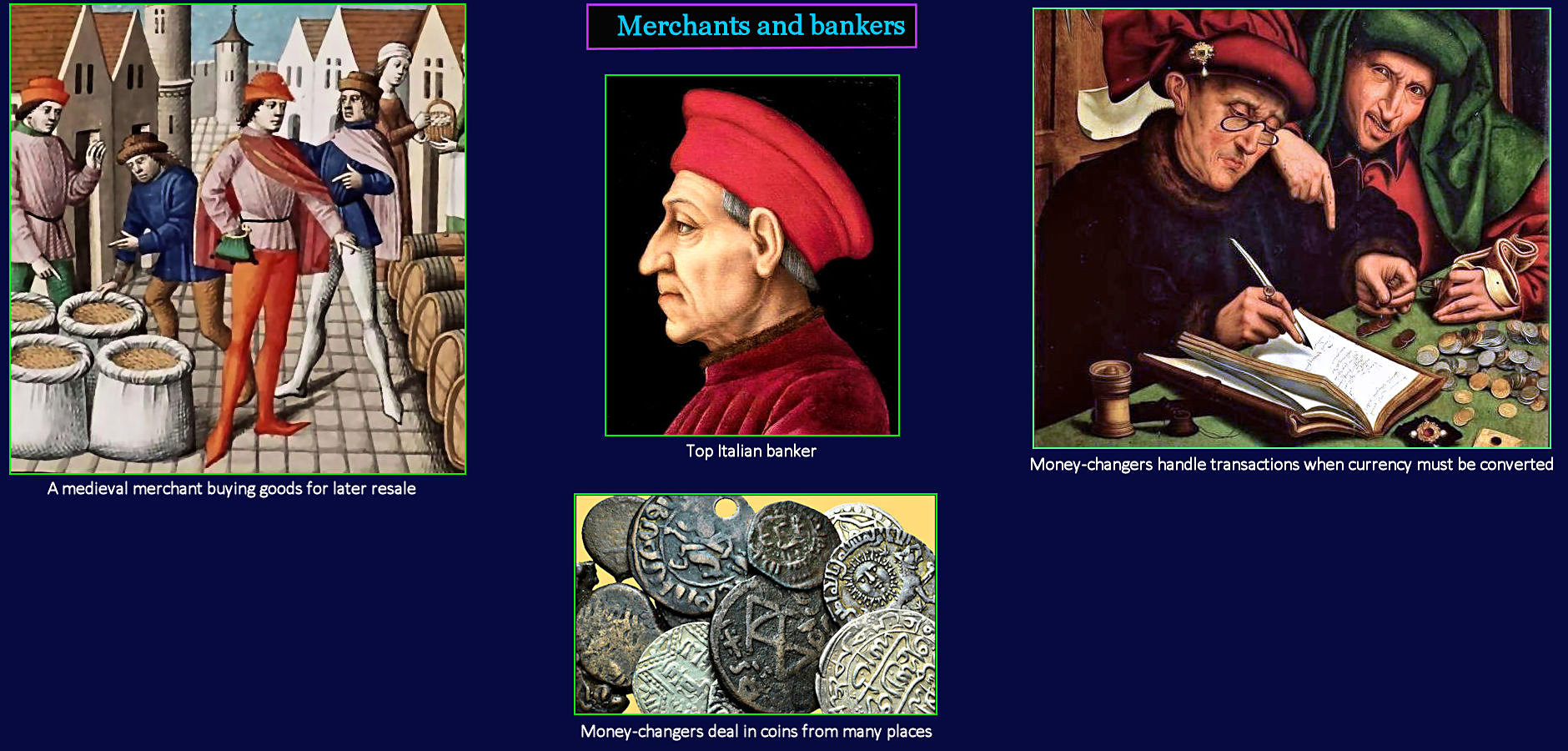
Commercial Transactions The term 'merchant' is seldom used today, but it's an all-purpose term for a medieval businessman who trades in products. This includes tradesmen who make their own goods, like shoemakers, but also men who travel around looking to acquire goods for resale elsewhere, at a higher price. Large transactions are often handled by Jewish bankers and moneychangers, partly because Christians and Muslims are prohibited from charging interest, by their religion. Jews, however, are only forbidden to charge interest when dealing with fellow Jews. The first great banking families in Europe are Italian (center top), who have amassed great fortunes by providing the Crusaders with transportation and supplies, during their quest in the Holy Land. | |||||||||