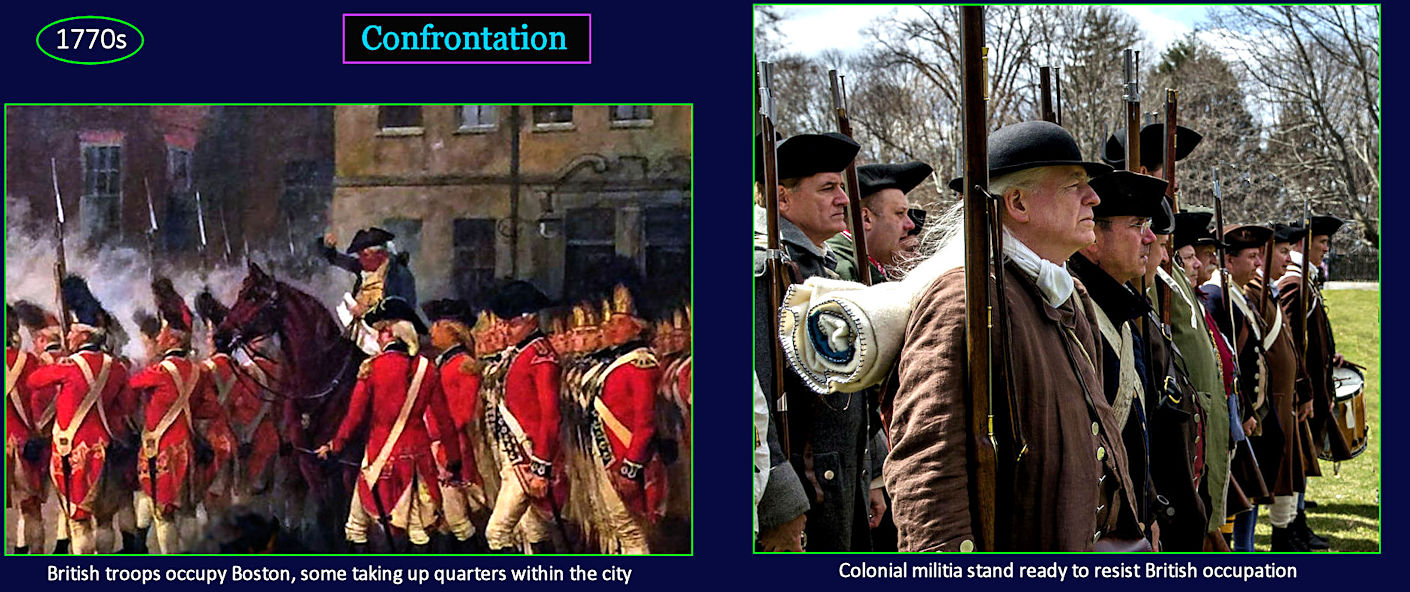
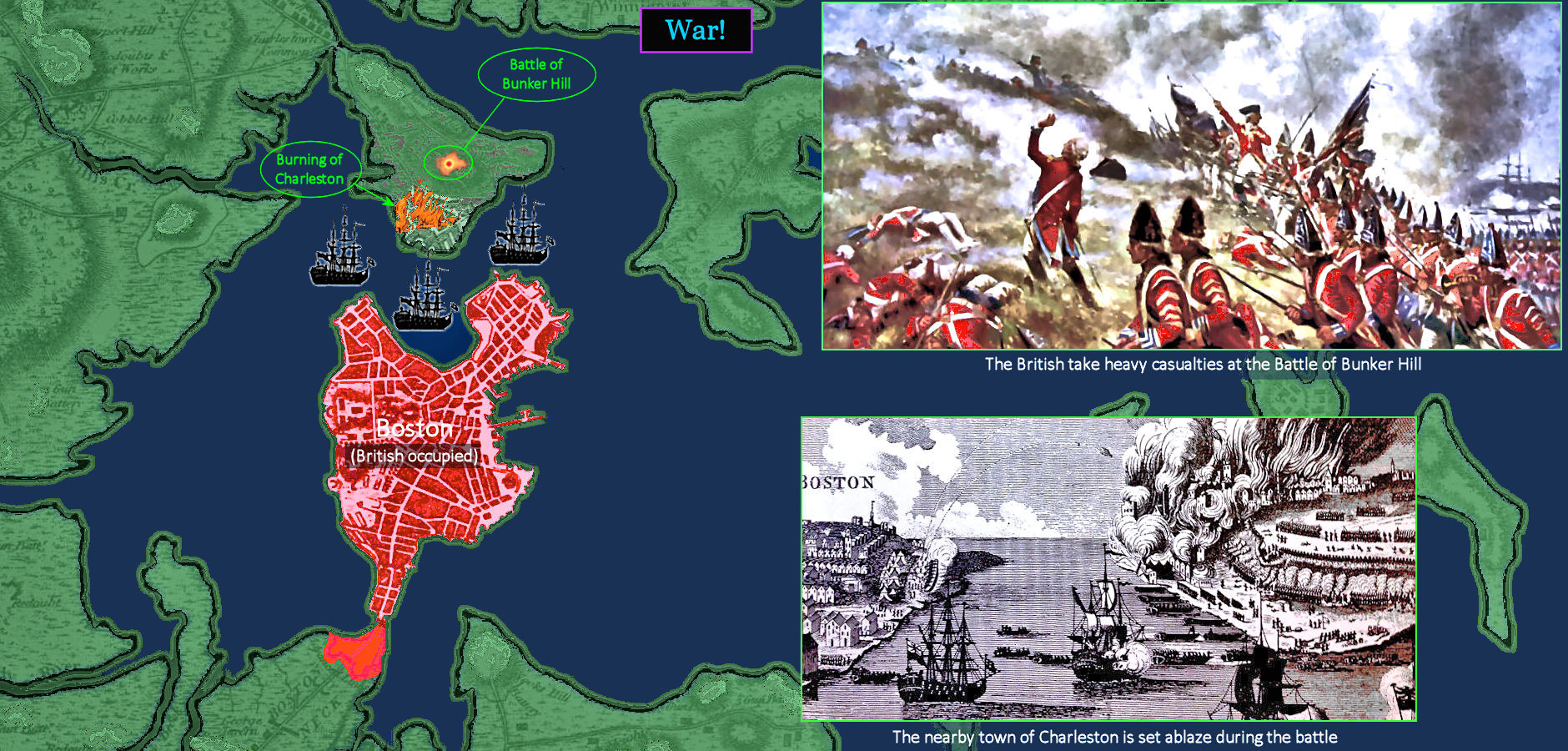
Growing TensionTo remind colonists just who is running the show, the British move the bulk of their forces in America directly into Boston. This occupation is ominous from the beginning, and grows slowly more hostile. Early on, British troops in Boston open fire on protestors, killing a handful. Four years later, feisty colonists oppose a British expedition into the countryside near Boston. After a tense standoff, shots are exchanged. Then comes the kicker. British troops, attempting to fortify positions around Boston Harbor, are suddenly confronted with an entrenched and determined colonial force. The British take heavy losses in a battle they nearly lose. |
| ||||||||||||||||
| |||||||||
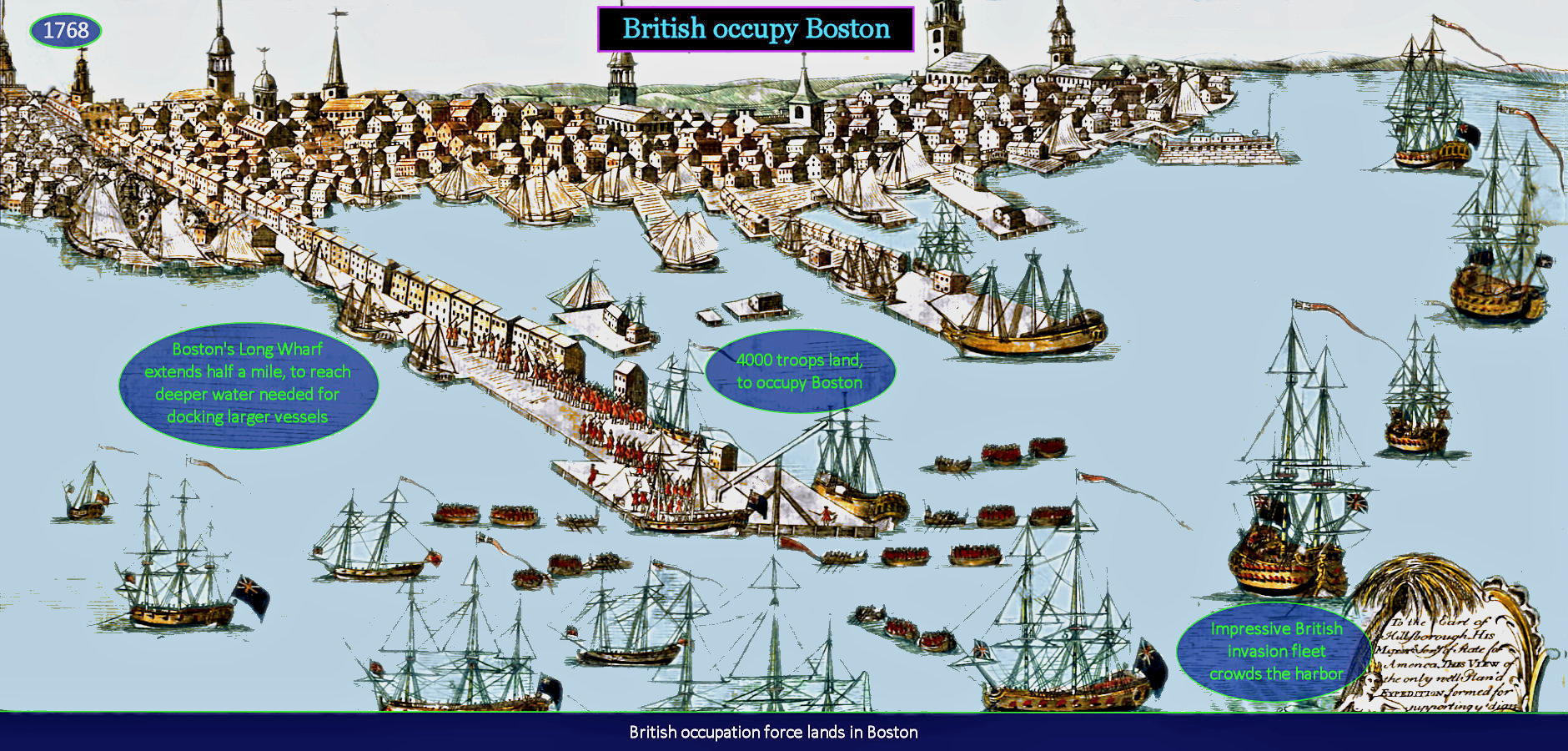
Heavy British Hand The British still have troops in America after the war with France ends. They decide to reposition these forces to the very heart of colonial resistance, Boston, as an overwhelming show of force. Arriving with a great fleet of warships, they unload 4,000 Redcoats at Boston's main wharf. This is one soldier for every four Bostonians, and will surely convince trouble-makers to cease resisting. Normally, troops would be stationed in barracks within a military garrison. But Boston has no such garrison, so the British force Bostonians to find housing for the troops within the city, including inside homes of sympathetic 'loyalists.' Bostonians are outraged, but can only grumble, and troops remain in the city for seven long years. | |||||||||
| |||||||||
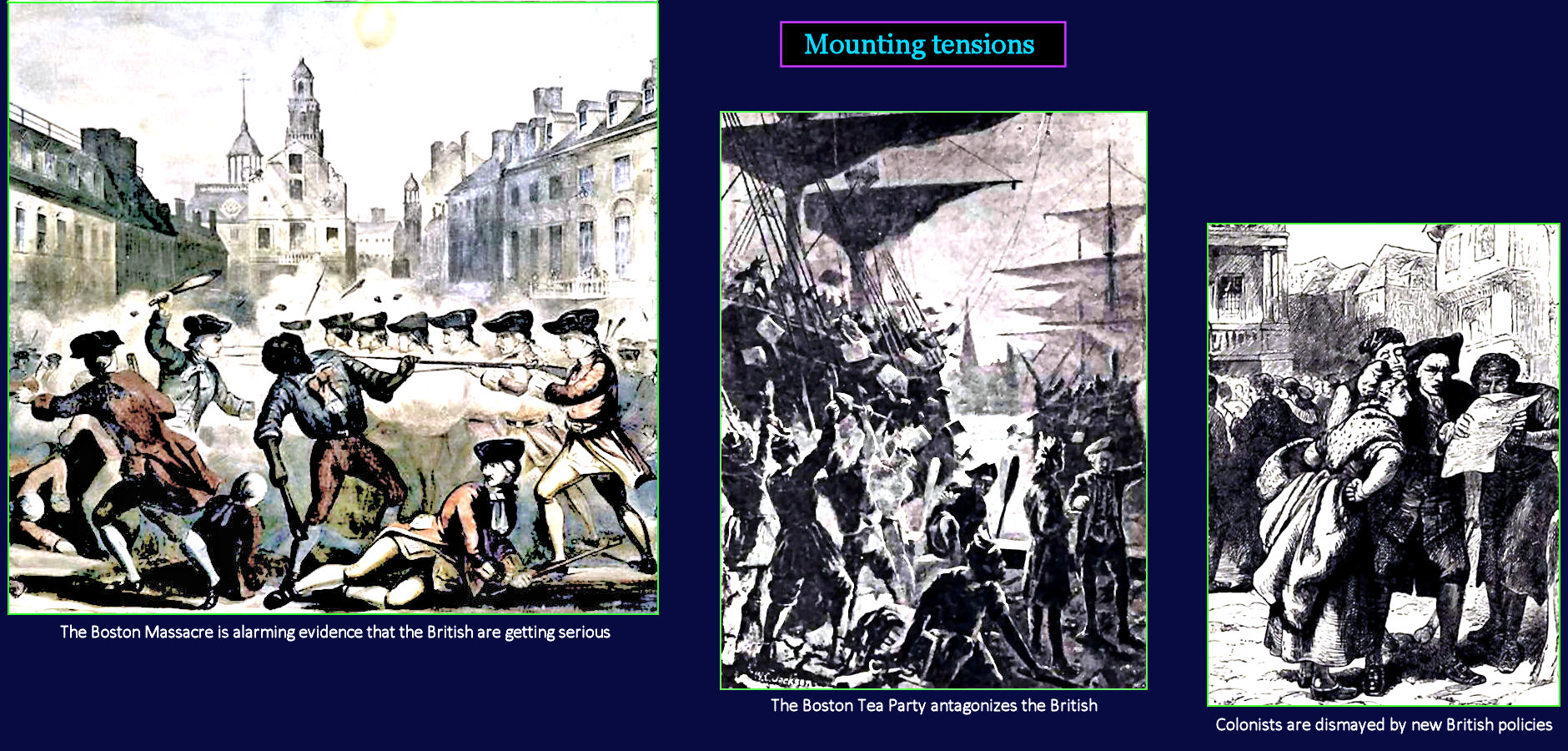
Boston Heats Up The occupation of Boston continues quietly for two years, but then erupts into bloodshed when colonists taunt British troops. After a scuffle, the troops open fire, killing a few Bostonians in an event that is sensationalized in the press as the 'Boston Massacre.' This is the first time British troops have opened fire on British subjects. The following year, a new tax on imported tea causes an uproar, even though the tax is modest, and replaces a whole set of earlier taxes on other goods. When a shipment of British tea arrives in Boston, patriots throw it into the harbor, rather than pay the tax. The British retaliate by closing the port of Boston completely, and taking control of the government. This is total lockdown, meant as a stern warning to all would-be protesters. | |||||||||
| |||||||||
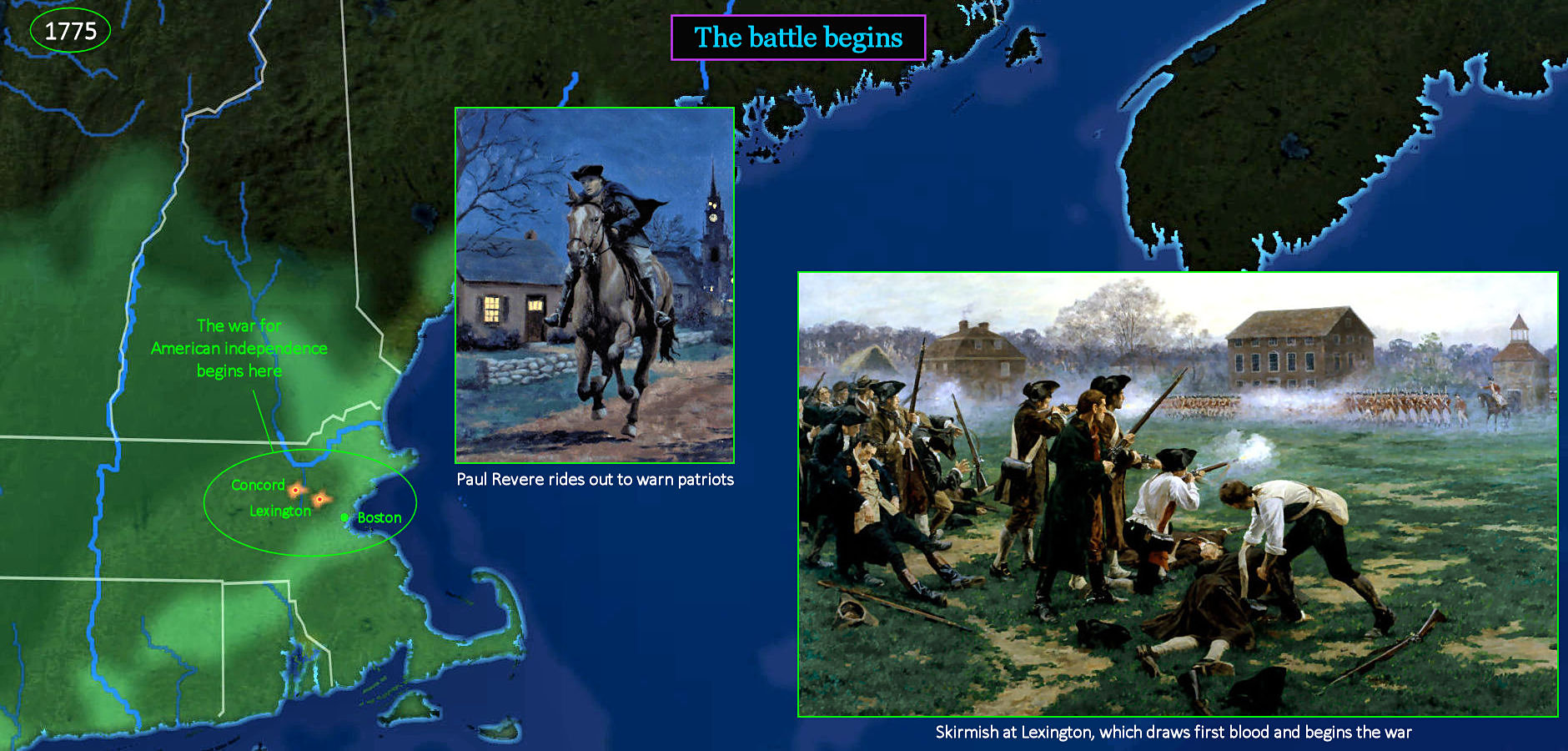
Lexington and Concord The first shots of battle come in 1775. Patriots have begun storing weapons and ammunition at Lexington and Concord, at a safe distance from British-held Boston. The British get wind of this, and send 700 soldiers on a march from Boston to seize the stockpile. The night before the raid, Paul Revere makes his famous 'midnight ride' from Boston to spread warning (top left). When the British arrive at Lexington, they find a rag-tag line of armed patriots blocking their path. A skirmish ensues, and a few shots are exchanged. Marching on to Concord, however, they are routed by organized militia, forcing a hasty and bloody retreat. Headlines celebrate the 'Shot Heard Round the World,' signaling that Americans are now ready to stand and fight. | |||||||||
| |||||||||
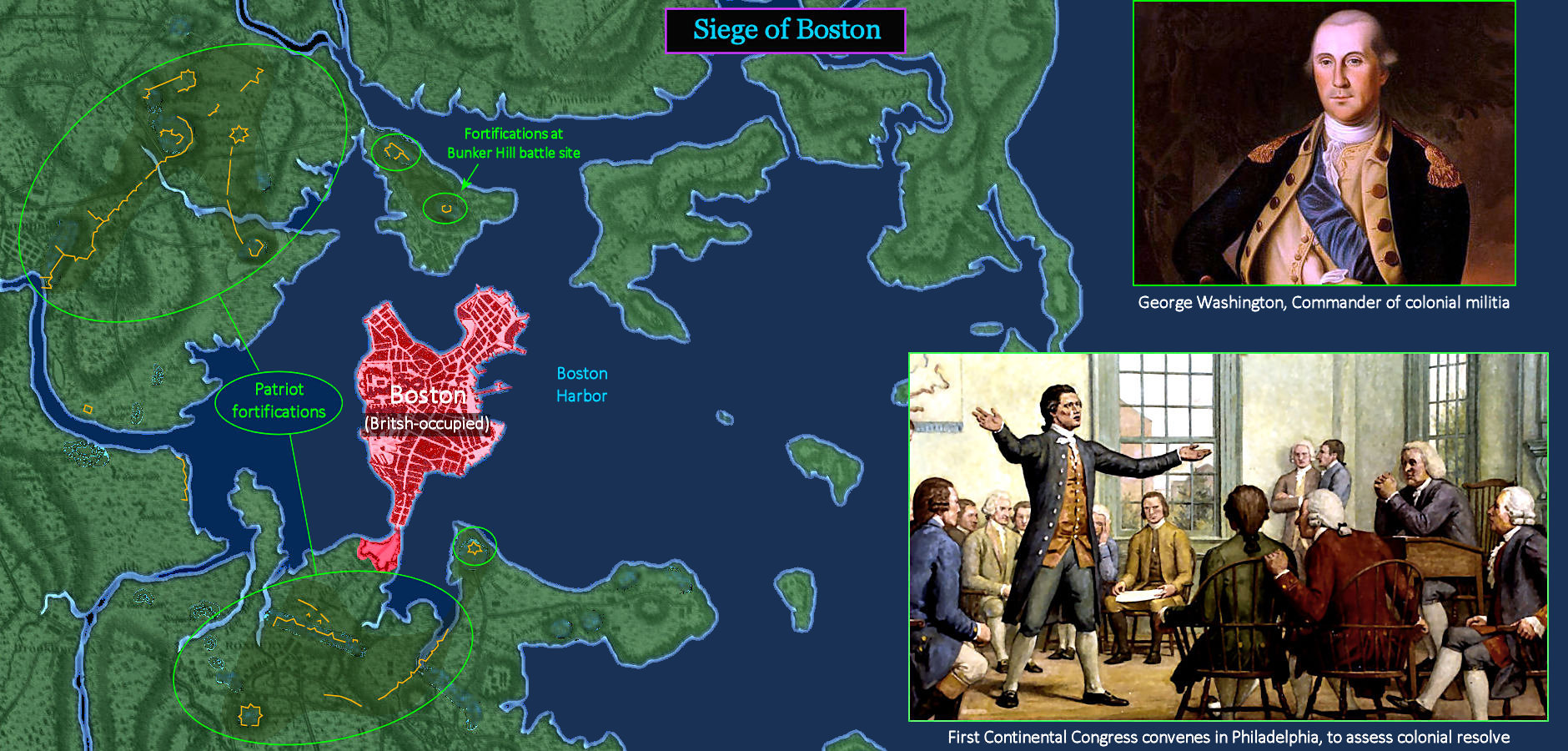
Patriots Dig In The conflict at Lexington and Concord puts the British in Boston on high alert. This is no longer colonial resistance. It's rebellion. The British bring in 2,000 additional troops, bolstering their force by a full 50%, and set about preparing fortifications to command Boston Harbor. The patriots, however, are also on high alert, and eager for action. The previous summer, delegates from each of the colonies meeting in Philadelphia began formulating a strategy of resistance (lower right), choosing 43-year-old George Washington to command the colonial militia (top right). Washington now quickly organizes fortified positions all around Boston, to keep the British bottled up. The British fume, as they prepare to break the siege. | |||||||||
| |||||||||
Battle of Bunker Hill By summer, things are nearing a breaking point, with the British occupation of Boston in its seventh year. Almost all patriots have fled the city, swapping places with loyalists in the surrounding region who support the King, and have moved into the city for protection. When the British send out an expedition to prepare fortifications on land just north of Boston, they find 1,200 patriot militia already dug into positions, on the high ground. A pitched battle ensues, with three waves of British attacks. The first two are repulsed with heavy loss, but the patriots finally run low on ammunition, and abandon the hill. There can be no doubt about the state of affairs in America anymore. This is WAR. | |||||||||