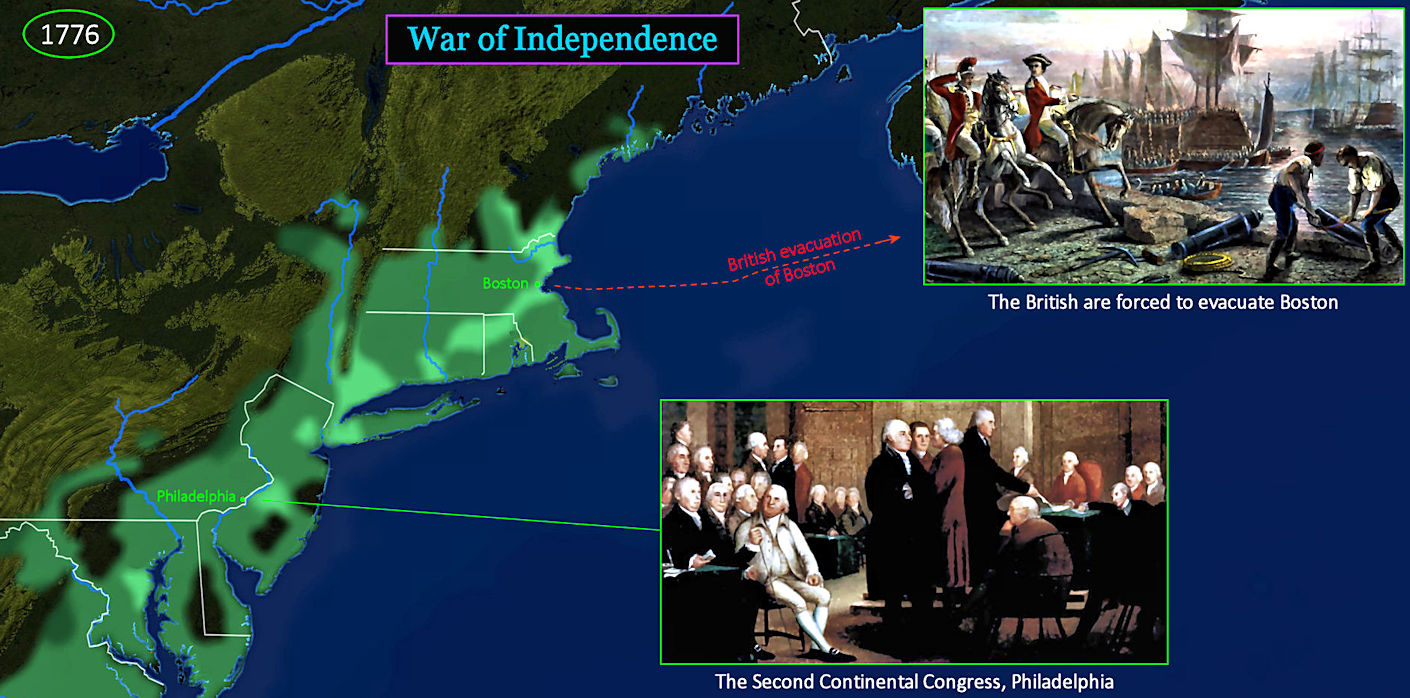
We WON (Didn't we?)The following year, delegates from all 13 colonies meet in Philadelphia to assess their situation. Their original intent is only to draft a set of grievances to present to the King. The colonists are still hoping of getting some relief. But just before they begin, word arrives that British forces have suddenly abandoned Boston, due to the arrival of colonial cannons which now threaten the entire city. The British evacuate, sailing back to their base in Nova Scotia. Sensing victory, the delegates go far beyond a simple formal protest, and vote instead to take a huge gamble. They declare the 'United States of America' to be an independent country, free forever from British control. |
| ||||||||||||||||
| |||||||||
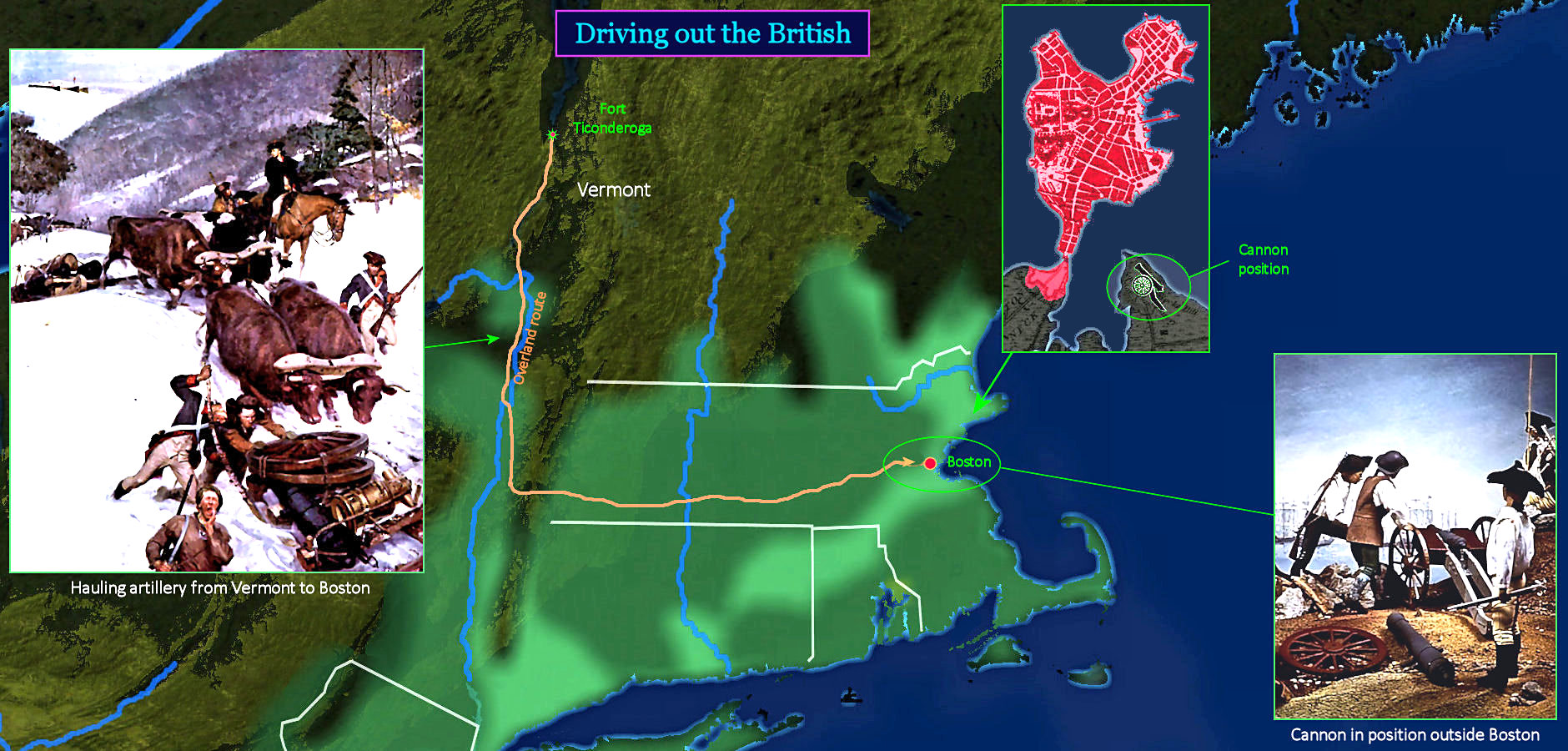
Bringing in the Guns The action that eventually forces the British to evacuate Boston begins with an incredible feat of endurance, as patriots drag 60 cannons down to Boston all the way from Fort Ticonderoga, far to the north (see map). This seems an impossible task, given the distance and poor state of roads. Nonetheless, the hardy group somehow manages to manhandle the guns all the way on sleds, which is the only way they can be moved at all. Each of the largest cannons weighs as much as a modern SUV. The journey takes 80 oxen and three months, but the cannons arrive in Boston by spring. They are quickly moved into a position on the heights, from which they can fire down into Boston, and the British evacuate. Well done, Lads. | |||||||||
| |||||||||
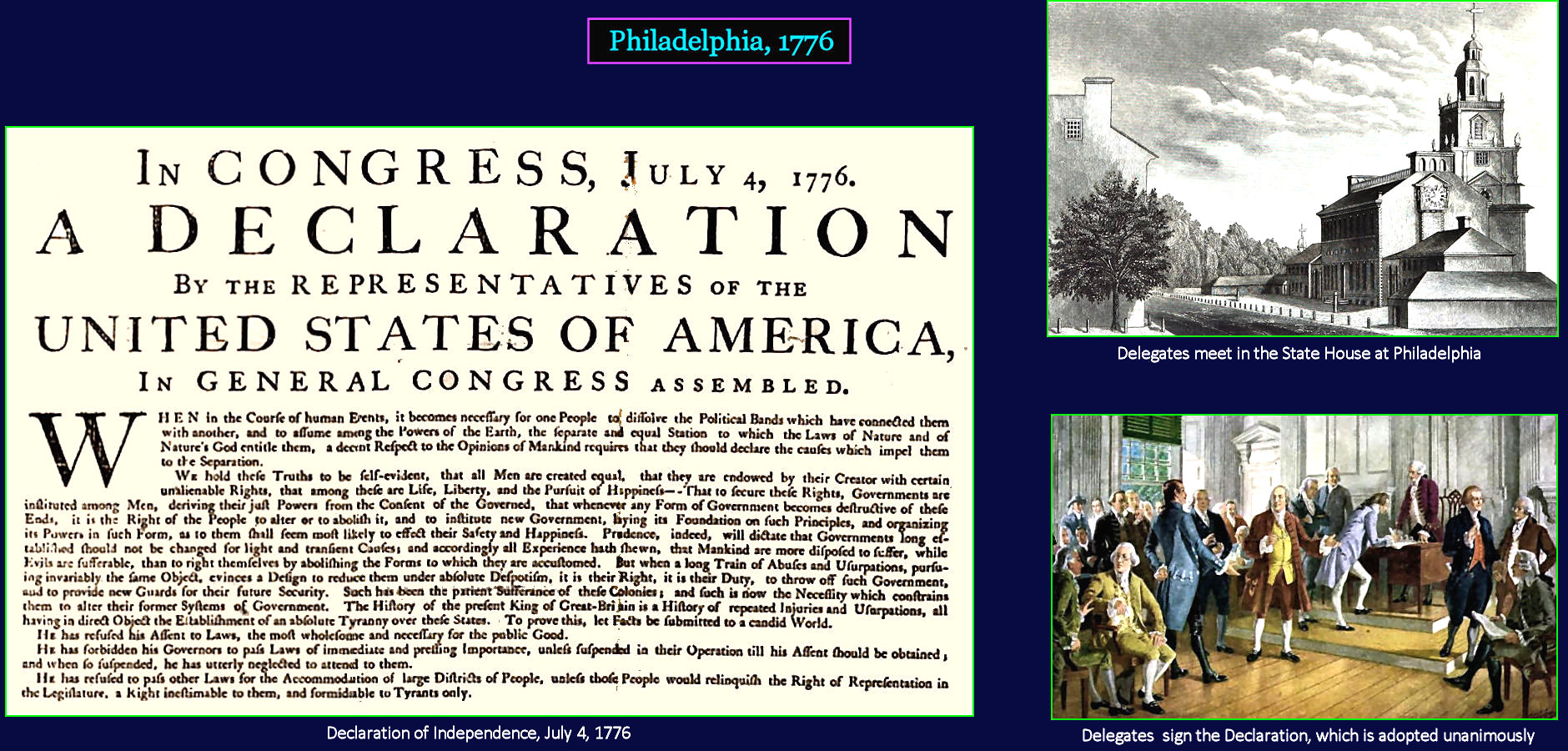
Choosing Independence When colonial delegates assemble in Philadelphia for the Second Continental Congress, they aren't trying to create a new nation. Instead, they are looking for ways to convince the King to ease off a bit. This is shortly before Washington's great success at Boston. But then, a pamphlet suddenly appears, arguing persuasively that the time for kings is OVER. It is written by an Englishman who has just arrived in Philadelphia, and is followed by the news of the British evacuation from Boston. This convinces delegates that the time for action has arrived, and they vote unanimously to adopt the Declaration of Independence, formally breaking from Britain. The opening to the document, written by Thomas Jefferson, is a marvel. But only time will tell if it can endure. | |||||||||
| |||||||||
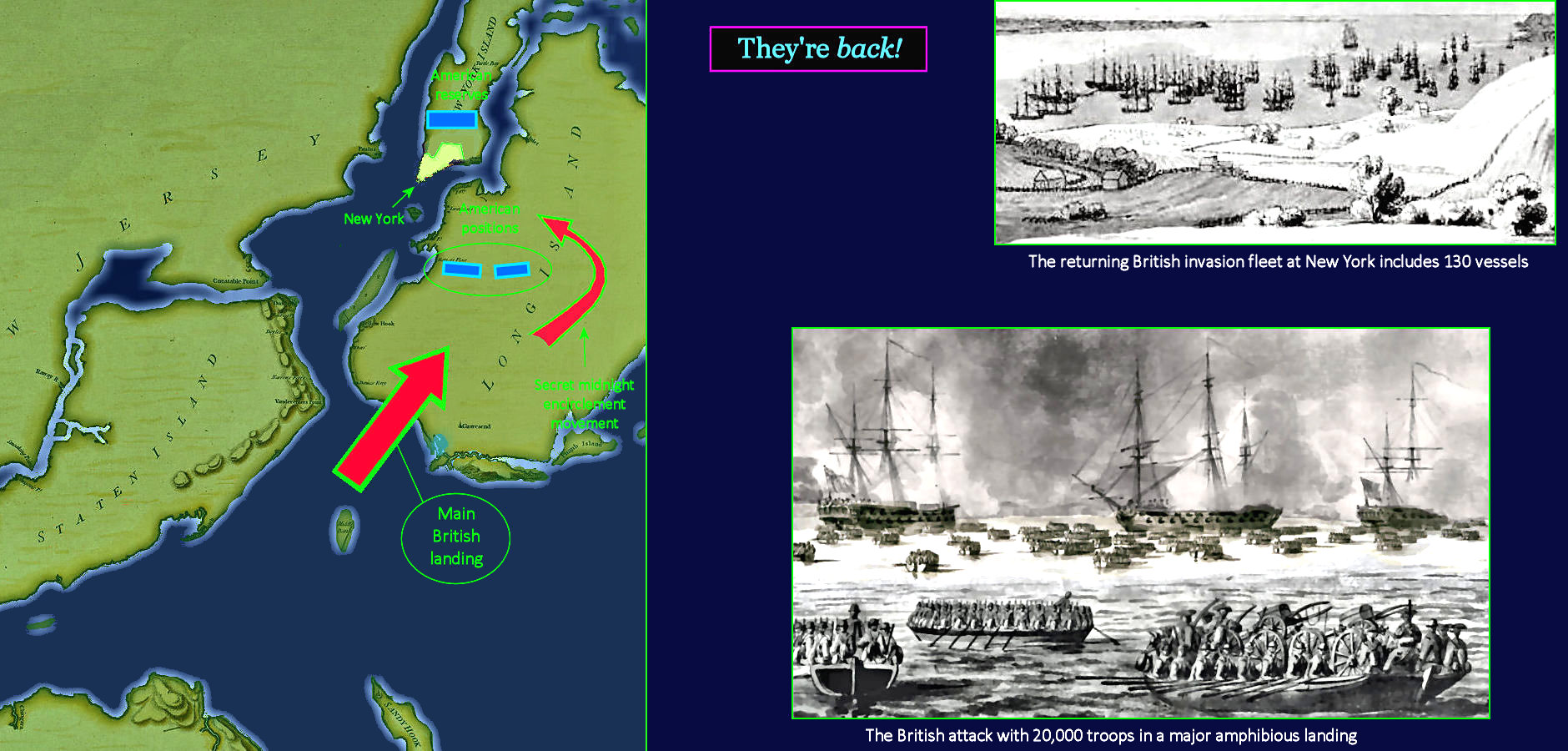
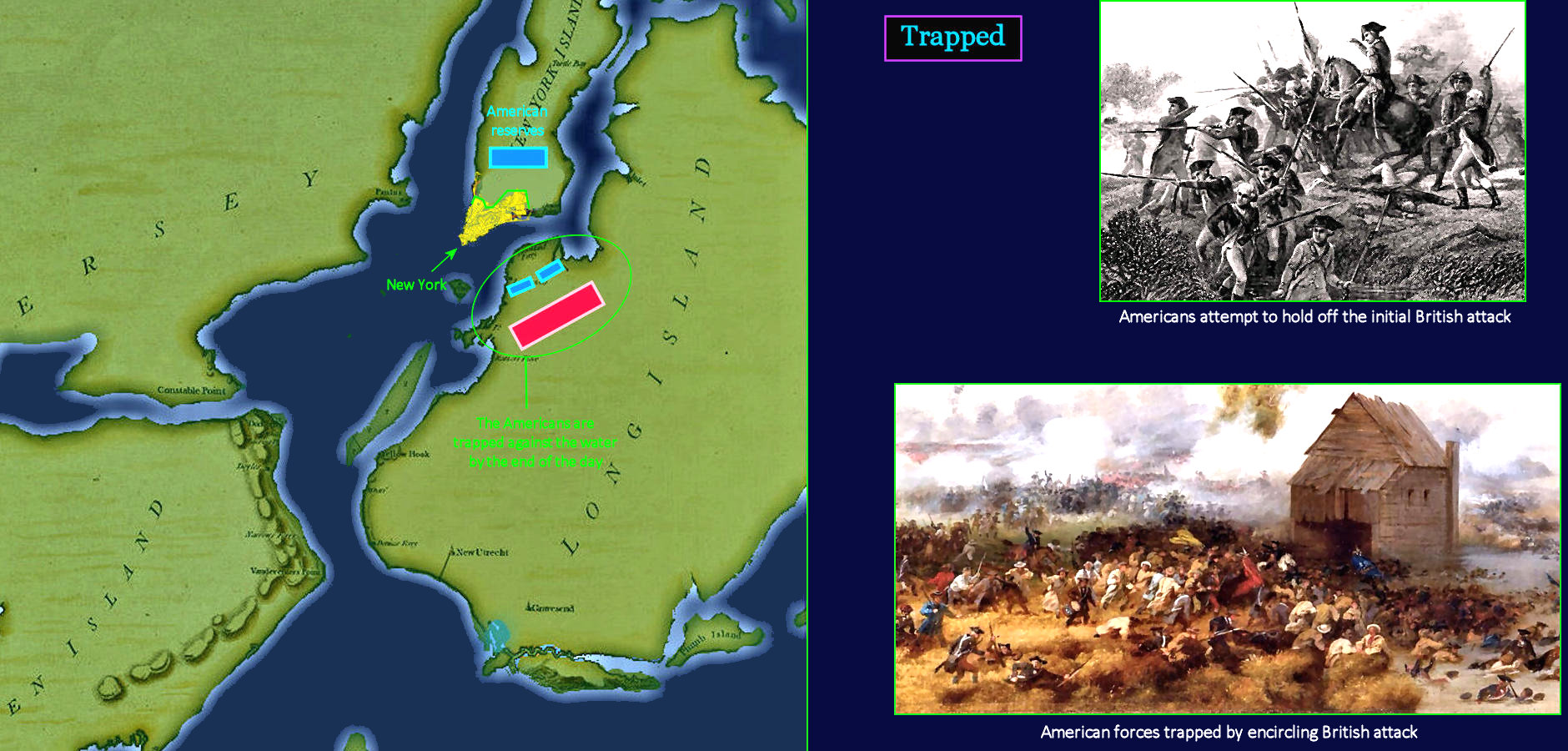
Invasion of New York Washington has guessed correctly that the British will attack New York when they return. What he can't foresee, however, is that this new invasion force will be three times the size of the one that evacuated Boston, three months earlier. A huge fleet arrives off Manhattan Island just three weeks after the signing of the Declaration of Independence. Had the delegates in Philadelphia known about the fleet, they might have hesitated to declare independence so confidently. It takes the British six weeks to consolidate their forces, before launching an assault on the tip of Long Island. During the night, the British send a large force of crack troops on a wide arc, to threaten the American rear. Unaware of this move, the Americans are now in a perilous position. | |||||||||
| |||||||||
Backs Against the Wall The battle that follows is a disaster for the Americans. The British have twice as many men, half of whom are now attacking the Americans from their blind side. Washington himself is still on Manhattan, but arrives in the morning to take control. In fierce and chaotic fighting, the Americans are gradually forced back to a position on Brooklyn Heights, with the East River at their back. But instead of pressing the attack, the British stop and regroup, confident that the Americans are now hopelessly trapped. Had the attack continued, Washington would likely have been forced to surrender, along with half of the American army. The war would have been all but over on the second day. | |||||||||
| |||||||||
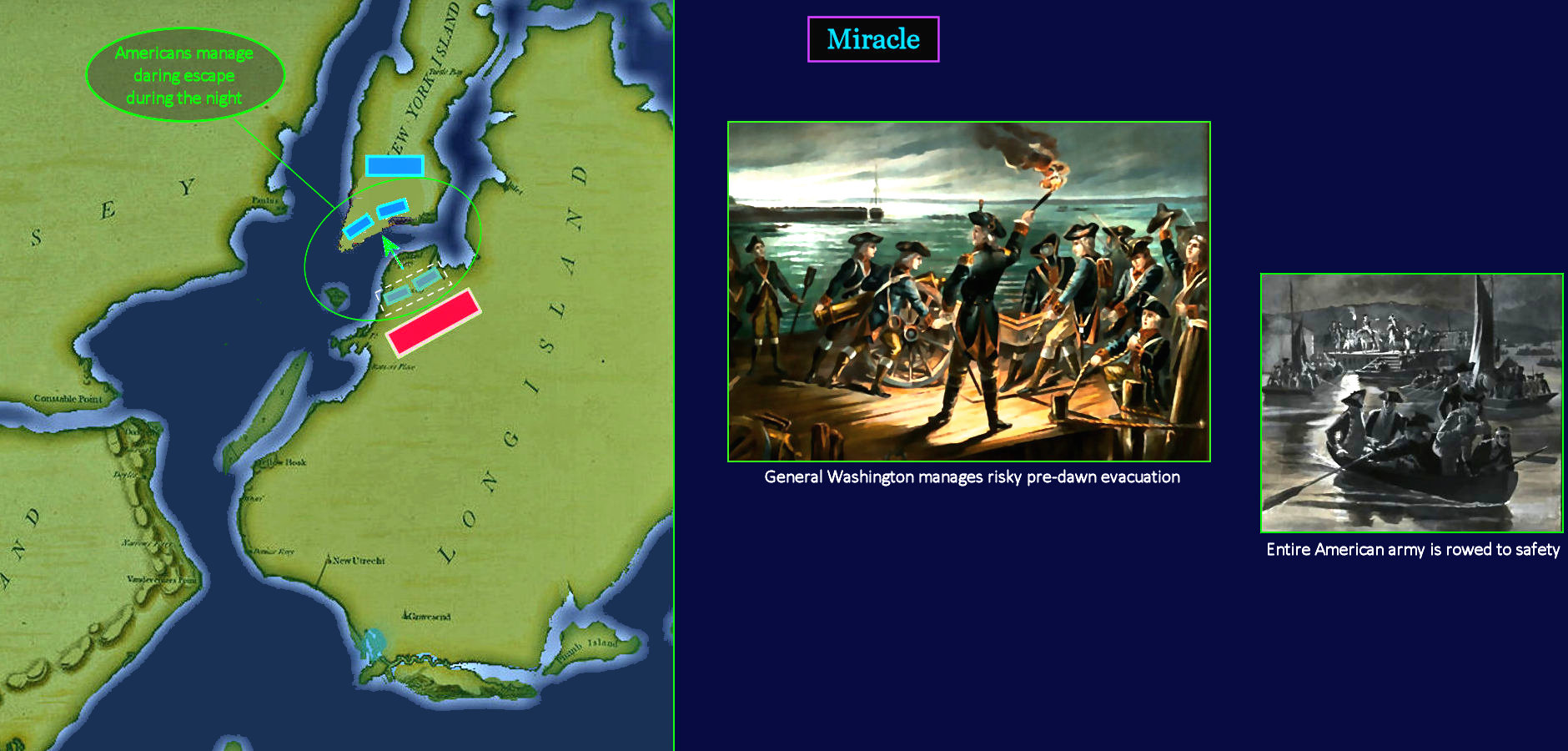
Divine Intervention? Instead, luck intervenes. It begins to rain that evening, and Washington starts to evacuate the wounded, by rowboat and barge. They are rowed from the Brooklyn ferry landing to Manhattan Island, a quarter mile away. Unaccountably, the British have failed to post vessels to prevent this. As the night wears on, Washington realizes that he might be able to withdraw most of his force under cover of darkness. Leaving their campfires burning, the Americans creep down to the landing, unit by unit, and make their way across the water to safety (see map). Washington stays at the landing all night, leaving on the last boat, as a lucky morning fog conceals the final movements. All 9,000 men escape, with full artillery and gear. A miracle, indeed. | |||||||||