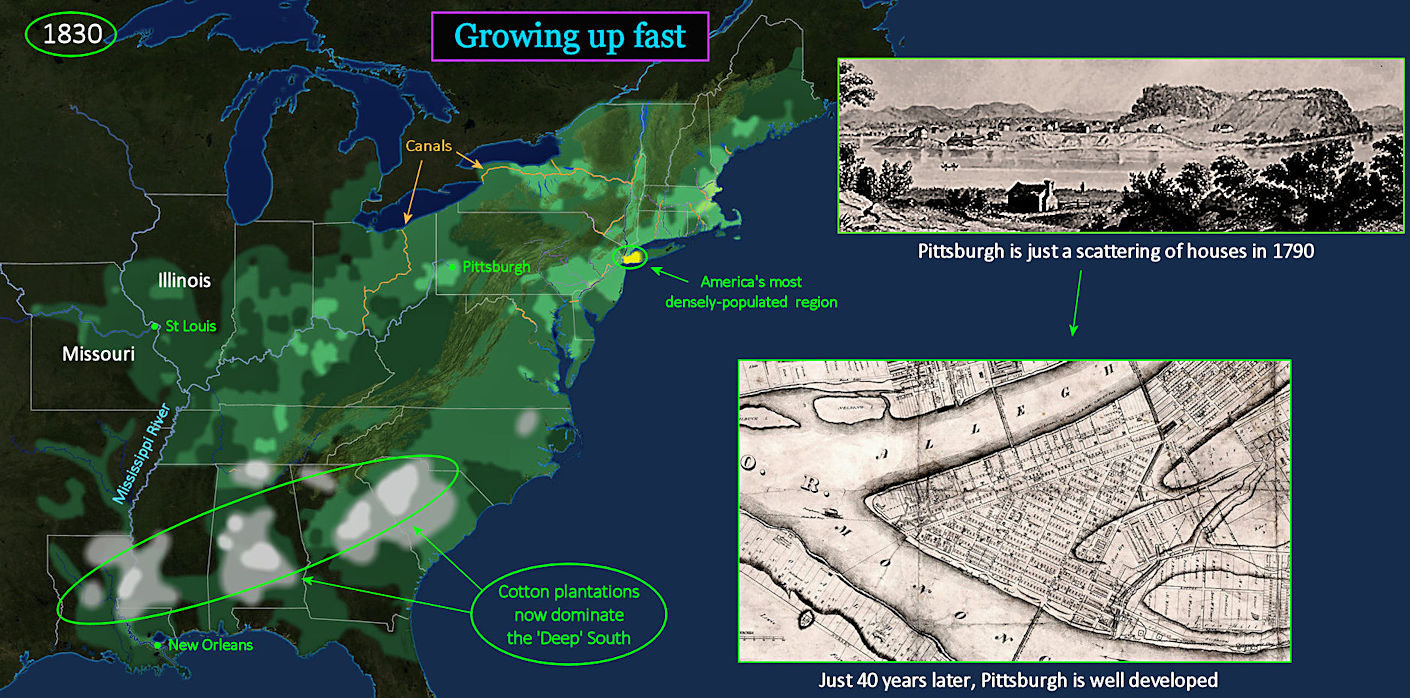
Transportation BoomA growing canal system, and fleet of steamboats, are supporting new development in the Ohio Valley, which has filled in almost completely. At the same time, new states have appeared all along the coast of the Deep South. Even the road system is improving, although investors are now focused on planning expensive new railroad projects. By 1830, 20 railroad companies have been chartered. One in New Jersey is already open for business. In the new states along the southern (Gulf) coast, another huge business is developing. Cotton. With the cotton gin to remove the seeds, cotton plantations are now spreading ever westward, bringing slavery along with them. |
| ||||||||||||||||
| |||||||||
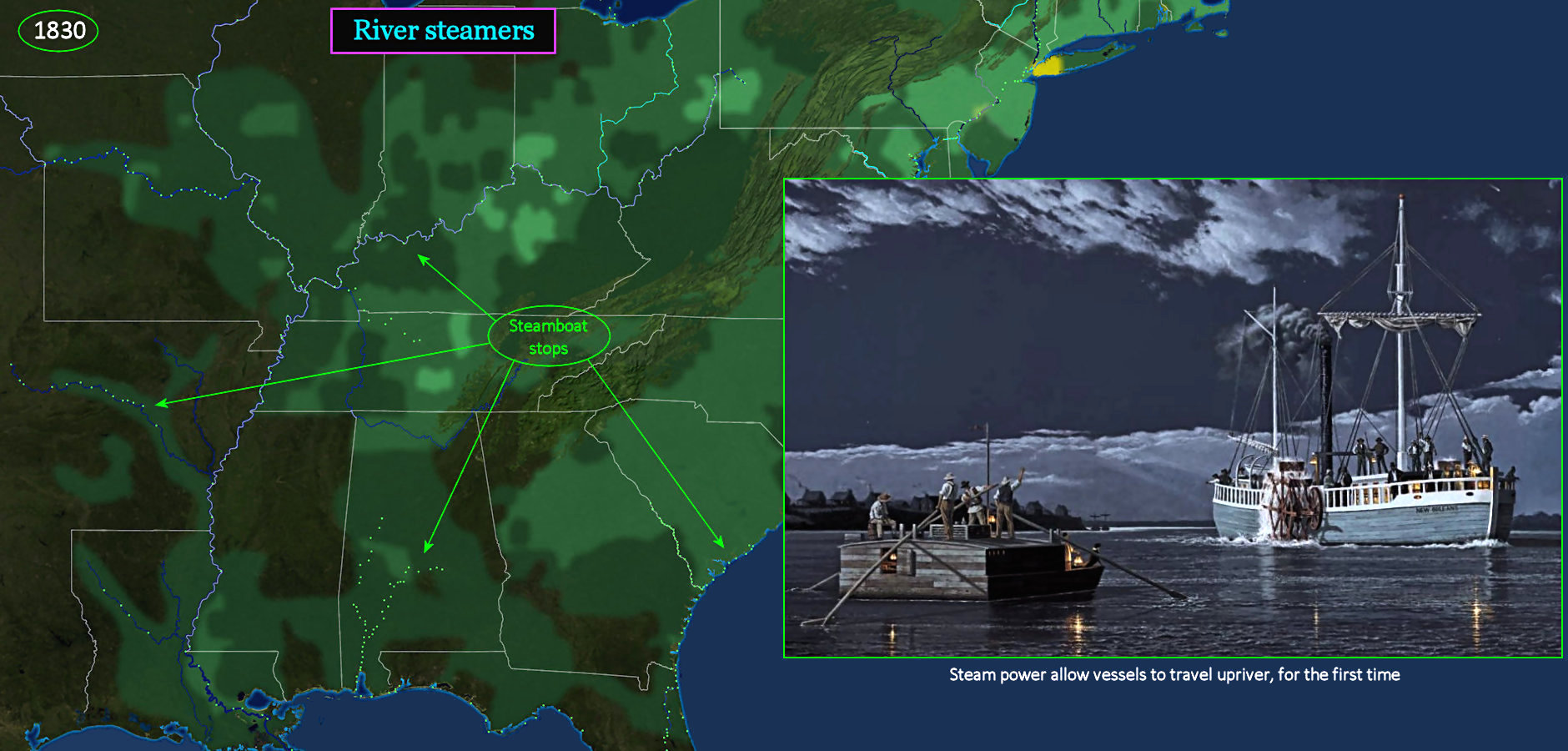
Steamboat Stops are Everywhere The picture at right, of two boats passing in the night, is highly symbolic. The little home-built flatboat is a relic from a soon-to-be forgotten era. It acts as a tranquil floating home for the six or eight weeks it will take to float down the Ohio and Mississippi Rivers to the great port of New Orleans, on the adventure of a lifetime. But it will be a one-way journey. With no means of traveling back upriver, it will be broken up for lumber when it arrives at its destination. The other vessel is big and modern, the first arrival of a new industrial era that is just about to overtake the nation. It can go downriver and upriver with equal ease, making it suitable for commerce on a scale never before imagined. The future is bursting upon America, and it is arriving first by water. | |||||||||
| |||||||||
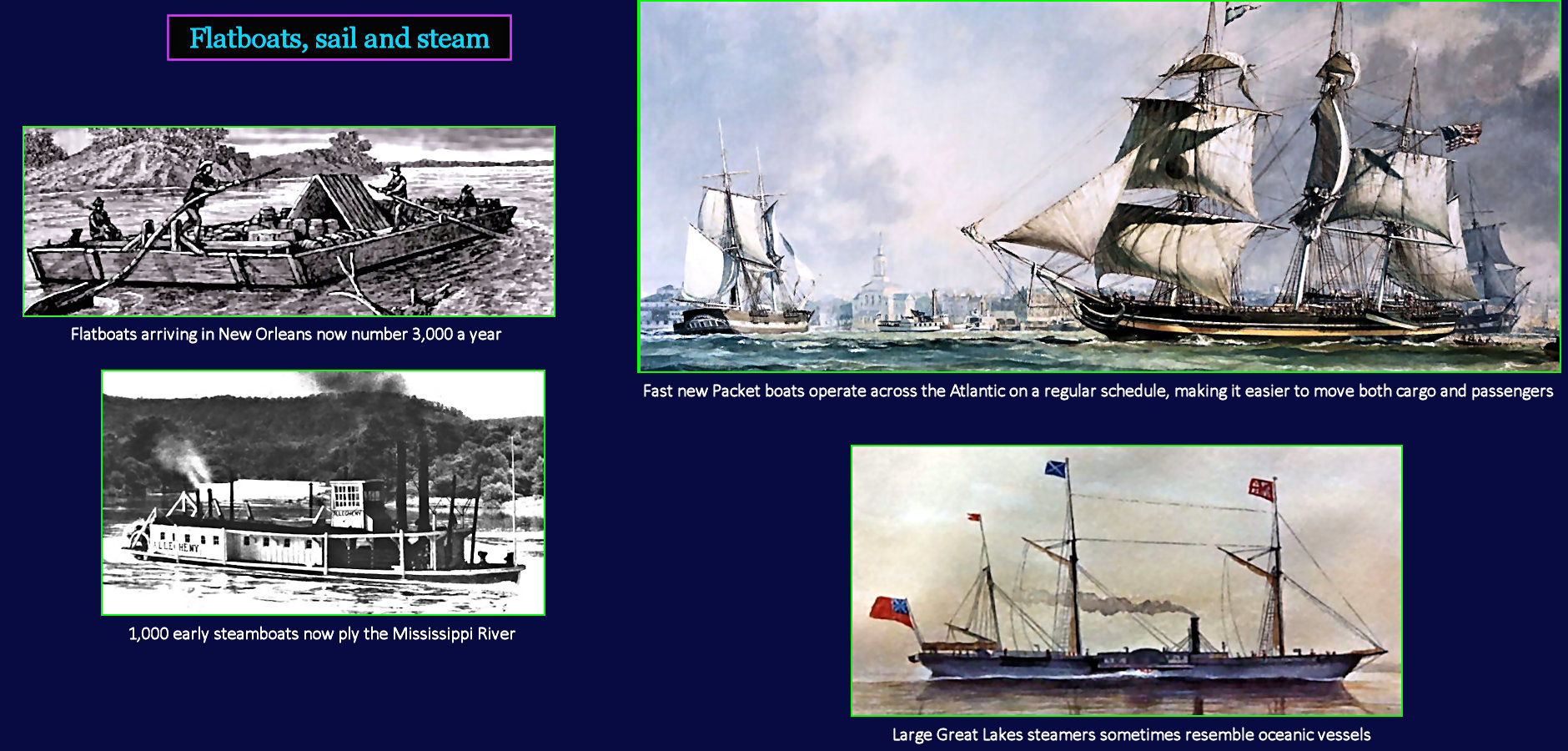
Vessels of All Kinds By 1830, cargo and passenger vessels are operating on almost every navigable mile of river and coastline. Primitive flatboats are floating down the Ohio and Mississippi Rivers in record numbers, even though they are unable to travel back upriver after reaching New Orleans. Mixing in with this traffic is a fast-growing fleet of river steamers. Transatlantic voyage is still by sail, although some vessels also mount auxiliary steam engines. The big sailing 'packet' boats are the first to depart on a fixed schedule, instead of just sailing whenever sufficient cargo can be assembled. This allows regular deliveries of cargo, and makes passenger voyages easier to plan. On the Great Lakes, steam-powered vessels are beginning to replace the big lumber schooners. | |||||||||
| |||||||||
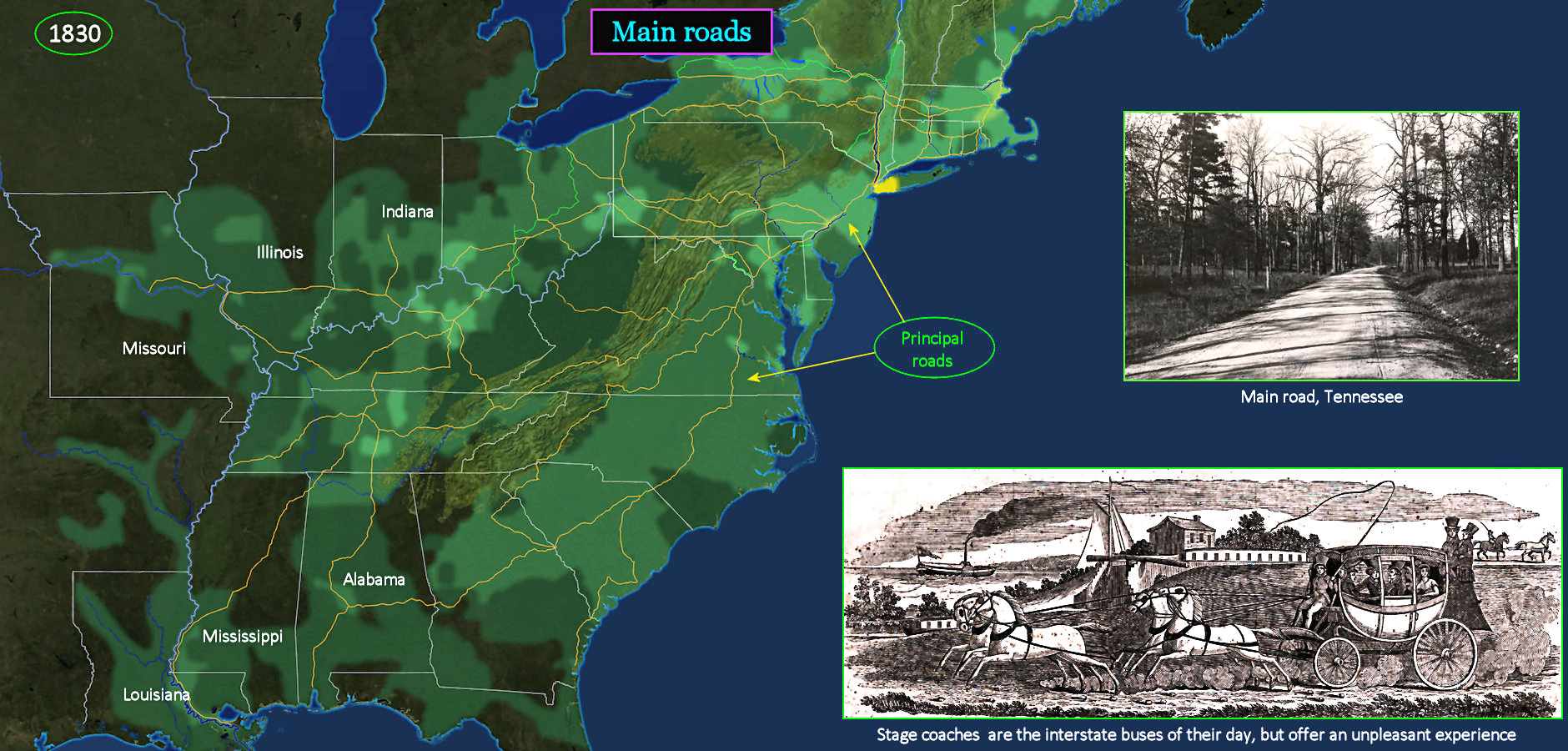
Travelling by Road Many states are now connected by rivers, canals and coastal trade, but the road network is also expanding. Stagecoaches are common on the East Coast (lower right), sometimes using improved roads called 'turnpikes.' These are the first privately built and maintained roads in America, and the first to charge tolls to cover costs, but none are paved. The word 'turnpike' is still used today to refer to toll highways. In the 'West' (now called the 'Midwest'), the new states of Indiana, Illinois and Missouri form the heart of America's great new farming region. In the South, the new states of Alabama, Mississippi and Louisiana extend along the Gulf Coast all the way to the still-unorganized territory of Texas, claimed by Spain, but under no real control. | |||||||||
| |||||||||
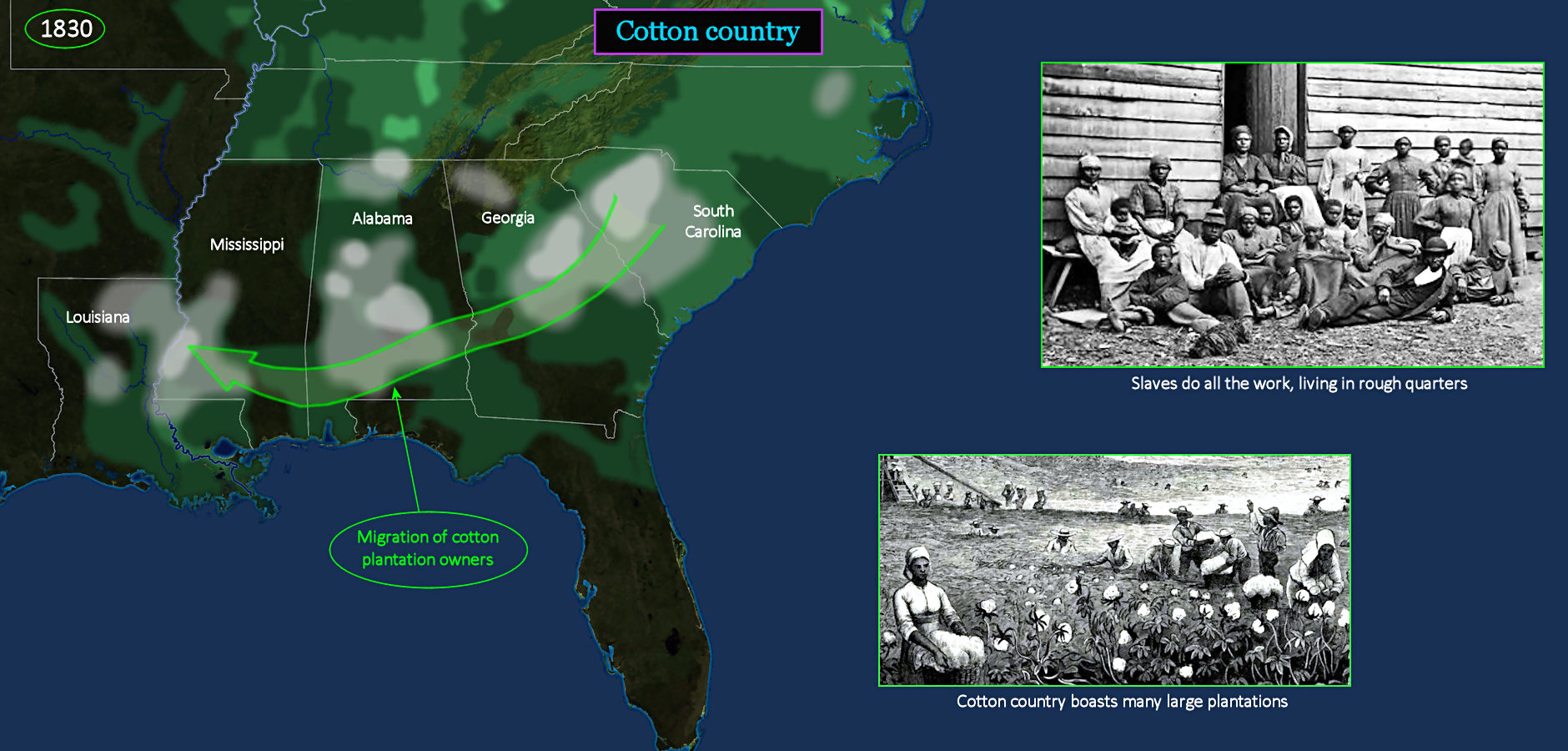
Road to Riches The cotton gin allows southern planters to pick up stakes and head south and west, into cotton country. The new states of Louisiana, Mississippi and Alabama form the heart of what will become known as the 'Deep' South. Cotton growing areas (WHITE highlights) spread first from South Carolina into Georgia, and then gradually further west. In just 30 years, cotton exports to English textile mills explode, growing from less than 10% of all American exports to almost 50%. In addition, substantial amounts are shipped to New England mills. Cotton quickly becomes dominant throughout the South, except Louisiana, where sugar and rice are also important. Slavery, of course, spreads with the cotton, which becomes the new road to riches. | |||||||||
| |||||||||
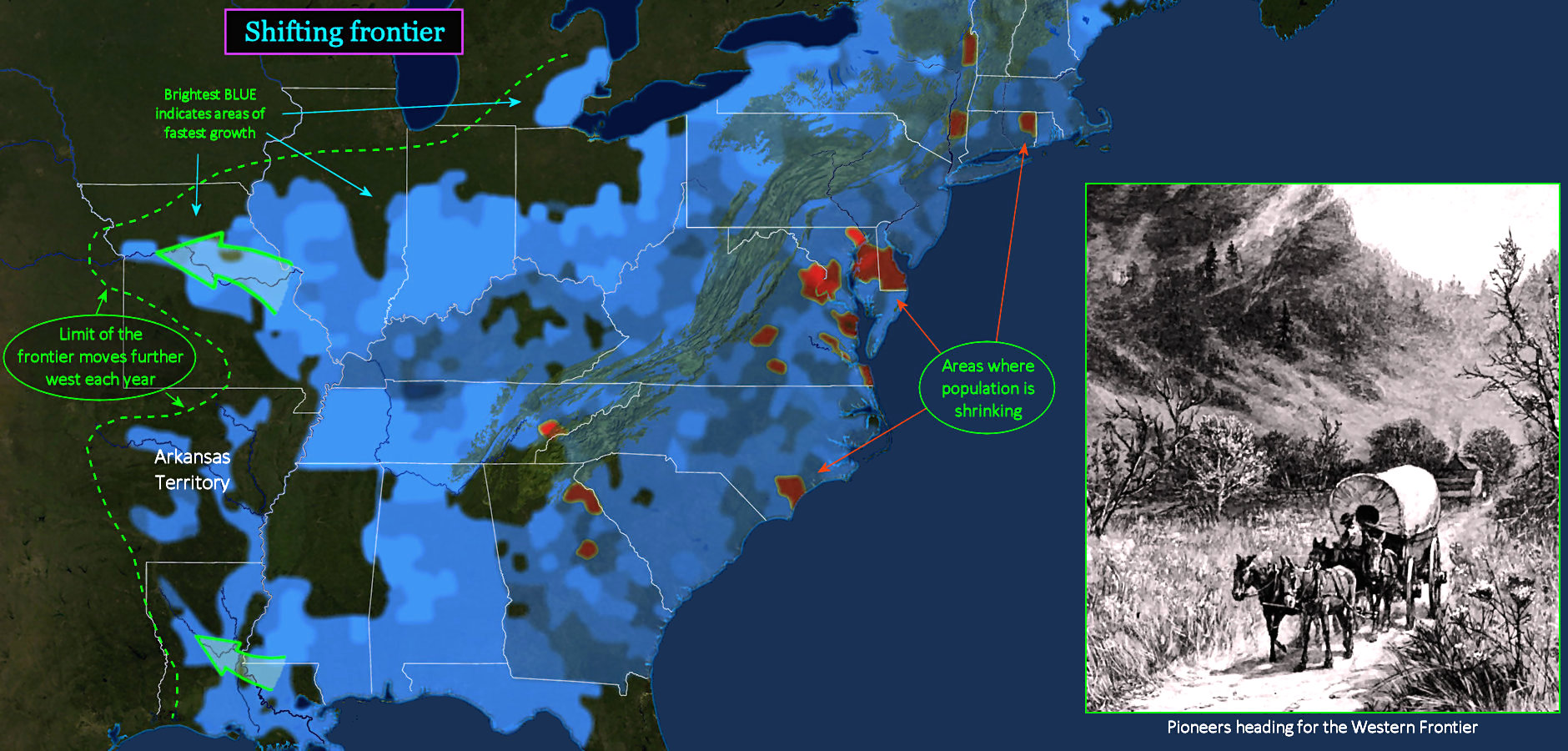
Western Edge This view shows the regions of fastest growth in 1830. The brighter BLUE areas are growing fastest, while RED areas are shrinking. As settlers move west, this bright edge of growth keeps moving with them, always shifting further west. The word 'frontier' is used to describe the rough zone where white settlement ends, and 'Indian Country' begins. To those living on the frontier, the term 'Indian troubles' refers to local resistance by the remaining Indians. The Indians can't really stop the settlers, but at least they try to slow down the relentless white invasion. In the process, the Indian culture continues to wither, as Indians are forced into ever drier and more difficult country, with ever-dwindling food resources. | |||||||||