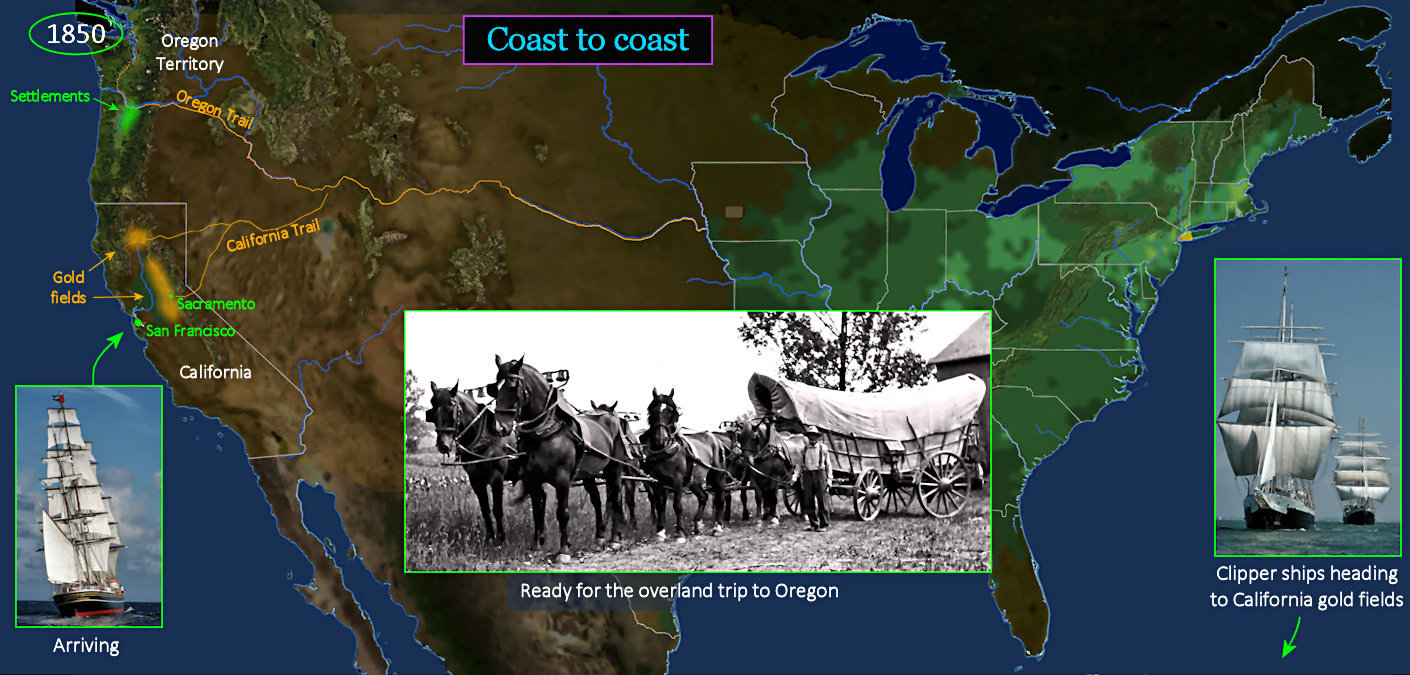
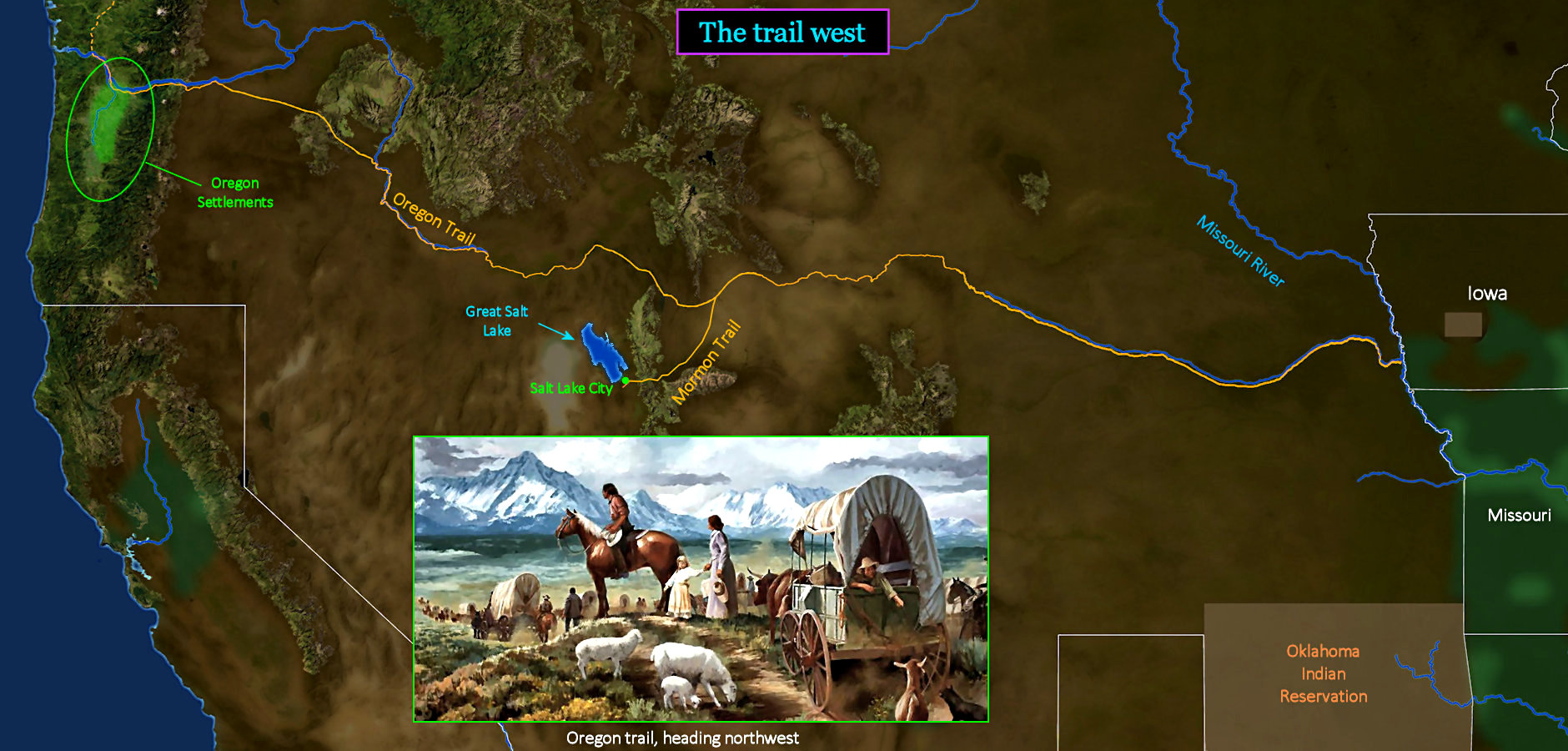
Going really WestThey're heading for the Oregon Territory, 2,000 miles further west. The first few wagons soon turn into a constant flow, loaded up with supplies, and heading west from the last place you could buy anything, in Iowa. Then, in 1849, gold is discovered in California. Americans sail all the way around South America to get there, a trip of 20,000 miles. Gold fever runs so high that sailors abandon their ships in San Francisco, to join the rush. Within a year, the population of California surges from almost nothing to 90,000, and the territory is admitted to the Union as the first state on the Pacific Coast. The Gold Rush is ON, and with it, a frantic new land grab. |
| ||||||||||||||||
| |||||||||
On the Trail Married couples heading off to Oregon can expect to receive a square mile of land at no cost when they arrive. Few have any idea how difficult the journey to get there will prove. Crossing the prairie is relatively painless, but the land on the other side of the Rocky Mountains turns much drier and more barren, a place where horses die. Oxen are better suited to survive the remainder of the trip. During the 1840s, the area around the Great Salt Lake is also settled by a hardy, non-Christian religious sect called the Mormons. They have been driven out of Illinois and the Nebraska Territory by intolerant neighbors, and finally establish Salt Lake City as their new home. Just beyond lie seemingly endless salt flats, frying in the sun. | |||||||||
| |||||||||
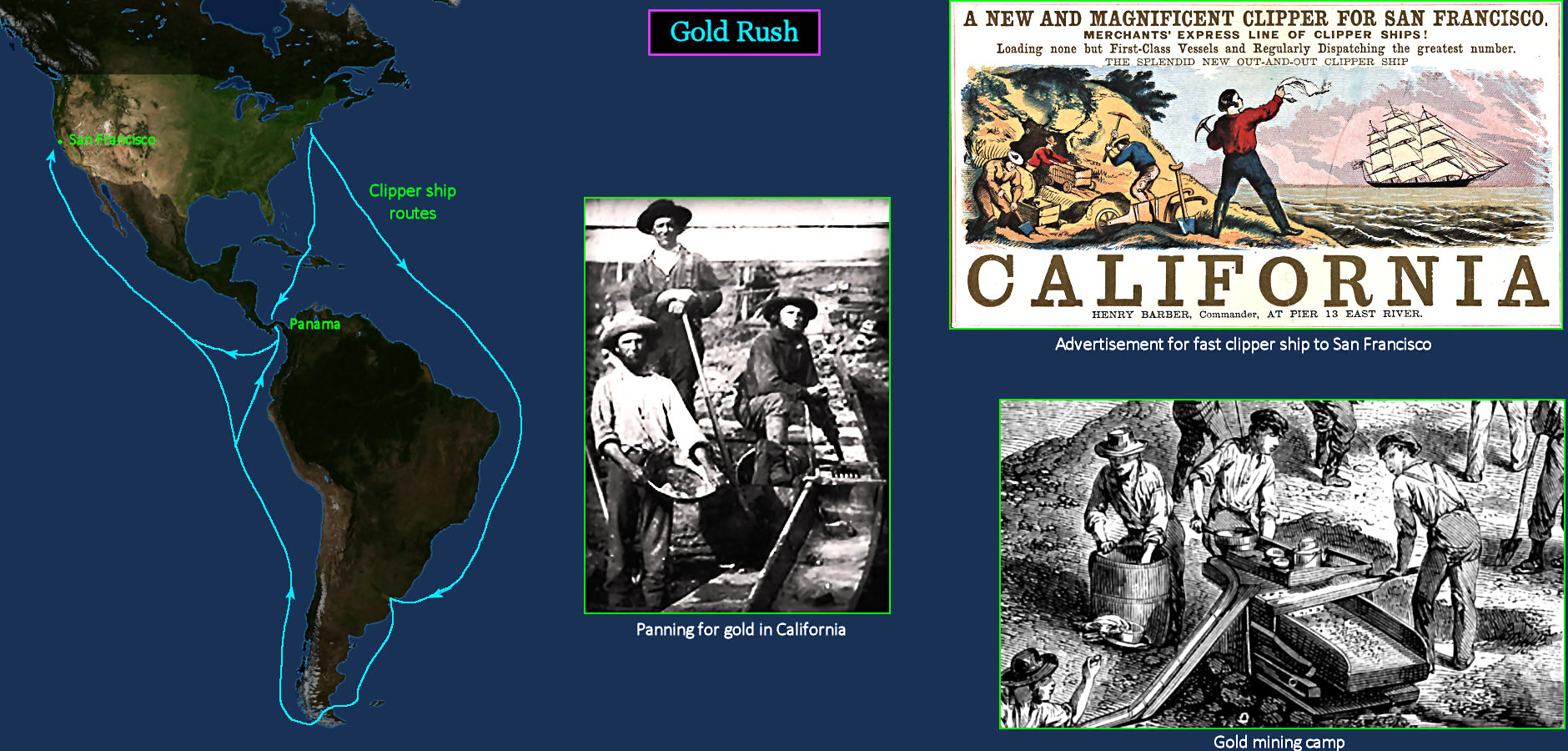
Glitter of Gold The California Gold Rush of 1849 is an amazing event. It's nearly impossible to get to California at all, but men come anyway. The easy way is to sail all the way around South America to San Francisco, but this takes four or five months. A faster, more popular route, is to take a steamship to the Atlantic coast of Panama, spend a week crossing through malaria-infested jungles to the Pacific side, and then pick up another steamer for San Francisco. The overland route through the Nevada desert is harder, and takes even longer. You have to be young, strong, and mesmerized by the possibility of striking it rich to even think about it. | |||||||||
| |||||||||
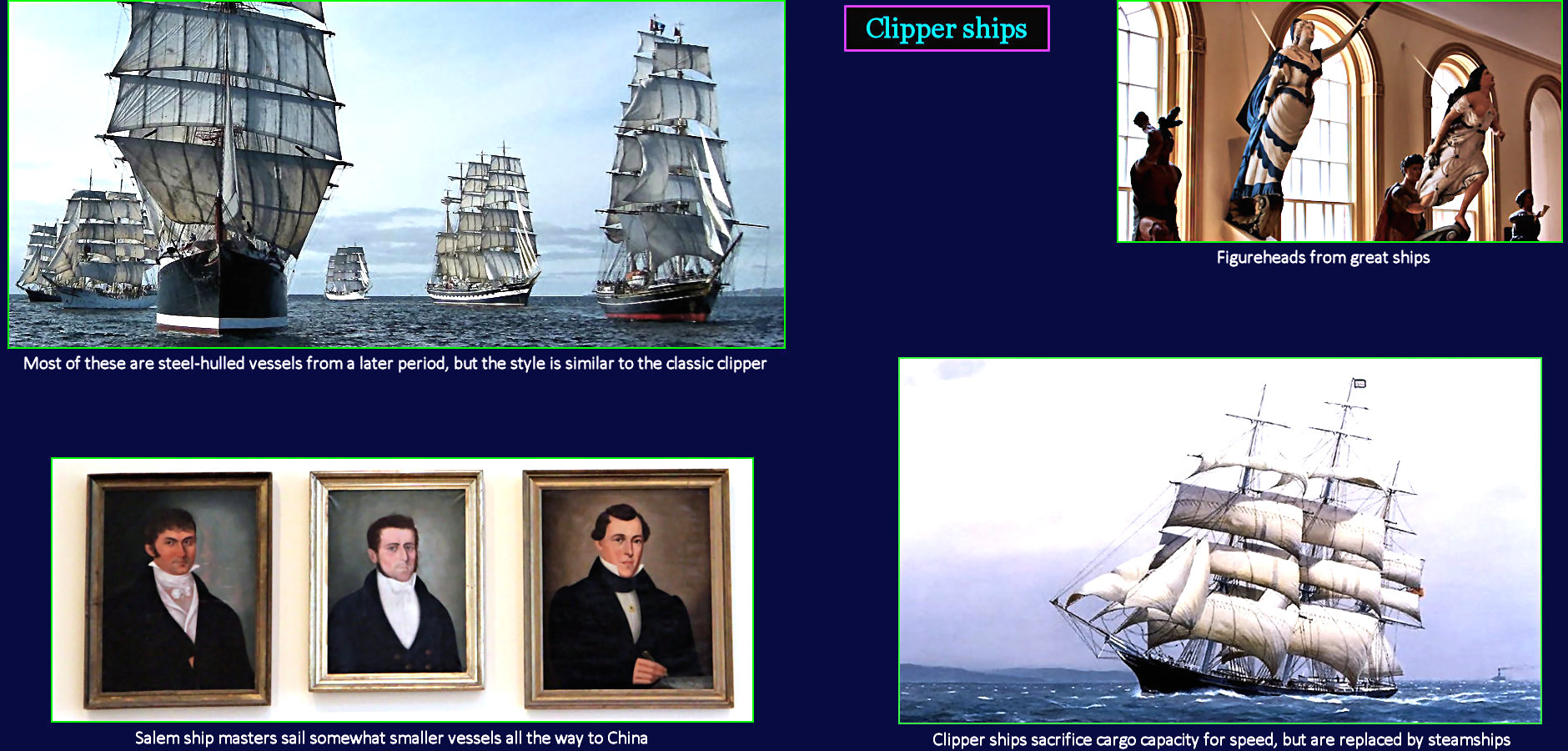
Driven by the Wind Many gold prospectors make it to San Francisco on board a new kind of sailing vessel called the clipper ship. The hull is much longer than usual, and the bow much sharper, but the real difference is in the rigging. Clippers carry incredibly tall masts, with an immense spread of canvas. The stern captains that drive ships of this period are a breed unto themselves, businessmen of a rare sort (lower left). Clipper ships are nearly twice as fast as other merchant ships, and are thus the vessel of choice to reach California, or even China. As majestic as they are, however, their glory is brief. Oceanic steamships of roughly the same size will soon bring the great era of clipper ships to an end. | |||||||||
| |||||||||
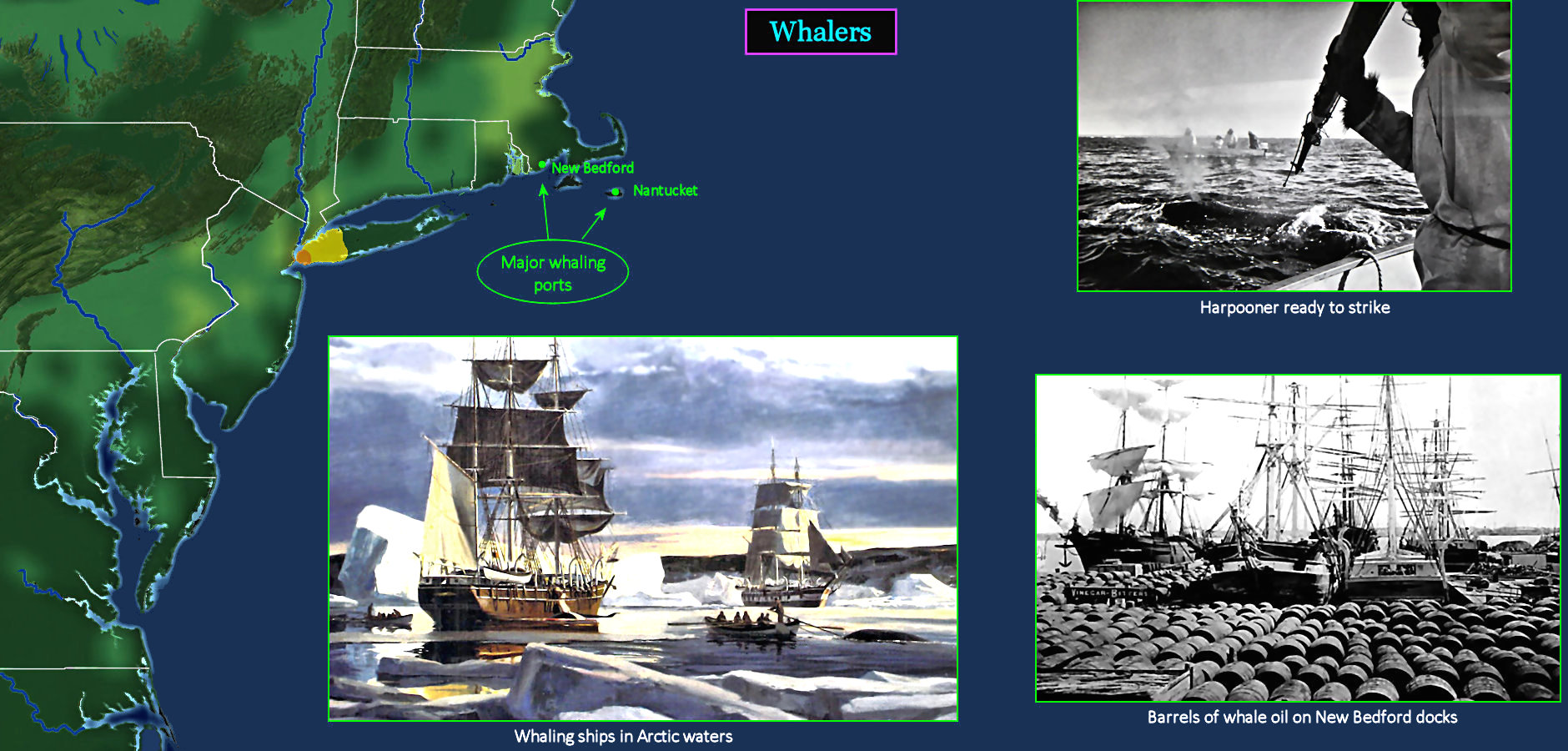
Chasing the Whale Shipping can be immensely profitable, and many ship captains and owners retire wealthy. One particularly profitable segment is the whaling industry, centered in New Bedford and Nantucket Island. Whaleships hunt their prey on all the world's oceans, sometimes well up into Alaskan waters. A single voyage can last three or four years. Whale oil is used as fuel in oil lamps, and is also the best lubricant for machinery, which needs more or less constant lubrication on shafts, pivots and bearings. On steamships, the 'oiler' has a full-time job, tending the engine with frequent drips of oil anywhere that are moving parts. | |||||||||
| |||||||||
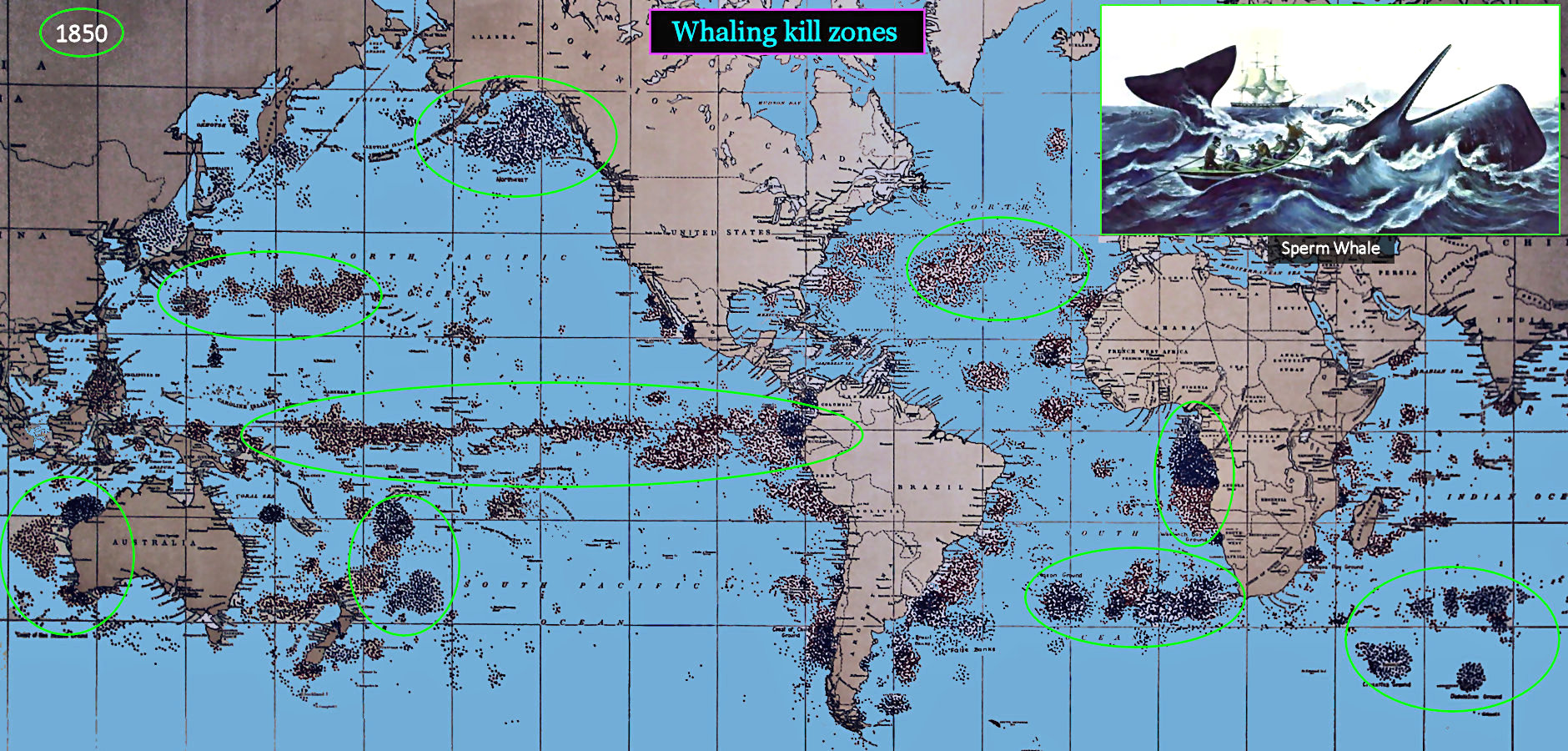
Half a Million Kills This map shows all the locations where whales are killed during the 1800s. The more whales that are harpooned, the further the ships need to sail to find more. Voyages to the Alaskan Arctic become more common as the hunting grounds dwindle. It is estimated that over half a million whales are taken by sailing vessels during the 1800s. About half of these are the prized Sperm Whales (top right, and dots inside GREEN ovals on map). After about 1900, whales are mostly chased from steel ships, with harpoon guns. The number of whales taken to the present day totals perhaps three million, killed to get the oil that can be boiled out of the fatty blubber which insulates them from the ocean chill. | |||||||||