| |
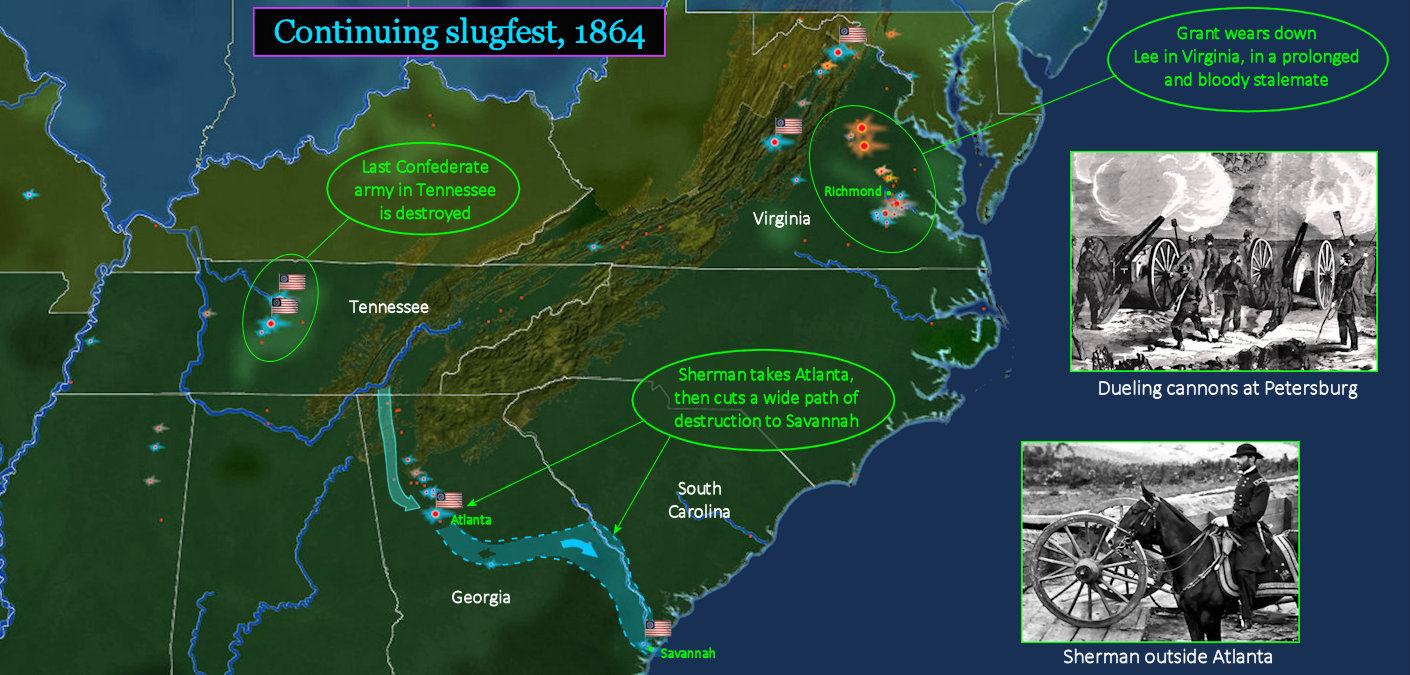
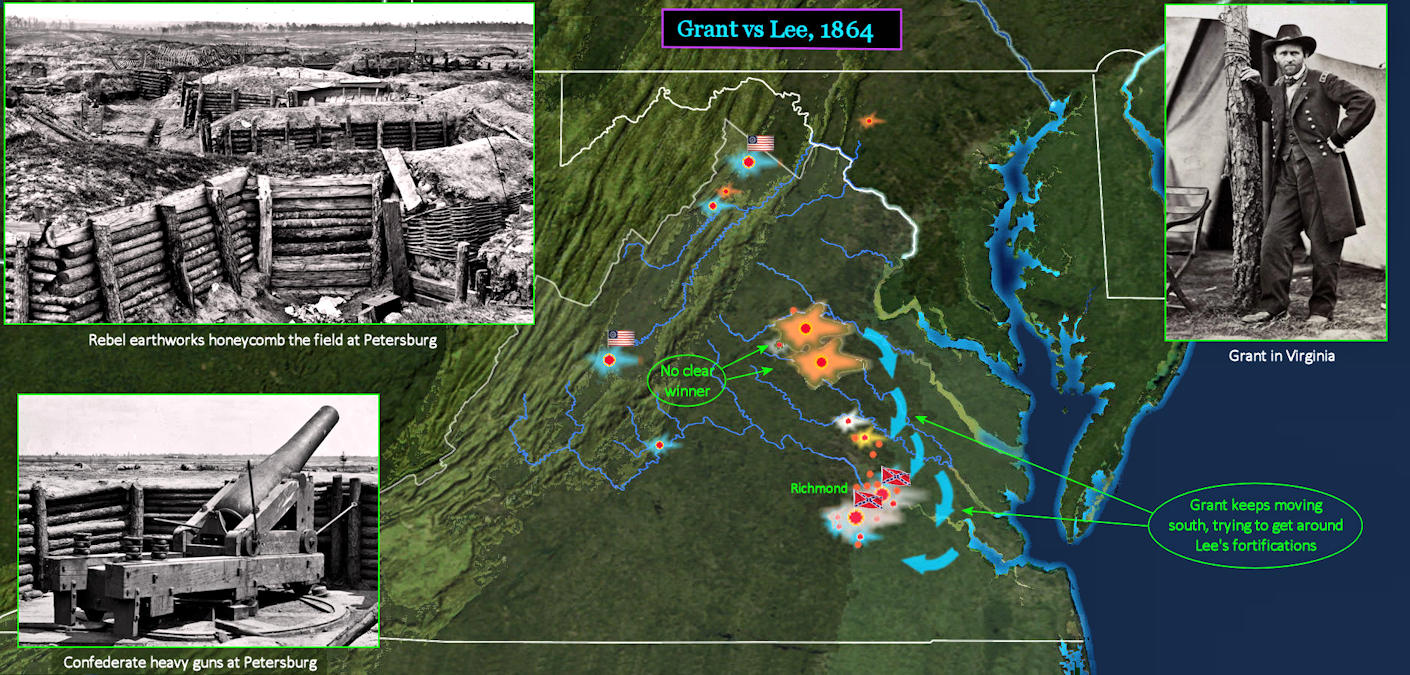
Virginia Stands Alone In Virginia, Lee and Grant fight 14 wide-ranging battles, with little result, until Lee finally falls back into fixed defensive positions. Grant is losing far more men, but can count on replacement troops from Lincoln's war-time draft. Lee finds it much harder to replace his losses, as the Confederate draft has already called up almost all military-aged males. In Georgia, where the armies are nearly as big, and casualty rates nearly as high, the eventual fall and burning of Atlanta effectively ends rebel resistance. This allows Sherman to march to Savannah, unopposed. |
| |||||||||
Determined Resistance Grant is often criticized for throwing his men into failed attacks, which even he admits was true at Cold Harbor. But he is keenly aware that the only way to defeat Lee, is to fight him. If the rebel army is entrenched behind earthworks, then defeating it will be costly. It's a general rule of combat that an attacking force needs to be two or three times the size of the defending force, if it is to have a good chance of success. When the defenders are in forts, trenches or earthworks, the odds just get longer. Grant believes that if he can just keep hammering away, Lee will eventually become exhausted. Confederate losses are far lower, but Lee has fewer options for reinforcement. | |||||||||
| |||||||||
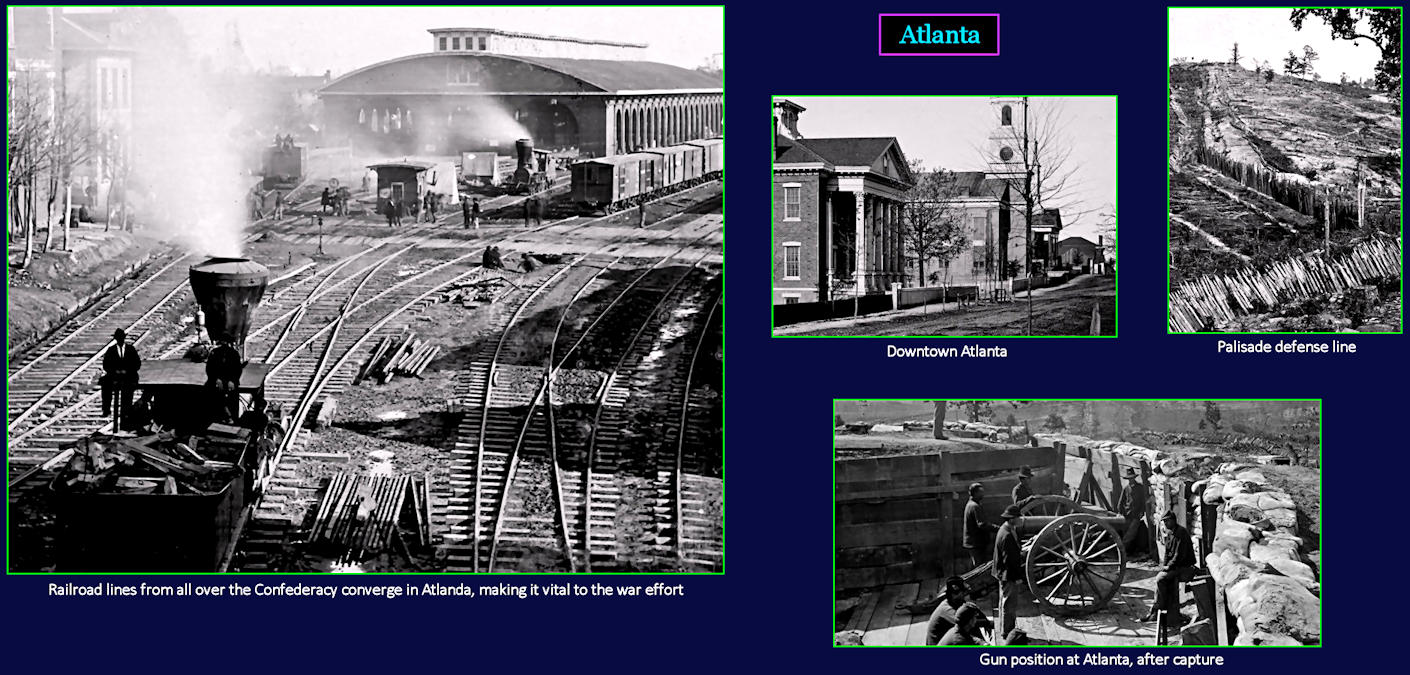
All Eyes on Atlanta After the fall of Chattanooga, Atlanta becomes the focus of attention. If Atlanta falls, then rail connections will be lost throughout the Deep South. So when Sherman begins moving towards the city, the Rebels do everything they can to slow him down, including harassing his supply lines back to Chattanooga. At the same time, they begin fortifying the city, erecting palisades and artillery positions at strategic points. In 17 separate engagements, the Rebels try to stop the Union advance, and fail. When Atlanta finally falls, Sherman burns it down for the trouble it has caused him. Sherman and Grant then agree that the only way to end the war for good, is to deprive Lee's army of supplies, including gunpowder from Georgia. This means cutting off Virginia completely. | |||||||||
| |||||||||
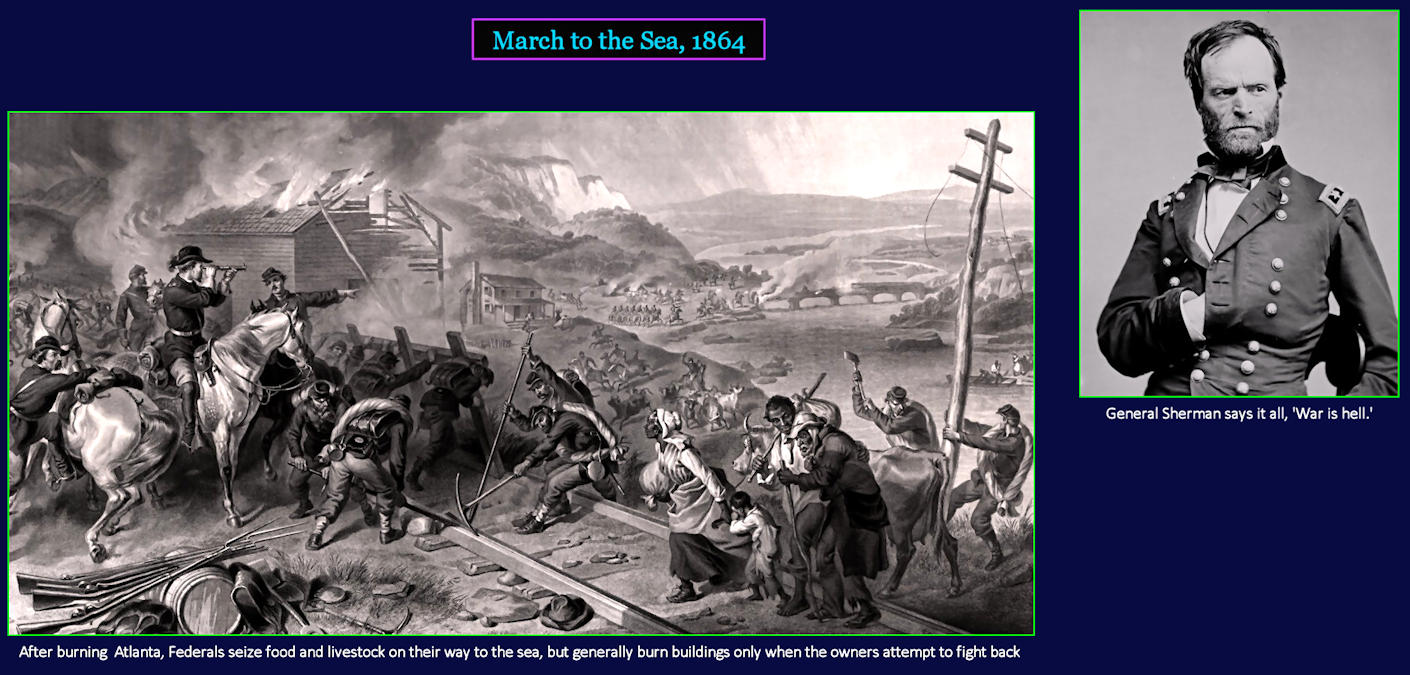
Cutting the Cord Sherman says that the purpose of his March to the Sea is 'to make old and young, rich and poor, feel the hard hand of war.' After all, his army is 'not only fighting hostile armies, but a hostile people.' Indeed, Sherman treats Atlanta very harshly, methodically burning the town, and most of its 4,000 houses. But on his way to Savannah, he doesn't burn any other towns, and only authorizes destruction of homes when owners resist. Instead, he concentrates on destroying everything of military value, especially rail lines. Since he has abandoned his supply lines behind him, his army now relies on gathering food along the way. His troops are given free license to confiscate whatever they need to keep advancing. Southerners complain that the Federals 'take everything.' | |||||||||
| |||||||||
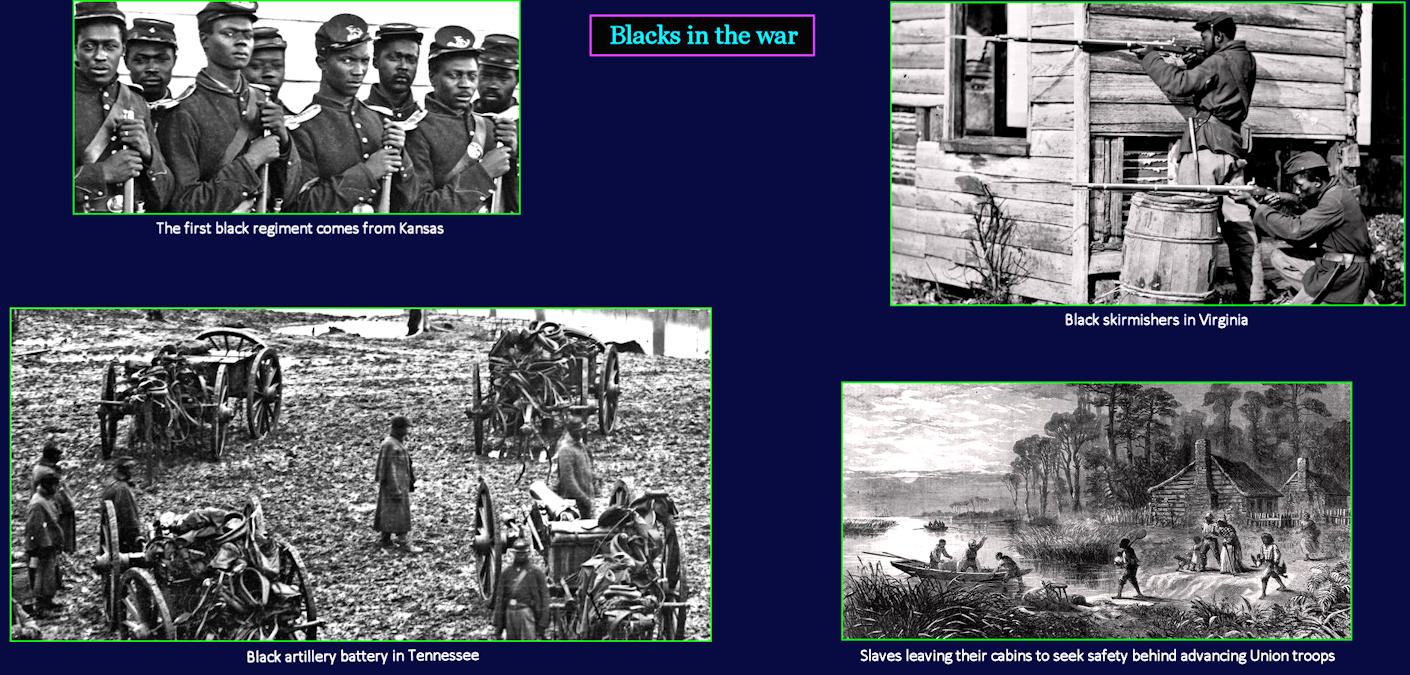
Helping Where They Can Shortly after Lincoln frees all Blacks in the Confederate states, the Union army begins forming all-black infantry regiments, with white officers as commanders. Black troops are raised in every northern state, and eventually account for 10% of all Union troops. They serve in many important battles, suffering casualty rates a third higher than white regiments. One in five die, while 16 receive the Medal of Honor. They serve in every branch of the service, including the navy. When Sherman marches to Savannah, slaves flee the fields to fall in behind the columns, drawn by the promise of freedom. | |||||||||
| |||||||||
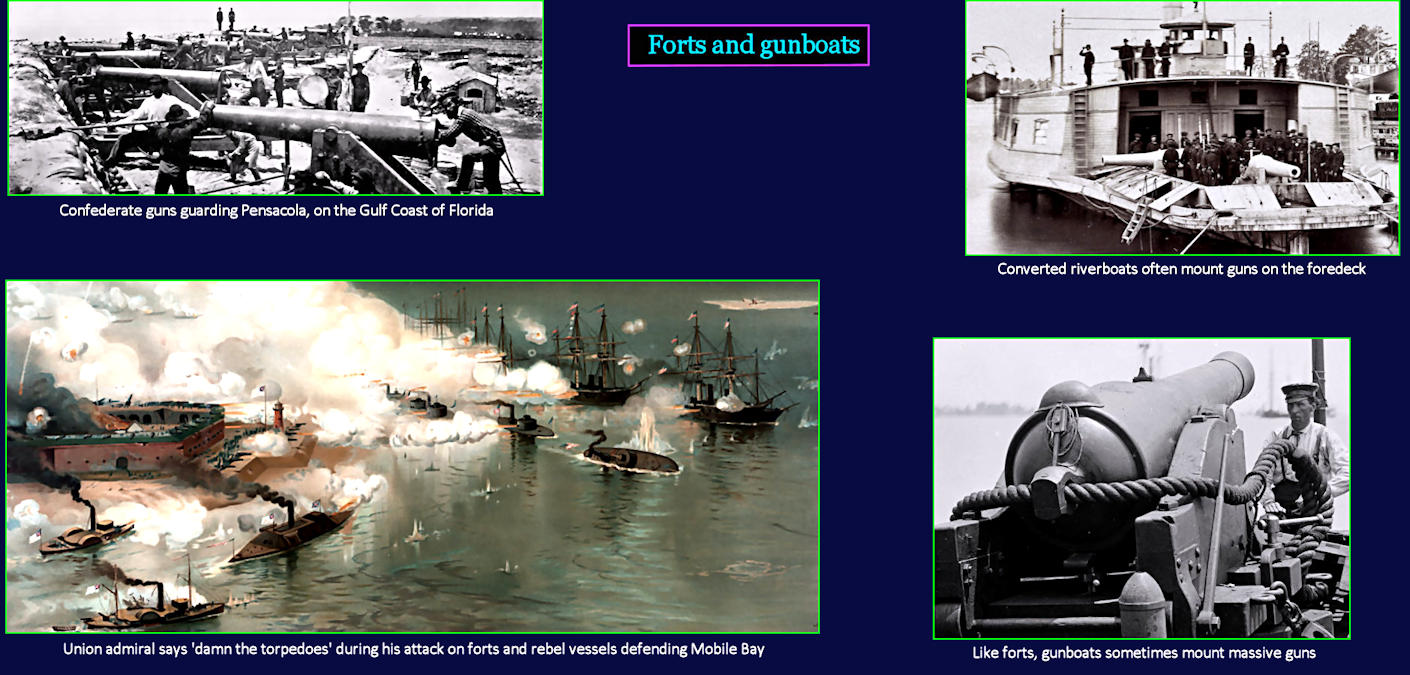
Attacking Coastal Forts By 1864, the Union blockade has closed down most rebel ports, but Mobile is still in operation, on the Gulf Coast of Alabama. The Union fleet arrives to attempt to take out the three well-defended forts guarding the harbor, together with a small fleet of Confederate gunboats. This includes the rebel ironclad Tennessee, one of 20 ironclad rams built hastily by the South, despite its limited supply of iron. The Union commander successfully runs through a cluster of defensive mines (called torpedoes), a risky maneuver that costs him one of his ironclads, and goes on to subdue the forts and take the port. The blockade is now nearly total. | |||||||||