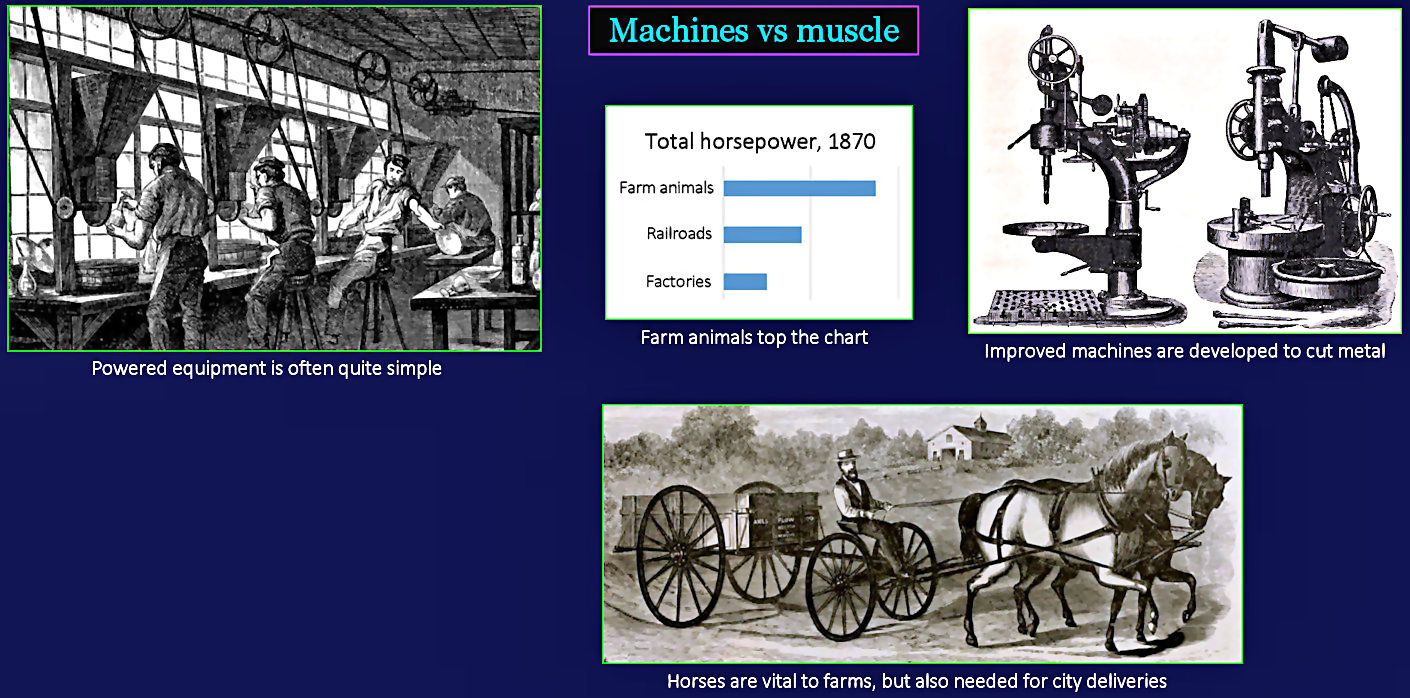
Horses and Manual LaborEven in factories, equipment is often used just to speed up certain secondary operations, like mixing or polishing. Technology is not yet available to produce the hefty machines that are needed to work metal. Most machines in 1870 are just beefed up versions of designs originally developed for woodworking, but adapted to work metal. Drilling holes in iron plate, for rivets, is a common operation needed to make steam boilers. The chart shows that powered equipment is still just beginning to take hold. The total horsepower provided by farm animals is still equal to the horsepower of railroads and factories, combined. |
| ||||||||||||||||
| |||||||||
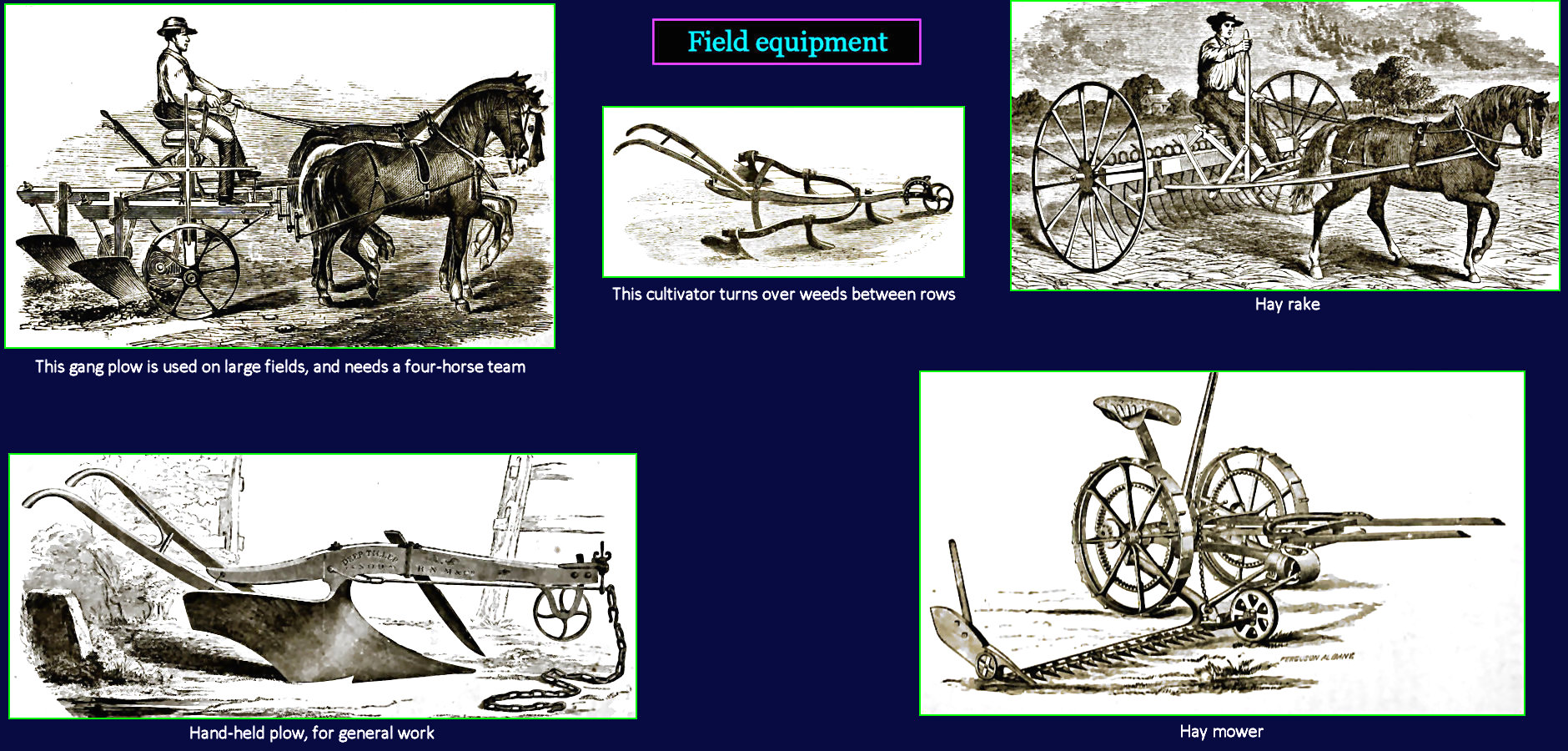
More Metal Farming equipment is still simple, with wooden frames and handles, but iron cutting blades. All are pulled through the fields by animals. The hay mower (lower right) is perhaps the most complicated, equipped with metal teeth on the hay bar which move back and forth, driven by gears on the main wheels. This cuts the hay like an array of scissors. | |||||||||
| |||||||||
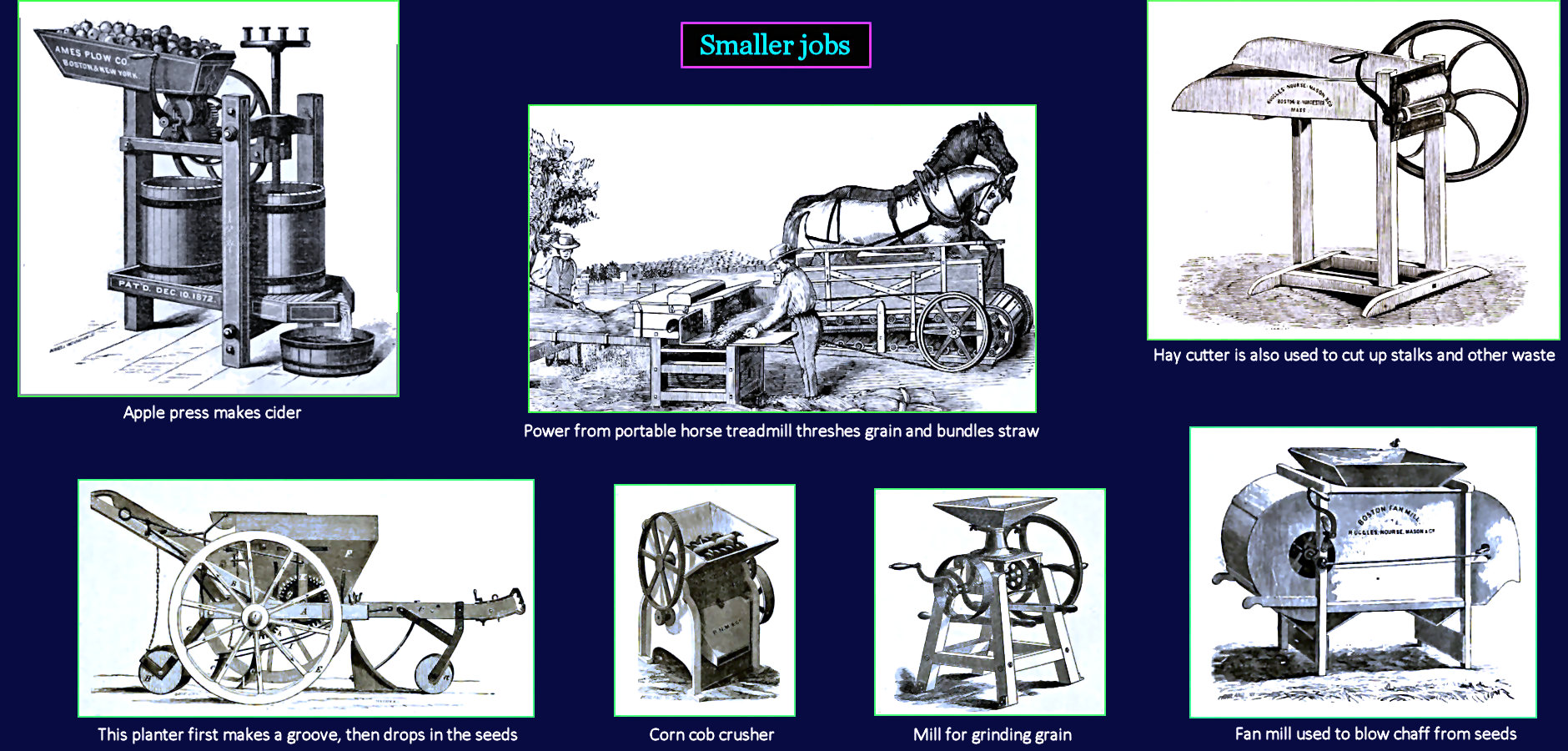
Ingenious Contraptions Planting and harvesting are the most important tasks in farm life. But there are plenty of other chores which require specialized equipment. Most are powered by hand cranks. | |||||||||
| |||||||||
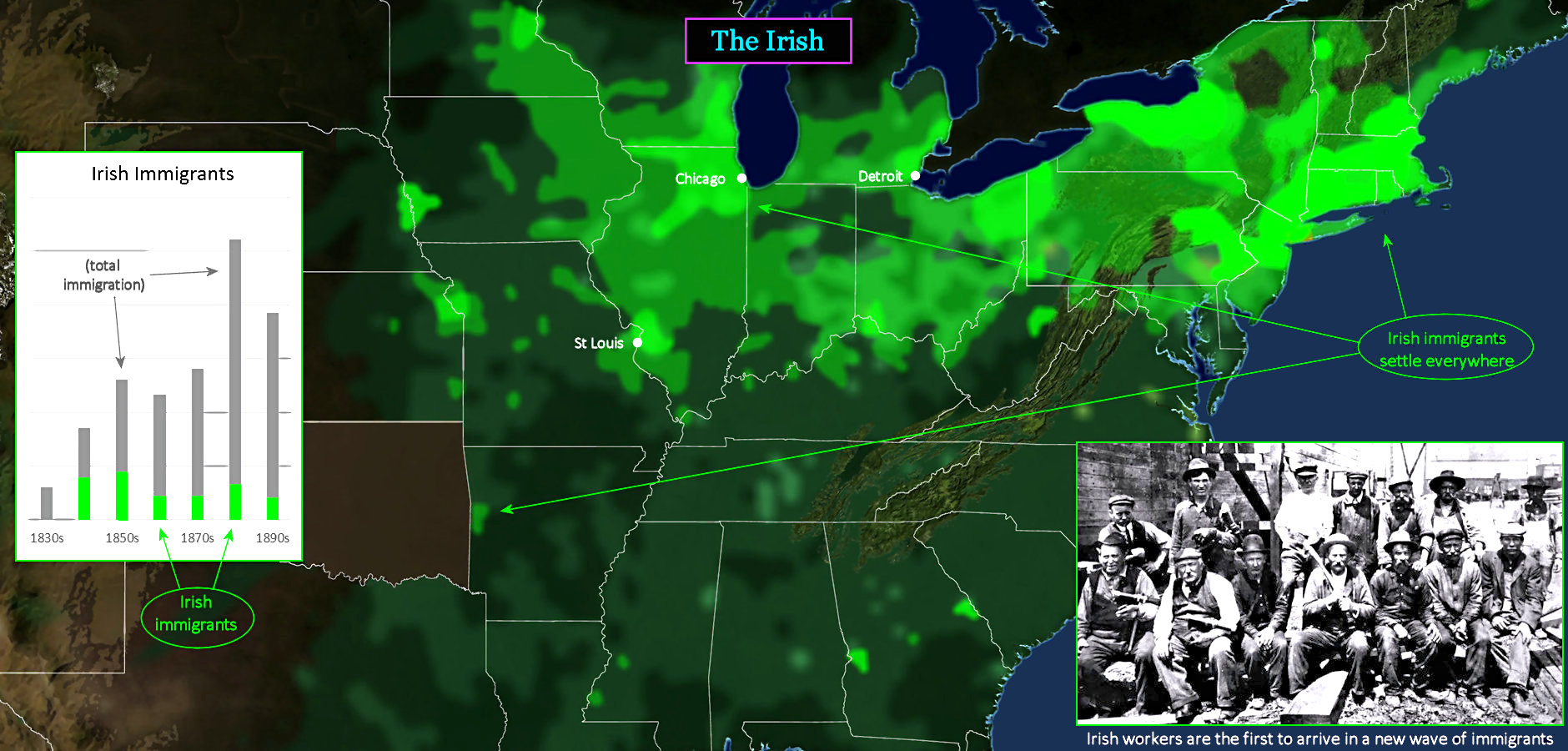
First Wave Immigration played a minor role in the early settlement of America, but then stopped almost completely. A new wave of immigration, however, begins to build in the 1830s. It swells to a great wave during the 1840s, when the terrible Irish potato famine forces a quarter of the Irish population to leave Ireland. America is the principal destination, where two million arrive by 1860. Many land in Boston, which retains a strong Irish flavor to this day. Over time, however, New York becomes the chief port of entry for immigrants. Many board trains and head west, spreading throughout the upper Midwest. | |||||||||
| |||||||||
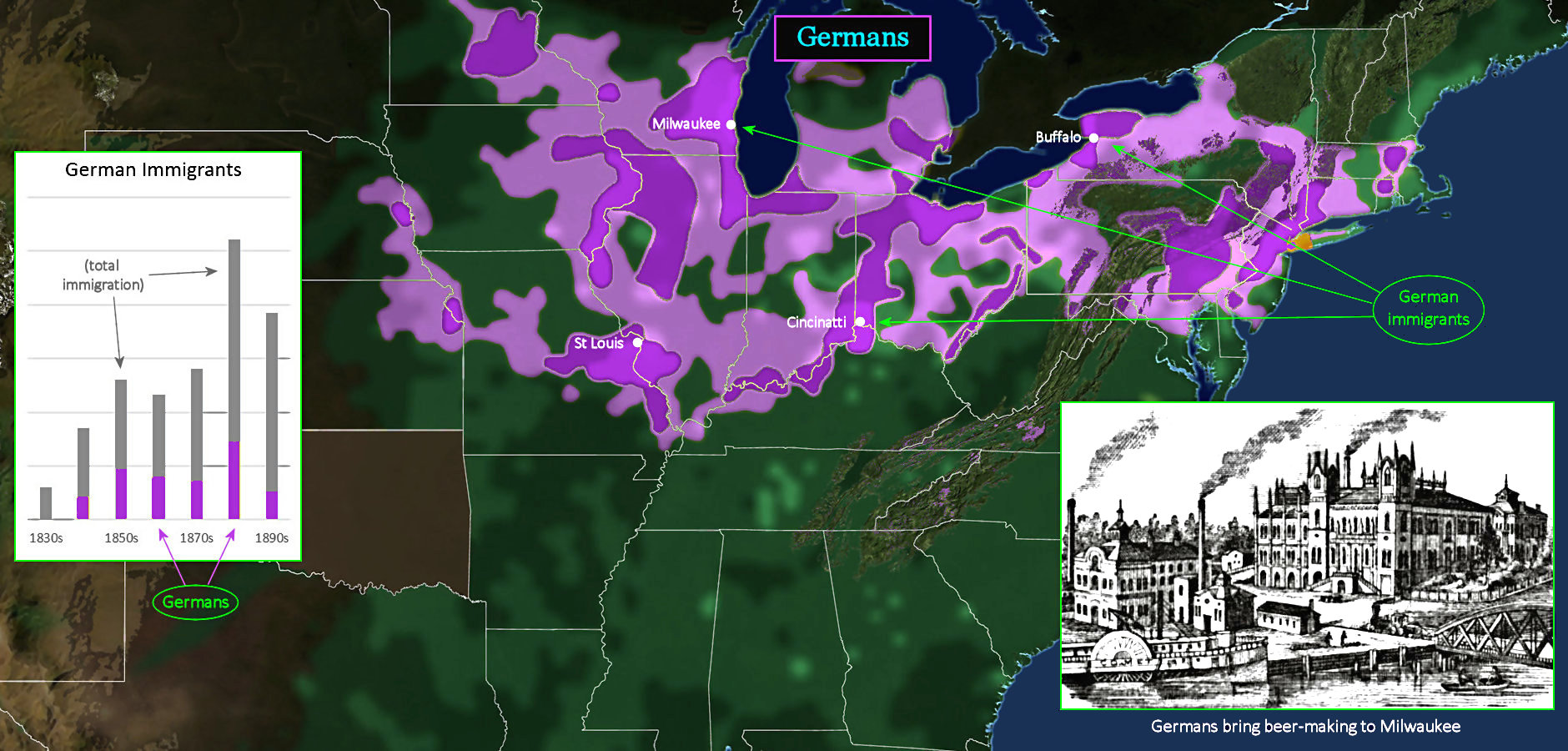
Second Wave A fresh wave of Germans begins arriving in America right behind the Irish, in numbers that exceed the Irish by the 1860s, and crest in the 1880s. Many are fleeing continuing conflicts in Germany and central Europe. Like the Irish, Germans spread all across the northern states, bringing their beer-making skills with them. German breweries soon dominate the city of Milwaukee. Today, there are actually slightly more Americans reporting German ancestry than English ancestry. | |||||||||
| |||||||||
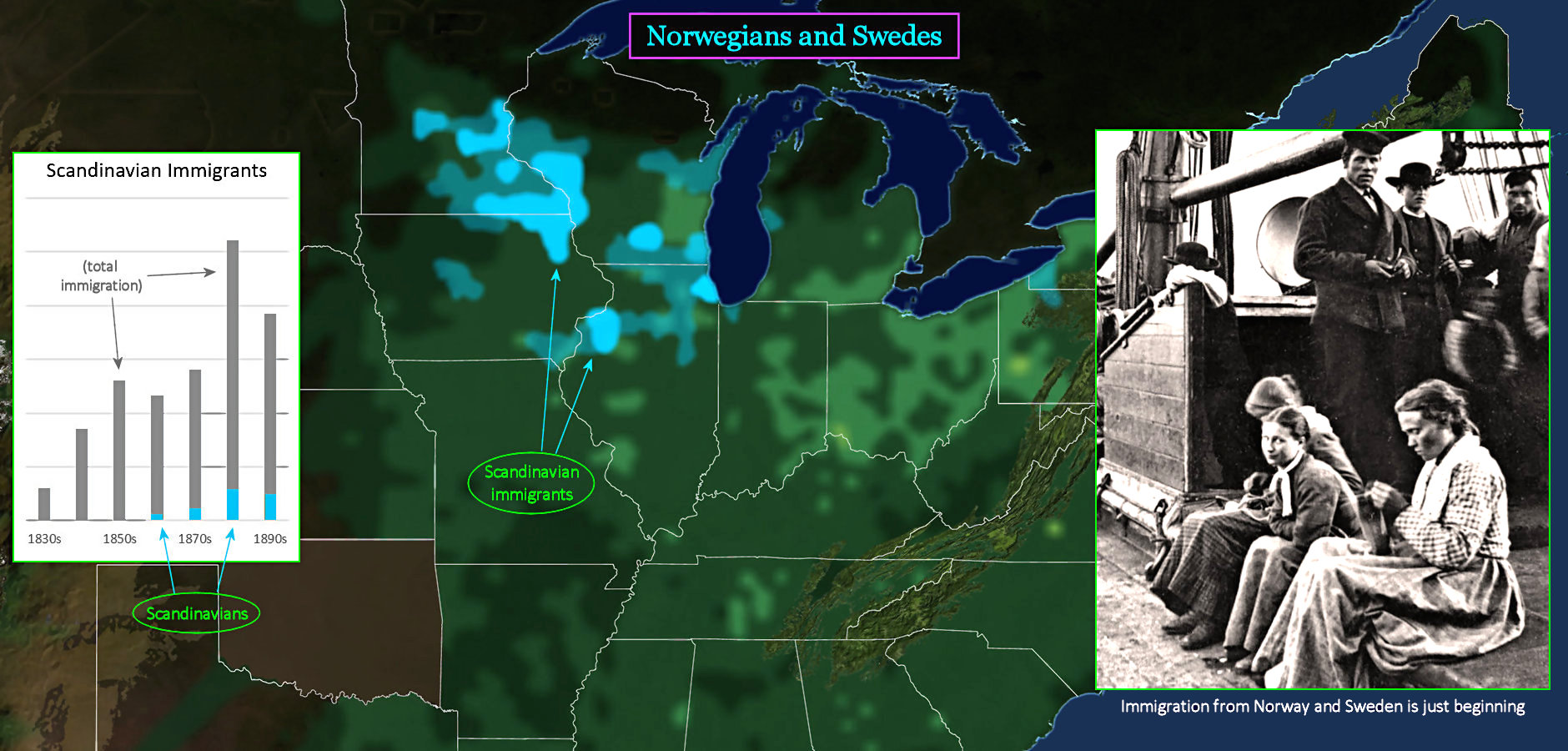
Third Wave As the German immigration wave is beginning to crest, it is joined by smaller numbers of Norwegians and Swedes, who find Wisconsin and Minnesota similar to their homelands. Unlike the Irish and Germans, however, they tend to avoid cities. Instead, they settle in more or less isolated farming communities, including some with Norwegian 'bachelor farmers.' All of this, however, precedes the even larger wave of immigration which will begin surging in the early 1900s, composed of millions of Italians and destitute Jews from Eastern Europe. Most famous photos of immigrants arriving in America are from this later period, when New York builds its famous immigrant detention facility on Ellis Island. | |||||||||