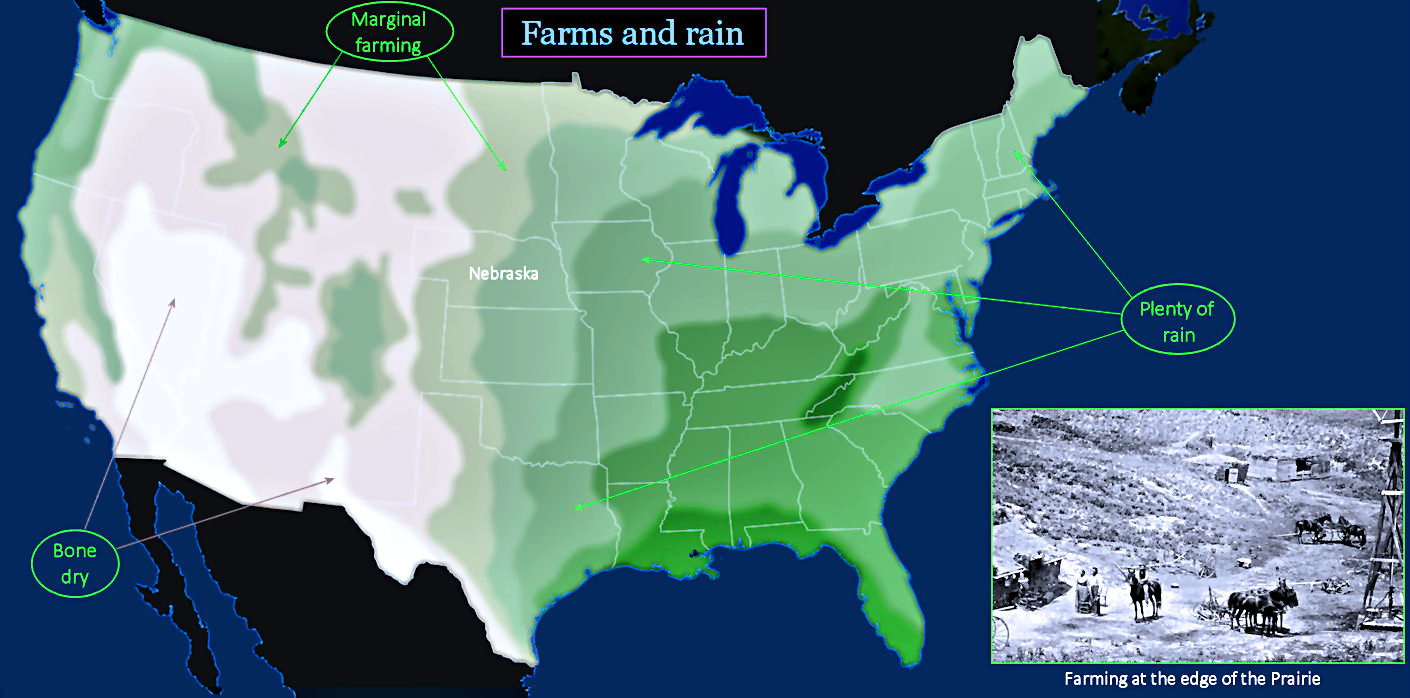
Crops Need WaterRailroads enable this continued migration, making it easier and easier to reach new, unspoiled frontier settlements. No one gives much consideration to the nature of the land at their final destination. All land is good land. This begins to change, however, as railroads push further west, to the edge of the prairie. Few people understand that the weather changes abruptly as you approach western Nebraska, where spring rain begins to vanish. The map shows yearly rainfall, providing dramatic evidence of how quickly green turns to brown as you head west. Almost like falling off a cliff, moisture dries up, and trees disappear. Here, only grass-eaters like buffalo thrive. |
| ||||||||||||||||
| |||||||||
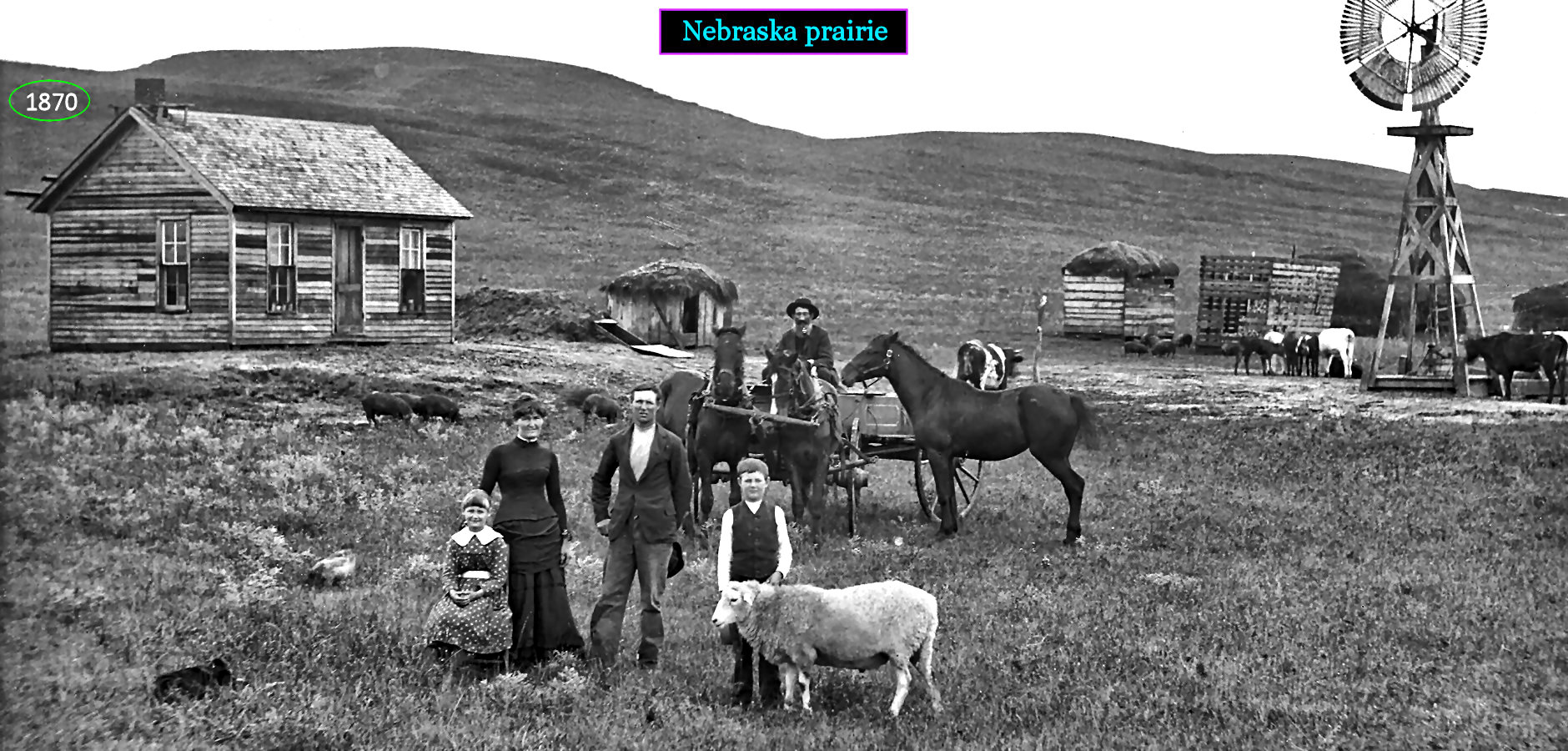
Dry Country America's great prairie, home of the buffalo, is not an easy place to live. Railroads can deliver lumber to build a house, but not water to raise a crop. The wooden tower at far right is a new kind of pump-driven well. It uses pinwheel-type vanes to turn a vertical shaft, which pumps water from areas where groundwater naturally rises near the surface. This type of well is developed in the 1850s on the dry rangeland of West Texas, and quickly spreads north to Nebraska. Driven by relentless prairie winds, the pump works day and night, keeping the animals watered. Meanwhile, livestock can graze comfortably through late fall on the natural prairie grass, which requires very little rain. Keeping livestock fed during the winter, however, is the big challenge. | |||||||||
| |||||||||
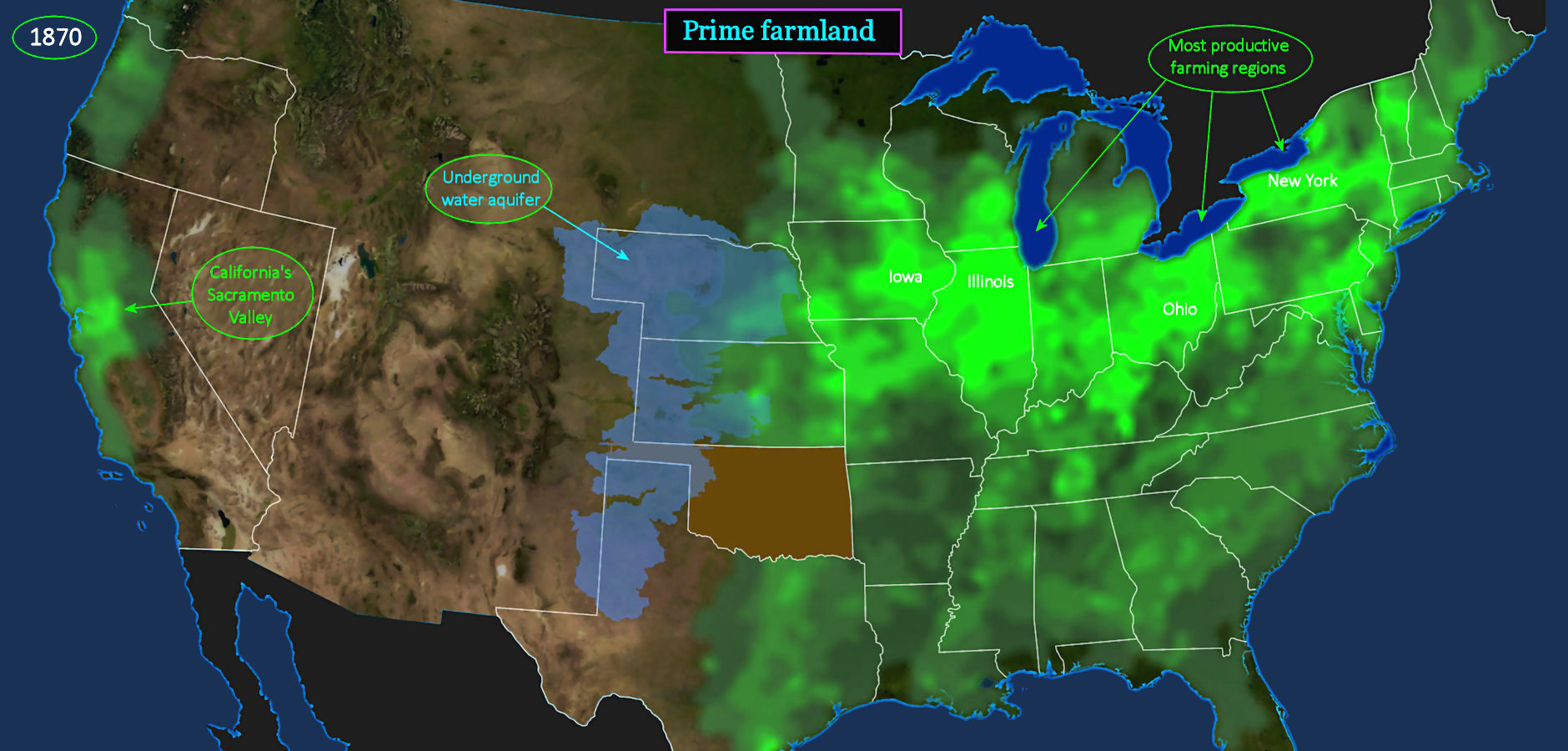
Crops Need Water The areas of brightest GREEN indicate America's heartland farming regions. All these areas have fertile soil and good rain. Western states, by contrast, are barely farmed at all. The Sacramento Valley in California is a prominent exception. This large, fertile, and well-watered valley makes California the nation's highest food producer today, by a wide margin, followed by Iowa and Nebraska. Without irrigation, Nebraska would be well down from the top of the list. Luckily, it sits atop the all-important Ogallala aquifer, which holds groundwater that can be pumped to the surface, making livestock farming possible. Even so, many wells must still be dug by hand. Some of the aquifer shown above is too deep to reach without a steam drill. | |||||||||
| |||||||||
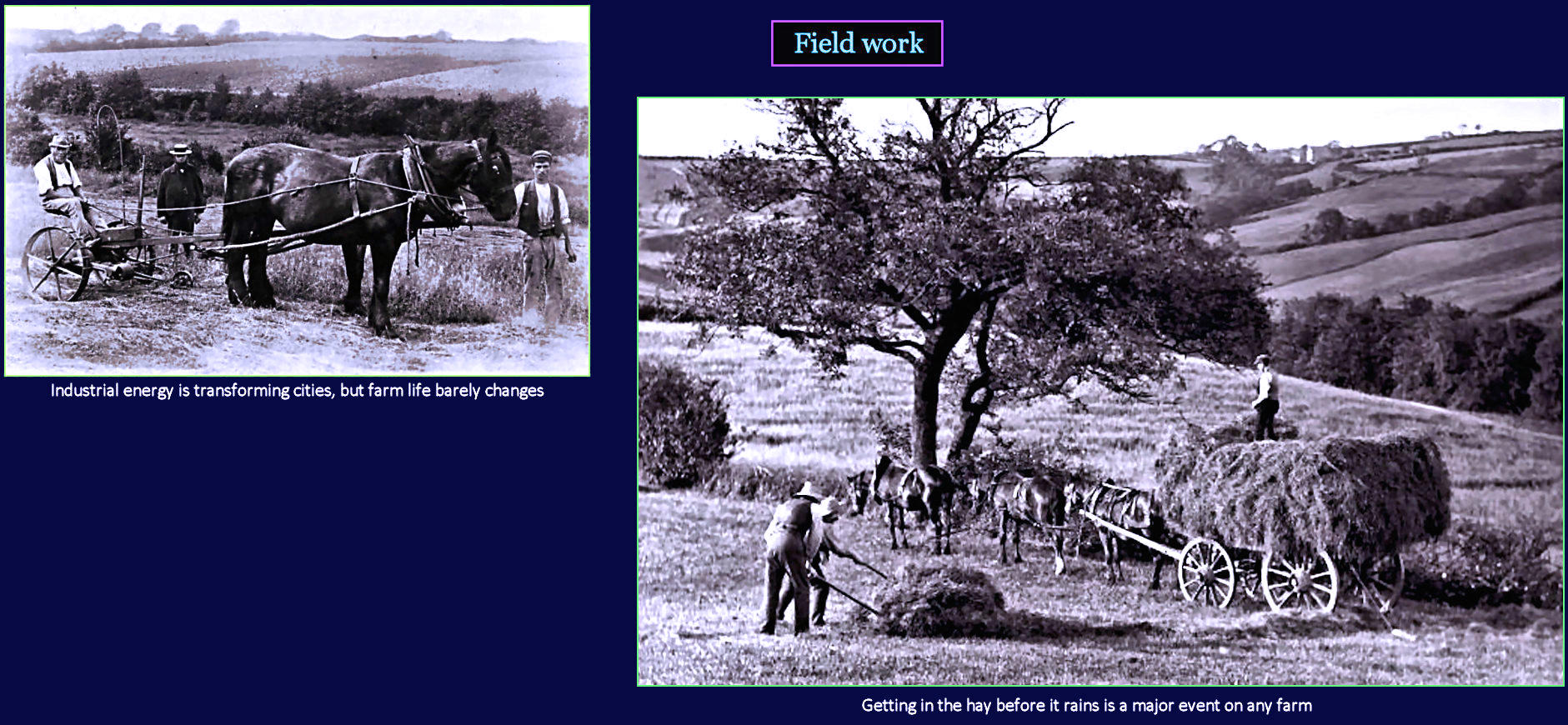
Old Ways Persist Farm life in the Midwest isn't much different from farm life in Pennsylvania 50 years earlier. The steady rhythm of field work begins in the spring, with plowing and cultivating, then moves on to mowing and threshing as the crops mature. The only real variable is the weather. Occasional dry periods are to be expected almost anywhere, but prolonged drought of the kind experienced routinely on the prairie is something else. When crops fail, families suffer through the winter. | |||||||||
| |||||||||
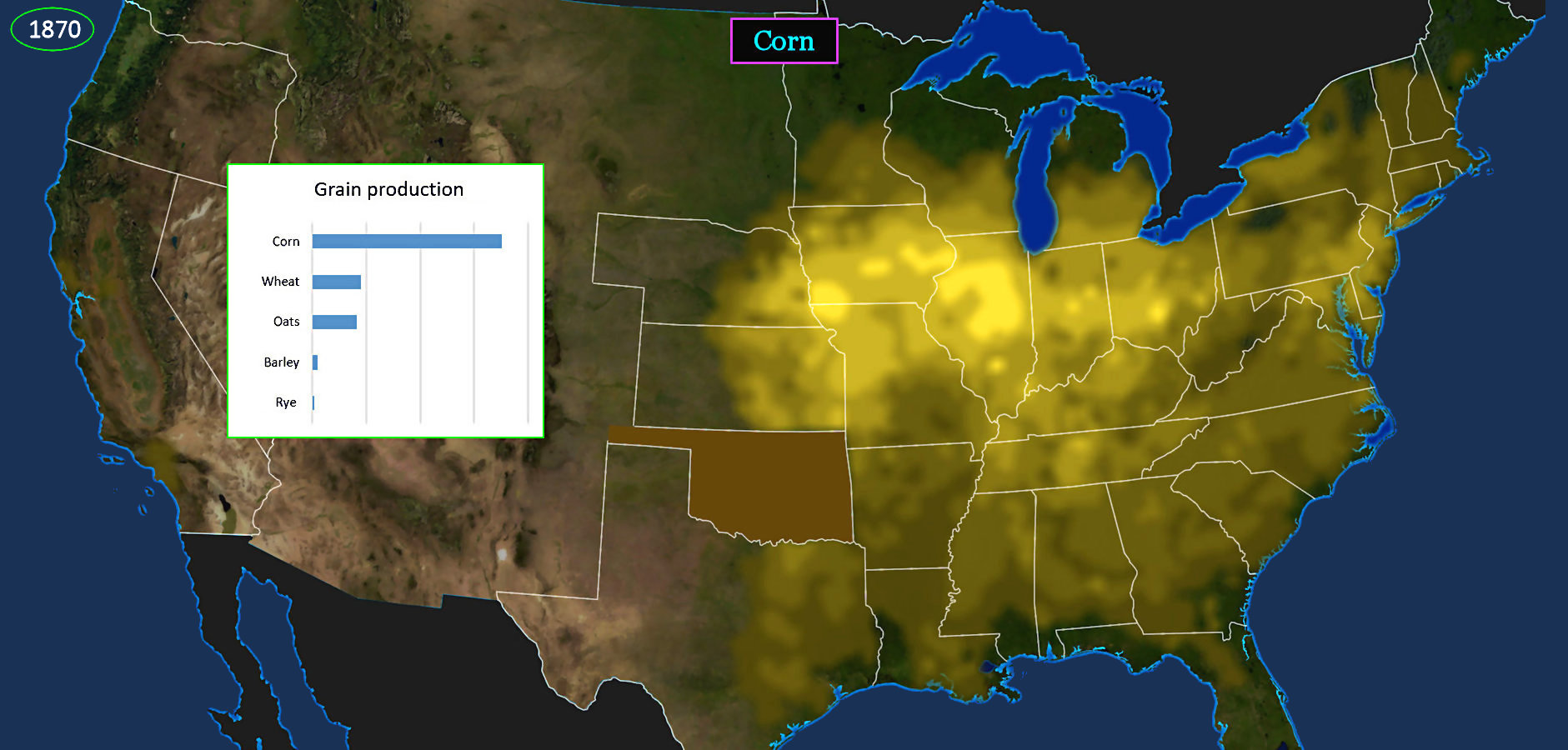
Biggest Crops Field crops (as opposed to garden crops) are grown primarily for income, especially for export to Europe. Corn is by far the dominant crop grown in America, with three times the production of the two next most important crops, wheat and oats (see chart). The YELLOW highlights on map show that corn is grown all over the East, but mostly in the Midwestern farm states of Iowa and Illinois. The maps for wheat and oat production look much the same, as they thrive in similar conditions. Today, corn is still America's dominant farm product, through soybeans now run a close second. Wheat today ranks a somewhat distant third. | |||||||||
| |||||||||
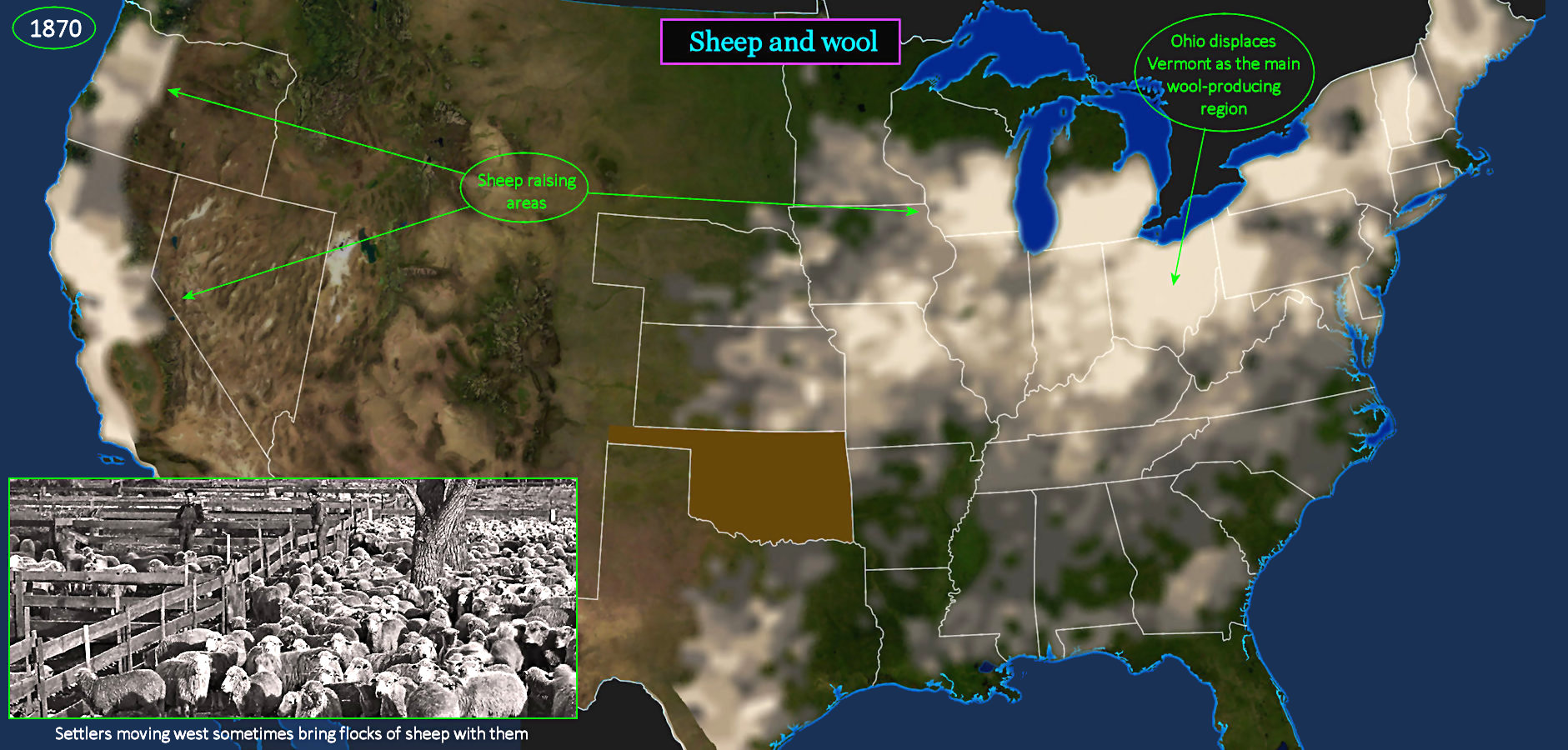
Wool is Still Important Sheep provide the wool for everyday clothing. Sheep and cattle thrive on the dry western grasslands, and mountain highlands that cover much of the West. Settlers sometimes drive flocks of sheep with them, as they head west. | |||||||||