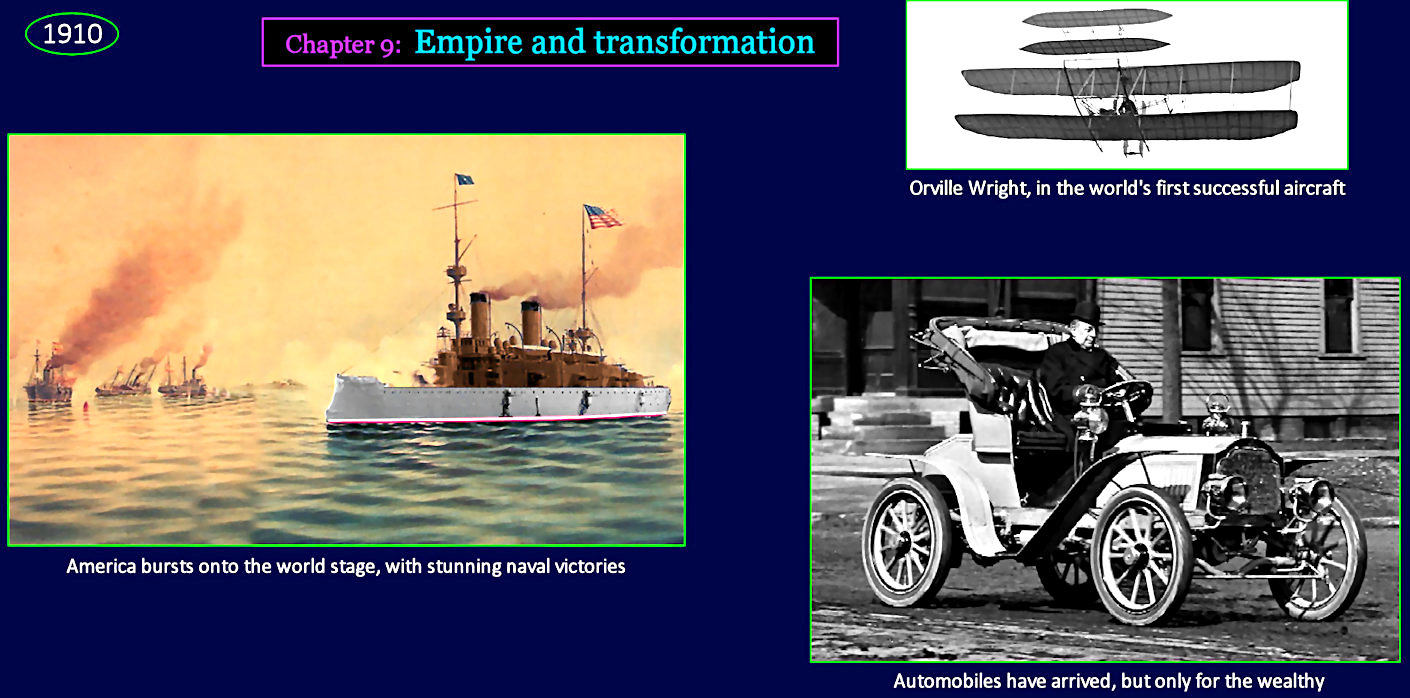
New CenturyThere's a lot to celebrate. America has just won a trouble-free, 10-week war with Spain. This includes two smashing naval victories, and the addition of America's first overseas colony. The American fleets barely take a scratch. Automobiles are finally a reality, even if few roads are ready for them. Flying machines haven't yet arrived, but soon will, with the first Wright Brothers flight in 1903. Such machines, however, are still infants. The main event of the new century is the widespread appearance of large urban landscapes. This includes the growing presence of corporate giants, with their huge new buildings. Big Business is now firmly in the driver's seat. |
| ||||||||||||||||
| |||||||||
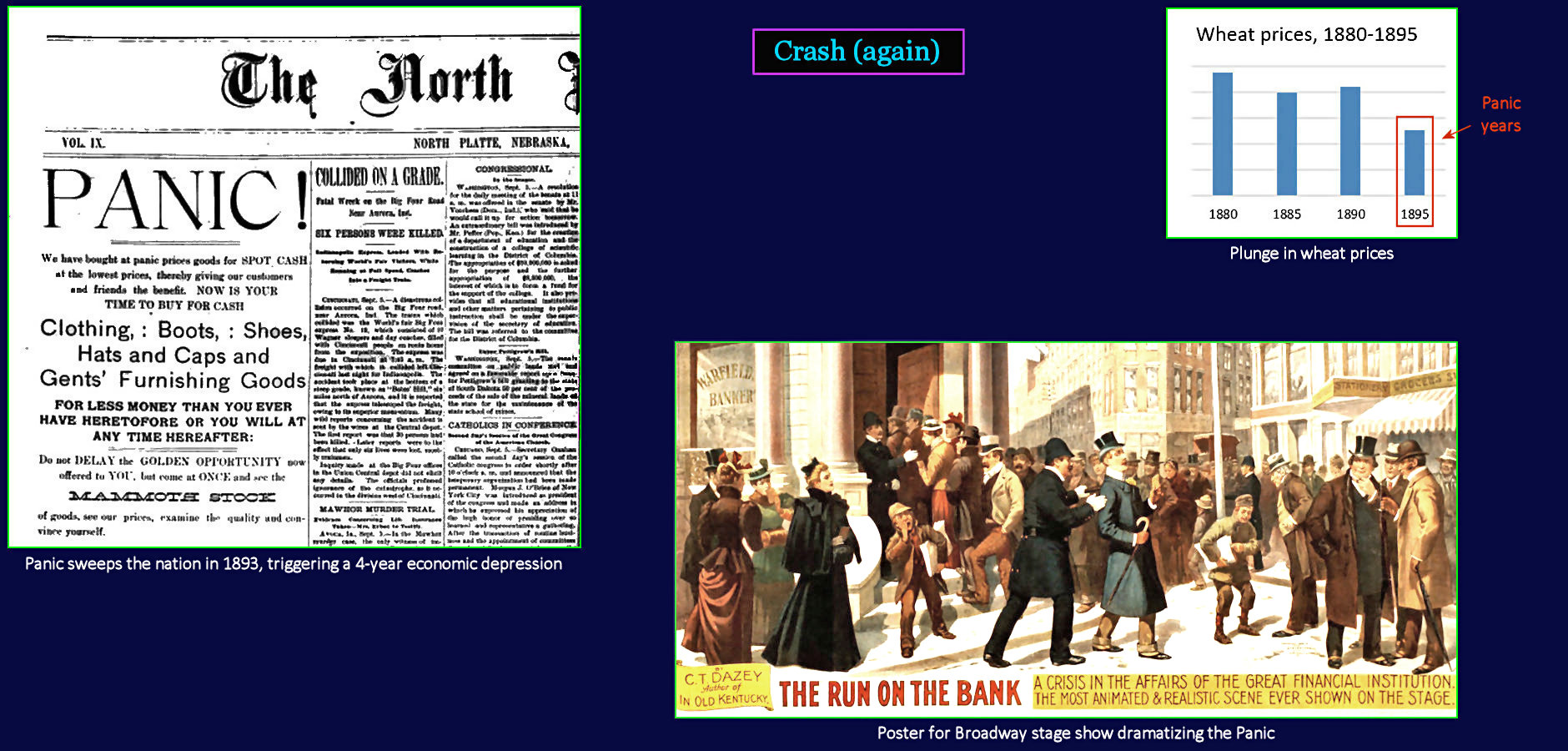
Growing Storm Clouds Americans hoped that the financial excesses which resulted in the 'Great Depression' of 1873 were behind them. But now, just 20 years later, a similar catastrophe again envelopes the nation. Sparked by a sharp drop in wheat prices (top right), the Panic of 1893 is even worse than its predecessor. It's aggravated by over-production of silver, and continued over-investment in railroads. This leads to the failure of major railroads, 15,000 businesses, and 500 banks. As before, the worst damage is out west, but unemployment in Michigan tops 40%, and is nearly as bad in New York. The President is forced to accept a bailout from ruthless super-financier JP Morgan. Even so, the depression lingers on, with a brutally-suppressed railroad strike. | |||||||||
| |||||||||
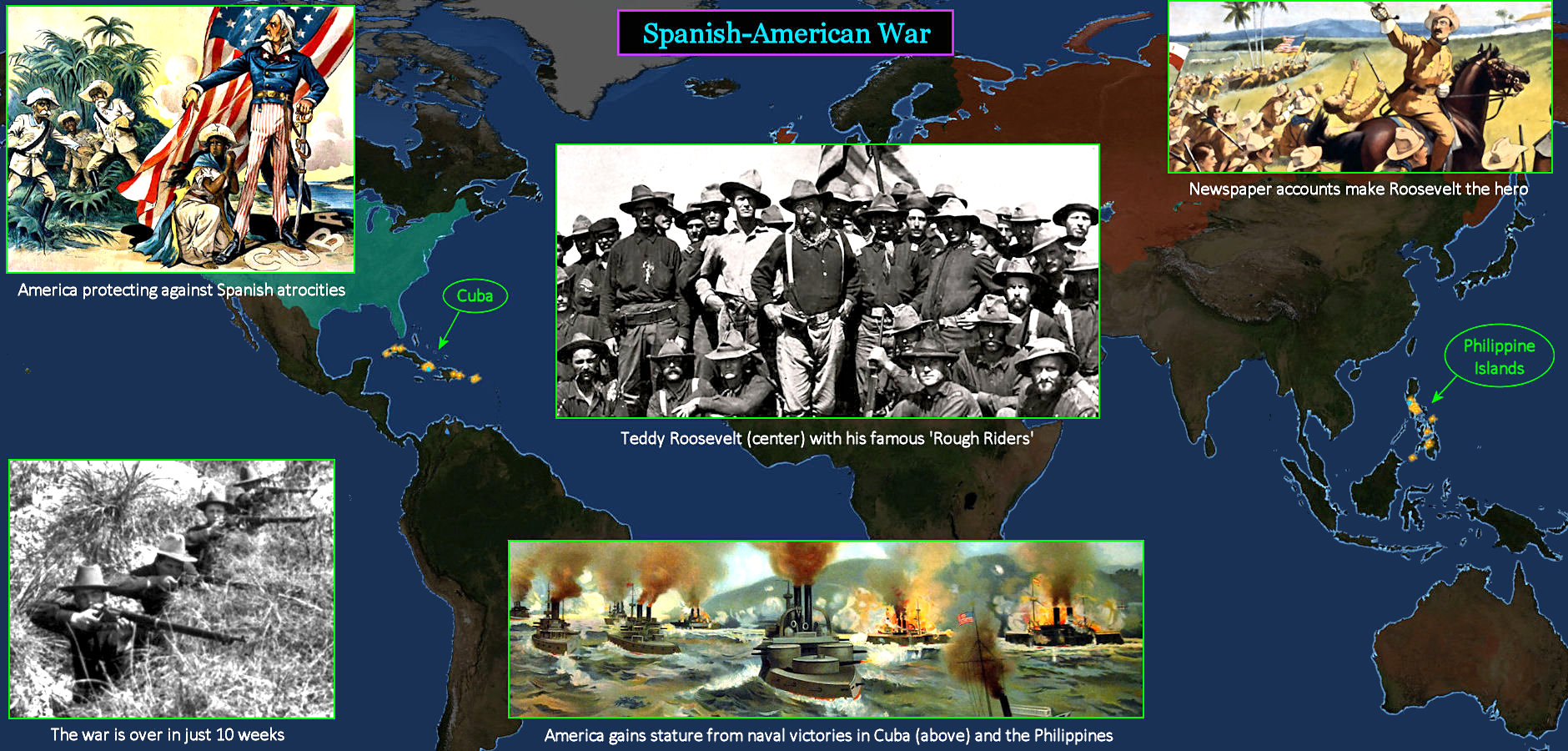
A War? Really? The Spanish-American War of 1898 brings quick victory to American forces, and new respect in Europe. The color images above give the popularized version. It starts with brutal Spanish repression of Cubans seeking independence. Estimates for Cuban deaths in concentration camps exceed 200,000, and mass bones are later recovered from the bottom of Havana harbor (right). America tries to intercede, sending the battleship Maine to Havana. It mysteriously blows up, providing the pretext for American invasion. A fleet is sent to Cuba, which enjoys a resounding victory that completely destroys the outgunned Spanish fleet (bottom right). On the opposite side of the globe, a smaller American fleet annihilates another aging Spanish fleet in the Philippines. | |||||||||
| |||||||||
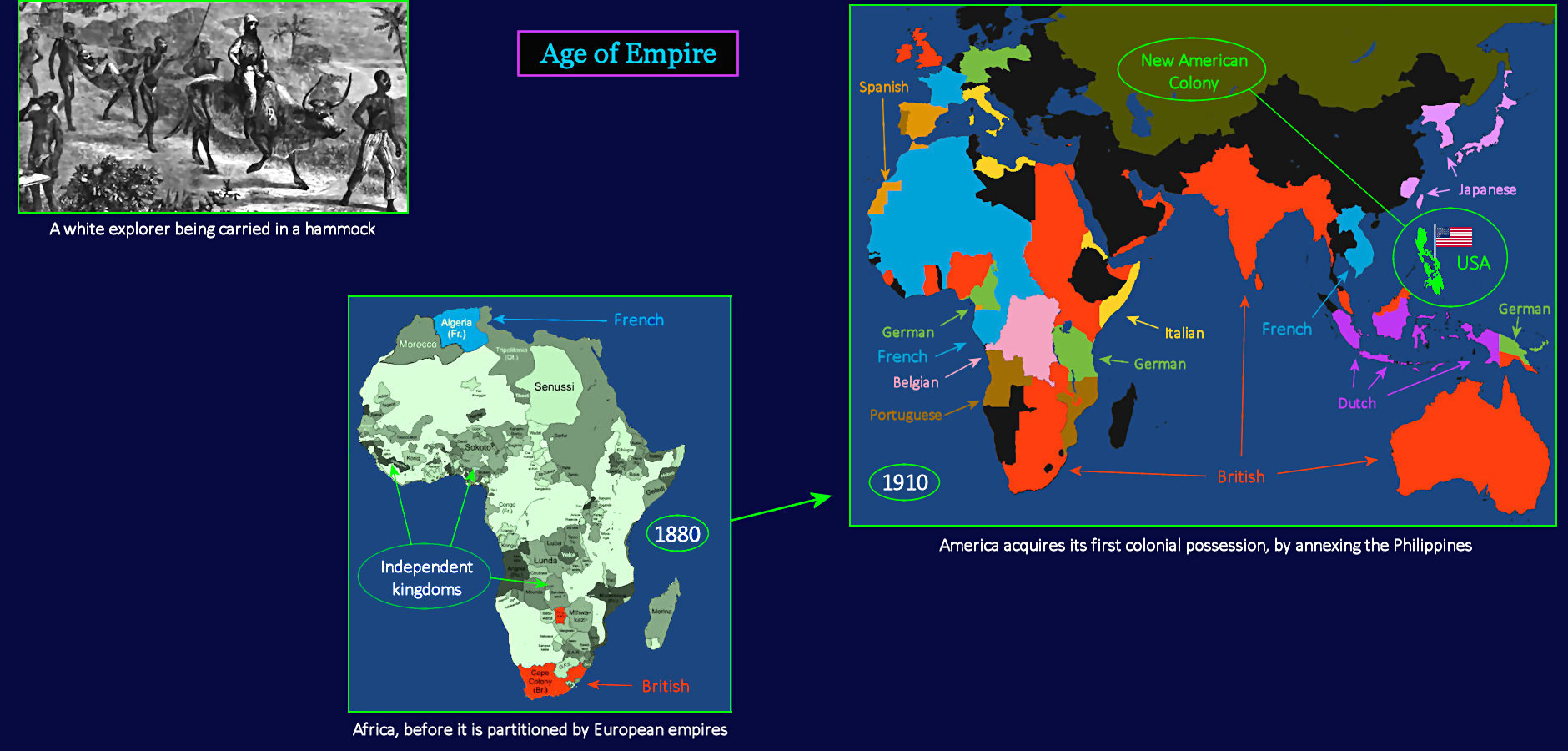
Dividing up Africa The period between 1880 and the beginning of World War I (in 1914) is the Golden Age of Empire. All the major European powers are engaged in a frantic free-for-all, gobbling up territories which have no organized national government to oppose them. The activity is global, but centered in Africa. The result is an almost complete transformation of 'Darkest Africa' into colonies of the Great Powers (lower left). Previously independent peoples are now ruled by foreign masters. Some effort is made to 'civilize' the natives, but the real objective is to plunder natural resources, which can now be exported at will. America joins in the game by seizing the Philippine Islands, for use as a naval base (top right). | |||||||||
| |||||||||
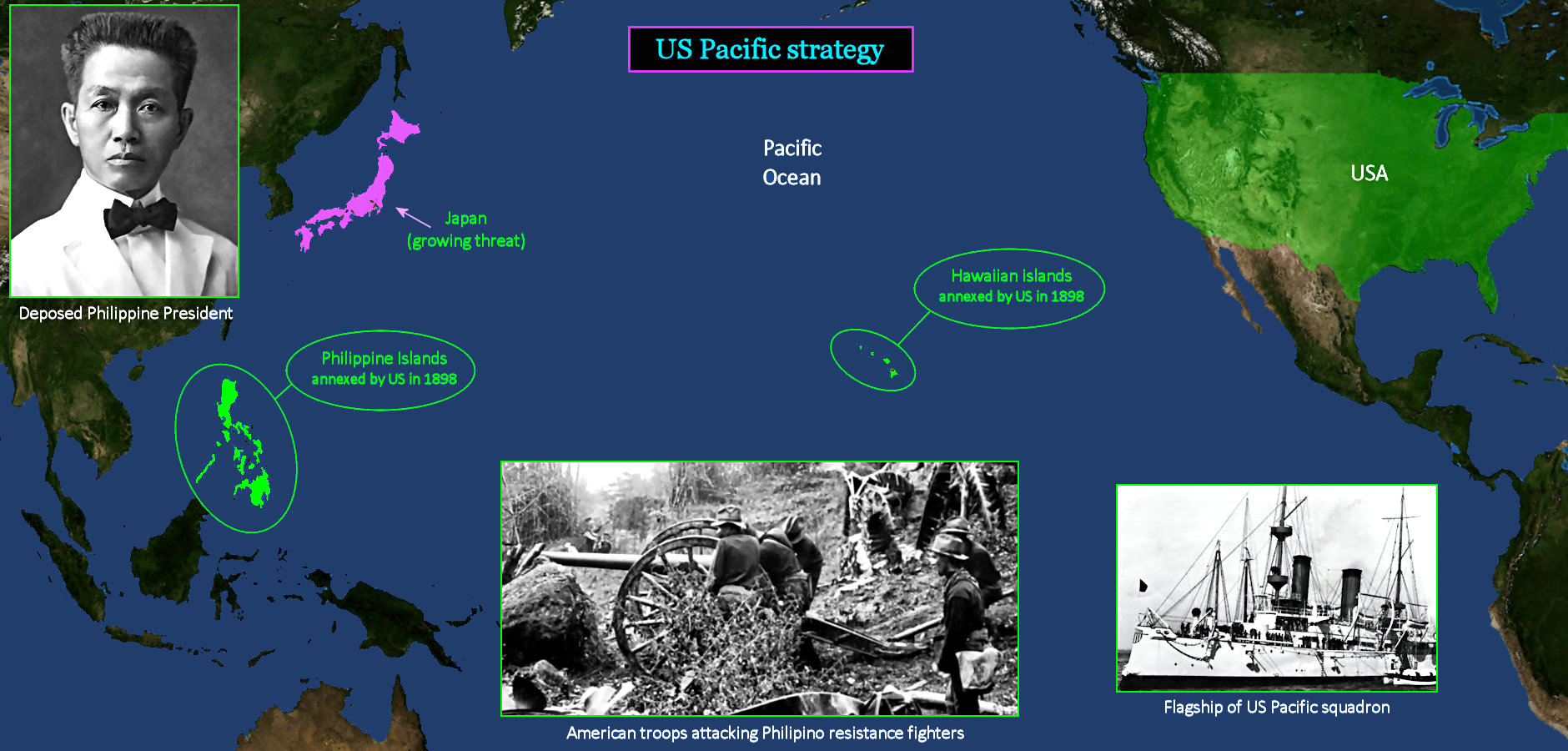
Global Ambitions The Spanish-American War comes right in the middle of the era of colonial expansion. It' billed as a war to liberate Cuban freedom-fighters from the oppression of Spanish colonial masters. But it includes a simultaneous attack on the Philippine Islands, also a Spanish colony, but located on the opposite side of the globe. American naval planners, interested in establishing a naval base into the Pacific, had actually begun planning an attack on the Philippines two years earlier. America annexes the islands after the Spanish surrender, but the US Army continues fighting against native Filipinos for three years. It finally captures the rebel leader, who was President before American involvement. Hawaii is annexed at the same time. | |||||||||
| |||||||||
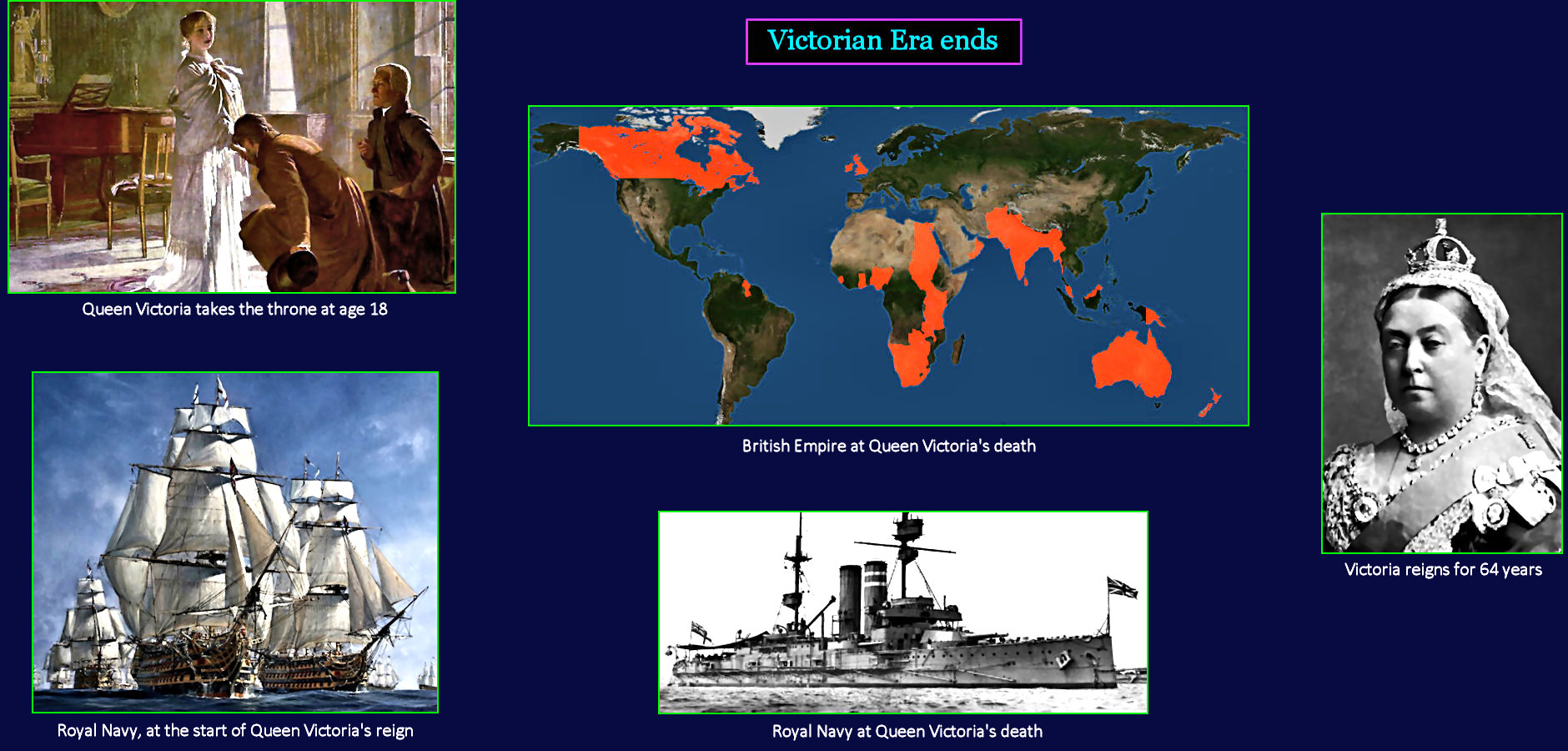
Goodbye, 19th Century With the new century barely begun, the death of England's Queen Victoria in 1901 puts a final end to the long Victorian Era, making way for the automobile age. Queen Victoria reign throughout most of the 1800s, taking the throne not long after Napoleon's final defeat at Waterloo. At this time, Britain rules the seas in majestic, triple-decked wooden warships (lower left). By the time Victoria dies, these have been replaced by steel killing machines of an entirely different character (bottom center). Britain still rules the seas, and controls much of the world's landmass, as well (top center). This is soon to be tested, as America joins Germany and France in a sudden frenzy of warship construction. | |||||||||