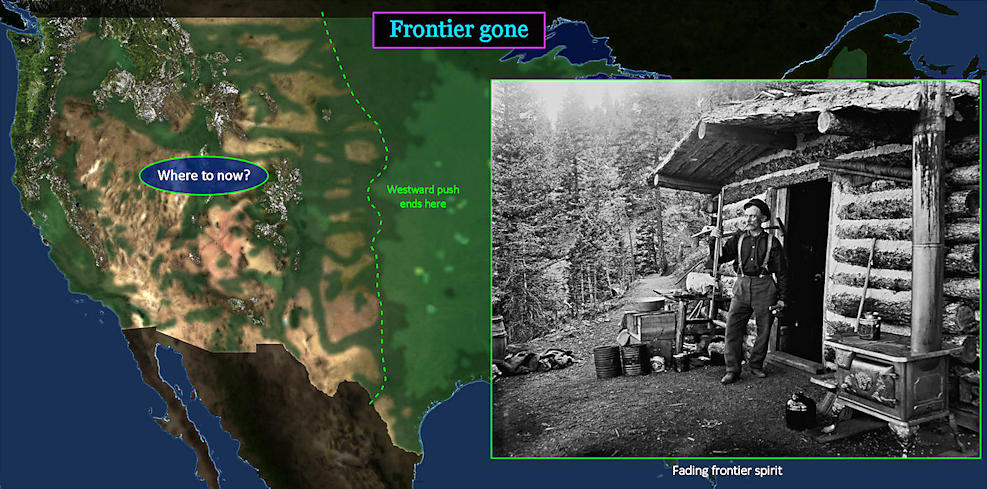
Gravy Train stopsThe theory suggests that the distinctive character of America wasn't forged in the East, by Pilgrims. Rather, the real story unfolds in the West, which beckons with alluring dreams of a new start and (perhaps) sudden wealth. The extraction of gold and silver, which begins with the Gold Rush of 1849, is the final chapter in this long saga. By 1910, the mines are largely played out, leaving just ranches and the remaining sun-scorched expanses. Arizona and New Mexico are the last of the 'lower 48' states to be admitted to the Union, both in 1912. Alaska and Hawaii, which are both distant territories, won't become states until 1959. |
| ||||||||||||||||
| |||||||||
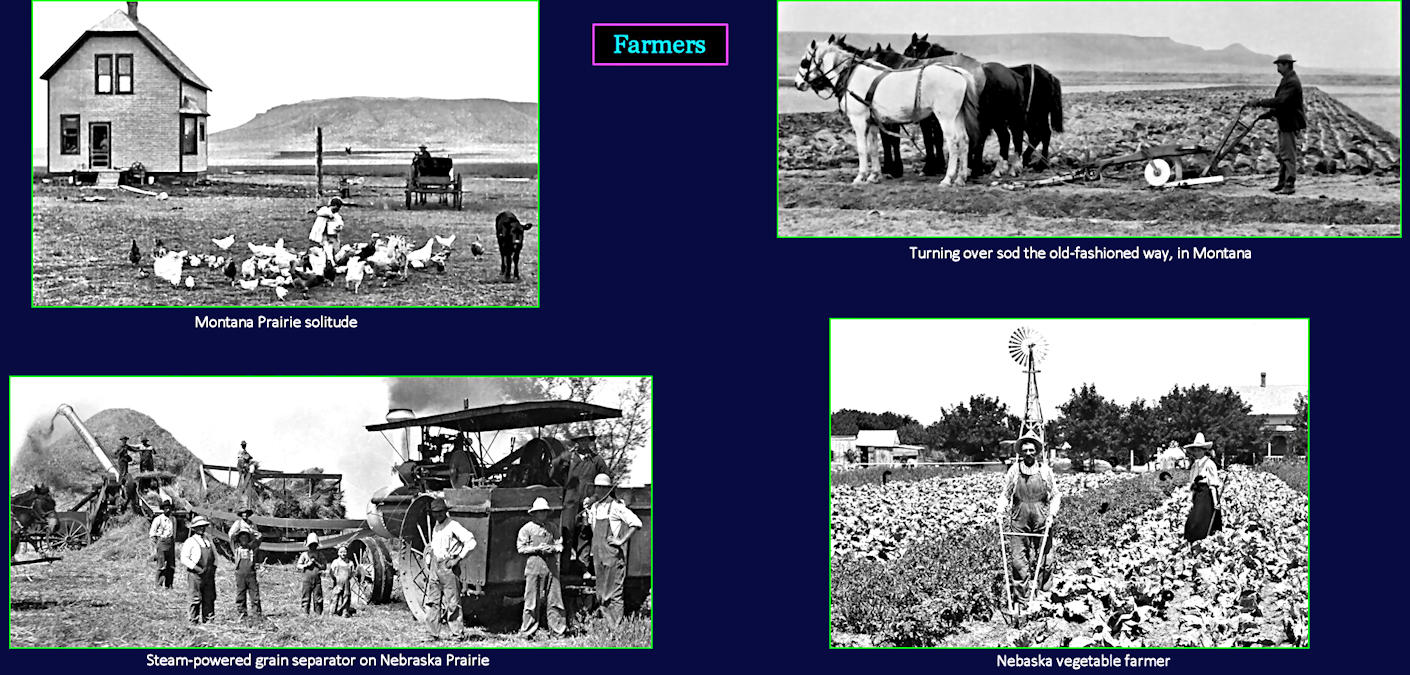
Just Getting By Prairie farming is difficult in the best of conditions, and grimly disheartening at other times. Irrigation can ease the burden, but keeping the ditches repaired and the water flowing is a constant chore. Still, farmers manage to get by, in a lonely life where the sudden energy of the harvest is only a brief interruption. The rest of the time, settlers have little company beyond the relentless wind, and tormenting visions of perhaps having to finally chuck it all in, defeated by a hostile environment. | |||||||||
| |||||||||
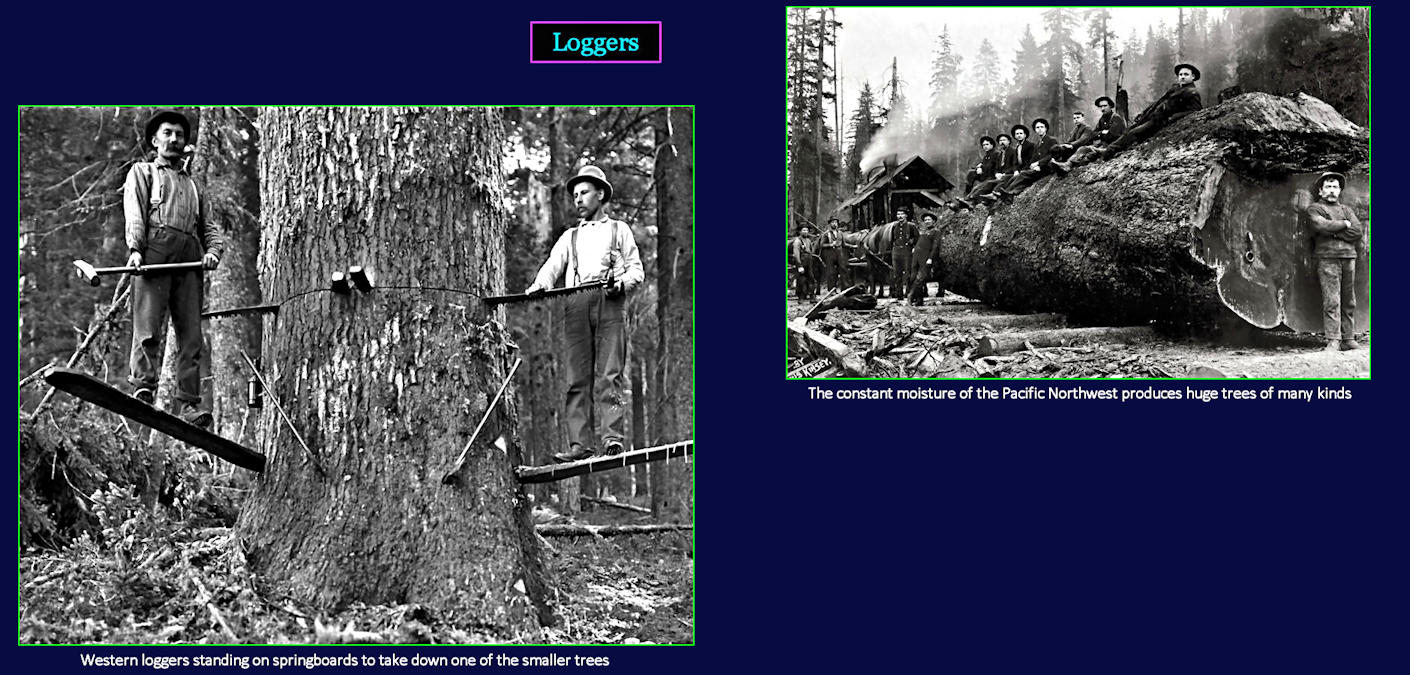
Monster Trees Western logging presents a totally different picture, but one which only applies to the rather narrow coastal region. This land rises quickly from the sea into a continuous north-south ridge called the Coastal Range. In the north, this range is known as the Cascades, a region continuously drenched in moisture that forms the heart of western logging. Here, trees grow to enormous size, presenting a challenge that loggers eagerly accept. | |||||||||
| |||||||||
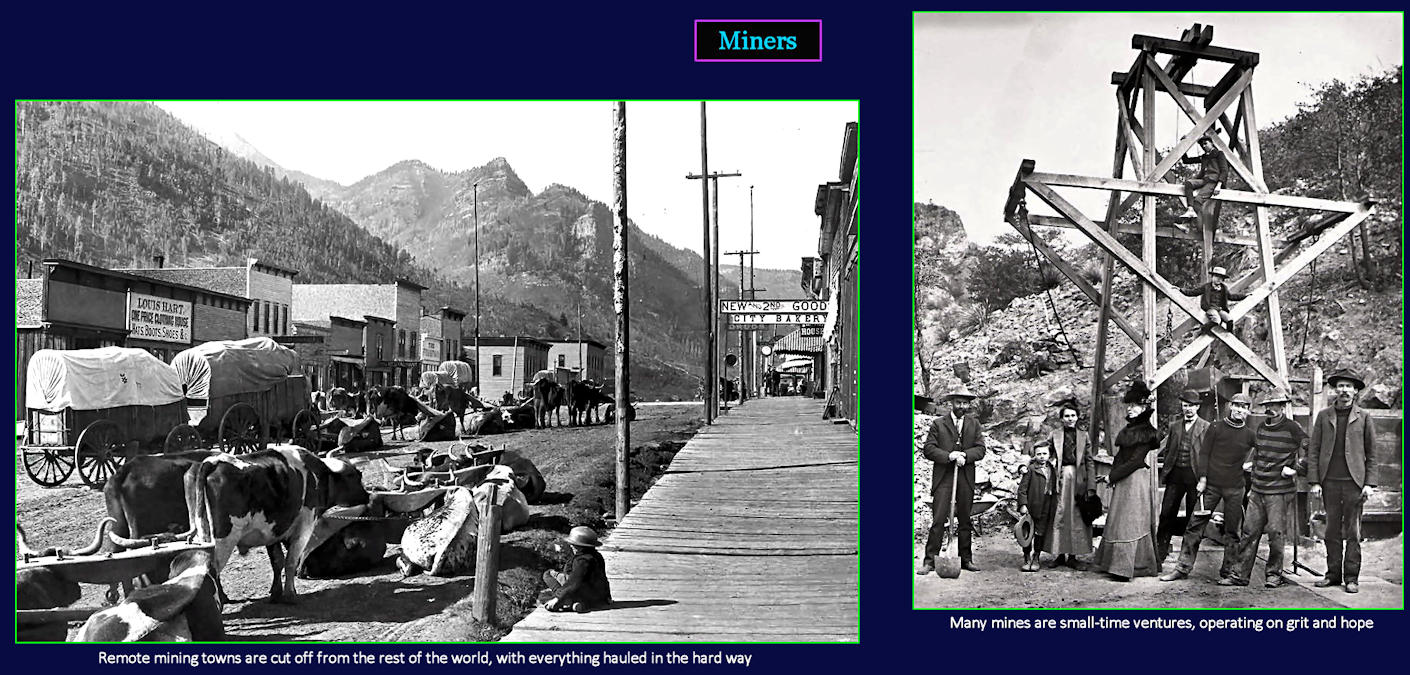
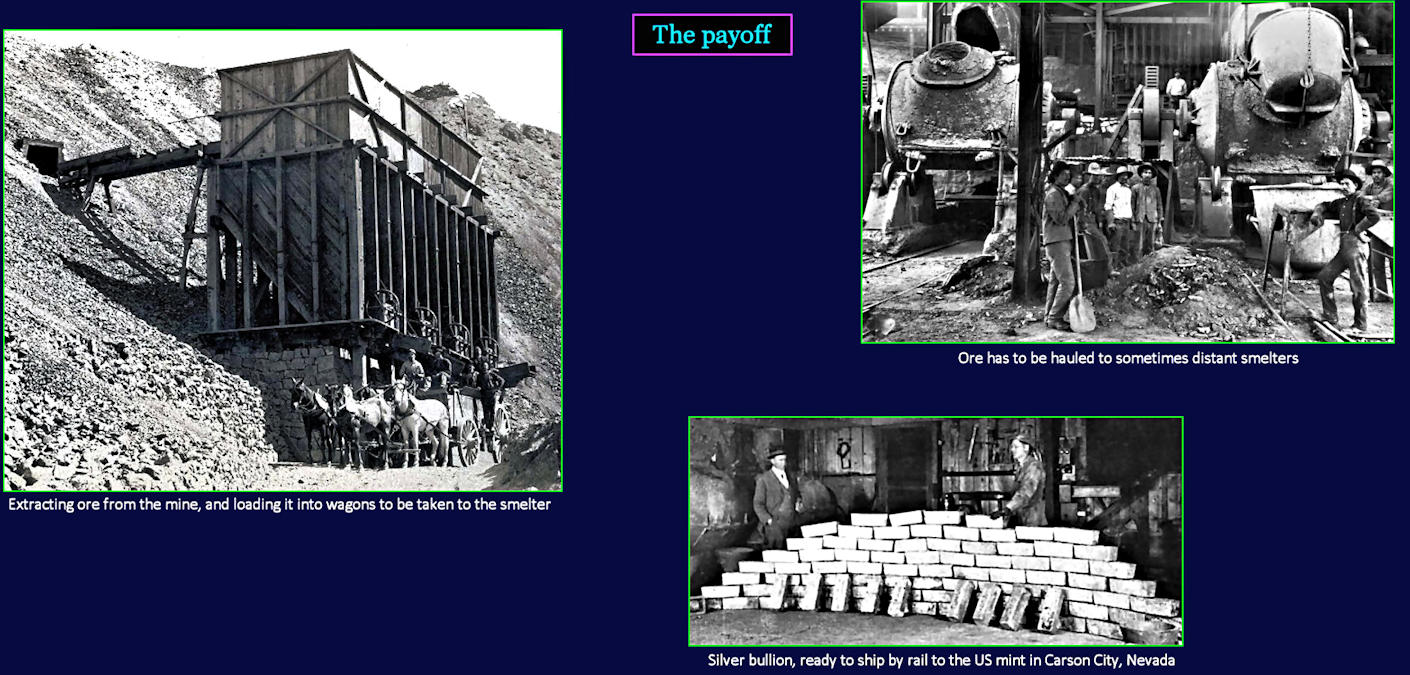
Mines Giving Out Western mining doesn't come to an abrupt halt, but the yield continues to dwindle. Little mining towns, sprinkled throughout the higher elevations in remote locations, seldom last more than 30 years. Afterwards, most become ghost towns. The largest mining complexes are full of machinery that enables continued production. But the glory days are largely over. | |||||||||
| |||||||||
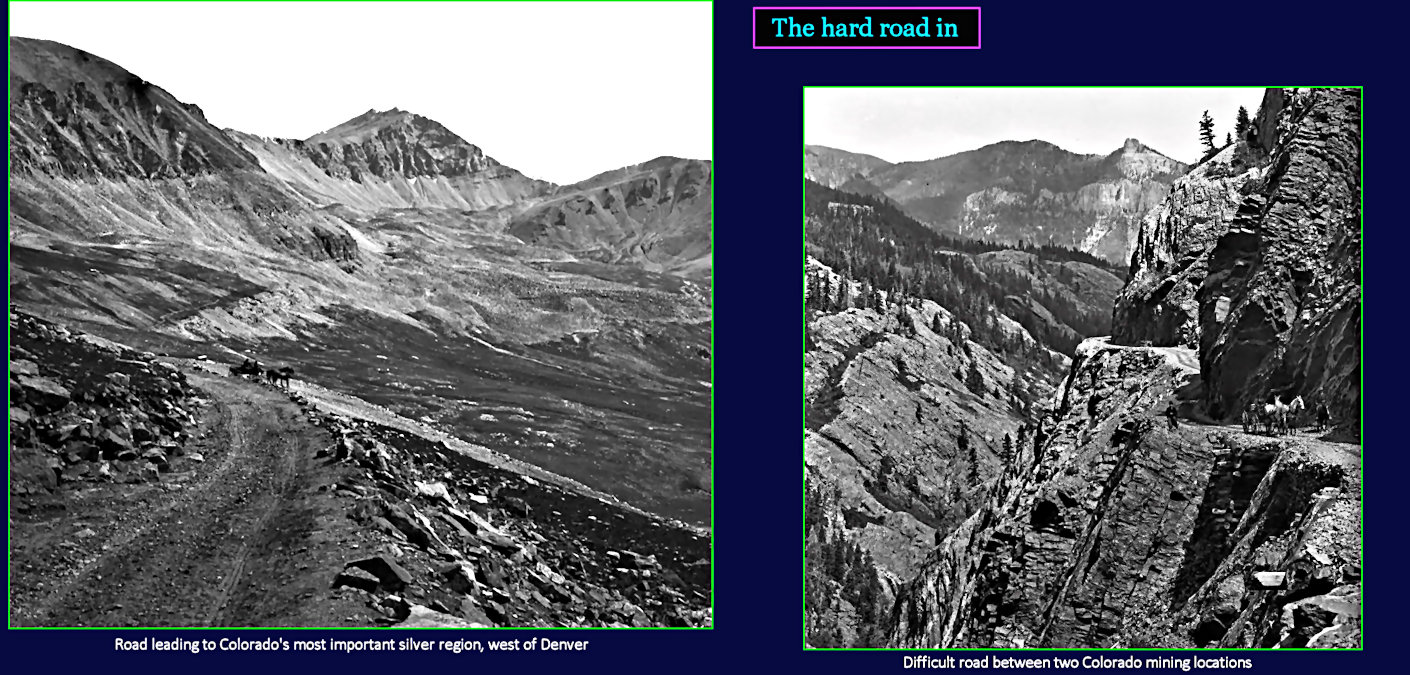
Getting There Here you can see why so many western mining towns are eventually abandoned. They're just too far from anything else. Today, ski resorts like Aspen, in Colorado, have reclaimed some of these locations. | |||||||||
| |||||||||
Wild West Reality It's a testament to human desire and persistence that mining opportunities lure so many men to the West. Women are scarce in these towns, which exist in a semi-lawless state. This is typified by Tombstone, Arizona, the site of the famous 'Shootout at the OK Corral.' Contrary to popular belief, Tombstone is a mining town, not a cowboy town. It hosts one of the final, brief episodes of western good luck resulting in sudden riches. | |||||||||