| |
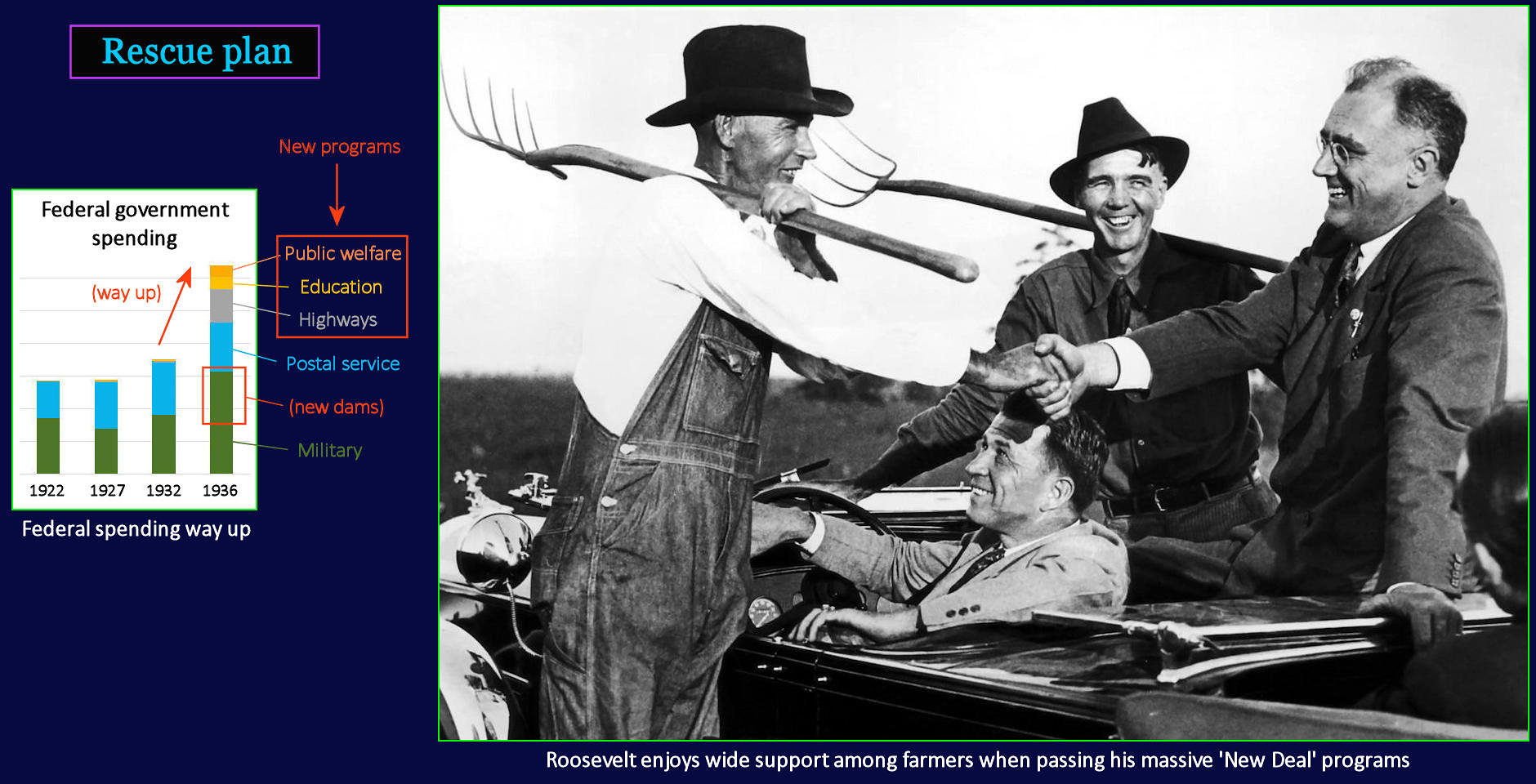
Increased Funding The chart above summarizes spending for programs designed to end the Depression, collectively called the 'New Deal.' Previously, the federal government's only major expenses involved funding the military and the Post Office. The right-most bar (for 1936) shows a massive boost, with new spending on public welfare, education and highways. The GREEN portion of that bar (military spending) also shows a dramatic increase, reflecting new construction projects undertaken by the Army Corp of Engineers. These include many spectacular new dams. |
| |||||||||
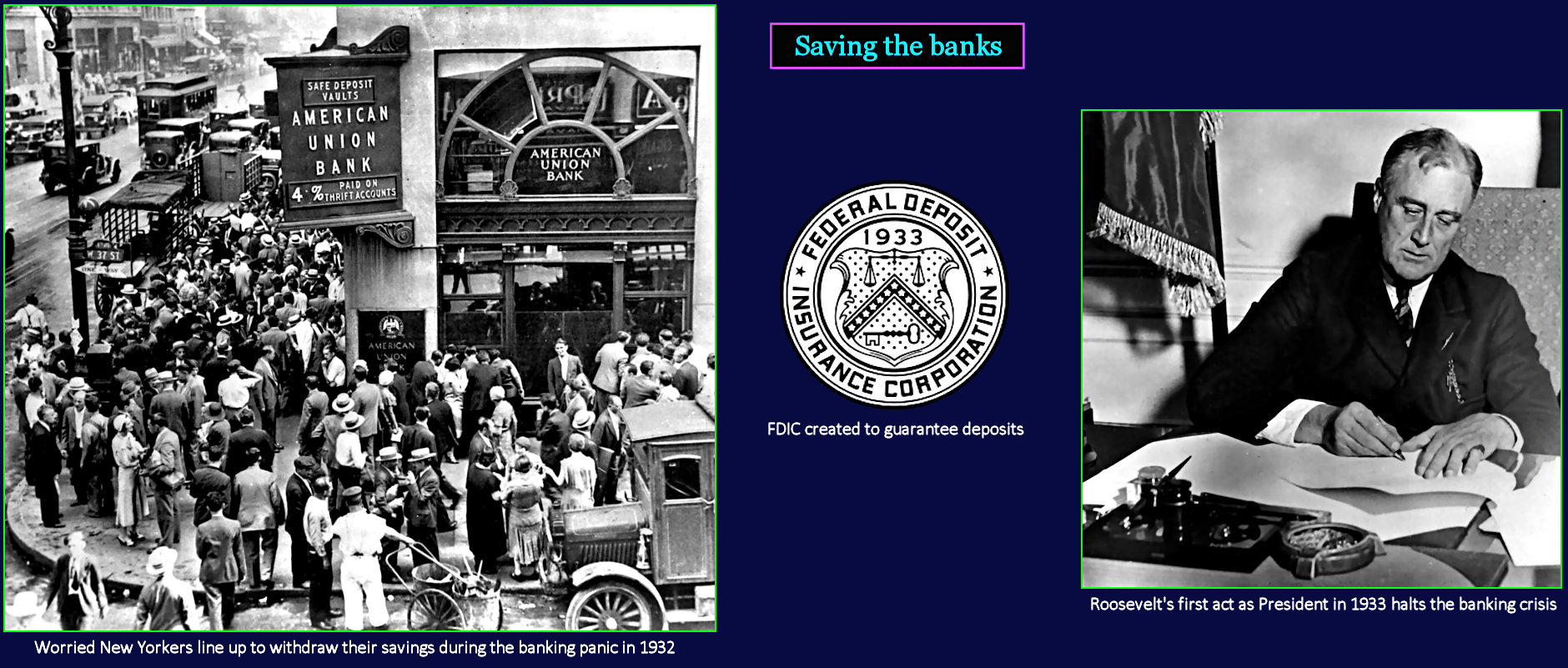
Starting with Banks By the time Roosevelt takes office, the banking crisis is out of control. Nearly half of all banks in the country have already failed. People are so scared that they attempt to withdraw their entire savings, in cash, on the spot. No bank can survive such an assault, not even the Federal Reserve. Every bank has more money out on loan than the total of its deposits. If everyone attempts to withdraw at the same time, the bank fails. Realizing this, Roosevelt temporarily closes all banks in the country. They stayed closed until sufficient currency can be distributed to keep them afloat, with guarantees that no citizen will lose a penny in case of a default. Just 10 days later, most banks have reopened, and are ready for business. | |||||||||
| |||||||||
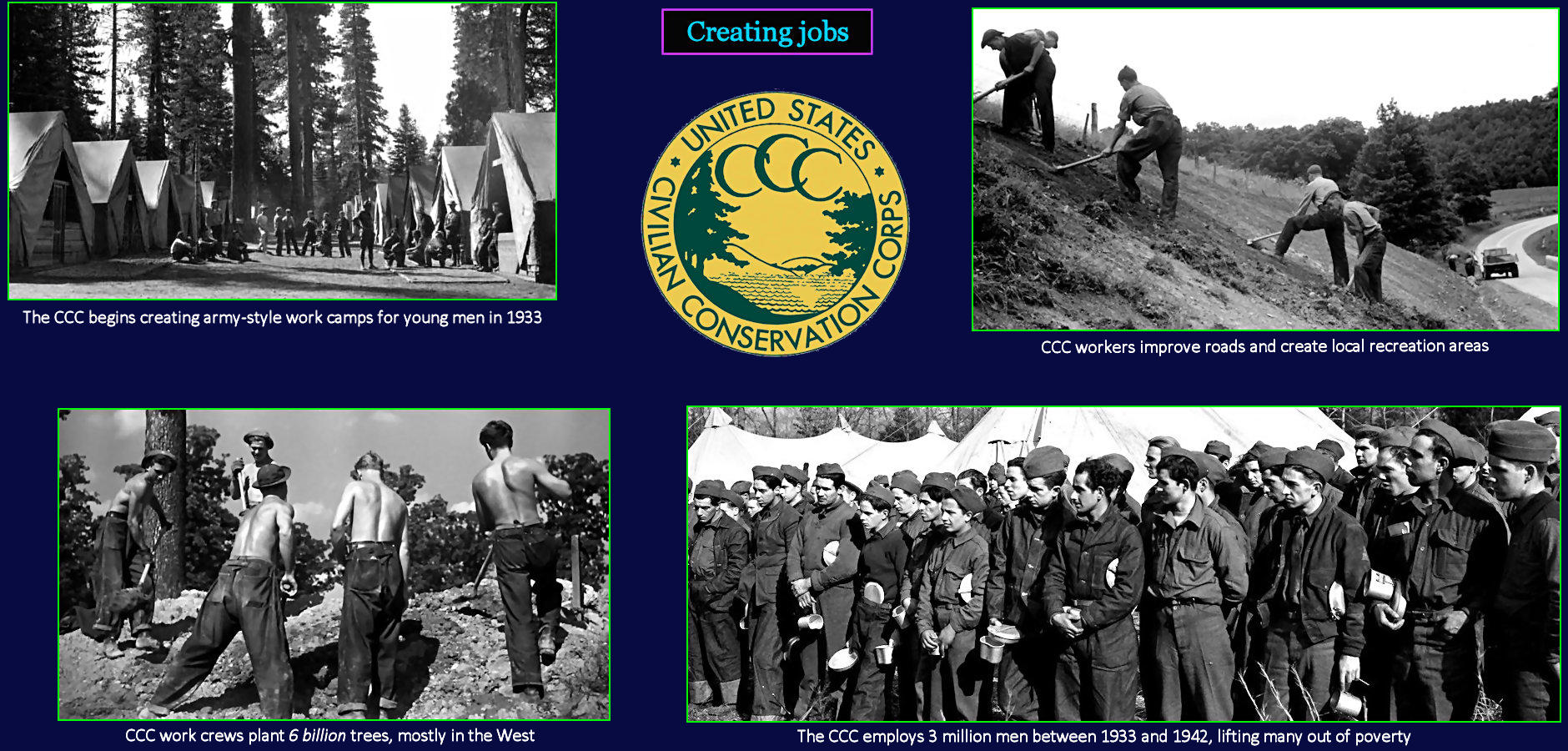
Jobs Come Next Still during his first month in office, Roosevelt takes up the next most pressing issue. Jobs. There are 13 million Americans without jobs. Presidents can't actually create jobs, so instead he creates new agencies that can, with budgets for plenty of new hires. Big construction programs, however, take time to ramp up. You don't begin hiring until you have prepared detailed plans, and signed contracts. To fill this time gap, Roosevelt creates the Civilian Conservation Corps (CCC), with the simple initial task of planting trees. All that's required are seedlings, and army tents for a base camp near the planting site. The CCC later works to build access roads through national forests out west, and creates state parks all over the country. | |||||||||
| |||||||||
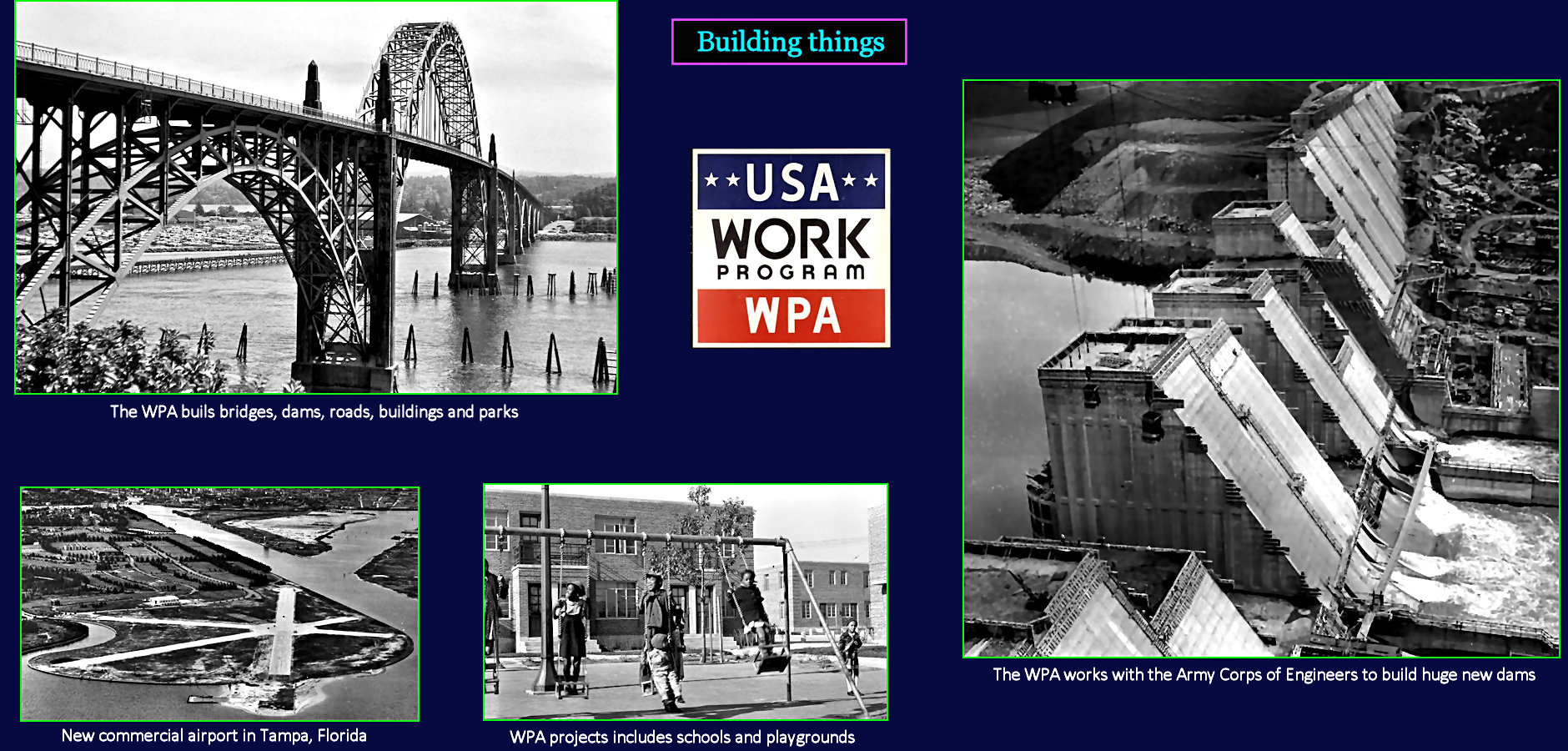
Pouring Concrete By the three-month mark, Roosevelt has pushed through funding for huge new construction projects costing $6 billion, an unheard-of sum, on a variety of major public-works projects. The most ambitious is a sprawling flood control and electrification program to help rural Americans living in near isolation in Tennessee, and six surrounding states. The WPA (Works Progress Administration) funds a vast array of building projects all across the country, becoming America's first great 'infrastructure' program. At its peak, it employs three million men and women, supporting transportation, electrification, education and recreation projects. This includes 200 dams, 80,000 new bridges, 400 airports, and thousands of public buildings. America has never seen anything like this. | |||||||||
| |||||||||
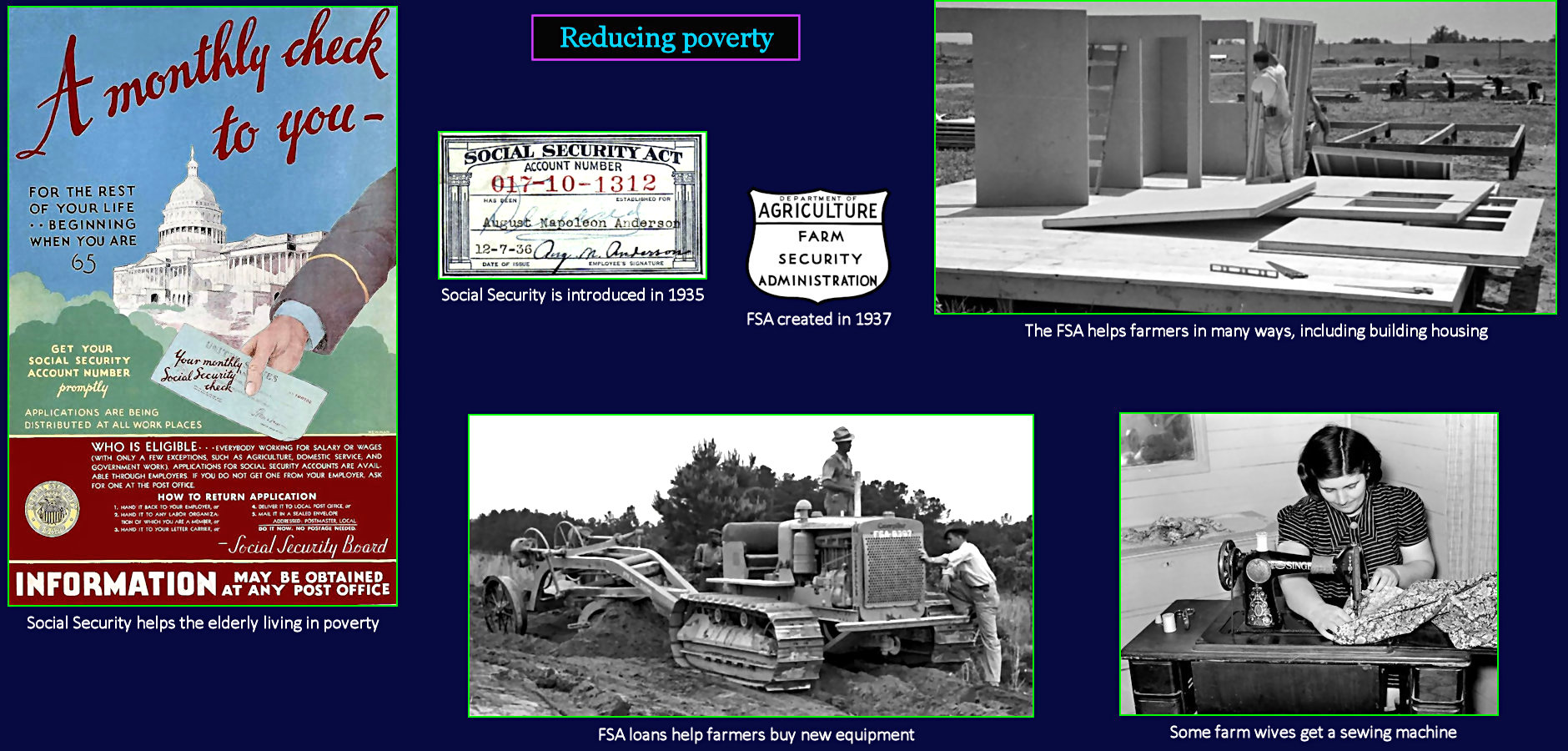
Help for the Poor Roosevelt next turns to the issue of poverty, with passage of the Social Security Act in 1935. This is designed to reduce the number of Americans over age 65 living in poverty, often alone, by providing a dependable minimum income. At the time, life expectancy is just 58 for men, and 62 for women. Then, in 1937, the economy inexplicably slides back into recession, and unemployment spikes back up. Business opposition to the flood of new government spending results in many Americans believing that New-Deal spending is actually delaying business recovery. Regardless, Roosevelt doubles down with his 'Second New Deal.' This includes support for farmers, and funding for low-income public housing. The goal is reducing persistent poverty across rural America. | |||||||||
| |||||||||
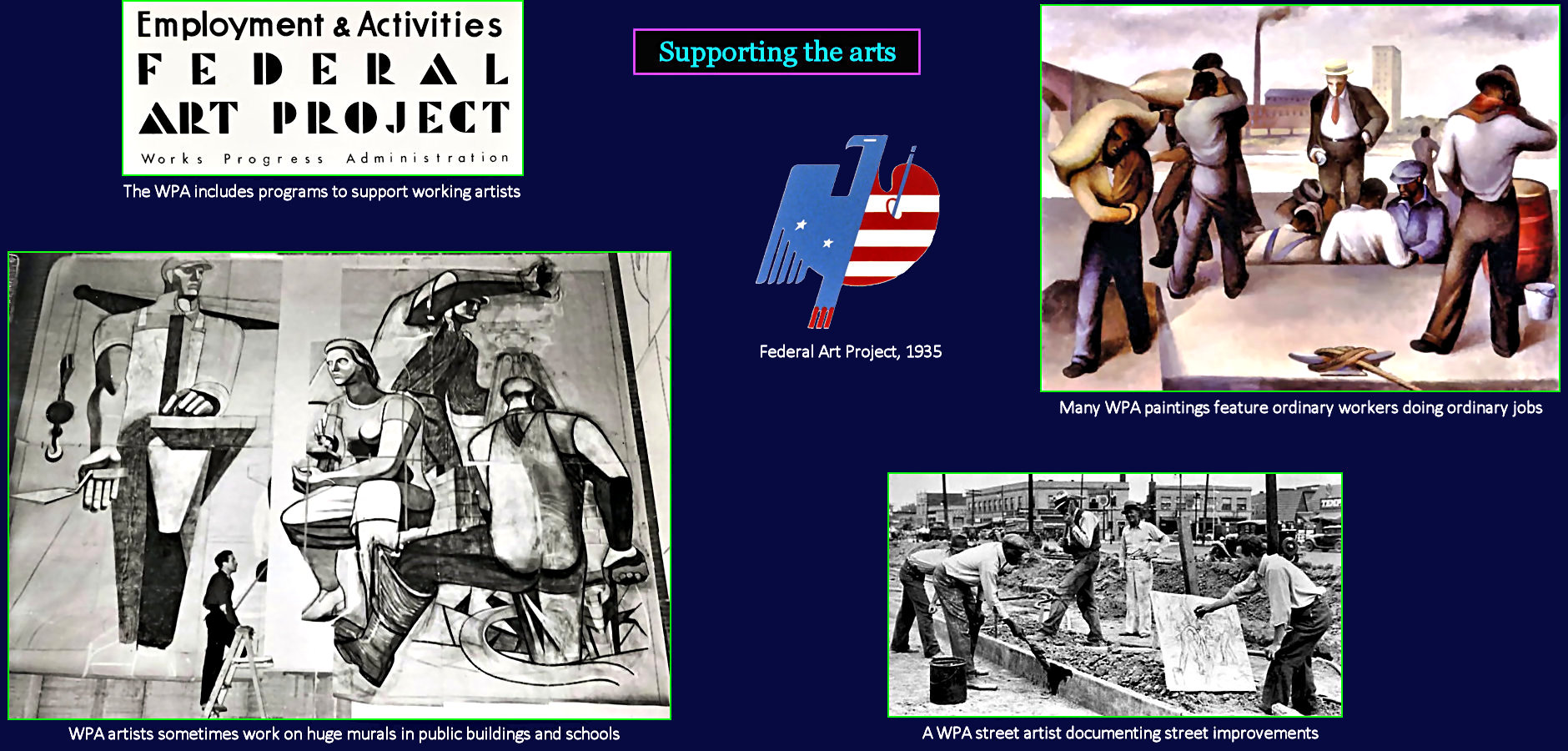
Not Quite Finished Roosevelt seems to have an unusual bond with ordinary Americans. From the very beginning, he personally visits rural farming communities, looking for ideas to help relieve the plight of suffering families. This impulse to improve lives extends to America's struggling artistic community. The sprawling WPA now includes five separate mini-programs collected under the name 'Federal Art Project.' By the end of the first year, the programs are employing 900 artists working on murals, 900 on paintings, 500 on sculpture, 500 on posters, 400 on arts and crafts, and 600 teaching art. High schools, libraries and other public buildings from this period sometimes have murals created under this program. | |||||||||