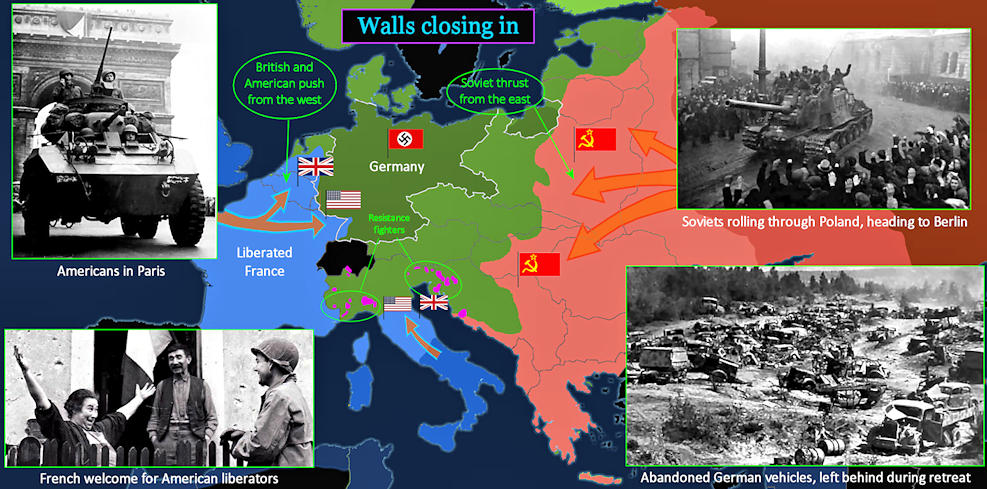
Hitler CrushedIt's one of the enduring mysteries of life. Why don't great warriors ever concede defeat after all hope of victory has long vanished? For Adolph Hitler and Emperor Hirohito, those days already arrived, the previous year. The Germans are being squeezed from three directions by forces they cannot withstand. Their great cities all lie in ruin, their war machine smashed to bits. In the Pacific, the Japanese are in a similarly hopeless position. Why don't they just accept the inevitable and surrender? Why endure the continuing destruction of daily bombings at home, and endless retreat in the field? Why prolong the agony when there is nothing conceivably to be gained? For whatever reason, Hitler doesn't commit suicide in his bunker until Berlin is surrounded, his troops out of ammunition. Tokyo is burned to the ground before Emperor Hirohito finally yields to atom bombs. |
| ||||||||||||||||
| |||||||||
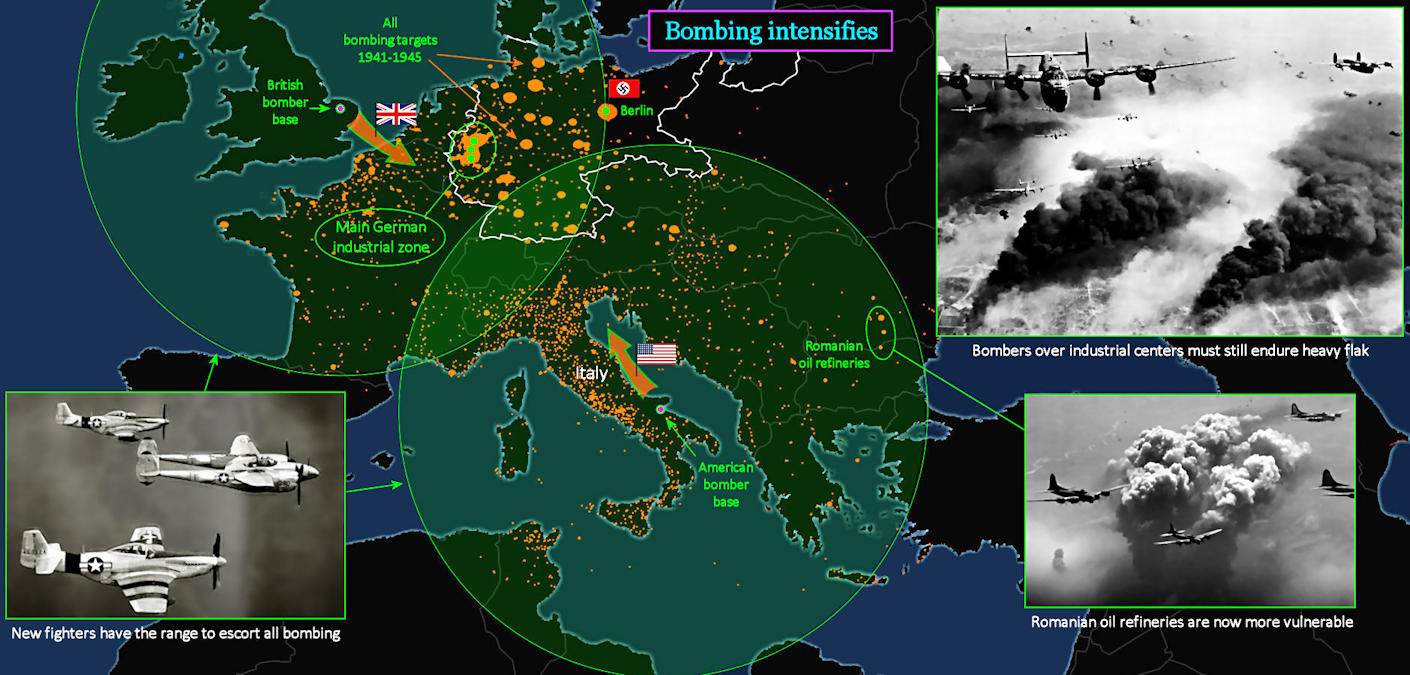
Excessive Bombing? The Allied bombing campaign on Germany's industrial base is unrelenting. The map above shows all targets bombed during four years of war (in ORANGE). The larger dots are the strategic industrial centers, while smaller dots indicate tactical bombing in support of combat operations. In Germany alone, 20 of the largest cities are at least half-destroyed, while Cologne and Hamburg are both essentially levelled. But the air war comes at a steep price. The British and Americans each lose 10,000 bombers, 10,000 fighters, and 80,000 airmen. Germany loses 60,000 aircraft, while three-quarters of its heavy artillery are tied up in anti-aircraft duties. The Germans keep flying to the very end, despite losing a quarter of their pilots every month. | |||||||||
| |||||||||
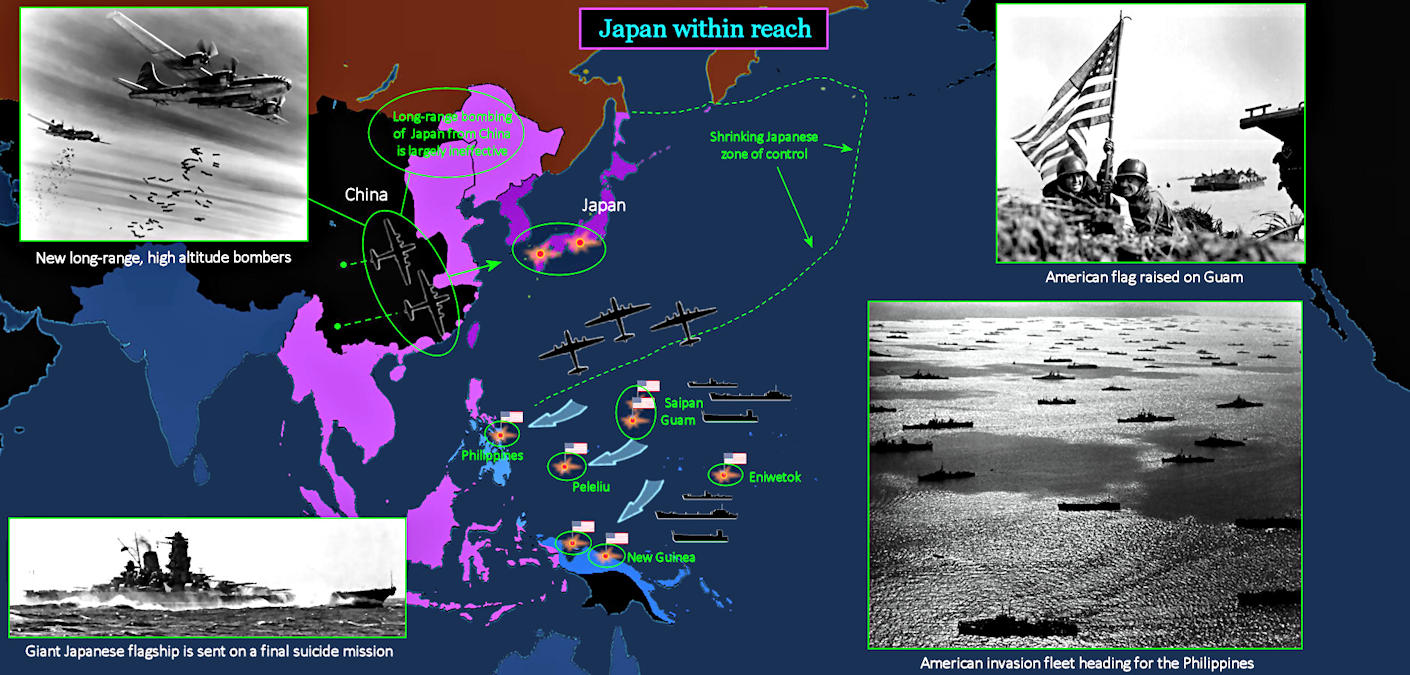
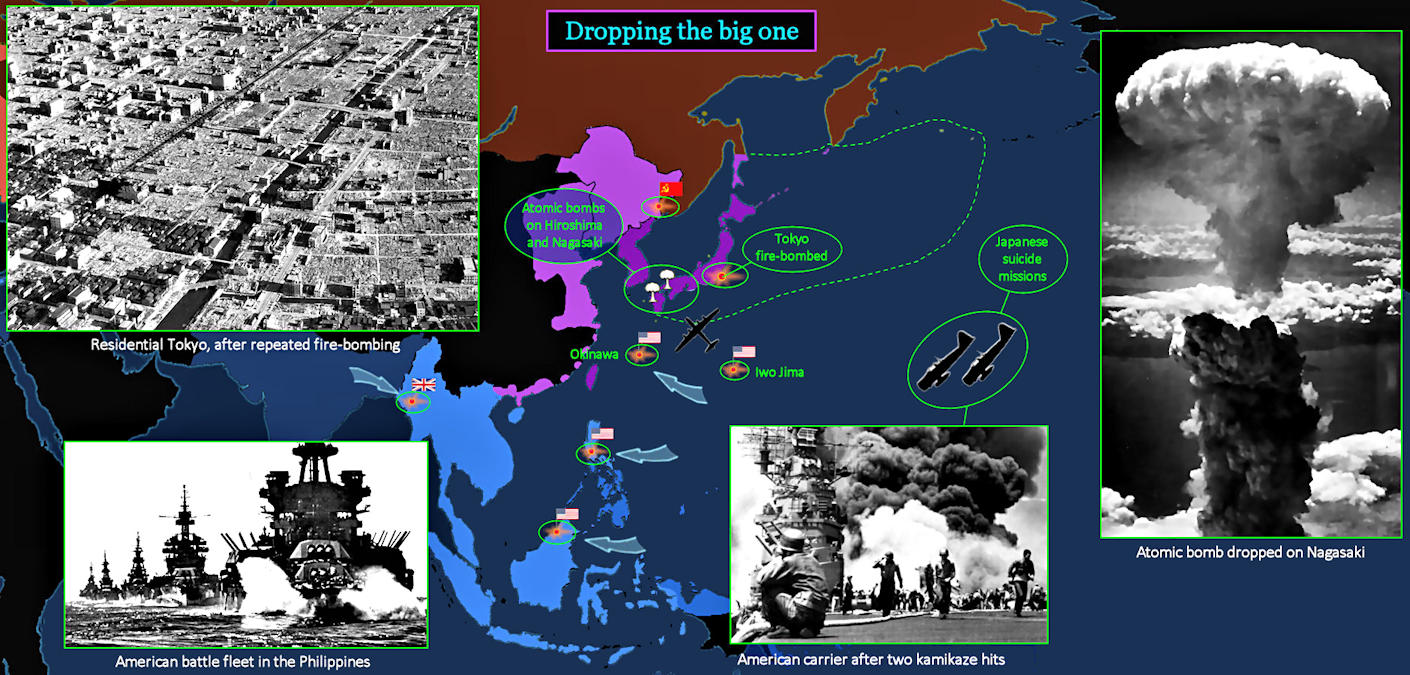
Wrestling Japan to the Mat Japan, too, is on the ropes by the start of 1945. All its outer island bases have been taken, and its fleet destroyed. Japan itself is under high-altitude bombing attack from Chinese bases. Japanese houses are typically built of wood, so fires sparked by bombs are likely to spread out of control. Japan's aircraft carriers are gone, along with almost all its planes and pilots, leaving the home island helpless to defend itself. Meanwhile, the American fleet is cutting off shipping lanes from territory Japan still occupies in Southeast Asia. Still, Japan clings to its nationalistic pride, with soldiers ready to fight to the death for the Emperor. In desperation, barely-trained Kamikaze pilots are instructed to crash their planes directly into American ships. It's all hopeless. | |||||||||
| |||||||||
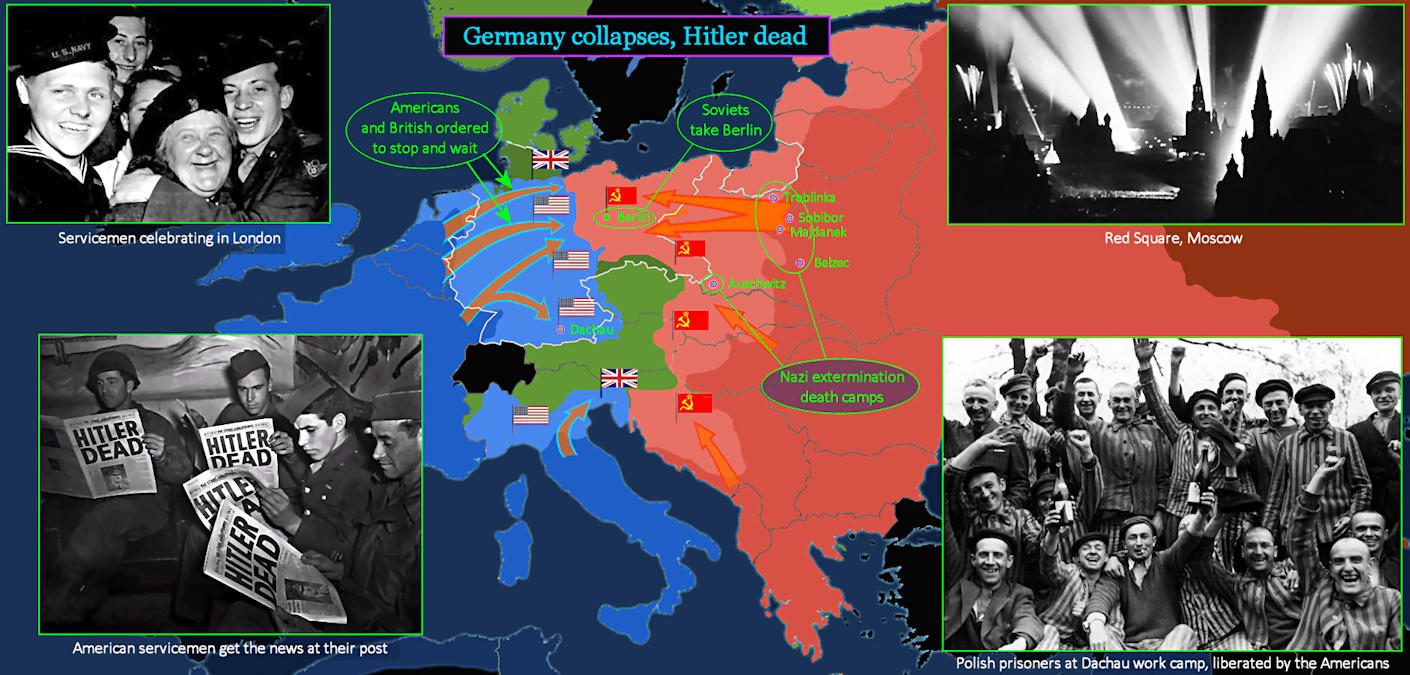
Jaws Slam Shut The end for Germany comes quickly in early 1945, with Soviets roaring in from the east, and the British and Americans approaching from the west. Still, Hitler never gives the order to surrender. Instead, he waits until the last defenders in Berlin run out of ammunition, and then commits suicide in his bunker, making no statement. Servicemen everywhere are elated and relieved. Americans driving into southern Germany are astonished to stumble on the conditions at Dachau, the most notorious of the Nazi work camps (lower right). Soviets advancing through Poland discover far more sickening scenes at the six 'extermination camps' for Jews, where no one ever works. They are all sent directly to the gas chambers. In all, the Nazis murder six million Jews. | |||||||||
| |||||||||
Atomic Age Begins Amazingly, the Japanese still won't surrender. Marines invade Okinawa and Iwo Jima, two of the close-in 'home' islands, taking heavy losses amid stubborn resistance. Back in America, President Roosevelt suddenly dies of a massive brain hemorrhage, shocking the nation, and eliciting nationwide displays of gratitude. Vice-President Harry Truman takes over as President, to his own great dismay. By mid-summer, Japan is being fire-bombed daily from aircraft carriers just offshore, while American battleships get close enough to bombard coastal targets. Finally, in August, Truman authorizes the dropping of two atomic bombs which have just been finished, the first ever. At last, the Emperor surrenders, and it's all over. Hallelujah and Amen. | |||||||||
| |||||||||
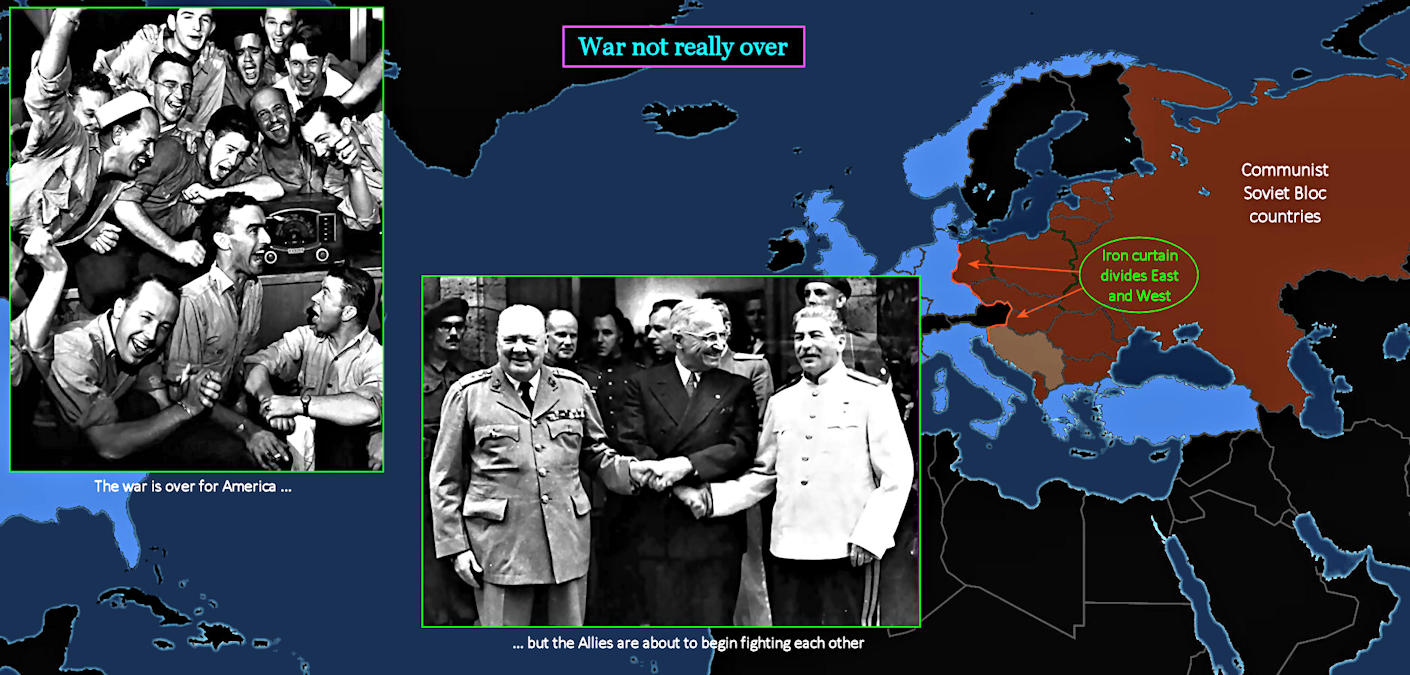
Hot War Goes Cold Everyone's celebrating, although the war isn't really over. Instead, it's shifting into the next phase, with Democracy pitted against Communism. Churchill had long been suspicious of Stalin's motives, and even argues quietly for holding back, near the end of the war, to allow the Germans and Soviets to exhaust each other in a final double-suicide. In this way, Churchill hopes the threat of Communism after the war will be minimized. Churchill's public support of Stalin during the war is a simple strategy of addressing the greatest threat first. His fears are quickly realized, as Stalin refuses to give up any territory seized by the Red Army during the war. This prompts Churchill to famously remark that an 'Iron Curtain' has descended over Europe. The Cold War has begun. | |||||||||